متاهات أخلاقية: عالم مديري الشركات — روبرت جاكال
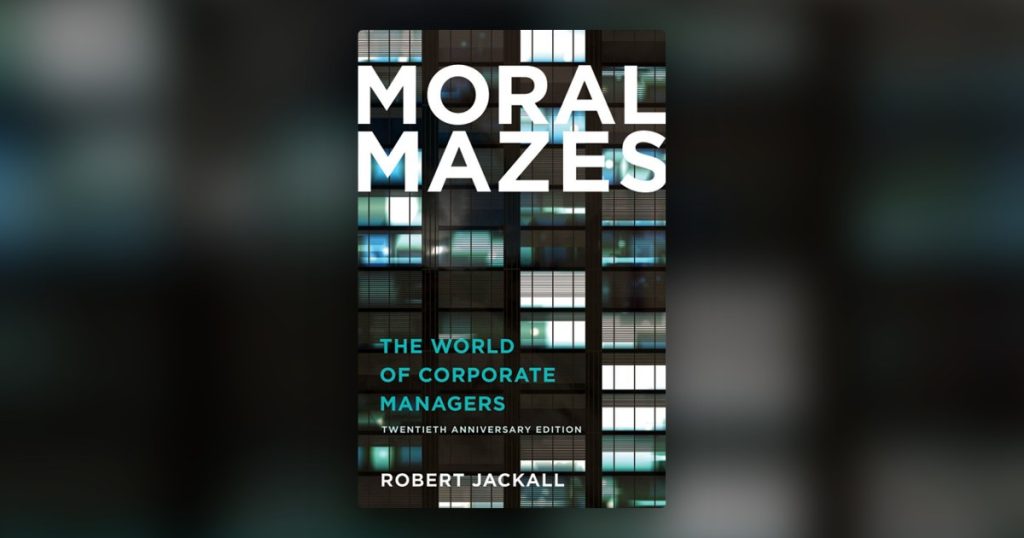
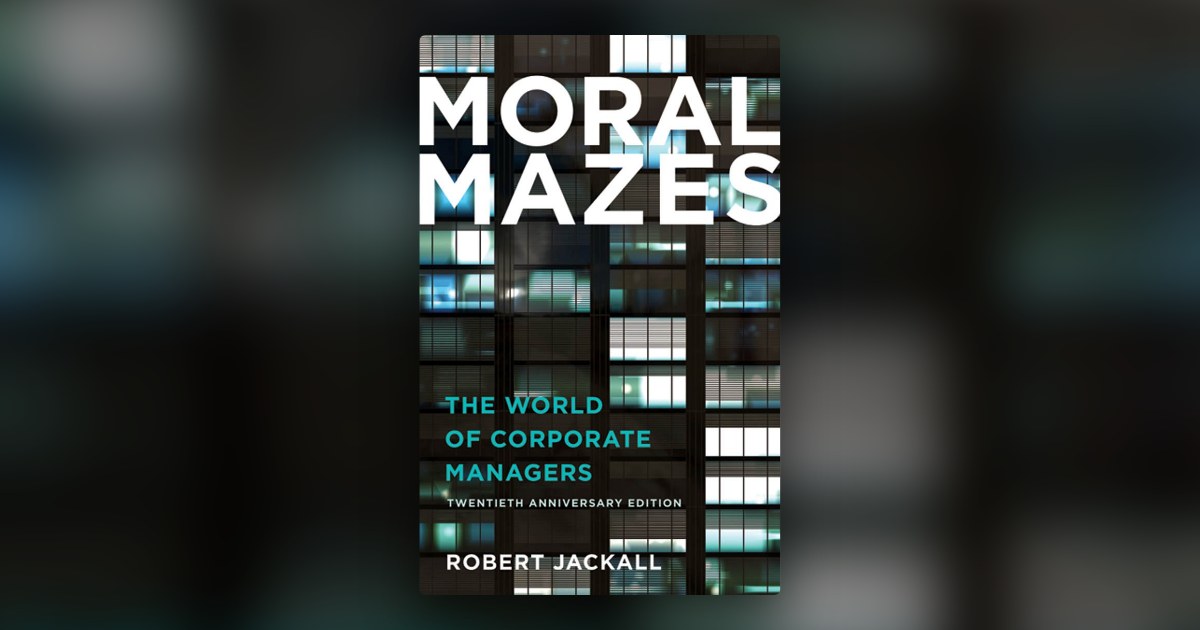
ملخّص كتاب «Moral Mazes: The World of Corporate Managers» لروبرت جاكال (Robert Jackall) — دراسةٌ ميدانية في الأخلاق المعمول بها داخل الشركات الكبرى، مبنيّة على 143 مقابلة في ثلاث شركات.
الأرقام بين معقوفين مثل [ص 86] هي صفحات الكتاب المطبوعة، لمن أراد أن يتحقّق. والأسماء «ألكيمي» و«كوفننت» و«ويفت» و«إيميجز» أسماءٌ مستعارة وضعها المؤلّف للشركات التي درسها.
1. السؤال الذي يفتح الكتاب
المقدمة — الأعمال ساحةً اجتماعية وأخلاقية [ص 1–5]
يبدأ جاكال من وعدٍ يكرّره قادة الشركات: العمل الشاقّ يؤدّي إلى النجاح. ثم يسأل: ماذا يحدث لأخلاق الشركة — القواعد اليومية التي يلعب الناس بها — إذا لم يَرَ العاملون فيها صلةً ضرورية بين النجاح والعمل الشاقّ؟ وأيّ قواعد يصنعونها إذا شعروا أن ما يفرز الناسَ حقّاً ليس القدرة والموهبة والخدمة المتفانية، بل السياسة والكلام البارع والحظّ والصلات والترويج للذات [ص 1]؟
دخل الشركات ليدرس كيف تُشكّل البيروقراطية الوعي الأخلاقي، وبقي ليدرس قواعد البقاء والنجاح لأنهما أعلى ما في أذهان المديرين؛ وهي عنده قلب الأخلاق البيروقراطية [ص 2]. ولا يقصد بـ«الأخلاق» منظومةً معيّنة ولا مطلقاً يحكم به، بل القواعد التقييمية الفعلية التي تحكم تعامل المدير مع رؤسائه ومرؤوسيه وأقرانه وحلفائه ومنافسيه وعملائه والمنظّمين والإعلام والجماهير [ص 2]. ويَنقد حقلاً صار تجارةً كبيرة — يسمّيه ساخراً «الأخلاق المحدودة» (Ethics Inc.) — لأن تحليله جرى على حالاتٍ افتراضية أو وقائعَ انتُزعت من سياقها التنظيمي، ولأن الفلاسفة لم يحقّقوا في العمل اليومي وكيف تُشكّل شروطُه الوعيَ الأخلاقي [ص 3–4].
والأطروحة: العمل البيروقراطي يُشكّل الوعي بطرق حاسمة. ينظّم تجربة الزمن، ويضع الناس في جوارٍ يومي مع السلطة وتحتها فيخلق نزعةً دائمة إلى النظر إلى أعلى، ويُعلي عقلاً عمليّاً يطلب أهدافاً محدّدة، ويبني تراتباً للمكانة يجعل قواعد المؤسّسة وبروتوكولها الموجّهَ النفسي الأعظم. وعبقرية الشكل التنظيمي الباقية أنه يسمح للأفراد بالاحتفاظ بدوافع خاصة متباينة إلى حدّ الحيرة، ما داموا يلتزمون علانيةً بقواعد متّفق عليها [ص 4]. ونتيجته أن المرء يضع بين قوسين، وهو في العمل، الأخلاق التي يحملها خارجه:
«ما هو صحيح في الشركة ليس ما هو صحيح في بيت الرجل أو في كنيسته. ما هو صحيح في الشركة هو ما يريده منك الرجل الذي فوقك. تلك هي الأخلاق في الشركة.»
والمديرون لا يتناقشون في الأخلاق مباشرةً إلا في حلقاتٍ ينظّمها أخلاقيّون؛ وهي نادرة متوتّرة مصطنعة، تصير مناسبةً لاستدعاءٍ علني مهيب — من كبارهم خاصة — لأخلاقٍ تقليدية وشعاراتٍ موروثة. أما المهمّ يوماً بيوم فقواعدُ تتفاوت بحدّة حسب القرب من السوق، وحسب الخط أو الجهاز المعاون، وحسب الموقع في التراتب: أخلاقٌ سياقية، موقفية، شديدة التخصيص، وغير مُفصَحٍ عنها في الأغلب [ص 5]. ولا يقدّم برنامجَ إصلاح ولا نصائحَ للمسار السريع؛ هذا وصفٌ اجتماعي تأويلي لكيف يظنّ المديرون أن العالم يعمل [ص 5].
2. من أخلاق البروتستانت إلى البيروقراطية الأبوية
الفصل الأول — محن أخلاقية، قديمة وجديدة [ص 6–17]
يرجع إلى أخلاق البروتستانت بمصطلح فيبر: قواعدُ ملزِمة تنصح بـ«النسك الدنيوي» — إخضاعِ النزوة لمشيئة الله بعملٍ «دائب متّصل منظّم في دعوةٍ دنيوية» [ص 6]. والأهمّ من الخلافات العقدية التنظيمُ الاجتماعي للمحنة الأخلاقية: كيف يُثبت المرء جدارته لدى الآخرين. فأهميتها جاءت من أنها جعلت العملَ في الدنيا محنةً للذات موصولةً بالخلاص: فالفرد يخدم إلهاً لا يُدرَك لا بالصلاة ولا بالصدقة بل بعملٍ أمينٍ لا ينقطع؛ وحين يُتوَّج بنجاحٍ اقتصادي فقد أثبت أمام الناس، وموافقتهم تساعده على إقناع نفسه بأنه أثبت أمام الله [ص 7].
ثم تآكلت من جهتين: تراكم الثروة جرّدها من أساسها الديني فصارت علمانيةً — أخلاقَ عملٍ وفرديةً خشنة وأخلاقَ نجاح [ص 8]؛ والأهمّ أن جوهرها — الاعتماد على الذات، والتفاني، وأخلاقٌ تفترض جزاءً عادلاً لعملٍ أُحسن — قوّضه التحوّلُ الكامل في شكل العمل: تراتباتٌ إدارية، وإجراءاتٌ موحّدة، وخبرةٌ متخصّصة، وسيطرةٌ مركزية — أي بيروقراطية الاقتصاد [ص 8]. ويشدّد: البيروقراطية ليست نظاماً تقنياً فقط، بل هي دائماً نظام سلطة وامتياز وهيمنة؛ وأثرها الأكبر انحدارُ الطبقة الوسطى القديمة — أصحابِ المشاريع والمهنيين المستقلّين والمزارعين وصغار التجّار، حاملي الأخلاق القديمة — وصعودُ طبقةِ موظّفين سمتُهم الاعتماد على المؤسّسة الكبيرة [ص 9–10].
بيروقراطية هجينة: الأمير في قلب الشركة
واللاشخصيةُ الخالصة — المنصبُ منفصلاً عن الشخص — لا تلائم الطابع الأمريكي: فتجربةُ التخوم الغربية أعلت الحلول الفردية، والمهاجرون من أصولٍ ريفية لم تجذبهم الرسميات، وزعماءُ المدن أقاموا حكمهم شبهَ الإقطاعي على الولاء الشخصي. فلمّا تحوّلت الشركات إلى بيروقراطيات أدخلت كأمرٍ طبيعي كثيراً من الولاء الشخصي والمحاباة واللارسمية [ص 10–11]. فالذي نشأ هجين: فيه سماتُ البيروقراطية الخالصة، ويشبه في الوقت نفسه البيروقراطية الأبوية (patrimonial bureaucracy) — شكلَ بلاطات الملوك والأمراء:
«هناك كان الولاء الشخصي هو القاعدة، لا الولاء للمنصب. في البيروقراطية الأبوية ينجو المرء ويزدهر بالتزلّف لموظّفين أقوياء أعلى منه، قريبين من الحاكم. نظامٌ تَسِمُه المحاباة، والدسائس والمؤامرات بين الفصائل لنيل رضا الحاكم وما يصحبه من مزايا.»
ولا ملوك في أمريكا، لكن التراتبات تسمح بأن تتوجّه حاجةُ التعلّق إلى الرؤساء التنفيذيين؛ وهذا الهجين هو إطار البحث [ص 11]. ولماذا المديرون؟ لأنهم — وهم 9.9٪ من قوة العمل في 1980 — جماعةُ العمل البيروقراطية النموذجية: يصنعون القواعد ويُقيَّدون بها، ويطبّقون إجراءات عقلانية ثم تطبعهم العقلانية نفسها، ويصيبهم ما تولّده الجهود العقلانية من لاعقلانية؛ رؤساءُ ومرؤوسون في آن. وولاءاتهم — بخلاف موظّف الخدمة العامة — لمبدأ التنظيم، وللسوق المنظَّم بيروقراطياً، ولمن يستطيع طلب ولائهم، ولأنفسهم ومسيراتهم [ص 12].
الدخول إلى الميدان: المحنة الأولى
وأطرفُ دليلٍ على الأطروحة تجربةُ الباحث في طلب الإذن. فالمعيار الذي يحكم به المديرون حدسيّ: هل يشعرون بأنهم «مرتاحون» مع حلٍّ أو مع شخص؟ والارتياحُ مقياسٌ للجدارة بالثقة والاعتمادية والقابلية للتوقّع في عالمٍ يجدونه مُلبِساً مُقلِقاً [ص 13]. رفضت ستٌّ وثلاثون شركة السماح بالدراسة، ونصفُ الرفوض بعد مفاوضاتٍ وصلت في بعضها إلى القمة. والمبرّراتُ في ظاهرها عملية: لا فائدةَ تنظيمية ملموسة لأن المشروع يخلو من تركيزٍ عملي، أو أن الوقت غير مناسب بسبب «تحوّلات». ومعناهما — كما فهم لاحقاً — أن المديرين لا يملكون أن يوافقوا إلا على دراسةٍ «مربوطة برسنٍ قصير» يمكن الدفاع عنها علانيةً بمفردات التبرير المتاحة في الشركة [ص 13–14].
ونصحه متعاطفون بإعادة الصياغة كمسألةٍ تقنية — «مشكلة خلافة التنفيذيين» — وبحذف الأخلاق والقيم أصلاً والكلام بدلاً عنها عن «عملية صناعة القرار» و«المقايضات». فأعاد الكتابة بتلك اللغة الباهتة المُلطَّفة التي كان يتعلّم بسرعة أنها لغةُ التعامل في عالم الشركات — فتآكل ما كان متميّزاً فرُفض بوصفه إعادةَ اختراعٍ للعجلة [ص 14]. ثم أوقعته النصيحة في أرضٍ مُلبِسة: أخلاقيٌّ بارز «لم يشعر بالارتياح» للنسخة المعقّمة لأنها تخلّ بـ«الإفصاح الكامل»، ففضّل الصريحة ووصله بتنفيذيٍّ كبير — لكن هذا «لم يشعر بالارتياح» بأن يقترح على زملائه أن يفحص غريبٌ لم يُختبر في الأعمال أخلاقَهم. فالخلاصة أن الباحث لم يستطع الوصول إلى قواعد المديرين الأخلاقية لأنه لم يُظهر أنه يفهمها أصلاً فهماً يُقنعهم بأنه شخصٌ يمكن أن «يرتاحوا» معه [ص 14].
وجاء الوصولُ أخيراً بظروفٍ عارضة لا علاقة لها بقيمة الدراسة، فأدرك كم يُعلي المديرون «أن تكون معروفاً» وأن يُزكّيك معروف: لقاءٌ محض مصادفة أوصله إلى تنفيذيٍّ في العلاقات العامة درّبه على إعادة بناء تقديم نفسه وعلى العبارة غير المباشرة وعلى إعادةِ صياغة المسائل الأخلاقية كمسائلِ علاقاتٍ عامة؛ فزكّاه عند تنفيذيٍّ في شركة نسيجٍ كبيرة أسماها ويفت (Weft) — ومن تلك اللحظة صار المقترح بلا معنى فلم يره أحدٌ بعدهما. التزكيةُ وحدها حسمت، وبُنيت على استعدادٍ لأن يكون «مرناً»، وعلى إدراكه أهمَّ ما في أخلاق الإدارة عند المديرين: كيف تظهر قيمهم في العين العامة [ص 15]. وسلسلةٌ أكثرُ عشوائية — لقاءٌ في ملعب تنس — أوصلته إلى كوفننت (Covenant) فإلى شركتها الكيماوية ألكيمي (Alchemy Inc.)، ولم يُسمَح له إلا بدراسة تنظيمٍ منتظر على مركّبات الكلوروفلوروكربون وحدها؛ ثم وجد طريقه إلى الشبكات يزكّيه واحدٌ لآخر فوسّع بحثه بهدوءٍ بمساعدةٍ نشطة من التنفيذيّ نفسه الذي أطّر وصوله علانيةً كدراسةٍ تقنية ضيّقة؛ أما الثالثة، وكالةُ العلاقات العامة إيميجز (Images Inc.)، فدعاه تنفيذيٌّ كبير لدراستها بسبب أزمةٍ داخلية سنة 1982 [ص 15–16]. ويصرّح بحدوده: لا اختيارَ عشوائياً، ولا زعمَ أن الكتاب يصف الأعمال الأمريكية كلّها؛ لكنّ العملَ الميداني المفصّل وحده يعطي معرفةً عميقة بموضوعٍ كأخلاق المهنة [ص 16].
3. الولاء: كيف تُعاش السلطة داخل الشركة
الفصل الثاني — البنية الاجتماعية لعمل المدير [ص 18–26]
السلطةُ لا تُرى مجرّدةً بل مجسّدةً في العلاقة بالرئيس المباشر: فحين يصف المدير عمله لغريب يقول أولاً «أنا أعمل لدى فلان»، ثم يصف وظيفته [ص 18]. والأعمالُ الأمريكية تمركز السلطة وتوزّعها معاً: القوّةُ في القمّة، ومسؤوليةُ الأرباح مدفوعةٌ إلى أسفل ما أمكن. (ألكيمي 11,000 موظّف وأكثر من ثمانين مصنعاً؛ كوفننت أكثرُ من 50,000 موظّف حين بدأ البحث وأكثرُ من 100,000 اليوم؛ ويفت 20,000 في ثلاث شِعَب نسيج؛ وكلٌّ «مركزُ ربح» نظريّاً) [ص 18–19]. والرابطُ بينها نظامُ التقارير: كلٌّ يجمع أهداف مرؤوسيه ويصوغ منها التزامه لرئيسه حتى تصل الالتزاماتُ إلى الرئيس التنفيذي؛ وفي كل مستوى مفاوضاتٌ معقّدة يسمّيها المديرون «مؤامرات» لإبقاء الالتزامات محترمةً وقابلةً للتحقيق في آن [ص 19–20]. وهذا النظام — «الإدارةُ بالأهداف» — يصنع ترتيباً أبوياً: يُدين المرؤوسُ بالولاء لرئيسه المباشر، وقواعدُه صريحة [ص 20–21]:
- لا يُحمّله أكثر مما يحتمل فلا «يُعلَّق» بوعودٍ لا تُنجَز؛ ويمنعه من الخطأ العلني؛ ويُبقيه مُطَّلعاً فلا «يُضرَب من زاويةٍ عمياء».
- وإن كان رئيسُه كثيرَ الخطأ فالإغراءُ بتركه يُسقط نفسه قائم؛ لكنّ الحكيم يعرف خطرين: أن تُجهز عليه أخطاءُ رئيسه، والأهمّ أن المديرين ينظرون بأشدّ الشكّ إلى مرؤوسٍ يحجب معلومةً حاسمة عن رئيسه ولو كانوا يرونه أحمق.
- لا يتخطّاه ولا يُظهر ذلك، ولا يناقض حكمه علانيةً أبداً؛ ومخالفةُ هذا تُعدّ نوعاً من «رغبةٍ في الموت».
- ومع أن الأُلفة بالاسم الأول هي الأسلوب السائد، فعليه إجلالٌ شعائري: يتبع قيادته في الحديث، ولا يتكلّم في غير دوره، ويضحك لطُرفه ولا يصنع طُرفاً تَبُزّها؛ والفَطِن يتعلّم أن يُمحي نفسه ليزداد وجهُ رئيسه إشراقاً.
ويرجو في المقابل ما في يد رئيسه، والحمايةَ من الأخطاء إلى حدٍّ لا يُحدَّد قطعاً: فالرؤساءُ مُطالَبون بحماية من في ولايتهم وتخلُّفُهم يُقرَأ ضعفاً؛ أمّا إن كان الخطأُ أحمقَ أو خالف الولاء — بتخطّي رئيسه مثلاً — فالتخلّي عنه مقبولٌ تماماً. ويتشابك مع هذا نظامُ الراعي والتابع [ص 20–21].
التفاصيل إلى أسفل والفضل إلى أعلى
لا يحبّ الرؤساء التعليماتَ المفصّلة. والسببُ المعلن تعظيمُ استقلال المرؤوسين؛ والحقيقي: التخلّصُ من التفاصيل المُضجِرة، وعزلُ الأعلى عن ضغوط الوسط، والأهمّ: حمايةُ امتياز السلطة في أن تُعلن أن خطأً قد وقع. يشرح تنفيذيٌّ في ألكيمي: إن قلتُ له افعل أ وب وج فالمعنى الضِّمني أنه سينجح؛ فإن لم ينجح فقد استثمرتُ جزءاً من نفسي في عمله وفقدتُ حقّي في توبيخه — ولذلك لا يُعطي كثيرون توجيهاً صريحاً بل بياناً بالأهداف، ثم ينقدون من يُخطئ هدفه [ص 21–22]. ويُعفيهم دفعُ التفاصيل إلى أسفل من عبء المعرفة المُورِّطة: «أعطني أفضل ما عندك»، ثم «أظنّك قادراً على أفضل من هذا» — حتى يُنجز المرؤوسُ تفاصيلَ حلٍّ قرّره الرئيسُ سلفاً، دون أن يكون الرئيسُ مطّلعاً تحديداً على «كل البيض الذي اضطُرّ أن يُكسَر» [ص 22].
ونتيجتان: الدوائرُ العليا، وهي تُبعِد نفسها عن التفاصيل قصداً، تتوقّع نتائجَ ناجحة بلا تعقيدات — وهذا أصلُ نفورها من الأخبار السيّئة ونزعتِها إلى قتل حاملها؛ ويصير الضغطُ هائلاً على الوسط لأنهم يعرفون التفاصيل، فيصبحون «رأسَ الحربة» ثم «كبشَ الفداء». والمديرُ المفرِط في الضمير مفيدٌ في الوسط، لكنّ هذا الضمير لا يُجزى بالضرورة؛ فالمكافآتُ الحقيقية على سلوكٍ آخر أكثرَ «مرونة» [ص 22]. والفضلُ يصعد ويستولي عليه أعلى مسؤولٍ شارك في نجاح: فالسلطةُ تمنح رخصةً لسرقة الأفكار حتى أمام أصحابها؛ والمرؤوسُ الذي تُؤخَذ فكرتُه مُطالَبٌ بأن يتقبّل ذلك بروحٍ رياضية. ففي الوسط يكون الفضلُ دائماً شرفاً اجتماعياً منعكِساً: لا يُدَّعى ولو استُحقّ بل يجب أن يُمنَح، وقَبولُه تأكيدٌ ضِمني للولاء. وأمّا توزيعُ اللوم فله نظامٌ آخر [ص 22–23].
الرئيس التنفيذي ملكاً
إن كان رؤساءُ الشركات «بارونات» فالرئيسُ التنفيذي الملك: كلمتُه قانون، ونزواتُه تُؤخَذ أوامرَ فتُحوَّل سياسات. أبدى رئيسٌ جديد في ويفت قلقاً معتدلاً من كلفة السيّارات المستأجرة فحلّ في اليوم التالي نظامٌ صارمٌ لمراقبة المسافات. ومن أمثالهم: «حين يعطس، نُصاب كلّنا بالزُّكام» — ويذكر الكتاب أن بينها صيغةً أشدّ فُحشاً وأكثرَ تلويناً [ص 23]. وحين يزور رئيسُ كوفننت مصنعاً فأهمُّ بندٍ محلّي طلاءٌ جديد تجاوزت كلفتُه وحدها 100,000 دولار في حالات؛ وإن كان مجدولاً أصلاً أُجّل حتى قُبيل وصوله، فالمحافظةُ على المظاهر بلا اعترافٍ بالجهد لا معنى لها؛ والبندُ الثاني كتابٌ مصوَّر عن المصنع كلفةُ نسخته نحو 10,000 دولار. وهذا بأيّ معيار تقشُّفٍ غيرُ عقلاني، لكنه بمعايير الشركة الاجتماعية معقولٌ تماماً: إرضاءُ الملك اليوم أهمُّ من اقتصاد المقاطعة غداً، إذ لو لم يُرضَ فقد لا تبقى مقاطعةٌ ولا أتباع [ص 23–24]. ومن ثَمّ يكون أكثرُ أحاديثهم شيوعاً التخمينَ في خططه ونواياه؛ وحتى مجازاتُ لغته تنزل إلى من تحته: حار الباحثُ من كثرة المصطلحات البحرية في كوفننت وموقعُها محصورٌ في البرّ — فالرئيسُ مولعٌ بقوارب الشراع ويُفضّل أن يناديه معاونوه «القُبطان» [ص 24]. وليس هذا لغواً: فلأنه يقف في قمّة البنيتين ويُثبّت نظامَ الالتزامات، فهو الذي يُقرّر في النهاية إن كانت أُوفيت على نحوٍ مُرضٍ [ص 25].
الخرائط الذهنية
ويرسم المديرون خرائطَ ذهنية تقودهم في أدغال مؤسّساتهم، وأبرزُ سماتها طابعُها السِّيَري: صورٌ مختصرة للتاريخ المهني لكل مديرٍ في رتبتهم أو أعلى، تتركّز على علاقات التقارير والرعاية والتحالفات، وتضمّ الإهاناتِ والإحراجاتِ العلنية وسلوكَ الناس تحت الضغط. وهي ليست دقيقةً ولا عادلةً بالضرورة بل مبنيّةٌ على أوهى الأدلّة — يصفها مديرٌ عامّ بأنها «إحساسٌ في الأحشاء» [ص 25–26]:
«هذه الآراءُ غيرُ الرسمية عن الآخرين هي شريانُ حياة نظام الترقية في المؤسّسة. نعم، للسِّجلّ، لدينا التقييماتُ الرسمية؛ لكنّ الآراءَ الحقيقية — التي تُحدِّد فعلاً مصائرَ الناس — هي التي تُتبادَل في الاجتماعات والمؤتمرات الخاصة واللقاءات العارضة.»
ويُقابل شغفَهم بالسِّيَر نفورُهم من التفاصيل عموماً ومن التاريخ، لأن الاهتمامَ بالتاريخ يُقيّد التوجُّهَ إلى الأمام والتفاؤلَ المُقدَّر. أما السِّيَر فمعرفةٌ حاسمة، لأنهم يعرفون أن المصائر تُصنع وتُكسر لا بالإنجازات بالضرورة بل بالناس الآخرين [ص 26].
4. انتفاضات «كوفننت»: سياسة الشركة في أربع سنوات
الفصل الثاني — دراسة حالة [ص 26–36]
الصراعُ السياسي سمةٌ ثابتة، مُغطّاةٌ ببلاغةٍ مُفصَّلة عن الوفاق وروح الفريق، لكنها تظهر في الانتفاضات. وكما لاحظ مانهايم: حين يبدأ نظامٌ في التفكّك يُبصِر المرءُ ما كان يشدّه معاً [ص 26].
1979 — «التصفية الكبرى». تولّى رئيسٌ تنفيذي جديد، وأولُ فعلٍ لمعظم الجُدد تغييرٌ تنظيمي: يمنع وراثةَ اللوم، ويبثّ صورةَ العدوانية التي تُقدّرها وول ستريت، والأهمّ: يعيد ترتيب بنية الولاء. فاختار بنفسه رؤساءَ الشركات الخمس وأمرهم بـ«تقليص تعدادٍ» واسع. ورئيسُ ألكيمي — سميث — من خلفيةٍ تسويقية، فمدّ يده إلى شِعبته القديمة ورفّع زملاءه وحلفاءه؛ أمّا أقوياءُ الشِّعبة المنافسة فأُنزِلوا رتباتٍ كبيرة، أو وُضِعوا في «مهمّةٍ خاصة» وهي كنايةُ الشركات عن سيبيريا («ما عاد أحدٌ قطّ من مهمّةٍ خاصة»)، أو طُردوا؛ وخسِر مئاتٌ وظائفهم في «الخميس الدامي». ورآها المديرون حقيقةً حتميّة: سميث اختار من يرتاح إليهم، وكان يمكن أن يسير الأمر في اتّجاهٍ مختلفٍ تماماً لو اختير رئيسٌ آخر [ص 27–28]:
«الولاءُ هو مِلاطُ تراتب الشركة، لكن إزالةَ حجرٍ واحدٍ حسنِ الموضع تُرخي المِلاط في الهرم كلّه. ولا أحدَ يتأكّد قطّ — إلا بعد وقوع الأمر — كيف سيُعاد تركيبُ الهرم.»
1980–1981 — ثمنُ الانتصار. ازدهرت ألكيمي وأوفَت بالتزاماتها، وهي العملةُ الحاسمة لشراء استقلالٍ مستمرّ. ثم — وهي حكايةٌ تحذيرية عن مخاطر الانتصار في عالمٍ يجب أن يتبع فيه نصرٌ نصراً — التزم سميث بأكثر مما يحتمل أمام رؤساء الشركات المتنافسين على رئاسة كوفننت بينما كان الاقتصادُ ينزلق إلى كساد؛ فصار عملُ المستويات العليا الوسطى انتزاعَ أرباحٍ من أسفل مع واجهةٍ علنية من الرضا المرح. يقول تنفيذي: «عليك أن تُبقي سجلّ انتصاراتك عند 75٪ على الأقلّ… يُتوقَّع منك أن تأخذ مخاطر — هكذا يقول الرئيسُ التنفيذي — لكنّ الحقيقة أن الناس يخافون أن يُخطئوا». وبان أن الشركة لن تبلغ إلا 60٪ من هدفها، وذلك حتى بعد شَعوذةٍ لافتة في الدفاتر؛ وأُمِر مديرو الأسمدة بألّا يعرضوا أبداً الطقسَ أو إفلاسَ المزارعين عُذراً؛ واتُّهم بعدم الولاء من تخلّف عن اجتماعٍ في التاسعة صباحاً في واحدةٍ من أسوأ عواصف الثلج في عقدين [ص 28–29].
1982 — الانتفاضةُ دفاعاً، وهي خطُّ الدفاع الأول عند رؤساء الشركات المتعثّرة ضدّ مطالب رئيسهم. فأزال سميث — مستنداً إلى دراسةٍ كلّف بها مستشارين — طبقةً إدارية فتخلّص من نائبه براون: رجلٌ جعله تاريخُه المهني مُريباً، وأسلوبُه نابٍ عن مودّة دائرة سميث — فالمديرون يقولون إن على المرء أن يبقى ثلاثةَ كؤوسٍ على الأقلّ خلف رئيسه في المناسبات، ومعناه أن مرؤوسي براون قد لا يشربون أبداً. فأنقذه الرئيسُ التنفيذي وأرسله إلى «مقبرة الشركات»: أعمالٌ آيلةٌ تُدفَن بالبيع، فرآها كثيرون أمراً له بأن يحفر قبره في موقعٍ مناسب. وحوّل سميث لومَ السنة السيّئة إلى رؤوس بضعة مديرين عامّين فطردهم؛ ونذيرُ شؤمٍ واحد: خسارتُه السيطرةَ على موقع المقرّ — وقاعدةٌ أساسية: لا يتخلّى المرءُ أبداً عن السيطرة على أصلٍ ولو كان صُداعاً إدارياً [ص 30–31]. ويصف تنفيذيٌّ مدقّقي الرئيس:
«المدقّقُ هو مَن يجلس على تلّةٍ تُشرف على معركة، بعيداً عن ضجيج المدافع ودخان الانفجارات… وحين تنتهي ويصفو الدخانُ ينزل إلى ساحة القتال فيمشي بين الجرحى. ويطلق عليهم النار.»
ثم طلب الرئيسُ قطعَ 30٪ من الجهاز وطلب الأسماء، فطرد سميث 200 شخص معظمهم فنّيّون معاونون — «جنوداً لا قادة» — محافظاً على قاعدةٍ أساسية: الإدارةُ تعتني بنفسها في الشدّة والرخاء. وتركّز الهجومُ على الجهاز البيئي الذي أقامه سميث نفسه بعد كارثةٍ في أواخر السبعينيات ورآه أفضلَ دفاعٍ ضدّ كارثةٍ أشدَّ إحراجاً وأغلى. وهنا مفارقةُ الإصلاح التنظيمي: فالإصلاحُ الذي أنتجه السَّخَط العامّ وضع كذلك، بغير قصد، أساسَ استياءٍ عند من لم يستفيدوا منه، فالتقطوا في الأزمة الفرصةَ للمطالبة الصاخبة بتفكيك الضمانات نفسها التي قد تمنع كوارث المستقبل [ص 31–34]. وفي الخريف — والأسوأُ احتمالُ استسلامٍ علني للرئيس في بنية شركته «المستقلّة» المفترضة — استقال سميث «ليتابع مصالحَ أخرى» شادّاً حبلَ «مِظلّته الذهبية»؛ ورسالتُه الوداعية تقول إن أعظمَ ما أرضاه أن يسير في الممرّ فيُسلّم عليه كثيرون باسمه، ويدعو الجميعَ إلى شرابٍ بلا خُطَبٍ ولا رسميات — فصارت المناسبةُ فعلَ تمرُّدٍ صغيراً ضدّ الرئيس التنفيذي [ص 32].
ثم، ولدهشة الجميع، أعاد الرئيسُ براون من المقبرة — بعد «تقييمٍ شاملٍ لكل المرشّحين» استغرق يومين — رئيساً لألكيمي؛ ومهما كانت ارتباطاتُه السابقة فلم يكن في ولائه الآن شكّ: عُرف بـ«صبيّ الرئيس التنفيذي» وله تفويضٌ بأن «يُشهر الساطور». فطرد 150 شخصاً معظمهم من رتبة الإدارة — انتهاكٌ مُنذِرٌ لمدوّنة المديرين — وقطع الجهاز البيئي 75٪ فعُطِّل فعليّاً. والتبريرُ الرسمي أن الشركة مأسست تلك المعرفة ولم تبقَ مشكلات؛ والأدقُّ أن العمل البيئي فقد استعجاله في عهد ريغان: الوكالةُ ميّتة، والتهديدُ الوحيد المحاكم — لكنها تحكم في أفعالٍ ماضية لا في ممارساتٍ حاضرة، وحين تصل إلى قضايا اليوم (بعد خمسة عشر عاماً في العادة) سيكون المسؤولون الآن قد مَضَوا تاركين ما تُحدثه سياساتُهم لغيرهم [ص 33–34]. وفي 1983 أعلن الرئيسُ استحواذاً كبيراً وإعادةَ تنظيمٍ كبرى مستنداً إلى تقييمٍ شاملٍ آخر من شركة استشارات، فذهبت قيادةُ القطاع إلى رجلٍ من شركة المعادن فأعطى الرئاسات لرجال المعادن، وبدأت دورةُ صعودٍ جديدة بأنماطها من الولاء والرعاية والشِّلل. ولاحظ المديرون بارتياحٍ تجاوُزَ الرئيس لبراون بعد أن أدّى له عمله القذر، لكنّ ارتياحهم كان قصيراً: فقد عاد براون معاوناً لراعيه القديم رئيسِ قطاع الطاقة، ولمّا تقاعد هذا تولّى براون القطاع [ص 35]. وليس هذا التتابعُ لافتاً إلا في كثافته؛ وفي ويفت الأنماطُ نفسها على زمنٍ أطول: رئيسٌ جديد أولُ فعلٍ له قاعدةٌ تمنع من تجاوز الستين من الاحتفاظ بمنصبٍ فوق رتبةٍ معيّنة — فتخلّص بضربةٍ واحدة من جيلٍ كامل، ثم ملأ المواقع بمن خدم تحته في الجيش أو عمل معه أو كان يرتاح إليه؛ ومع تقدّمهم في العمر أُلغيت قاعدةُ السنّ [ص 35].
5. العَرضية، ومستويات الصراع، ودوائر الانتماء
الفصل الثاني — البنى الأساسية [ص 36–43]
أولاً: إحساسٌ حادّ بالعَرضيّة التنظيمية. لأن الروابط متشابكة، يعرف المديرون أن هزّةً في القمّة قد تُطلِق انقلاباتٍ مذهلة في الحظوظ؛ ومثلُهم المُكرَّر «حسناً، أنت لا تعرف أبداً…» يُلخّص ذلك، ويأخذون مأخذَ المُسلَّم أن تغييرات الانتفاضات اعتباطيةٌ إلى حدٍّ كبير، تعتمد قبل كل شيءٍ على علاقاتهم بأفرادٍ مفتاحيين وبجماعات [ص 36]. ثم ثلاثةُ مستوياتٍ للصراع مُضمَّنةٍ في البنية نفسها [ص 36–38]:
- الجماعاتُ المهنية تتنافس على صعود أفكارها ومنتجاتها وأنفسها: أعظمُ ما يُرضي رجالَ الإنتاج أن تخرج المنتجاتُ من الباب؛ والبائعين أن يُبرموا صفقةً بأيّ سعر؛ والمسوّقين أن يضبطوا البائعين ويعصروا الأرباح؛ والماليين أن يلتزم الجميعُ بالميزانية. والعملُ المتّصل في منتجٍ يصنع ارتباطاتٍ رمزية تَسِم المدير، فيصير دفعُ منتجه جزءاً من ترويجه لنفسه.
- الخطُّ والجهازُ المعاون يتنازعان الموارد والقواعد، والتعريفُ يتبع الموقع: «من زاوية الرجل الذي يدفع الزرّ، كلُّ الآخرين جهاز». والقاعدة: موقفُ الخطّ من الجهاز يتناسب طَرداً مع الاستقلال الذي تمنحه الإدارةُ العليا له؛ وفي المؤسّسات «اللامركزية» على الجهاز أن يسوّق مهاراته للخطّ كما تفعل شركةٌ خارجية فيبقى مُقيَّداً. يقول مديرٌ بيئي في ويفت إنه لا يُذكَر حين يُرقّى أو ينشر ورقةً: «لو انصرفنا، أفتَعمل المصانع؟ لا تستطيع. نحن أساسيّون». وأعدادُ الجهاز تنمو حتى تأتي دورةٌ أيديولوجية من «الترشيق» فيُحصَد صِغارُ رتبته.
- الأقوياءُ بعضهم مع بعض يتقاتلون لتحسين موقعهم وموقعِ منتجاتهم وحلفائهم في عين رئيسهم. فالتراتباتُ تُغذّي طموحَ من يُخضِع نفسه لمنطق مؤسّسته، ولأن الجزاءاتَ شحيحةٌ فهي تضرب الناس بعضهم ببعضٍ بالضرورة وتُحبط طموحَ بعضهم حتماً.
وليست المواقعُ الرسمية وحدها موضوعَ النزاع؛ فالأهمُّ يوماً بيوم المنافسةُ على أيّ إرادةٍ تَسود، لأن الحظوظ تعتمد على «المصداقية»: فعلى المرء أن يسود في الصغائر ليأمل موقعاً في الكبائر، وقد تكون الأجندةُ الخفية لخلافاتٍ تبدو تافهة صراعاً على مصائرَ طويلة المدى. وتحت أيديولوجيا اللامركزية الكاملة يُركّز رئيسُ كوفننت السلطةَ في يده تركيزاً هائلاً، لأن الخوف على الطموحات يمنع من تحته أن يتحرّك بلا موافقته [ص 39]. والقاعدةُ الثابتة الوحيدة:
«كلُّ مؤسّسةٍ كبيرة مُقامةٌ لمصلحة من يسيطرون عليها؛ الرئيسُ يحصل على ما يريد.»
وإلّا في الانتفاضات فالصراعُ مُخفيٌّ وراء مناخٍ اجتماعي مريح: سجّادٌ فخم، وفنٌّ على الجدران، ومقاصفُ مدعومة، وقرعٌ متّصل لطبول أيديولوجيا المؤسّسة. والمراد أن الشركات لا تُعرَض ولا تُرى مجرّدَ أماكنَ لكسب العيش، بل يُصنَع مناخٌ كامل يُغطّي العداوات فيُصعِّب تبيُّن الصراع: فبعد «التصفية الكبرى» التي طُرد فيها 600 شخص أنفق الرئيسُ التنفيذي مليون دولار على «يوم العائلة» «ليَجمع الجميع» — حضره أكثرُ من 14,000 شخص بمهرّجين وأبطال رياضة وألعابٍ و— ربما بما يناسب المقام — متاهات [ص 40–41]. وضرورةُ المشاركة في مثل هذه الشعائر تُنتج نصفَ تصديق؛ لكنّ الحكماء يقاومون كلامَ الوحدة المُسَكِّن — وإن استدعوه بحميّة — ويبحثون عن تصادُم المصالح الحتمي تحت السطح المرح، فاهمين أن «كبتَ الصراع المفتوح يضع ثمناً إضافياً على إتقان الأساليب المقبولة اجتماعياً لإدارة القتال» [ص 41].
وعدمُ اليقين، يُفاقِمه الصراعُ المُقنَّع، يجعلهم يلتفتون بعضهم إلى بعضٍ طلباً للإشارات — أي يحاولون السيطرة على بناء واقعهم اليومي؛ ويتّخذ ذلك أربعةَ أشكال [ص 41–42]: التحالفات روابطُ ولاءٍ شبهِ فطري يصوغها العملُ المشترك والتجاربُ مع الأعداء أنفسهم والخدماتُ المتبادَلة على مرّ الزمن؛ والشبكات شِباكٌ مفتوحة بلا معايير عضوية بيّنة، يُعرَف فيها المرءُ «معقولاً» أو — خاصةً — «مرناً» لا «مدفعاً سائباً»، كتوماً يستطيع أن يُغلق فمه أو أن ينظر بعيداً ويتظاهر بأنه لم يلاحظ شيئاً، صاحبَ أفكارٍ تفُكّ العُقَد ولا يعترض على أن يستولي عليها رؤساؤه؛ والجماعاتُ الاجتماعية أقربُ إلى النوادي — ساعةُ كوكتيلٍ خلف سياج الحيّ المُغلَق حيث يسكن التنفيذيّون المهمّون، أو بوكرُ ليلةِ الجمعة وهو مسرحٌ يَعرِض فيه المديرُ إتقانه للوجوه العامة ويراقب إتقانَ غيره بغير تطفُّل، أو حاناتُ ما بعد العمل وهي أقربُ ما يصل إليه بعضُهم من نقاشٍ مفتوح في عمله — فيَهمّ انتقاءُ الزملاء بعناية، ومعرفةُ كيف تُسقِطهم إن سقطوا من الحظوة؛ والشِّلل تحالفاتٌ على مصالحَ محدّدة، ومثالُها النموذجي شِلّةُ القوّة: مستقرّون حسنو الموقع يطرحون خلافاتهم ويتّحدون لـ«قضيةٍ أعلى» هي تقدُّمهم أو حمايتُهم أنفسهم.
ويسمّي هذا كلَّه دوائرَ الانتماء، ويلاحظ أن لفظ «الدائرة» ناقص: فأحسمُ سمةٍ في التراتب البيروقراطي أن هذه الدوائر تُقيم معاييرَ قبولٍ غيرَ رسمية — غائمةً معرَّضةً لتعديلٍ اعتباطيّ، وعلى المدير أن يُتقنها. وكلُّ سياقٍ اجتماعي يسعى ليعرف إن كان المرءُ ممّن «يمكن أن ترتاح معه»، ومن «يمكن الوثوق به»، ومن هو «واحدٌ منّا» — أو بإيجاز: «واحدٌ من الزُّمرة»؛ ولفظُ «الزُّمرة» — بما يُوحي من قيادةٍ وتراتبٍ وآليّاتِ اختبارٍ في جماعةٍ محدودةٍ غائمةِ الشكل — قد يصف العلاقاتِ في الشركة أدقَّ من كلمة «دائرة» الأرقّ ولذلك الأحبّ [ص 43].
«كما يجب على المديرين أن يُرضوا رئيسهم، ورئيسَ رئيسهم، ورعاتهم، ورئيسَهم التنفيذي، فكذلك يجب أن يُثبتوا أنفسهم مرّةً بعد مرّةٍ لبعضهم بعضاً. فيصير العملُ جولةً لا تنتهي من بوتقات الاختبار… وهذه الحالةُ الدائمة من الاختبار تُنتج في المديرين قلقاً عميقاً، لعلّه التجربةُ المفتاحية في عمل الإدارة.»
6. الفرصة الكبرى: ما يحدّد النجاح فعلاً
الفصل الثالث [ص 44–49]
قلّما يتحدّث المديرون عن معاييرَ موضوعية للنجاح، لأنه بعد نقاطٍ حاسمة في المسار يبدو أن النجاح والفشل لا علاقةَ لهما بالإنجازات [ص 44]. والشركاتُ تطلب كفاءةً أساسية وتعتمد في ضمانها على المدارس لتُقيم «حواجزَ كفاءة»: فقدرةُ الطالب على تخطّي حواجزَ متصاعدة تُؤخَذ دليلاً على قدرته على احتمال محن الشركة. ويتعقّد ذلك بتصوُّر التنفيذيين لموقع شركتهم في سوق الهيبة: فكوفننت تجنّد من كبرى كلّيات الإدارة، أما ويفت فدوائرُها العليا مُدرِكةٌ لصورة صناعة النسيج المتخلّفة فترضى بالتجنيد من كلّيات الجنوب الأقلّ شأناً [ص 44–45].
ثم تجري غربلةٌ في السنوات الأولى، وكلّما بدا المديرُ أكثرَ تبشيراً بالنجاح زادت المحن التي يجتازها: فشابٌّ في ويفت تخرّج 1965 مرّ في اثنتي عشرة مرحلة حتى بلغ في السادسة والثلاثين الرتبة 20 من 29، «نقطةَ الانكسار»، فصار في أعلى 12.17٪ من إدارة ويفت؛ وفي ألكيمي نقطةُ الانكسار الرتبة 13 من 25، أي أعلى 8.5٪ [ص 45]. وعندها تُؤخَذ الكفاءةُ مُسلَّمةً ويُفترَض أنها لا تتفاوت كثيراً بين مديرٍ وآخر؛ ويبقى المرءُ في اختبار، فعليه أن يتجنّب الارتباط بالأخطاء الكبيرة، لأن سمعةً صُنعت بعنايةٍ في سنوات يمكن أن تُدمَّر في يومٍ واحدٍ بزلّةٍ كبرى. وكلّما ارتفع تراكمت الطبقاتُ بينه وبين المهامّ التي تُرتكب فيها الأخطاء، فصار تأكيدُ كفاءته رهينةً بجهود الآخرين وبتأويلاتهم [ص 45–46].
والسعيُ إلى النجاح واجبٌ أخلاقي ومعناه الصعود؛ ودوافعُه: المالُ، أو حرّيةُ تعريف الدور و«الخروجُ من تحت إبهام الآخرين»، أو القوّةُ واللذّةُ الغريبة المُنعِشة في التحكّم بمصائر الآخرين، أو جوعٌ لاعتراف الأقران [ص 46]. لكن ليس كلُّ أحدٍ يحمل هذه الرغبة: فبعضهم يقبل الثبات — لا لأنه بلغ حدَّ طاقته عادةً، بل لأنه لا يريد أن يُضحّي بحياته الأسرية، أو قرأ بنية الأعمار فوقه فرأى أن الفرصة انتهت، أو شاهد الضغط الهائل فلا يريده: «أنظر إلى سميث وأسأل ما دوافعه: الرئيسُ التنفيذي يُهينه دائماً. أهذا ما تكافح من أجله طول عمرك؟ أن تُهان علانيةً؟ أهذا ما يشتريه لك 326,000 دولار في السنة؟» [ص 46–47]. فيستقرّون في زواياهم بمقايضةٍ صامتة، ويحميهم ذلك جزئياً لأن كلَّ مؤسّسةٍ تحتاج نواةً منهم — «لا يمكن أن يكون الجميعُ نجوماً… تحتاج أناساً — حسناً — نحلاتٍ عاملة. ولا تريد أن يتحرّكوا» — والأهمّ أنهم لا يهدّدون أحداً، لكنهم بلا نفوذ فمعرَّضون لاحتقار الأقوياء للعاجزين؛ ولذلك يتبنّى حتى الراضون منهم بلاغةَ الحركة في العلن [ص 47]. أما المدفوعُ إلى الصعود فالثباتُ لحظةً خطر: فالأمرُ لعبةٌ معقّدة للحفاظ على «الوهم» بأنه يتحرّك؛ ففي اقتصادٍ متضخّم من يحصل على 10–12٪ سنوياً فهو واقفٌ في مكانه: «لو سمحتَ لهم لحظةً أن يعطوك زيادةَ غلاء المعيشة 10٪ فأنت منتهٍ… ونفوذك — أيّاً كان — يتبخّر» [ص 47].
والعملُ الشاقّ هو المفتاح كما يُقال: يقول نائبٌ تنفيذي في ويفت إن الذين يصلون هم «مَن يريدون ذلك، مَن يعملون… تستطيع أن تلحظهم في أول ستة أشهر: يعملون بجدّ، يأتون أبكر، ويخرجون متأخّرين… ولا ينزلون إلى استراحة القهوة». ومثلُ هذه المعادلات تحثّ الآخرين وتُشرعِن صعودَ قائلها في الوقت نفسه؛ وتبقى في أنقى صورها في المهن التي تُقاس نتائجُها بدقّة — مديرو البيع والمصانع — فالعملُ القابل للقياس يمنح بعضهم مقاييسَ مُطمئنة للإنجاز تُجدِّد الإيمان القديم [ص 48]. لكنّ معظمَ المديرين، بعد نقاط الانكسار، يرون حظوظهم لا تعتمد على الكفاءة ولا على الأداء بوصفه كذلك، بل على معاييرَ اجتماعية تضعها السلطةُ والتحالفات وأخلاقُ الشركة وأسلوبُها [ص 48]:
«بعد مستوىً معيّن من الخبرة، الفرقُ بين نائب رئيسٍ ونائبٍ تنفيذي ومديرٍ عامّ ضئيل. علاقتُه بالقدرة قليلةٌ نسبياً. الناسُ كلُّهم جيّدون في ذلك المستوى… ما يحدُث أن الناس يُدركون في غيرهم ما يحبّونه: أساليبَ التشغيل، وأنماطَ الحياة، والشخصيات، والقدرةَ على التآلُف. وهذه كلُّها أحكامٌ ذاتيّةٌ جدّاً.»
7. الوجهُ العامّ واللعبُ الجماعي
الفصل الثالث [ص 49–60]
البيروقراطياتُ لا تُرشّد العملَ فقط بل تُرشّد وجوه الناس العامة. وللعمّال في المستويات الدنيا قواعدُ شديدةُ التوحيد — مدوّنةُ لباسٍ تحدّد حتى طول التنّورة — ويضيق العمّالُ بهذه الأقنعة المفروضة. لكنّ المديرين يرون المسألة غير ذلك: ليست لُبسَ قناعٍ مفروضٍ على مَضَض، بل إتقانَ القواعد التي تحدّد أيَّ قناعٍ يُلبَس في أيّ مناسبة [ص 49–50].
ومحنُ هذا الإتقان تبدأ مبكّراً: فكلّ ربيعٍ ينزل مُجنّدو الشركات إلى الجامعات، فيفسح الجينزُ واللحى والإهمالُ العابث الطريقَ لـ«زيّ الشركة». واللافتُ أن طلابَ السنوات الأدنى يرون الاستسلامَ تنازلاً أخلاقياً مُبكّراً، أولَ خطوةٍ مُنذِرة نحو مُطابَقةٍ تُفقِد الفردية، أما طلابُ السنة الأخيرة فيقاربونه عملياً وإن بسخريةٍ لاذعة — فمثلُ هذه المحن الصغيرة هي مادّةُ الحياة الإدارية اليومية [ص 50]. ويمزح المديرون عن القواعد: القاعدةُ غيرُ المنطوقة ضدّ الأحذية المريحة (فالحذاءُ المريح يُوحي بموقفٍ متهاون)، والتحريمُ غيرُ المكتوب للبدلات البنّية (البنّيّ لونُ خاسر؛ والفائزون يختارون الأزرق)، وتفضيلُ الربطات الحمراء (فالأحمرُ يرمز للقوّة والسلطة). ومن كان غبيّاً أو عنيداً فلم يستجب للإيحاءات يُوسَم سريعاً بأنه غيرُ صالح لأيّ نظرٍ في الترقية: فمن لا يقرأ أظهرَ الأعراف لن يقرأ قطعاً إشاراتٍ أغمض. والإدارةُ الصحيحة للمظاهر تُشير إلى الأقران والرؤساء بأن صاحبها مستعدٌّ لأنواعٍ أخرى من تطويع الذات [ص 50–51]. ويشدّدون على ضبطٍ حديديٍّ للنفس وإخفاءِ كل انفعالٍ ونيّةٍ وراء وجوهٍ باهتةٍ باسمةٍ مُوافِقة: تُخفى العدوانيةُ وراء الهدوء؛ ولا يُفصِح المرءُ عن ميوله حتى يرتّب صفوفه؛ ويسمع الهجومَ عليه وهو حاضرٌ يقظٌ ومنفصلٌ في آنٍ واحد؛ ولا يدخل في علاقاتٍ تهدّد صورته: «لا تخلِط علاقاتك الخاصة بمصدر رزقك» [ص 51].
كان رئيسُ إحدى الشِّعَب معروفاً بعلاقةٍ طويلة مع مديرةٍ وسطى، ويُقال إنه كان «يُشارِكها» مع نائبه التنفيذي أوثقِ حلفائه، ولم يحاول أيٌّ منهما إخفاءَ الأمر. والشاهدُ أن المديرين — إلا واحداً — لم يجدوا حَرَجاً أخلاقياً في السلوك الجنسي بوصفه كذلك؛ رأوا أن الرجلين تحت ضغطٍ شديد. لكنهم بلا استثناء أدانوهما لأنهما كانا «خارجَ السيطرة» و«فقدا رباطةَ جأشهما»: فاستهتارُهما بالأعراف — وهو من امتيازات السلطة المعترَف بها — رُئي تعريضاً متهوّراً لا لنفسيهما فقط بل لبنية الولاء والتحالف التي بنياها [ص 52–53]. والقاعدة: ثمنُ القوّة البيروقراطية إخضاعٌ منهجيٌّ لا يرحم للنزوات، في العلن على الأقلّ. فالاستسلامُ للرغبة في موقفٍ عامّ بما يستطيع الآخرون أن يستعملوه ضدّك — سواءٌ بعلاقةٍ معلنة أو بإظهار الغضب — يُرى لاعقلانياً، لا يليق برجالٍ ونساءٍ دعواهم الأولى إلى الشرعية الاجتماعية هي الحسابُ العقلاني البارد [ص 53].
ثم اللعبُ الجماعي، وأساسُه المجازي كرةُ القدم الأمريكية: لعبةٌ تُوازي عملَ الإدارة في التخصّص والتقطيع والاستراتيجية والتراتب، وفي أن الجماعة هي التي تُتيح للفرد انفجارَ جهدٍ مذهل [ص 53]:
| عبارةُ كرة القدم | معناها المجازي عند المديرين |
|---|---|
| لاعبون | كلُّ من له حصّةٌ في قرارٍ فهو داخلٌ فيه |
| حملُ الكرة | تولّي مهمّة |
| أخذُ الكرة والجَري بها | إظهارُ المبادرة والدَفع |
| إسقاطُ الكرة | الإخفاقُ في مهمّة |
| تمريرُ الكرة | التخلّصُ من مسؤولية |
| ركلةُ التخلّص | استراتيجيةٌ دفاعية في انتظار أن تستقرّ الأمور |
| الإخراجُ إلى الخطّ الجانبي | الإخراجُ من اللعبة؛ الإقعادُ على مِقعَد الاحتياط |
| استهلاكُ الوقت | إنهاكُ الخصم بالمُراوَغة |
| التحلُّق | اجتماعٌ سريع |
| قلبُ الميدان | تغييرُ الرواية أو المبرّر العلني، أو تغييرُ الاستراتيجية |
| التخطّي | تحقيقُ الالتزامات |
| الاعتراضُ أو الصدّ | راعٍ يستخدم نفوذه لإسقاط معارضة خطط تابعه |
| الجَريُ في ميدانٍ مفتوح | أداءٌ فرديٌّ باهر |
| الضَّربُ من زاويةٍ عمياء | أن يُقوّضك آخرُ علانيةً على غير توقّع |
| الكوارترباك (قائدُ الهجوم) | الرئيس |
وأبعادُه خمسة [ص 54–60]:
- أن تبدو قابلاً للتبادل. فالشركاتُ تُثبّط التخصّصَ الضيّق كلّما صعِدتَ، وتُثبّط إبداءَ التحفّظات الأخلاقية أو السياسية. قد يعترض المرءُ على العمل في أنظمة الأسلحة ومعظمُ الشركات تحترم ذلك؛ لكنّ إعلانَه ينهي أيَّ طموحٍ واقعي، لأن نفعك يعتمد على تعدُّد استعمالك: «سنوافق على طلبه، لكننا سنبقى نتساءل عنه». والقناعاتُ القويّة من أيّ نوعٍ مُريبة: «في رأيي يستطيع المرءُ أن يحمل أيَّ معتقداتٍ يريد ما دام يتركها في البيت». وحتى مواقفُ الزوجة قد تُقلّل تصوُّرَ الآخرين لقدرته: قال مديرٌ عن زميلٍ زوجتُه نشطةٌ في العمل البيئي: «إن كان الرجلُ لا يستطيع أن يُدير زوجته، فكيف يُتوقَّع أن يُدير الناس؟» [ص 54]
- الساعاتُ الطويلة. اغتمّ رئيسُ كوفننت أولَ عهده لمّا وجد المقرَّ خالياً في ساعته المعتادة 6:30 صباحاً، فعالج وحدته بتركِ ملاحظاتٍ على مكاتب كبار تنفيذييه: «اتّصل بي عند وصولك» — فمدّ يومَ العمل للجميع ساعاتٍ عدّة. وكبارُ المديرين يمضون اثنتي عشرة إلى أربع عشرة ساعة، وكثيرٌ من ذلك ليس عملاً بل شعائرَ اجتماعية هي التي تصنع «الأُلفةَ المهنية» التي تجعل العمل الجماعي ممكناً؛ ومن لا يشارك فيها يجد نفسه «على الخطّ الجانبي». ولذلك يكره التنفيذيّون الرحلاتِ الطويلة؛ والسببُ المعلن التفاني، والحقيقيُّ خوفُ أن يُنسى المرء [ص 54–55].
- أن تُرى عضواً فعّالاً يلزم موقعه المُسنَد. فاللاعبُ الجيّد ليس «نجماً متعالياً» ولو كان نجماً صاعداً — ومن كان منهم يحاول عادةً ألّا يظهر كذلك. والسِّماتُ المميّزة خطيرة؛ ومن أكثرِ ما يؤذي مديراً أن يُقال إنه «لامع»، فهذه تشير إلى حكمٍ بأنه أكّد ذكاءه علانيةً فصار يُرى تهديداً: «ما نفعُ ساحرٍ يُقلِق زملاءه وعملاءه؟». ويعادله ضرراً حكمٌ بأنه لا يتآلف مع الناس: فيه «إلحاحٌ في الوصول إلى الأجوبة الصحيحة» و«يسأل لماذا دائماً» ولا يعرف «متى يتراجع». وتواجه المديراتُ مأزقاً مزدوجاً: فإن قدّمت التنفيذية أنوثةً دافئة جاذبة خاطرت بأن يراها زملاؤها «حلوةً» لا وزنَ لها فيطرحوها بلا شأن؛ وإن اتّخذت صرامةً علنية — وبدَت طموحةً خاصةً — فقد تُوسَم «شرسةً حاسبة»، وهو وَسمٌ يصعُب التخلّص منه [ص 55–56].
- «الاصطفافُ مع الأيديولوجيا السائدة في اللحظة» — أو: «الانحناءُ لأيّ إلهٍ يحكُم الآن». فإيمانُ الداخل بالأهداف المجرّدة ليس شرطاً للنجاح؛ الشرطُ هو الإيمانُ بالأفراد الذين ينطقون بأهداف المؤسّسة والخضوعُ لهم. وعلى المرء أن يكون قادراً — في لحظةٍ واحدة — على التصرّف كأنّ الواقعَ الرسمي هو الواقعُ الوحيد؛ وأقوى ممارسي السياسة لا يقدّرون شيئاً أعلى من ظاهرِ إجماعٍ في الرأي بين تابعيهم [ص 56–57]. وتعريفاتُهم تختلف باختلاف الموقع: يقول مسؤولٌ كبير إن اللاعبَ الجماعي من «يُغرِق طموحه الشخصي لصالح الشركة؛ من يوافق على الإجماع في قرارٍ وإن كان يرى الأمورَ خلاف ذلك»؛ أما تنفيذيٌّ في الإدارة العليا الوسطى فيسرُد البلاغةَ المقبولة ثم يقول المعنى الحقيقي: «أن تسير مع التيّار ولا تُحدِث أمواجاً… وتستطيع أن تُدين شخصاً بأن تقول إنه ليس لاعباً جماعياً… والسببُ أنه يُجادلك قبل أن يفعل شيئاً، خاصةً إن كان على حقّ. حينها نغضب حقّاً — حين يكون الآخرُ على حقّ» [ص 57–58]. ويستعمله الرئيسُ الماهر بمهارة: «معنىً آخر للّعب الجماعي أنه هُراوة. تستعمله لتدفع الناس إلى الزوايا بغير أن تبدو فاعلاً ذلك». واللاعبُ الجماعي من لا يُرغِم رئيسه على أن «يُشهر السوط»؛ ومن اختار غيرَ ذلك يُقال إنه «اتّخذ قراراً» — عبارةٌ تُوصَف بها دائماً تقريباً خِيارٌ سيُقصِّر مساراً مهنياً. ويقطع مديرٌ في الإدارة الوسطى بحكمٍ حادّ: «من يتكلّم عن اللعب الجماعي فهو ساعٍ إلى سَحق المخالفة. إنه أنجعُ طريقةٍ لإخبار أصحاب المنظورات المختلفة بأن يَسكُتوا»، ويقول إن «المُشاغِب» كثيراً ما يكون مُبدِعاً، «لكنّ المبدعين حقّاً لا يتقدّمون؛ لتتقدّم يجب أن تكون موثوقاً ولاعباً جماعياً» [ص 58]. والمخالفةُ في وقائعَ قابلة للإثبات مقبولةٌ بشرط تصحيحِ الآخرين بلباقةٍ وبلا إحراجٍ علني؛ أما إن دخلت الأحكامُ التأويلية، فما كان «منظوراً صريحاً» في سياقٍ زَميليّ يُؤوَّل «سلبيّةً محضة» بل «عدمَ ولاء» [ص 59].
- البهجةُ ونهجُ «نستطيع». يقول نائبُ رئيسٍ: «درجةُ سعادتك مهمّة… إن تكلّم الجميعُ عن الفشل فستفشل… الناسُ لا يريدون أن يسيروا في طابورٍ إلى وادي العَذاب» [ص 59].
وبإيجاز، اللاعبُ الجماعي «يُلائم» و«يعرف كيف يُؤانس»؛ «مؤدّي دورٍ» يلعب دوره بلا شكوى؛ لا يهدّد الآخرين بأن يبدو لامعاً ولا بشخصيته ولا بقِيَمه؛ يُقنِّع طموحه وعدوانيته بالبلادة؛ يتعرّف المشكلة فيتجنّبها؛ يحمي رئيسه وزملاءه من الزلل؛ وإن خالف فبلباقةٍ وفي الخاصّ؛ وفي الأوقات المُظلمة يُبقي مزاجاً مُشرِقاً. وبإيجاز: يجعل المديرين الآخرين يرتاحون — وهي الفضيلةُ الحاسمة في عالمٍ غيرِ مؤكَّد [ص 60].
8. الأسلوب، وترشيدُ الذات، والراعي
الفصل الثالث [ص 60–66]
وليواصل الصعود، على المدير أن يملك الأسلوبَ الذي يميّزه ويدفعه إلى دائرة الضوء: «المؤسّسةُ تضيق جدّاً بعد نقطةٍ معيّنة، وإذا كانت لك قدرةٌ ولغيرك القدرةُ نفسها، فما الذي يُحدِث الفرق؟ ليست القدرةَ الذهنية. سيكون الأسلوبُ هو ما يُفرّق بين شخصٍ وآخر» [ص 60]. وأهمُّ مكوّناته القدرةُ على العرض: «ليس أداءَ العمل صحيحاً فقط، بل القدرةَ على استثماره… قد لا يكونون أصحابَ قرار، لكنهم يعطونك الانطباع بأنهم كذلك… وفي اجتماعات الشِّعَب التي هي كقِدر الضغط يقف الناس ويستعرضون أرقامهم — جوٌّ مسرحيّ. والجميعُ يعرف لماذا تتفكّك الأمورُ أحياناً، لكنّ بعضهم أقدرُ على الشرح وإبراز النقاط الجيّدة» [ص 61]. وينبّه آخر: «رأيتُ كثيرين رُقّوا على أساس عرضٍ واحد إلى ما يفوق قدراتهم… وحين يرى الكبارُ رجلاً ويقولون "هذا عظيم"، تُخلَّد الأسطورةُ عنه» — ولن يقول مديرُ مصنعٍ لرئيسه إن ذلك الرجل «لا يعرف رأسه من قدميه»، فيصبح فجأةً على المسار السريع [ص 61–62]. والأسلوبُ الصحيح كذلك مرآةٌ للصورة التي يحملها الكبارُ عن أنفسهم، وهذا معنىً مركزيٌّ لفكرة الارتياح: «حين تصل إلى القمّة لا يمكن أن يكون أسلوبك في صراعٍ مع أسلوب الرجال في الأعلى. وإن كان فلن تبقى طويلاً» [ص 62].
وقد فسّر بعضُ المراقبين هذه المُطابَقةَ دليلاً على انحدار فردية الأخلاق البروتستانتية؛ ويقول جاكال إنهم — ما داموا يأخذون الوجوه العامة بظاهرها — يُخطئون المقصد: فالمديرون يتبنّون وجوههم بوعيٍ تامّ، وهي الأقنعةُ التي تُوجَد وراءها صراعاتُ الشركة ومسائلُها الأخلاقية الحقيقية [ص 63]. ويستعمل مفهومَ مانهايم عن ترشيد الذات:
«في عالمٍ تعني فيه المظاهرُ — بأوسع معانيها — كلَّ شيء، يتعلّم المديرُ الحكيمُ الطموحُ أن ينمّي بدأبٍ أنماطَ الظهور الصحيحة. يُقيِّم نفسه ببرودٍ، معامِلاً نفسه كشيءٍ، كسِلعة. يُحلّل قوّته وضعفه ويقرّر ما يحتاج أن يغيّره لينجو ويزدهر. ثم يشرع منهجيّاً في برنامجٍ لإعادة بناء صورته، ومواقفه أو أفكاره المُعلَنة.»
ومعناه كبحُ النزوات بحدّة، بل كبحُ العفوية من أيّ نوع، والحسابُ الدقيق للنتائج الاجتماعية لكل فعل؛ ويطلُب انضباطاً عظيماً و«مرونةً» معاً لأن على المرء أن يعدّل نفسه باستمرارٍ ليوافق توقّعاتِ الدوائر الحاسمة في بيئاتٍ دائمةِ التغيّر [ص 63].
«المظهرُ حاسم… وأعظمُ شيءٍ لمسارك أن تقف أمام لجنة العمليات وتتكلّم. إنه يومُك في الشمس، أو بالأحرى خمسُ دقائقك في الشمس. وما يحبّونه العروضُ اللمّاعة بالشرائح: قصيرةٌ موجزة. قل لهم ما يريدون أن يسمعوه… والصاعدون كلُّهم يُرسلون مذكّراتِ ظهور… اصنع لنفسك مظهرَ قيادة… وأُرسِلتُ إلى دورتين في الخطابة، وللذين على المسار السريع عندهم «مدرسةُ أناقة» للتنفيذيين… وطريقُ الصعود أن تعرف أكبر عددٍ ممكن… لا مسؤوليةَ لي عن وظيفة بائعٍ في هذه الشركة، لكني أبيع كلَّ أحدٍ كلَّ يوم. والذي أبيعه هو أنا — نفسي» [ص 63–64]. ثم جاءت إعادةُ تنظيمٍ لاحقة فصار الشعارُ «إدارةً نحيفةً جائعةً عدوانية»، وصارت مودّةُ العهد القديم خطراً؛ فغيّر الحكماءُ وجوههم العامة لتُلائم الظرفَ الجديد [ص 64].
ويطلُب هذا مراقبةً متّصلة للذات: فالمرءُ يفحص أداءه دائماً كأنه يلمح نفسه في مرآة؛ وهذا أحدُ جذور النرجسية التي لاحظها جوزيف بنسمان بين المديرين، وهو مفهومٌ تماماً لأن شخصيّة المرء تصير أثمنَ ما يملك: «الشخصيّةُ هي التي تصنع النجاح أو الفشل، لا ما تفعله في الميدان». وطبيعةُ عملهم تجعل المديرين من أعظم مُمثّلي عصرنا؛ لكنهم قلّما يُعطَون الفضلَ في قدراتهم المسرحية، لأن أفضلَ أداءاتهم لا تحدُث على المسرح الأمامي بل في الأروقة والغرف الخلفية لجُحورهم البيروقراطية [ص 65].
وللتقدّم لا بدّ من راعٍ — مُرشِدٍ أو «أبٍ روحيّ» — يُلقّنه التطوّراتِ السياسية الحاسمة، ويرتّب له نقلاتٍ أفقية إن أُعيق تقدّمه، ويصفّق لعروضه، ويعرّفه بالناس المناسبين، ويرقّيه في الانتفاضات إلى مواقعَ يحتاج فيها شخصاً لا يتزعزع ولاؤه. وبقدر ما «يستثمر» الراعي فيه يحرص على ألّا يفشل، لأن فشلَ التابع يؤذي سمعةَ الراعي في انتقاء الفائزين؛ والتابعُ يضمن وصولَ المعلومات الحيوية إلى راعيه لئلّا يُخطئ علانيةً فيفقد «مصداقيّته». وكلّما قَوِي الراعي زاد خوفُ المديرين من تابعيه لأن معارضةَ التابع تشكيكٌ في حكم الراعي. وعلى المرء أن يكون محظوظاً في راعيه: فإن وقع الراعي في تبادل نارٍ سياسي فالسهامُ ستجد تابعيه كذلك [ص 65].
9. الأرقام، والفشل، والحظّ
الفصل الثالث [ص 66–78]
وماذا عن النتائج المالية؟ «إصابةُ الأرقام» مهمّة — لكن داخل السياق الاجتماعي الموصوف فقط: «تستطيع أن تخسر مالاً وتبقى من الداخل؛ وتستطيع أن تكسِب مالاً وتبقى من الخارج». وأمّا القواعدُ فثلاث [ص 66]:
- مَن في موقعٍ تنفيذيّ و«يُخطئ أرقامه» بانتظام لن ينجو، فضلاً عن أن يصعد.
- ومن يُصيب أرقامه دائماً لكنه يفتقر بعضَ المهارات الاجتماعية أو كلَّها فلن يصعد.
- ومن يُخطئ أرقامه أحياناً لكن فيه كلُّ السِّمات الاجتماعية المرغوبة فسيصعد.
فالأداءُ خاضعٌ دائماً لتأويلاتٍ لا تُحصى، والمديرون لا يرون صلةً ضرورية بين الأداء والجزاء. أولاً: العَرضيّةُ تنخر مفاهيمَ الولاء و«الثقةَ في النظام»: «هذه الأمورُ اعتباطيّةٌ متقلّبة دائماً… يشعر الناسُ بأنهم قد يُكافَأون على عملٍ جيّد، لكنهم يُدركون كذلك أن مساراتهم قد تنتهي في دقيقةٍ رغم عملهم الجيّد» [ص 66–67]. وثانياً: إدراكُهم لاإنصافاتٍ أساسية في التقييم: فأنظمةُ «الأجر بالجَدارة» تُعدّ شرعنةً عقلانيةً لِما هو عملياً نظامُ محاباةٍ سياسية؛ وفي كوفننت يتركّز النقدُ على التوزيع الجَرَسي الصارم: «الواحدُ يعني أنك تمشي على الماء، والخمسةُ تعني أنك ستبحث عن عملٍ آخر. وعليهم أن يوازنوها، ومعناه أن ربحَ أحدهم خسارةُ آخر». وأثرُه أنه يُبرز المنافسةَ الشرسة ويُكوِّم الزحامَ في الوسط معاً: فالمُقصِّرون يرضَون لأنهم يُقدَّرون كالمجتهدين وهم يتقاعسون، والمُفرِطون في الأداء يَستاؤون لأنهم يرون أن عملهم غيرُ معترَفٍ به — فيصير العملُ مفصولاً عن الجزاء [ص 67]. وأنظمةُ المكافآت لا ترِمّ الصدع: فالمستثنَون يستاؤون من استثنائهم مما يرونه مضموناً؛ والمشمولون (الرتبة 15 وما فوق) عندهم معرفةٌ مُورِّطة، فحتى في سنوات خسائر المؤسّسة كانت المكافآتُ السخيّة تُوزَّع بانتظامٍ على القلّة المختارة [ص 68].
وأخيراً — إلا في المستويات الدنيا — يرى المديرون غموضَ عملهم مستعصياً على أي تقييمٍ موضوعي: فعناوينُ التقييم نفسها (الحكم، والقدرةُ على القرار، والإبداع، والقيادة، والتواصل، والعملُ مع الآخرين) تحتمِل تأويلاتٍ متعدّدةً بالغةَ التباعد؛ وبقدر ما تكون المقاييسُ غائمةً تكون معاييرُ المساءلة غائمة. فتصير المهمّةُ الحقيقية «كيف يشكّل ويواصل تشكيلَ مُدرَكات الآخرين عنه… حتى يُرى "قابلاً للترقية"» [ص 68]؛ وليست كلُّ الخرائط متساوية: «أحياناً يكون الرجلُ غيرَ قابلٍ للترقية اليوم وغداً هو أفضلُ رجل. كلُّ شيءٍ يعتمد على مَن في الأعلى وكيف يُدرِكك» — والرعاةُ الأقوياء يحمون المُختارين سلفاً من أحكام الآخرين، ولا يُشير إلى أخطاء أصحاب السلطة إلا متهوّر [ص 68].
والفشلُ كذلك محدَّدٌ اجتماعياً. وأشدُّه ضرراً «حين يقول رئيسُك، أو من يملك سلطةَ تحديد مصيرك: فشلتَ». وإلّا في الزلّات العلنية الكبرى — ومن أصابته تلك المصيبة «كان أولى به أن تُوسَم كلمةُ أحمق على جبهته» — فـ«الفشلُ تصوُّر»، أي أحكامٌ متوافقة بأن المرءَ «لا يفي بالمطلوب»؛ والأسبابُ: «لا يُلائم»، «مُستغرِقٌ في التفاصيل»، «ليس مَرِناً كفايةً» [ص 69]:
«تستطيع أن تُغلق الطريقَ على أيّ أحدٍ يعمل لك بسهولةٍ بالغة… فحين تريد حقّاً أن تُجهِز على أحدهم، تقول فقط: حسناً، إنه لا يستطيع التآلف مع الناس. هذه كبيرة. ونحن نفعلها باستمرار. ومعناها أنه أغضبني… وبهذه الطريقة يُبنى إجماعٌ عن شخص، فيكون الرجلُ ميّتاً ولا يعلم.»
ومن وُسِم فاشلاً علانيةً لا يجد إلا الرحيل؛ ومن حُكم عليه بعدم القابلية للترقية يمكنه البقاء إن قَبِل أن يتوقّف، وأن يُقبَل «الرفَّ» أو — بتعبيرٍ أطرف — أن «يُعامَل كالفُطر»: يُحفَظ في مكانٍ مظلم، ويُغذّى بالسِّماد، ويُترَك بلا شيءٍ يفعله إلا أن يَسمَن. وعادةً لا يُخبَر بالحكم السلبي: «أشياءٌ كهذه لا ينبغي أن تحتاج فكَّ شيفرة… لكن لن تُخبره أبداً — أو نادراً جدّاً»؛ ويبرّر: «معظمُ الناس يفضّلون التعلّق بما لديهم… يمرّون في الحياة كأسرى حربٍ لا يُدركون حقيقةَ وضعهم»؛ ويقول آخر: «مثلُ رجلٍ عندنا سيتقاعد في وظيفته. يعرف ذلك. وأنا أعرف. وهو لا يريد أن أُخبره بذلك» [ص 70]. فالمديرون يُدركون الصلات بين الأوهام الشخصية والاحتياجات المؤسّسية ويختارون ألّا يُزعجوا تطابقاً غامضاً لكنه نافع؛ والأدقُّ أنهم يتجنّبون المواجهة لأنها قد تُعرّض للخطر صوراً غرسوها في الآخرين — وفي أنفسهم. ومن ثَمّ يُتوقَّع من المرؤوسين أن يفهموا الرسالة بعد أن يُتجاوَزوا مراراً؛ بل يُؤوّل مديرو الوسط البقاءَ في الوظيفة نفسها أكثرَ من سنتين أو ثلاث دليلاً على حكمٍ سلبي — فينشأ «ذُعرُ الحركة» في المستويات الوسطى [ص 70–71].
كان باترسون نائباً تنفيذياً في شِعبة العمليات القديمة، موصولاً براعيين قويّين — وطُرد كلاهما بصعود الرئيس التنفيذي الجديد، فصار «عارياً أمام أعدائه». فوجد نفسه بين الطرد أو تنزيلٍ مزدوج إلى مستوى مديرٍ عامّ، فاختار الثاني وأُسنِد إليه «كلبٌ»، أي مجالٌ كاسدٌ آيلٌ إلى الانحدار. واللافتُ عند المديرين — الذين يأخذون العَرضيّة مألوفاً — كان قرارَه أن يقبل التنزيلَ والإهانةَ العلنية: فمديرون كانوا أدنى منه بكثير صاروا رؤساءه. ورأى الشبابُ أنه «فقد شجاعته» و«استلقى ومات»؛ أما من هم في سنّه (48) فقد فهموا حاجته إلى الحفاظ على دخله حتى يبلُغ «الرقم السحري 80» — مجموعَ العمر وسنوات الخدمة المُؤهِّل للتقاعد — ومع ذلك قالوا إن احترامهم لخياره قليل [ص 71–72].
والضعفُ في عالمٍ يُعلي القوّة دعوةٌ إلى الإساءة: فأخذ سميث الجزءَ المُربح الوحيد من عمله وأعطاه نجماً صاعداً يحتاج خبرةً تشغيليةً مأمونةَ الفشل، ثم أُمر ببيع ما تبقّى. وتجنّبه المديرون «كما يُتجنَّب المجذوم»؛ ولهذا التبعيد غرضان: أن يُقوّض سلفاً أيَّ مطالبةٍ قد يطالب بها الفاشل، وأن يَحُول دون أن يُقرَن المرءُ به في خرائط الآخرين [ص 72]:
«دوافعُنا أنانيّةٌ خالصة. لسنا قلقين على سقوط جو العجوز، بل قلقون على كيف سينعكس سقوطُه علينا… ففشلُه، وما يعنيه لأطفاله، لا يعني شيئاً. الذي تقلق عليه هو جِلدُك أمام رؤسائك لأنك انتقيتَه أصلاً… والذي نفعله حين يفشل أحدُهم أن نضعه في قاربٍ صغير ونَقطُره إلى البحر ونقطع الحبل. ولا نفكّر فيه أبداً بعد ذلك.»
بل التجنُّبُ الاستباقي هو القاعدة عند مجرّد الشكّ: فما دام المرءُ لا يعرف أيَّ معاييرَ ستُستدعى، فلا معنى للارتباط بمن بدا أن أيامه في الشركة معدودة. ولذلك فعالَمُ الإدارة ليس مشهوراً بالرحمة، مؤكِّداً ملاحظةَ فيبر عن التعارض الذي لا يُرَمّ بين مُقتضيات المحبّة وضروراتِ السوق: «وحين تصل إلى الإدارة الوسطى يصعُب أن تصنع أصدقاء، لأن الشرطَ الطبيعي للصداقة — أي الولاء — لا يُلائم هذا السياق» [ص 72–73]. وقد بحثوا في شخصيته عن عيوبٍ تجعل ما أصابه مفهوماً، ولافتٌ أنهم لم يركّزوا على أدائه بل على طريقته الاجتماعية في ذلك الأداء: «فالمهمّ في الإدارة ألّا تُظهر سلطتك كثيراً. عليك أن تجعل الناس يظنّون أن الفكرة فكرتُهم». ونال باترسون إعجابهم الصامت لأنه تعاون مع زملائه في ترتيب تجنُّبهم له؛ وأعانه قَبولُه التامّ للمنطق المؤسّسي: فهو يجادل بأنه لو انتصر لفَعَل بغيره ما فُعِل به بالضبط. فتبنّى وجهاً عامّاً من القبول الرَّواقي حفظه أكثر من ثلاث سنوات رغم غضبٍ مكبوتٍ دائم. ثم تصادف بلوغُه «الرقم 80» مع إحدى تصفيات سميث فطُرد — وعرف المديرون أن ذهابه كان ختامَ أداءٍ بارع [ص 73–74].
وأخيراً، يشعر المديرون أن في التقدّم قدراً هائلاً من الحظّ المحض؛ ولافتٌ كم يفسّر مديرون يفخَرون بأنهم عقلانيّون صلابُ الرأس مساراتهم بالحظّ. ومصدرُه إحساسُهم بالعَرضيّة، ثم عدمُ يقين الأسواق الذي يقطع الصلة المُدرَكة بين العمل والنتائج: «فقد يأتي رجلٌ جاهَد حقّاً فتضرِبه كارثة؛ وقد يأتي رجلٌ لا يفعل شيئاً فينجح عملُه نجاحاً كبيراً»؛ ويقول تنفيذيٌّ كبير في ويفت: «أقول دائماً إنه لا وجودَ لشيءٍ اسمه عبقريُّ تسويق؛ هناك فقط أسواقٌ عظيمة» [ص 74]. فيصير التخطيطُ الإداري تخميناً مُفصَّلاً، وإن بقي شعيرةً تنظيمية مركزية — «نوعاً من مَراسم العقلانية»؛ ومن المهمّ أن مصداقيةَ مدير الخطّ تتضرّر من إخطاء أرقامه صعوداً — أي ربحاً أعلى من المتوقَّع — بقدر ما تتضرّر من إخطائها هبوطاً، فكلتاهما تُقوّض أيديولوجيا التخطيط والسيطرة [ص 74–75]. والحصنُ الآخر «العملُ الشاقّ» وهو ضرورةٌ نفسية تخفّف قلقَ المسؤولية عمّا لا يُسيطرون عليه: «لا بدّ أن أُؤمن بأني أستطيع التأثيرَ في الأحداث». ويلاحظ كثيرون بسخريةٍ أنهم يُمضون أطولَ الساعات في الأوقات السيّئة حين لا يرون إلا نتائجَ قليلة — لا لأنهم يتوقّعون أن تُنتج ساعاتُهم انتعاشاً، بل لأنهم يعرفون أنهم إن لم يُرَوا كادحين مع غيرهم فقد لا يكونون موجودين حين تبدأ الأوقاتُ الطيّبة تتدحرج [ص 75]. وتخلق الأنظمةُ شكوكاً كذلك: فـ«رُهابُ الكيمياء» أطلق تراجعاً عن الإنتاج الكيماوي في شركاتٍ عدّة؛ ويسمّي تنفيذيّو ويفت احتمالَ تنظيمٍ على راتنج الفورمالدهايد «البيانو المُعلَّق فوق رؤوسنا»؛ وأخصّائيو السلامة يعرفون أن الدعايةَ السيّئة من حادثٍ واحد يمكن أن تُبخّس عشراتَ جوائز السلامة [ص 75]. فتتفتّت إنجازاتُ الأمس تحت ضغوط اليوم: «في عالم الشركات، تُمحى ألفُ "أحسنتَ" بـ"آه، تبّاً!" واحدة» [ص 76]. ولهذا يتحدّثون عن أهمية أن تكون في المكان المناسب في الوقت المناسب: «لو كنتُ حديثَ التخرّج لقلتُ إن العمل الشاقّ لا يزال المفتاح — الفضائلَ القديمة. أمّا الآن وقد كبرتُ فأظنّه محضَ مصادفة — حظّ»؛ وللمَثَل معنىً حرفيٌّ كذلك: «لو كانت هناك وظيفةٌ خالية هنا في المقرّ ونُظر في شخصين، أحدهما هنا تماماً والآخر في مهمّةٍ في ولايةٍ أخرى، فمن تظنّ سيأخذ الوظيفة؟» [ص 76]. وتحاول الشركاتُ أن تُقيم آلياتٍ تُعظّم إدراك العقلانية والإنصاف — كـ«بنوك المهارات» المحسوبة — لكن كلّما طالت إقامةُ المرء قلّت عقلانيةُ هذه الأنظمة الشديدةِ العقلانية في عينه: «كلُّ القوائم المحسوبة في العالم لا تساوي كثيراً. المهمُّ حزمةُ رجالٍ يجلسون في غرفةٍ بغير رسميّة ويقرّرون من ينبغي أن يأخذ الوظائف. والظروفُ تحدّد مصيرك» [ص 76].
ومقابلاتُ جاكال مملوءةٌ بحكايات الظروف [ص 77]: أناسٌ نُقلوا قبل هزّةٍ كبرى بقليل فوجدوا أنفسهم يركبون قمّةَ موجةٍ إلى القوّة؛ ومديران شابّان «لازما» راعياً قويّاً فتقاعد فوجُ الكبار كلُّه فجأةً فدُفع الثلاثة إلى الطبقات العليا؛ وتنفيذيٌّ كان واثقاً من رئاسة شِعبةٍ خلَت فأصابته عدوى فيروسية غامضة أبعدته ستّة أسابيع — وهي مدّةٌ كافية ليحظى غريمُه بالإشارة ويصير رئيسه الجديد؛ ومديرُ منتجٍ أنتج مصنعُه بالخطأ دفعةً بلونٍ غريب فباعها نسخةً ممتازة وهو اليوم يُعَدّ عبقريَّ تسويق؛ ومديرُ مصنعٍ توقّفت آلاتُه وحار فنّيّوه فقال لطاقمه — بغير أدنى فكرةٍ عن الصحيح، وبخوفٍ عظيم من أن كلَّ ما عَمِل له على وشك الانهيار — أن يُلقوا عشرة أرطال من الفوسفات في الآلة، فدبّت الحياةُ فيها وصار بطلاً. والمقصودُ أن للمديرين إحساساً حادّاً لا بعَرضيّة الحياة التنظيمية فقط بل بتقلُّبها الأهوج؛ فيقرّر كثيرون أنهم لا يستطيعون أن يفعلوا كثيراً للتأثير في الأحداث الخارجية لصالحهم — لا أنهم يتوقّفون عن العمل أو القلق، بل إن القلقَ في صميم الحياة الإدارية يجعل المُقتضياتِ الاجتماعية للساعات الطويلة قهراً شخصياً كذلك [ص 77–78]. وخاتمةُ الفصل:
«لكن على المرء ألّا يدَع المهامّ تُشتّته عن الفرصة الكبرى. فحتى في عالمٍ لاعقلاني يستطيع المرءُ على الأقلّ أن يُمارس سيطرةً عقلانية على نفسه. وفوق كل شيءٍ عليه أن يتعلّم أن يصقُل نفسه بلا خجل، وأن يتعلّم لُبسَ كلّ الأقنعة الصحيحة، وأن يتعلّم كلَّ مفردات الخطاب المناسبة، وأن يتعرّف كلَّ الأشخاص المناسبين، وأن يُتقن دقائقَ فنّ الترويج للذات. ثم يستطيع أن يجلس مطمئنّاً وينتظر أن تحدُث الأمور.»
10. النظر إلى أعلى وإلى الجوانب: كيف تُتَّخذ القرارات
الفصل الرابع [ص 79–89]
وفي قلب غموض عمل الإدارة بَراعةُ القرار، ولكلّ شركةٍ أساطيرُها: «المديرُ التوافقي» و«الرجلُ الذي يتولّى الأمر»؛ وهذه الصور — المحبوبةُ عند المديرين أنفسهم — صورٌ متباهية تُخفي المشكلاتِ السياسية والشخصية الجوهرية. ومساحاتٌ واسعة من القرار روتينية، والمديرون في المستويات الدنيا والوسطى خاضعون للانضباط وتفتيتِ الحكم التقديري نفسه الذي فرضوه على غيرهم، حتى يرى كثيرٌ منهم أنفسهم «لا أكثرَ من كتبةٍ بأجورٍ عالية» [ص 79–80]. والمقصودُ هنا ما سمّاه فيبر ثم مانهايم العقلانيةَ الوظيفية — فعلٌ محسوبٌ لبلوغ هدفٍ، أيِّ هدف — في مقابل العقلانية الجوهرية التي تقيّم الأهدافَ نفسها؛ وفي البيروقراطيات تعلو التقنيةُ على التأمّل الجوهري: فقد أُعطي كبارُ مديري ألكيمي كتيّباً اسمه «إجراءاتُ الإبداع في الإدارة». ونظرياتُ القرار تقدّم أدواتٍ «تُخرِج السحرَ الأسود من الإدارة»؛ ولافتٌ أن الشاكّين في جدواها من أكبر مستهلكيها: فمن يصارع قوىً تبدو غيرَ قابلةٍ للحساب مستعدٌّ لأيّ أداة، ثم إن التخلّي عن مفردات العقلانية لا يُثمر إلا اتّهاماً بأنك «تُدير بالحدس والارتجال» [ص 80]. ومفرداتُ العقلانية تُستدعى دائماً لتغليف القرارات: فقد باع رئيسُ كوفننت عملَ الأدوات الرياضية — وهو العمليةُ المُربحة الوحيدة في تلك الشركة وتوقّعاتُ نموّه قويّة — والأرجحُ في رأي مديرين أن المؤسّسة لم تكن كبيرةً بما يكفي لاحتواء أنانيَّتين ضخمتين كأنانيَّته وأنانيَّةِ رئيس الشركة؛ لكنّ السببَ الرسمي كان أن العمل «لا يُلائم الملامح الاستراتيجية» [ص 80–81].
أمّا في المسائل غيرِ الروتينية فمشكلتُهم الجوهرية كيف يجعلون الأمور تنتهي كما «ينبغي»، أي كما يحدّده رؤساؤهم. تحكي مصمّمةٌ في ويفت أن تصميماتِ مصمّمٍ يصل إلى الرئيس مباشرةً كانت بشعة: «نُوديتُ إلى غرفةٍ فيها تسعةُ أشخاص… نظرتُ فكرهتُها فوراً. سُئلتُ عن رأيي، لكن قبل أن أفتح فمي كان الناسُ يتواثبون ويصفّقون على ظهر المصمّم… كانوا قد قرّروا تنفيذها لأن الرئيس أحبّها». وكانت النتيجةُ فشلاً تامّاً [ص 81–82]:
«المقصودُ أن الناس في اتّخاذ القرارات ينظرون إلى أعلى وينظرون إلى الجوانب. يعتمدون على الآخرين، لا لنقص الخبرة، بل خوفاً من الفشل. ينظرون إلى أعلى وإلى الآخرين قبل أن يُقدِموا على أيّ خطوة.»
ويصير ذلك حاسماً في «قرارات الأحشاء»: ما ينطوي على مالٍ كبير أو ظهورٍ علني أو أثرٍ ذي شأن — والاسمُ من القلق الذي يَلوي الأحشاء. ويقول مديرٌ في الإدارة العليا الوسطى إن «اتّخاذ القرار ليس عمليةً فردية»، وإن للنظريات والدورات «لا علاقةَ بطريقة اتّخاذهم القرارات. والمبادئُ الأساسية في هذه المؤسّسة وفي أيّ مؤسّسةٍ على الأرجح: (1) تجنَّب اتّخاذَ أيّ قرارٍ إن كان ذلك ممكناً أصلاً؛ (2) وإن كان القرارُ لا بدّ منه فأدخِل فيه أكبرَ عددٍ ممكن من الناس، حتى إذا ساءت الأمورُ تكون قادراً على أن تُشير في أكبر عددٍ ممكن من الاتجاهات» [ص 82]. وشللُ القرار أشيعُ في الوسط: فمسؤولٌ رفض أن يُقرّر في مطلبٍ قيمتُه 200,000 دولار «لأنه كان غيرَ مرتاحٍ لحجم المال، وكان يخاف أن يُخطئ» — «ولو جُلتَ ونظرتَ إلى مكاتب الناس لرأيتها مُكوَّمةً بالورق، وذلك دليلُ شللهم». وأصلُ ذلك نفسيٌّ اجتماعي: فإحساسُهم بالعَرضيّة وانقطاعِ الصلة بين العمل والجزاء يجعل كثيرين يشكّون في قدراتهم ويعيشون في خوفٍ دائم من «أن يُكتشَفوا»: «الناسُ يعرفون نقائصهم. وكثيرون يجلسون في وظائف يعرفون أنها أكبر مما ينبغي لهم. لكنهم لا يستطيعون الإقرار بذلك علانيةً، ولا — على مستوىً آخر — لأنفسهم». ولذلك يُتقن كثيرون التنحّي عن القرارات وإزاحةَ المسؤولية مع إظهار مظهر الحسم، تاركين من يقرّر فعلاً يحمل الكرة وحده في ميدانٍ مفتوح [ص 82–84].
في 1975 أبدت بطّاريةُ مصنع كوكٍ كبير علاماتِ ضعف، فكان على مديرين في المقرّ أن يقرّروا استثمار ستّة ملايين دولار لترميمها — «قرارُ أحشاء» بحجم المال. فلم يُتَّخذ أيُّ قرار: فقد أصدر الرئيسُ التنفيذي توجيهه بتأجيل كل نفقةٍ رأسمالية غير ضرورية ليُوفّر احتياطيّاً نقدياً. فرصدوا مبالغَ صغيرة يُرقّعون بها حتى انهارت كلّياً في 1979 — فأوقع ذلك الشركةَ في إخلالٍ بعقدٍ مع مُنتِجِ فولاذ وفي انتهاكٍ لأنظمة التلوّث. وتجاوزت الفاتورةُ مئةَ مليون دولار (وسمع الباحثُ أرقاماً تصل إلى 150 مليوناً، لكن «المحاسبةَ الخلّاقة» جعلت أحداً لا يتأكّد من المبلغ) [ص 86]. والدرسُ أن القرارين مختلفان اختلافاً حاسماً: فلو تصرّفوا بحسمٍ في 1975 — وهو المسارُ العقلاني جوهرياً الوحيد — لأنقذوا الملايين. لكن على المدى القصير، ولأن حتى القرارات التي تبدو عقلانية خاضعةٌ لتأويلاتٍ بالغةِ التباين — خاصةً ما يخالف أهدافاً أعلنها رئيسٌ تنفيذي — لكانوا يأخذون مخاطرَ شخصية جدّية، ولربما تفكّكت شبكاتُهم السياسية. فاختاروا أمانَ المدى القصير على ربح المدى الطويل [ص 86].
ولقِصَر النظر أسبابٌ: صعودُ المديرين المِهنيّين الذين صقلتهم برامجُ الماجستير فصار عقلُهم يُعلي سرعةَ التنقّل وصناعةَ الصفقات وما يصحبها من ازدهارٍ سريع لمسار المرء؛ وأدواتُهم الكمّية أهمُّ أغراضها أن تمنح المرء موقعاً عقلانياً يسهُل الدفاعُ عنه في المنابر العلنية، ومنها «معدّلُ العائد على التدفّق النقدي المخصوم» الذي يُعلي العمل في المدى القصير حتى عند التخطيط للمدى الطويل [ص 86–87]. وثانياً بنيةُ العمل نفسها: فالمسائلُ لا «تأتي» متكاملةً بل مُجزّأةً مُبعثَرة في تقارير مرؤوسين تحت ضغط إظهار الأمور في ضوءٍ حسن، فيتفتّت وعيُ المديرين نفسه، وتفتُّتُ الوعي يجعل تاريخَ المشكلات وجذورَها غيرَ مهمّة فيجعل الحلولَ الطويلة غيرَ محتملة [ص 88–89]. ولبُّ المسألة: المديرون يفكّرون في المدى القصير لأن رؤساءهم وأقرانهم يقيّمونهم على نتائج المدى القصير؛ ومن لا يُرى مُنتِجاً للأرباح القريبة يُصبح «عبئاً مُحرِجاً». والمَثَلُ «أعرف ما فعلتَه لي أمس، لكن ماذا فعلتَ لي مؤخّراً؟» يصف فقدانَ الذاكرة الواسع لإنجازات الآخرين؛ يقول أحدهم: «أفقُنا هو غداءُ اليوم». ويعرفون أن القرارات الصحيحة بعيدةَ النظر قد تُقصِّر مساراتٍ واعدة: «وأحياناً تتّخذ القرارَ السوقيّ الصحيح، لكنه يكون القرارَ السياسيّ الخطأ». أمّا بعد الانهيار فقد صار القرارُ بسيطاً بلا خطر — إمّا الإصلاحُ كما تطلب الوكالة أو إغلاقُ المصنع وخسارةُ مئات الملايين — ولأنه لم تكن هناك خِياراتٌ حقيقية استطاع الجميعُ أن يتّفق، لأن الجميعَ استطاع أن يستنجد بالحتميّة [ص 89]:
«القراراتُ لا تُتَّخذ إلا حين تصير حتميّة. واتّخاذُ قرارٍ قبل الوقت الذي لا بدّ أن يُتَّخذ فيه مخاطرةٌ بكارثةٍ سياسية. فالناسُ يستطيعون دائماً أن يؤوّلوا القرار بأنه غيرُ حكيم، حتى لو كان يبدو صحيحاً بمعاييرَ أخرى.»
وحين يصير حتميّاً يقولون: «القرارُ اتّخذ نفسه». وتوزيعُ المسؤولية ملازمٌ للحياة التنظيمية، لأن المسألةَ الحقيقية في معظم قرارات الأحشاء هي: مَن الذي سيُلام إن سارت الأمورُ خطأً؟ [ص 89]
11. وقتُ اللوم، والهربُ من الأخطاء، وحَلبُ المصانع
الفصل الرابع [ص 90–105]
ليس في عالم الشركات ساعةٌ أرهبُ من «وقت اللوم»؛ ويُذكَر رسمٌ كاريكاتوري لنكسون يقول: «أقبل المسؤولية كلَّها، لكن لا شيءَ من اللوم». واللومُ غيرُ المسؤولية: أن تلوم أحداً هو أن تجرحه لفظياً في العلن؛ وفي مؤسّساتٍ صورةُ المرء فيها حاسمةٌ لمصداقيّته ونفوذه فهذا أخطرُ التهديدات. واللومُ — كالفشل — تحديدٌ اجتماعيٌّ لا علاقةَ له كثيراً بوقائع القضيّة: تصوُّرٌ بأن المرء فشل أو — وهو الأكثر — بأنه مقرونٌ بفشل، تسنده السلطةُ أو تسكُت عنه. والقاعدة: من يصيرون «ضحايا» و«يُترَكون لمصيرهم» هم الضِّعافُ سياسياً أو القابلون للاستبدال [ص 90]. وأشيعُ أنواعه «كبشُ الفداء»: «كثيراً ما فكّرتُ أن علينا أن نُنشئ منصباً اسمه رئيسُ كِباش الفداء. مزاحٌ طبعاً. لكنها فكرةٌ جيّدة. يكون حسنَ الأجر؛ وإن سارت الأمورُ خطأً يذهب إلى السجن أو ما شابه، وتُكفَل عائلتُه» [ص 90]. وأخشى المواقف أن ينتهي المرءُ غيرَ متعمّد في المكان الخطأ فيُلام — وهو ما يحدُث في بنيةٍ تُوزِّع المسؤولية منهجياً: فالمديرون يوزّعونها لأنهم يخافون وقتَ اللوم، لكن التوزيعَ يعني حتماً أن أحداً سيصير كبشَ فداء. ومثالٌ: جَولاتُ التنفيذيين في المصانع — «السِّرك الطائر» — ليست تفتيشاً جدّيّاً رغم استعراضات القفّازات البيضاء، بل مباركاتٌ شعائرية. فبعد أن زار تنفيذيّو ألكيمي مصنعاً وباركوه، كتب عمّالٌ ضاقوا بما رأوه تمثيلاً إلى إدارة السلامة والصحة، فوجّهت للشركة تُهماً فعلاً وبلغت القصةُ الصحافة؛ يحكي تنفيذيٌّ كان نفسه في «السِّرك»: «فكتبوا لمدير المصنع شيكاً بنصف مليون دولار لتنظيف المكان. والمفارقةُ أنه صار لاحقاً نموذجاً يُحتذى. لكنّ مديرَ المصنع كان هالكاً… فالتنفيذيّون أنفسهم الذين ساروا في المصنع وباركوه هم الذين يسيطرون على مصيره. فجعلوا منه كبشَ فداء… والرجلُ لم يتعافَ أبداً» — فلا شيء يجوز أن يسوء فيُفسِد الوهمَ بأن السلطة تُمارَس كما ينبغي [ص 91].
وتُشجّع الشركاتُ ذلك ضِمناً بغياب أيّ نظامٍ لتتبُّع المسؤولية: فمن هو حالياً مسؤولٌ عن مجالٍ يكون قابلاً للّوم عن كل ما يسوء فيه ولو ورث أخطاء غيره. وللسجلّات أعمارٌ قصيرة: فأرشيفُ كوفننت كلُّه في 1981 كان خمسةَ صناديقِ كرتونٍ أو ستّة؛ وكشف بحثُ مديرٍ بيئي عن مواقع النفايات التي استعملتها ألكيمي عن أسماء 150 موقعاً ولا معلوماتٍ أخرى؛ ولفترةٍ تمتدّ 29 سنة كانت هناك وثيقةٌ واحدة فقط تعطي أيَّ تفاصيل عن تاريخ الشركة [ص 93]. ومعظمُ الوثائق في عالم الشركات لا تشكّل إلا نُسَخاً رسمية للواقع، قليلةَ الشبه بالمعاملات المُتفاوَض عليها شفاهاً؛ فأيُّ تتبُّعٍ ذي معنى يحدُث داخلَ خرائط المديرين الذهنية، وهي دائمةُ التغيّر خاضعةٌ للتأويل بأثرٍ رجعي. أمّا السببُ الأبلغ:
«نظامٌ صريح لتتبُّع المساءلة كان سيَسري — في المنبر العلني على الأقلّ — على كبار التنفيذيين أيضاً، فيُقيّد حرّيتهم. والبيروقراطية توسّع حرّيةَ من في الأعلى بالضبط بأن تمنحهم القدرةَ على تقييد حرّية من تحتهم.»
وحين يأتي وقتُ اللوم تكون ردّةُ الفعل «احمِ ظهرك»: «العبارةُ الوحيدة التي تُشلّ غرفةً هي أن يقول صاحبُ سلطةٍ: "الآن، أنا غيرُ مهتمٍّ بمطاردة الساحرات، لكن…" فحين تُنطَق هذه الكلماتُ تكون غريزةُ الناس الأولى أن ينكمِشوا فوراً ويحموا مواقعهم»؛ وتتكاثر المذكّراتُ حتى يُقال إن المرء يستطيع أن يقيس خطورةَ مسألةٍ بكمّية الورق الذي تُولِّده. بل تُمَأسِس السلطاتُ العليا هذا التوثيقَ لتحمي نفسها من أيّ معرفةٍ غيرِ مُرادة: فالرئيسُ التنفيذي لكوفننت يعمّم مسوَّداتِ رسائلَ جاهزةً على كبار مديري الخطّ والجهاز، «تُطمئِن» كلَّ تنفيذيٍّ صعوداً بأن مرؤوسيه اتّخذوا كلَّ الخطوات لضمان الامتثال للأنظمة البيئية — والطمأنينةُ هنا لا تشمل تنبيهَ الإدارة العليا كتابةً إلى مشكلاتٍ محتملة أو قائمة [ص 94]. لكن حين تضرب كارثةٌ حقيقية فالورقُ لا يحمي أحداً في الوسط: «حين تتعقّد الأمورُ حقّاً، فكلُّ المذكّرات في الدنيا لن تساعدك»؛ والذي يهمّ سرعةُ الحركة والصلاتُ: «المديرُ الجيّد واعٍ دائماً وحَذِرٌ دائماً. يعرف أن عليه أن يكون قادراً على توجيه الإصبع إلى أحدٍ حين تسوء الأمور… لا مساءلةَ في المؤسّسة… وتحتاج أباً روحياً… وتذكّر أنك لا تحصُل إلا على فرصةٍ واحدة لتشرح الأمور» [ص 94–95].
وأهمُّ الوقايات أن «يسبِق المرءُ أخطاءه»: «لو حدث شيءٌ ووقعت الشركةُ في مشكلة، وكنتُ قد انتقلتُ من تلك الوظيفة إلى أخرى، لما تُعُقِّب الأمرُ إليّ أبداً. المشكلةُ ستكون مشكلةَ من يحمل المسؤولية حالياً. لا نظامَ تتبُّعٍ في المؤسّسة»؛ ويقول بعضهم إن ذلك هو المعنى الحقيقي لـ«المسار السريع»: «من في المواقع العالية لم يبقَوا قطّ في مكانٍ واحد مدّةً كافية لتُدركهم مشكلاتهم. إنهم يسبِقون أخطاءهم» [ص 95]. وطريقةٌ شائعة لتعكير لمعان نجمٍ صاعد: أن يُسنَد إليه — بلا ضماناتٍ آمنة — مجالٌ مُعرَّضٌ للمشكلات يصعُب فيه تجنُّبُ الأخطاء الكبيرة [ص 96].
حَلبُ المصانع
وإحدى طرق إصابة الأرقام عَصرُ الموارد: فكوفننت وويفت تُعلّيان العائدَ على الأصول، ومن ينجح في عَصر الأصول يكون أولَ الصفّ في المكافآت؛ وطريقةٌ جيّدة تقليلُ الأصول مع الحفاظ على المبيعات بتأجيل النفقات الرأسمالية أطولَ ما يمكن — «تجويعُ المصنع» مدّةً قصيرة، و«حَلبُ المصنع» مدّةً أطول. ويشرح مديرٌ الدافع: «نُحاسَب على المدى القصير لأن الجميع يغيّر وظيفته بكثرة… ولا تُتعقَّب من وظيفةٍ إلى التالية، فتستطيع أن تحلِب وضعك الحاضر ولا يُثبَّت ذلك عليك في المستقبل»، ثم يعدّ وسائله: الترقيعُ بدلاً من الاستبدال، وقطعُ المُستلزَمات 25٪، وعدمُ تجديد مخزون المستودعات — «فيظهر ذلك ربحاً مباشراً في ميزانيّتك» — وعدمُ استبدال المتقاعدين وشَدُّ الباقين، وقطعُ العمل الإضافي، وإنزالُ معايير الجودة، وفي العمل الكيماوي: أن تدَع النفاياتَ تتراكم. ثم القاعدةُ الحاكمة: «وأتعرف ما يحدُث حين تفعل ذلك؟ الرجلُ الذي يأتي إلى تلك الفوضى هو الذي يُلام، لا الرجلُ الذي حَلَبها» [ص 96–97]. والحَلبُ كان ممارسةً معيارية في شِعبة الكيماويات المتخصّصة، ولمّا انتصرت في «التصفية الكبرى» صار عُرفاً في الشركة كلّها؛ فبدأت حتى المرافقُ الجديدة تماماً تُبدي علاماتَ تآكلٍ سريع؛ ويشرح مديرٌ بيئي: «حين يكون دورانُ إدارة المصانع عالياً تكون هناك أنانيّةٌ طبيعية… وحين يصلون إلى القمّة لا يستطيعون أن ينقدوا النظام الذي أوصلهم، لأنهم يؤمنون به ولأنهم يعرفون أن الآخرين يعرفون كيف وصلوا هم أنفسهم» [ص 97–98]. ومعظمُ الحَلب يأتي من الأعلى بعيداً عن الموقع المحلّي: «فالرجلُ على مستوى المصنع قد لا يعرف حتى أنه يُحلَب» — ولا يحتاج الرئيسُ أن يقول «اقطع الإنفاق الرأسمالي»، بل يكفي أن يقول: «المبيعاتُ هبطت 50٪؛ لماذا لم تهبط نفقاتك 50٪؟». وحكايةٌ مشهورة: مديرُ مصنعٍ شابّ فُجع بحال مصنعٍ تولّاه فقدّم طلبَ ميزانيةٍ كبيرة للصيانة، فرُفض بلُطف؛ ولمّا أصرّ على إعادته صار هو نفسه فجأةً عتيقاً بقدر ما كان المصنعُ سيصير عتيقاً [ص 98]. والمخرجُ الوحيد للأدنى الاعتمادُ على جهةٍ خارجية تجعل النفقةَ حتميّةً فمقبولة: فإن جاءت إدارةُ السلامة وقالت «أصلِح تلك الأرضية الملعونة» «فيكون عليه أن يفعلها. خرجت من يديه» — ومع ذلك فمن اللازم أن يُنتقَد أيُّ تدخّلٍ تنظيمي في امتيازات الإدارة انتقاداً شديداً صاخباً [ص 98–99]. ويُقِرّ مسؤولٌ رفيع بالعِلّة: «والرجلُ الذي خرّب وظائفَه السابقة ينتهي جالساً في الأعلى يُشرف على رجالٍ ورثوا أخطاءه هو. ينبغي أن يكون لهذا حسابٌ ما، عقوبةٌ ما». لكن عملياً، من «يأخذ المال ويجري» لا يُعاقَب بل يُكافأ ويُعطى رخصةً للانتقال إلى أخطاءٍ أكبر: فقد أمر سميث نائبَ رئيسٍ للهندسة بإبقاء كلفة مصنعٍ جديد بين 15 و18 مليوناً، فأُقيم بغير صمّاماتٍ وخزّاناتِ تموُّجٍ ومصارف — ولم يكن يعمل بغيرها — فارتفعت كلفةُ إعادة تجهيزه إلى خمسين مليوناً؛ ولمّا دخل المصنعُ الخطَّ لم تكن هناك سوقٌ فأُحيلت الطاقةُ الإنتاجية إلى الخمول. فرقّى سميث نائبَ رئيس الهندسة — حركةً رآها المديرون «بيضةً ذهبية» — وتصرّف كأنّ القضيّة لم تحدُث أبداً [ص 99–100]. فـ«في قمّة المؤسّسات لا يسبِق المرءُ أخطاءه بقدر ما يقاوِمها بوَقاحةٍ صِرفة»؛ وبهذه الطرق يمكن أن تُفهَم البيروقراطيات — بعبارة سي. رايت ميلز — «أنظمةً واسعة من اللامسؤولية المنظَّمة» [ص 100]. والقاعدة:
«كلّما وضعت المحفّزاتُ البنيوية ثمناً على المكاسب الشخصية الفورية، وخاصةً حين لا تُعاقَب الأخطاء، بدا أن هناك هبوطاً حادّاً في احتمال أن يُضحّي الرجالُ والنساء بمصالحهم من أجل الآخرين، أو من أجل مؤسّساتهم، وأقلُّ من ذلك كلِّه من أجل الصالح العامّ.»
برز يونغ بعد «التصفية الكبرى» مديراً عامّاً لمجالٍ ناضج يُنتج «المادّة س»، وكلُّ طاقة كوفننت فيه في مصنعٍ واحدٍ قديم في أوهايو يعود إلى مطلع القرن. ومديرُ المصنع نول رجلٌ يُقال إنه حَلَب حَلباً تامّاً كلَّ مصنعٍ أشرف عليه قطّ؛ واتُّهم بذلك علانيةً من نائب رئيسٍ كان رئيسه، فردّ بجَسارة: «كيف تجلس هناك وتقول لي ذلك؟ كيف تظنّ بحقّ الجحيم أنك وصلتَ إلى ما أنت فيه، وكيف تظنّ أنك تبقى فيه؟» فأُسقِطت المسألة، لأن الحاضرين كلَّهم — ومنهم نائبُ الرئيس — عرفوا أن نول على حقّ: إنه يشير إلى المنطق المؤسّسي الذي يعيشون به جميعاً. فنائبُ الرئيس هو الذي خالف قاعدةً أساسية — يصوغها مديرٌ بأن المدوّنة هي أن تحلِب المصانع وتستعمل الناس وتُمارس امتيازات السلطة كما تشاء، «لكنك كذلك لا تتظاهر بأنك أتقى مني. وهذه النقطةُ الأخيرة بأهمية كلّ ما سبق» — فالمديرون يشعرون أن للخُطَب رنيناً أجوفَ في الغرف الخلفية [ص 102].
وقد أفاد يونغ من استعداد نول ليجعل «المادّة س» «بقرةً حلوباً» تعطي نحو ثمانية ملايين سنوياً (18٪ على أصوله) — وما دام ينتج ذلك فنجمُه ساطع. لكنه رأى تهديداتٍ جدّية: كلفةُ التخلّص من نفايةٍ سامّة يُزعَم أنها مُسرطِنة، وأنظمةٌ منتظَرة، وغَلاءُ «المعدن ص» الذي بدأت بحوثٌ تربطه بالتسرطن. وكان المنافسون قد انتقلوا إلى العملية «الخالية من المعدن ص» لكن عند بناء مصانعَ جديدة فقط — وهو ربما شاهدٌ على أن تلك التقنية لا تحتمل الأخطاء. فقرّروا تبنّيها بـأربعة ملايين: إلغاءُ كلفة المعدن، وتوفيرُ الطاقة، وتقليلُ النفايات 40٪، وتجنُّبُ أيّ مشكلةٍ مستقبلية مع إدارة السلامة — قال يونغ إنها «شيفروليه، وأمٌّ، وفطيرةُ تفّاح، كلُّها في حزمةٍ واحدة». والقرارُ الحاسم كان استعمالَ عمليةٍ فرعية ساكنة بدلاً من المتحرّكة المتّصلة التي يستعملها كلُّ منتجي المادّة س، لأن المتّصلة كانت سترفع الفاتورة إلى ثمانية ملايين — «وكان الإحساسُ أن طلبَ تخصيصٍ بذلك المبلغ لن يُوافَق عليه» [ص 102–103].
فلمّا ضُغط الزرُّ في أوائل 1982 بدأت كارثةٌ تتبع كارثة: فالعمليةُ الساكنة — وقد عملت تجريبياً — لم تعمل على مستوى المصنع؛ سبّبت ارتداداً شديداً للسوائل فتحوّل المصنعُ من مستهلكٍ صافٍ للماء إلى خطرٍ دائم بسَكب ماءٍ ملوَّث في الممرّ المائي، فحُوصر المصنعُ كلُّه بأكياس الرمل؛ ولم تُبرِّد الموادَّ بالسرعة الكافية فتكوّن راسبٌ غطّى عربات التحميل بقشرة فأُرسل رجالٌ بمطارق هوائية لتقشيرها. ولم يبلُغ المصنعُ قطّ حالةَ استقرار؛ وحين بلغها لحظةً بان أن طاقته نصفُ المتوقَّع ولا تُسدّد كلفتها؛ وكان على كوفننت أن تشتري المادّة س من منافسيها لتعيد بيعها بخسارةٍ لعملائها. فتُخُلّي عن العملية — التي صارت تُعرَف بـ«العملية الخالية من المادّة س» — بعد خسارةِ نحو 27 مليون دولار، ونحو خمسين مليوناً إن حُسِبت خسائرُ الأرباح [ص 103–104].
فنشأت دائرةُ لوم: البحثُ والتطوير يلومون التطبيق، والهندسةُ تلوم البحثَ والتطوير، وآخرون يلومون يونغ على قلّة الإشراف؛ وهو يعرف أين سيقع اللومُ الحقيقي، وحاول أن يصرِفه بطرد نول: «الحقيقةُ أن الأمرَ أضرّ بمصداقيّتي… أشعر أني مُلطَّخٌ به». ويمكن تخمينُ الخراب النفسي بمقارنة سلوكه في المقابلتين: في أغسطس 1981، عشيّةَ التركيب، كان مُبتهِجاً بهدوء متماسكاً ينظر في عين مُحادثه؛ وفي نوفمبر 1982، بعد سنةٍ من الكوارث، كان مضطرباً هائجاً، يدور في مكتبه يلتقط أشياءً متخيَّلة من الأرض، أو يحدّق في جدرانٍ فارغة وظهرُه إلى مُحادثه — ويبدو أن مكتبه صار زنزانةً وسلوكَه سلوكَ رجلٍ ينتظر الحكم [ص 104].
وقليلٌ رأوا الأمر بنيوياً، فعَزَوه إلى تجاهُل يونغ قواعدَ أخلاق «خُذ المال واجرِ»: «نظريّتي أن المصنع نفسه هو الذي تُرك يتدهور، وأنه ما كان ليعمل مهما وَضَعوا فيه… نول حَلَب المصنع… وكسب مالاً لكنه لم يُبقِ المصنعَ في حالٍ يُفعَل به شيء. والسؤال: هل يعرف أنه يفعل ذلك؟ أُراهنك أنه يظنّ نفسه رجلَ مصانعَ مُقتصِداً». ويشدّد المديرُ نفسه على أنه لا يعترض على الحَلب بشروط: «لا أظنّ أن في حَلب مصنعٍ شيئاً خطأً. ما دمتَ تعرف أنك تحلِبه… لكنّ شيئاً واحداً لا تفعله: لا تُنفق ملايين الدولارات على معدّاتٍ جديدة وأنت تحلِب مصنعاً. وهذا ما حدث في أوهايو» [ص 104–105]. فخطأُ يونغ القاتل، داخل المنطق المؤسّسي، أنه توقّف على المسار، في منتصف السِّباق، وفكّر في المستقبل. فبدلاً من أن يسبِق أخطاءه، دهسته [ص 105].
12. رسمُ الخطوط: ثلاث حالات
الفصل الخامس [ص 106–125]
أخلاقُ دوائر الإدارة أبرزُ ما يَسِمها افتقارُها إلى الثبات: فهي لا تنبع من قناعاتٍ داخلية أو مبادئ، بل من علاقاتٍ جاريةٍ متغيّرة بشخصٍ أو شبكةٍ أو شِلّةٍ تهمّ المرء؛ ولأن هذه العلاقات متعدّدةٌ عَرَضيّةٌ مُتحوِّلة فأخلاقُ المديرين موقفيّةٌ نسبيّةٌ دائماً — ولذلك تُعلي الشركاتُ فضيلةَ «المرونة» [ص 106].
وايت مهنيٌّ صحّي في مقرّ ويفت تدريبُه في السمعيّات، ومسؤوليتُه برنامجُ حفظ السمع. والضجيجُ في صناعة النسيج لا مفرّ منه: الأنوالُ القديمة 95–105 ديسيبل، وشدّةُ الصوت تتضاعف مع كل زيادةِ ثلاثة ديسيبل؛ وحتى بالأنوال النفّاثة الجديدة 93–94. وفي 1981 أوجبت إدارةُ السلامة إدخالَ من يتجاوز تعرُّضُهم 85 ديسيبل في برنامج حفظٍ للسمع، فعارضت الصناعةُ التعديل، وخالف وايتُ صناعته وأيّده. وسببُه فنّيّ: الإنسانُ يحتاج للسمع الوظيفي 300–3,400 هرتز، والتعرّضُ المطوَّل يُتلف الترددات الأعلى أولاً؛ والحاسمُ أن الفقدانَ يحدُث تدريجياً ولا يُحَسّ إلا بعد أن يصير غيرَ قابلٍ للرجعة ويظهر في آخر العمر. وسمّاعاتُ الأذن تُضخّم الصوتَ ولا تُوضّحه، فيغرق المسنّون في عزلةٍ وانقطاعِ تواصلٍ في تقاعدهم [ص 106–107]. وبتحليل بياناته وجد أن 12٪ من عمّال مصانع النسيج الخام أصابهم فقدانٌ يُعوَّض فوراً بما يبلُغ 3.5 إلى 5.7 مليون دولار، و63٪ آخرين أصابهم تلفٌ كبير لم يبلُغ حدَّ التعويض ولا يمكن إلا أن يسوء: أي ثلاثةُ أرباع كل عمّال النسيج الخام في ويفت — أكثرُ من عشرة آلاف موظّف. والصناعةُ تُقاتل ليُقرأ القانون بما يتيح المطالبةَ أثناء العمل فقط — مع أن الفقدان الشديد يظهر في سنوات العامل المتأخّرة [ص 107–108].
فكتب تقريراً؛ وكان ذلك عنده — بتدريبه وخلفيّته الدينية — مسألةً أخلاقية بيّنة، ورأى أن عليه أن يكون ضميرَ الشركة. فلم يَلقَ تقريرُه خيراً، ولأسبابٍ بنيويةٍ كلّها [ص 108–110]: (1) موقعُه على هامش بنية الولاء: فرئيسُه المديرُ الطبّي يرى نفسه حافظاً لمصالح الصناعة، والمسألةُ عنده بسيطة: لو لم يُدخّن العمّالُ لما أصابتهم اضطراباتٌ رئوية، ولو لَبِسوا السدّادات لما صَمّوا؛ بل كان يمازح بأن «جمعية الآذان البنّية» على وشك التأسيس؛ فأعاد كتابة التقرير ليُشدّد على المسؤولية المالية ولا يذكُر البرامج التعليمية إلا عارضاً. (2) ولم يتبنّه راعٍ: فالراعي المنطقي هو على الأرجح من دَفَن التقرير المُعاد صَوغُه؛ ولم يسمع وايتُ عن تقريره من رؤسائه بعدها قطّ. (3) ومصالحُ راسخة: فللكبار همّان — مسؤوليةٌ قانونية هائلة إن أُيقِظ المتضرّرون، وأن منافعَ الصحة هنا لا يمكن ربطُها بأيّ كَسبٍ في الإنتاجية وهو الهدفُ دائماً؛ ومديرو المصانع يطبّقونها، واجتماعاتُ الجماعات — كما يلاحظ المؤلّف — لا تُنتج قماشاً، والقماشُ هو المعيار الأول لصعودهم. (4) وموقفُه الأخلاقي نفسه: فنظرتُه الأخلاقية، الظاهرةُ في التزامه العاطفي البيّن، أقلقَ المديرين الآخرين. فالطريقةُ المقبولة علانيةً هي العباراتُ العقلانية التقنية المحايدة عاطفياً: «عواقبُ المسؤولية»، و«المقايضةُ بين تقليل الضجيج والكفاءة» — فمثلُ هذه اللغة المُجفَّفة تتيح ممارسةً أكثرَ حرّية للعقلانية الوظيفية. فوقع في قيدٍ مزدوج: غيرُ مرغوبٍ لأنه عرّف المسألة همّاً أخلاقياً بدلاً من أن يقاربها عملياً؛ ولو أطّرها مشكلةً عقلانيةً تقنية لعارضته مصالحُ قويّة في كل بند. فطلب عملاً مختلفاً تماماً فتُجوهِل طلبُه فترك الشركة. وصار التعديلُ قاعدةً نهائية؛ والتغييرُ الوحيد ذو الشأن في ممارسة ويفت أن الشركة صارت تعطي العمّالَ سدّاداتٍ بديلة بدلاً من أن تُلزِمهم بشرائها [ص 110]. والقاعدةُ التي يستخلصها جاكال: «فالمواقفُ الأخلاقية — بغير سندٍ سلطويٍّ بيّن — تهدّد الآخرين بأن تفرض عليهم مطالباتٍ قد تُعيق قدرتهم على قراءة المواقف الاجتماعية المتقلّبة… وتصير مفاهيمُ الأخلاق التي يحملها المرءُ خارج العمل غيرَ ذاتِ صلة، بل قد تصير خطِرةً في ظروفٍ معيّنة» — فالصوابُ والخطأُ في المؤسّسة يقرّرهما أصحابُ النفوذ الكافي لتثبيت رأيهم؛ ومن ثَمّ فالفضيلةُ الإدارية الأولى براغماتيّةٌ جوهرية شاملة [ص 110–111].
برادي مُحاسبٌ قانوني تدرّب في إنجلترا — ومهنتُه هناك أرفعُ مكانةً وثقةً عامةً من نظيرتها الأمريكية — صار نائبَ رئيسٍ للمالية في الشركة الدولية لمؤسّسةٍ كبيرة لتصنيع الأغذية. ورئيسُها التنفيذي رجلٌ ماليّ أنشأ نظامَ تقارير مزدوجاً يُوجب توثيقَ أيِّ تباينٍ في الأرقام — حتى زيادةِ أحدَ عشر دولاراً أسبوعياً لسكرتيرةٍ في البرازيل — فينتهي على مكتبه: «وحين يسأل رجالَ أعماله كان إلمامُه بالتفاصيل يهزّهم هزّاً… كان يجعلهم يَزحَفون أمامه» [ص 111–112]. وقد نَفخَ برادي الصافرةَ على نفسه أولَ توليه: فأخضع نفسه وجهازه لتحقيقٍ في رشاوى وأمر بإرسال نُسَخٍ إلى الرئيس التنفيذي. لكن مسألةً أقربَ إليه كانت أعصى: نظيرٌ له زوَّر فواتيرَ بخمسةٍ وسبعين ألف دولار، فقدّم برادي تقريراً، لكن رئيسَ الشِّعبة رفض التصديق وأرسل إليه ثلاثةَ مُوفَدين ليُقنعوه بالإسقاط — فقد كان جديداً غيرَ واثقٍ من علاقته بالرئيس التنفيذي ولم يُرِد أن تُنشَر مزيدٌ من الفضائح علانيةً. فاضطُرّ برادي إلى تقريرٍ شديد التعقيم؛ وصارت المسألةُ الحقيقية — كما رآها — «مسألةَ قدرةِ رئيس الشِّعبة على سَحقي». ثم تقاعد رئيسُه فجاء مقرَّبٌ من رئيس الشِّعبة، فوجد نفسه مُجمَّداً خارجَ القرارات؛ ودخل المستشفى لعمليةٍ صغيرة فعاد مكسورَ الرتبة والراتب، مُنقَلاً مساعدَ أمينِ صندوق — «لإبقائه تحت السيطرة» [ص 112–113].
وهناك عرف الأخطر: أن مسؤولين مفتاحيين يستعملون نحو 18 مليون دولار من صندوق تقاعد الموظّفين «صندوقَ أرباحٍ احتياطياً». فالمالُ الزائد لم يُعلَن أصلاً، بل خُبِّئ وحُرِّك داخلَ بيانات الأرباح وخارجَها كلَّ سنةٍ بحيث تُصيب المؤسّسةُ هدفَها دائماً بالضبط. بل كان الكبارُ يتوقّعون كلَّ أكتوبر ربحيةَ السهم للسنة إلى السنت الواحد، مع أن ثُلث الأرباح بعملاتٍ أجنبية. وهذه الدقّةُ الخارقة تضمَن مدفوعاتَ مكافآتٍ موثوقةً تماماً، لأنها مربوطةٌ بإصابة الأهداف وتعطي كبارَ المديرين ما يصل إلى 100٪ من رواتبهم دخلاً مؤجَّلاً في أسهم. ورأى برادي في ذلك خَرقاً مباشراً للأمانة الائتمانية، وحَرماناً للمُلّاك من معرفتهم المستحقّة، وسوءَ استعمالٍ لمال الآخرين لمكسبٍ شخصي، وممارسةً قد تعرّض صندوقَ تقاعد العاملين للخطر في الأوقات الصعبة [ص 113]. فلمّا لم تبقَ له قناةٌ طبيعية، أفضى بالأمر إلى صديقٍ نافذ حمل مذكّرةً كتبها بلا اسمٍ إلى مديرٍ يرأس لجنةَ تدقيق المديرين، فأخذها إلى اجتماعٍ مع الرئيس التنفيذي وكبار معاونيه. وفور انتهاء الاجتماع طُرد صديقُ برادي وأُخرِج من المبنى بحُرّاسٍ مسلّحين [ص 114]. وعند هذه النقطة فقط أدرك أن الرئيس التنفيذي نفسه هو الذي كان يُعابث الأرقام؛ وأن نظامَ التقارير المزدوج كلَّه، الذي أنشأه شخصياً، كان جزئياً شبكةَ جَوَاسيسَ للحِماية من اكتشاف التلاعب لا نظاماً لضمان الأمانة المالية. فذهب إلى كبير المحامين فـ«لم يُرِد أن يقترب من المسألة بأيّ حال»، وأرسل إليه نائبَ رئيسٍ ليُهدّئه: «اسمع، لماذا لا تنسى الأمر كلَّه؟ الجميعُ يفعلها. هذا جزءٌ من اللعبة في الأعمال اليوم»؛ ولمّا ذكر برنامجَ مكافآت المديرين وأقرّ بأنه قد يتأثّر سلباً بفعله اصفرّ وجهُ النائب واضطرب اضطراباً شديداً. وفور عودة رئيسه من أوروبا طُرد برادي، وأُلقي به وبأمتعته حرفياً خارجَ مبنى الشركة [ص 114]. والقضايا عنده أخلاقيةٌ من منظور مدوّنته المهنية: «لا بدّ أن تقف دفاعاً عنها. فإن كان لمهنتك مكانة، فمكانتُها لأن أحداً وقف دفاعاً عنها… خوفُ أن تسقُط في مكانٍ غرستَ فيه عَلَماً في الأرض وقلتَ: "هنا أقف"… كنتُ صادقاً أكثرَ مما يلزم لتلك الشركة. ما هو صحيح في الشركة ليس ما هو صحيح في بيت الرجل أو في كنيسته. ما هو صحيح في الشركة هو ما يريده منك الرجل الذي فوقك» [ص 115].
أمّا المديرون الذين عُرِضت عليهم القضيّة فرأوا مأزقه خالياً من أي مضمونٍ أخلاقي [ص 115–117]: (1) إخفاقُه أنه خالف قواعدَ الحياة البيروقراطية: لا تتخطّى رئيسك أبداً؛ وتقول له ما يريد أن يسمعه حتى إن ادّعى أنه يريد آراءً مخالفة؛ وإن أراد إسقاطَ شيءٍ فأسقِطه؛ ووظيفتُك ليست أن تُبلّغ عن شيءٍ لا يريد رئيسُك التبليغَ عنه بل أن تُغطّيه. (2) وكانت لديه شرعياتٌ وفيرة ليُعذِر نفسه: فالجميعُ كان يلعب اللعبة، والمشكلةُ في مجالات غيره، وأيُّ فعلٍ منه لن يكون ذا شأن أصلاً؛ وكان على الأحمق أن يعرف أن الرئيس التنفيذي لن يحمل اللوم. (3) والمخالفاتُ «أمورٌ تافهة»: فـ«رشوةُ رجلٍ هي عمولةُ رجلٍ آخر»، وخِفّةُ اليد في قيم المخزونات وإخفاءُ مبالغَ لتُستخرَج عند الحاجة جزءٌ لا يُفصَل من الإدارة في مؤسّسةٍ تحدّد فيها المصائرَ تأويلاتُ الأداء لا الأداءُ نفسه؛ ثم إن المقصودَ من المؤسّسة أصلاً تعريضُ مال الآخرين للخطر لا موارد المرء الخاصة. (4) وأكبرُ أخطائه إصرارُه على مدوّنةٍ لا صلةَ لها بوضعه التنظيمي، والأسوأ أنه شكّك في أخلاق الآخرين التنظيمية فأقلقهم وأضعف الثقةَ التي تجعل العملَ التعاوني ممكناً: «ما ينتهي إليه الأمرُ أن مدوّنته الأخلاقية أقلقت الآخرين… الرجلُ مُبَشِّر. تحت ستار الأمانة سيصل إلى الحقيقة مهما كان الثمن. وأولئك سيخسرون» — فبرادي رفض أن يُقرّ بأن «الحقيقة» محدَّدةٌ اجتماعياً لا مطلقة، وأن المساومةَ إذن ليست هزيمةً أخلاقية بل حقيقةٌ حتميّة من حقائق الحياة التنظيمية؛ ويقولون إنهم هم أيضاً كانوا سيُجهزون عليه بلا حَرَج: فالمديرون لا يريدون مُبشّرين يعملون لهم [ص 116–117].
والخاتمةُ تستحقّ الرواية: فبعد طرد برادي تقاعد الرئيسُ التنفيذي ورفَع إلى موقعه رجلاً عُرف بـ«سام الوفيّ». وعاد الرئيسُ إلى مكتبٍ في طابقٍ أوسط وأخذ منصباً فخرياً: رئيسَ قسم التدقيق الداخلي. فهو يسافر الآن حول العالم يكتب تقاريرَ تفتيشٍ دقيقة عن الشركات نفسها التي مارس عليها شَعوذته حين كان رئيساً تنفيذياً. وحين يسمع المديرون الخاتمة يضحكون ضحكاً ناعماً، ويُحنون رؤوسهم، ويعطون حتى غريباً كالباحث واحدةً من تلك النظرات العارفة الحادّة [ص 117]. ويعلّق: أشار مانهايم إلى أن البيروقراطية تحوّل كلَّ المسائل السياسية إلى مسائل إدارة؛ ويمكن رؤيةُ شَعوذةٍ موازية هنا: فالبيروقراطية تحوّل كلَّ المسائل الأخلاقية إلى هُمومٍ عملية آنيّة [ص 117].
جو ويلسون (اسمٌ مستعار بطلبه) مهندسٌ بحري عمل على سفينةٍ نووية ثم في برنامج الفضاء ثم الغوّاصات، وصار مديرَ عمليات الموقع في جزيرة الثلاثة أميال — الوحدةِ الثانية — بعد حادثة 1979 ذاتِ الأصداء العالمية. وثلاثُ مؤسّساتٍ تعمل في الجزيرة: الشركةُ النووية، وبِكتل المتعاقدُ الرئيس، واللجنةُ التنظيمية النووية؛ وغموضُ السلطة الأساسي ناشئٌ من إدخال موظّفي بِكتل في خطّ سلطة الشركة النظامي، وبعد إعادة تنظيمٍ في سبتمبر 1982 انتقلت القيادةُ إلى بِكتل. وكانت غريزتُه الأولى أن يخرج، لكنه بقي لأنه أمضى أفضلَ حياته في المجال النووي ورأى أن تنظيفها تنظيفاً صحيحاً حاسمٌ لمستقبل الصناعة؛ فعمل 60–70 ساعةً أسبوعياً وأنشأ أنظمةَ ضبط، منها متابعةٌ قلّصت طلباتَ العمل المتراكمة من 3,700 إلى 350، ونظامُ توقيعاتٍ لتثبيت المسؤولية — وكان جزءاً من التزامٍ للّجنة بعد حادثة تلوُّثٍ إشعاعي سببُها أن مصارفَ حاسمة سُدَّت بشريطٍ لاصق لا بسدّاداتٍ محكمة [ص 118–119].
وبعد صعود بِكتل قلِق من ثلاثة أمور [ص 120–121]: (1) ضغطُها للوفاء بجداولَ تُرضي وزارة الطاقة، ورأى أن سببَ التأخير غيابُ جدولٍ متكامل لكل الأقسام، فقال ذلك مراراً — فردّ رئيسُه بمذكّرةٍ تسأله عمّا يحاول إثباته وتقول إنه يقدّم مثالاً سيّئاً. ولم تُوضَع الجداولُ أبداً؛ وبدلاً منها عالجت بِكتل التأخيراتِ بسلسلةِ اختصاراتٍ حول الإجراءات — أظهرُها أنها أحلّت «نظامَ حِزَم العمل» الخاصّ بها محلَّ نظام ويلسون، وحِزَمُها لا تطلُب توقيعاتٍ أصلاً أو تطلُب توقيعاتِ موظّفيها فقط: فعجّل ذلك العملَ وطمَس المسؤولية. (2) وشعر أن سلطته تتقلّص ومسؤوليّته — و«قابليّته للّوم» — تبقى كما هي. (3) ثم نزاعُ «الرافعة القُطبية» التي تُستعمَل لرفع رأس وعاء المفاعل (163 طنّاً) ثم الدروعِ الصاروخية الأربعة (32–40 طنّاً) فالسطحِ فالحُطام: لم تُستعمل منذ الحادثة، وبعد أن جدّدتها بِكتل بملايين الدولارات رأى مهندسون — أحدُهم موظّفُ بِكتل نفسها — أنها قد يكون أصابها تلفٌ بنيويّ من الإشعاع والصدأ، وأن اختباراتَ بِكتل غيرُ كافيةٍ تقنياً وتُشكّل خطراً محتملاً على الصحة والسلامة العامّتين. فبِكتل تريد أن تُجري الاختبار وهي تؤدّي عملياتِ الرفع الفعلية على مراحل، فتُختَبر على نحو 200 طنّ وهي مُصمَّمة أصلاً لـ500؛ وعملياتُ الموقع تُحاجّ بأنه لو فشلت فأسقطت أحدَ الدروع فقد يتكرّر حادثُ 1979. وطلب ويلسون مراراً تحليلاً يُثبت أن الخطّة آمنة، فلم يتلقَّ ذلك التحليل قطّ [ص 121]. وعقّدت اللجنةُ النزاع: فقد صار معتاداً أن تُعطي موافقةً غيرَ رسمية على الطلبات قبل إكمال المراجعات الداخلية، فكان يُقال لعمليات الموقع إن اللجنة «لا مشكلةَ عندها» وإنه من الغريب أن تعترِض [ص 121–122].
فوثَّق ويلسون اعتراضاته بدقّةٍ متزايدة؛ وصار يرى احتجاجه مسألةً أخلاقية: فالصحةُ والسلامة العامّتان تعتمدان فعلاً على صَون الضمانات الإجرائية، و«ظهورُ» صَونها حاسمٌ كذلك لنجاح الصناعة النووية الطويل. ومرّةً كتب مذكّرةً عن صرفٍ صحّي ملوَّثٍ إشعاعياً يُنقَل بالشاحنات ويُتخلَّص منه بغير قانون، فردّ رئيسُه بأنه لا يحتاج مذكّرةً كهذه: إنها غيرُ بنّاءة وتُضيّع وقتَه ووقتَ ويلسون [ص 122]. والنهايةُ سريعة: في 7 فبراير 1983 طلب لقاءً مع رئيس رئيسيه لمناقشة هموم السلامة، فتُحدِّد في 25 فبراير. وفي 17 فبراير أبدى هو وأحدُ مهندسيه خلافهما الجوهريّ في الرافعة. وفي 24 فبراير — قبل اللقاء بيومٍ — عُلِّق بذريعة تعارُضِ المصالح: فقد كان مالكاً جزئياً لشركة استشاراتٍ لها عميلٌ واحد، ولم يكن يتلقّى منها دخلاً أثناء عمله. وأُمِرت سكرتيرتُه بالذهاب إلى «مركز ضبط الضغط» ثم طُردت؛ ومهندسُه الأشدُّ صخباً في مسألة الرافعة طُلب منه الذهابُ إلى المركز لفحصٍ نفسيٍّ عصبي ثم نُقل إلى محطّةٍ غيرِ نووية؛ ومهندسٌ آخر، موظّفُ بِكتل، عُلِّق ثم نُقل إلى الطرف الآخر من البلاد. ولم يَجرِ أيُّ تحقيقٍ في ارتباطه بشركة الاستشارات. وبعد شهرٍ طُرد [ص 122–123]. فخرج هو ومهندسوه إلى العلن. وأبقى كبارُ المسؤولين — للصحافة ولِلجنةٍ في الكونغرس — على أنه طُرد لتعارض المصالح؛ لكنّ نيويورك تايمز نقلت عن مسؤولين لم تُسمِّهم وصفَهم إيّاه بأنه «لم يكن لاعباً جماعياً». وفتح مكتبُ التحقيقات في اللجنة تحقيقاً خاصّاً، وأصدر تقريراً في 1 سبتمبر 1983 وجد أن ادّعاءات المخالفين ليست مُثبَتةً فقط بل إنها «توضيحيةٌ لا استنفاديّة»، ونقد اختصاراتِ بِكتل وإخفاقَ إدارة الشركة في «أن تراقب عملها مراقبةً مسؤولة وأن تُحاسِبها»؛ وكتب رئيسُ اللجنة إلى رئيس الشركة الأمّ: «ومع ذلك يبدو أنه — في سبيل السُّرعة — قد تكون ضوابطُ الإدارة السليمة قد جُرِحت» [ص 123].
أمّا المديرون في الشركات الأخرى فكلُّهم شدّدوا على أن تنظيفَ الوحدة هو الهمُّ الأعلى، ورأوا خُطّة بِكتل «معقولةً» — وهي الكلمةُ الأوسعُ استعمالاً في دوائر الإدارة للدلالة على «عمليّ» — ورأوا أن إصرارَ ويلسون على الإجراءات لا يُثمر إلا أن «يضع العراقيل في الطريق»؛ وتشديدُه على الإجراء دليلُ «عقلٍ عسكري» و«التدقيق في التوافه»؛ ولتصنع عُجّةً لا بدّ أن تخفُق البيض — فالنتائجُ هي ما يُحسَب [ص 123–124]. والأهمّ أن المنطقَ المؤسّسي كان ينبغي أن يكون بيّناً له [ص 124–125]: فأموالُ وزارة الطاقة — ومعها مصائرُ كثيرين — مربوطةٌ بالتقدّم؛ ولا ينبغي أن يُجعَل المرءُ رأيَه في مسألةٍ تقنية مسألةَ مبدأ، فللسلطة امتيازُ حلّ النزاعات التقنية، وبِكتل كسبت صراعَ القوّة فصار لها «الحقّ، أي القوّة» في أن تُملي القرار؛ وقد يُهزَم المرءُ وهو «على حقّ»، ولذلك كان كونُه على حقٍّ أو لا غيرَ ذي صلة: فالمهمُّ أن سلطاتٍ مفتاحية قرّرت أنه «على خطأ». وكان عليه أن يقبل هزيمته برَزانة، ويقول لمهندسيه أن يُسقِطوا المسألة، ويُعلن استعداده لكل ما يُعجّل الأمور. ثم: المؤسّسةُ ليست جمعيةً ديمقراطية؛ إنها حكمٌ مُطلَق، ومن ينسى ذلك فعلى مسؤوليته. وأقسى نقدهم أنه خالف قواعدَ دوائر الإدارة: فهم يُقرّون بأن الموقف كان مُحمَّلاً بكارثةٍ ولومٍ قد يجتاحه، وكانوا هم أيضاً سيحذرون، «لكنّ الحلّ لم يكن أن يُعرِّض الآخرين للخطر». وشبّهه أحدُهم برجلٍ في قاربِ تجديفٍ مزدحم على مياهٍ عاصفة يُعلن أنه سيحرُس المؤونةَ وسُتَر النجاة. فقد حاول أن يُثبّت المسؤولية — وهو تكتيكٌ مضمونٌ لتمزيق الثقة اللازمة لصَون «لامساءلةٍ تعاونية»؛ ووضع الأشياءَ في الكتابة في عالمٍ — رغم الإيماءات الشعائرية للتوثيق — ينمّي الغموضَ باعتماده الكلامَ أساساً للمفاوضة والأمر: فالكلامُ أطوعُ من الوثائق للتراجع والترقيع والمُراوَغة والتعمية والسِّرّيّة، وكلُّها فضائلُ مهمّة إن أراد المرء أن يفعل ما يجب أن يُفعَل ويُقيم في الوقت نفسه العلاقاتَ التي تحميه وحدها [ص 125]. فأخلاقُ مدارس الأحد — إعلانُ المبادئ السامية علانيةً — لا تُعين المديرين على قَطع الصفقات غيرِ السارّة أحياناً اللازمةِ لجعل العالم يعمل؛ ومن ثَمّ فالمبادئُ ومن يُثيرونها لا يَلقَون خيراً في الغرف الخلفية [ص 125].
13. التنبُّه للمصلحة: المنطقُ المؤسّسي، والمسافة، والصمت
الفصل الخامس [ص 126–141]
المنطقُ المؤسّسي عند جاكال ليس ضرورةً وظيفيةً عَمياء كامنةً في الأنظمة، بل مجموعةَ القواعد والمكافآت والجزاءات — المبنيّةَ بالتجربة ومن ثَمّ العَرضيّة — التي يصنعها الناس ويعيدون صنعها حتى يصير سلوكُهم منظّماً قابلاً للتوقّع إلى حدّ؛ أي طريقةُ عمل عالمٍ اجتماعيٍّ معيّن. ولذلك تُعلي الشركاتُ «التنبُّه للمصلحة»: القياسَ الدقيق لتقاطُع المقتضيات والمنطق المؤسّسي ومصلحةِ المرء الشخصية؛ ويصوغه المديرون سؤالاً: «أين ترسُم الخطّ؟» [ص 118 و126].
وأحياناً تكون الخطوطُ مرسومةً سلفاً بأعراف الشركة، وفعاليّتُها تعتمد كلّياً على جزاءات أصحاب السلطة: فلمكاتب ويفت الشمالية أعرافٌ قويّة ضد الرشوة في صناعةٍ الغِشُّ فيها ورحلاتُ برمودا والسيّاراتُ التي تظهر كالسحر في المَمَرّات طريقةُ حياة؛ ويُقال إن مديراً كان يأخذ من العملاء سنواتٍ طُرد في نصف ساعة حين كُشف قَبولُه «الغبيُّ على نحوٍ لا يُفسَّر» شيكاً بدلاً من عمولاته النقدية المعتادة. ومع ذلك، حتى «مدوّنات الأخلاق» المكتوبة تتحوّل داخل دوائر الإدارة إلى مفرداتٍ عمليّة: فالرشوةُ لا تُجاز لأنها «تعطي ميزةً سوقية غير عادلة»، وإفسادُ البيئة «سيّئٌ للعمل» أو «سيُصيبنا آخرَ الأمر لأننا مستهلكون أيضاً» [ص 126]. وفي معظم المواقف على المرء أن يرسُم الخطوط لنفسه؛ ويسرُد الكتاب — في علاقات العملاء وحدها — سلسلةً من الأسئلة بلا جواب [ص 126–129]: أن تأخذ من زبونٍ لتعطي آخر فتبيع البضاعةَ نفسها مرّتين — «وعادةً الأصغرُ هو الذي يُخدَع… ثم يأتي رئيسُه ويقول له أن يفعلها. وهذا الضغطُ هو الذي يُجنّن المديرين: هيّا، تستطيع أن تجد طريقةً لهذا، أليس كذلك؟»؛ وبيعُ بضاعةٍ دون الجودة كأنها من الدرجة الأولى؛ وطَرحُ طبعةٍ «لنرى كيف تُحجَز» ثم سحبُها «لمشكلةٍ في الجودة»؛ وشرحُ ذلك بـ«الأكاذيب المُمأسَسة» — «انكسر النَّولُ، لم تصِل الشحنة، أيُّ شيءٍ إلا الحقيقة»؛ ويقول تنفيذيّ: «نحن نكذِب دائماً، لكن إن كان الجميعُ يعرف أننا نكذِب، فهل الكذبةُ كذبةٌ حقّاً؟». ثم: لا يبيع مديرٌ عن علمٍ لمشترٍ أمريكي كيماوياتٍ سامّة حَرَّمتها الحكومة محلياً — لكن إن كان هناك مشترون في بلدانٍ أخرى، أفيتجاهل البياناتَ العلمية التي سبّبت الحَظر ويبيع ما يستطيع، خاصةً إن كانت الحكومةُ تعطي دعماً غيرَ مباشر لذلك؟ وهل يجب أن تتأكّد أن الرجل ليس قاتلاً بالفأس قبل أن تبيعه فأساً؟ [ص 127–128]
ومن استجاب استجابةً تامّة لإعلاء التنبُّه للمصلحة لا يُمضي وقتاً في فحص المزايا الذاتية للمسائل؛ بل ينزع عن المشكلة جوانبها العاطفية والأخلاقية المُعلَنة ويسأل: أيُّ نتيجةٍ تتوافق أكثرَ مع المنطق المؤسّسي وتكون في مصلحته ومصلحةِ شبكته؟ ثم يركّز على الوسائل التكتيكية بلا اعتبارٍ مُفرِط لغيرها — وإن اضطُرّ أن يعرض وجهاً عامّاً من الهمّ العميق [ص 131]. وتنمّي البيروقراطيةُ ذلك بطريقين:
أولاً: نظرةٌ مُجرَّدة لا مُجسَّدة، وتزيد كلّما صعِد المرء. ويقارن الكتاب ثلاثةَ مستوياتٍ في ويفت تتكلّم عن إعادةِ توزيع العمل نفسها في اليوم نفسه [ص 131–133]: فـمديرُ المصنع يرى العمّالَ بتعقيدٍ وتفصيل — يفصل نفسه عنهم اجتماعياً ويسخَر من أذواقهم، لكنه يفهم كيف تُحدِث هذه الحياةُ خراباً نفسياً: المخدّراتُ والكحول، والمعاركُ بين السود والبيض، وتخرُّجُ الثانوية والزواجُ المتعجّل ومنازلُ مواقف المقطورات والولاداتُ المبكّرة والموت؛ ويتذكّر مديرُ مصنعٍ كساد 1974: «كان علينا أن نُسرِّح كثيرين… فجاءتني شابّةٌ وقالت: "سيّد بروك، ماذا سأفعل؟" لم تُطاردني مسألةٌ قطّ كما طاردتني تلك… لم أستطع أن أعود إلى النوم تلك الليلة». أمّا نائبُ رئيس التصنيع — في المبنى نفسه لكنْ معزولٌ بهُوّةٍ من السلطة والهيبة والمال — فيتحدّث عن العمّال بتوقيرٍ ويسمّيهم «مِلحَ الأرض»، ويصف المسألةَ نفسها: «ومعناه قطعُ اثنتين وعشرين وظيفة. وقد استُوعِب العاملون كلُّهم في عملياتٍ أخرى» — فالعزلُ يتيح منظوراً عالياً «يحترم كرامة العمّال» في ظاهره، لكنه يبدو خالياً من حِسّ نسيجِ حياتهم ومن التعاطف الغريزي الذي تُورثه تلك المعرفة. أمّا رئيسُ الشِّعبة — من مكتبه البعيد ثمانَ مئةِ ميل — فقال: «في الحقيقة، أنا لا أقلق على العمّال… وأفترض أن العمّالَ الذين يفقدون وظائفهم بإغلاق مصنعٍ معيّن سيقدِرون على إيجاد وظيفةٍ في مكانٍ ما» — فعند أعلى المستويات يصير العمّالُ فئاتٍ مُجرَّدةً تماماً [ص 133]. واللاشخصيّةُ الصِّرفة للأسواق تُعين على المسافة كذلك: «افترِض أن نظرية استنزاف الأوزون صحيحة، وأنك تعرف أن هؤلاء الخمسين بعينهم سيُصابون بسرطان الجلد لأنك أنتجتَ مركّبات الكلوروفلوروكربون. حسناً، لا سؤالَ آنذاك: ستُوقِف الإنتاج ببساطة. لكن افترِض أنك لا تعرف الخمسين… فماذا تفعل حينئذٍ؟»؛ ويردّد آخر: «ما دام أولئك لا يمكن تحديدُهم، ما داموا ليسوا أشخاصاً بعينهم، فلا بأس. أليس ذلك غريباً؟ فتُركّب مُرشِّحاً على بيتك وتُحاول أن تحمي نفسك» — فاللاشخصيّةُ توفّر المسافة النفسية اللازمة لِما يسمّونه «الخِيارات الصعبة»؛ و«تحليلُ الكلفة والعائد» نموذجٌ مفهومي للعقلانية الوظيفية يُعين على تطبيق حسابٍ نفعيٍّ حتى على مجالاتٍ قد يرونها في حياتهم الخاصة مُقدَّسة [ص 134–135].
وثانياً: آلياتٌ تفصل الناس عن عواقب أفعالهم، وفي صميمها اتّفاقٌ ضِمنيٌّ على الصَّمت: فمن يتنبَّه للمصلحة يعرف أنه يعتمد على دائرته في حفظ المعلومات الحسّاسة وفي التغطية عليه إلى حدّ؛ ومن لا يحفظ السِّرّ يُعرَف «ثرثاراً» أو «صاحبَ لسانٍ لا يُمسِك سرّاً» فتُحكَم عليه الهامشية. وعلى المرء التزامٌ ما بالتغطية على أخطاء مُقرَّبيه بالسكوت على الأقلّ، لأن الآخرين «يَكمُنون في الأعشاب، بحجارةٍ، وينتظرون»: فمعرفةُ أخطاء أحدٍ ذخيرةٌ للمستقبل. وفوق كل شيء: لا يُلِحّ المرءُ على حلّ مشكلةٍ فيها أخطاءُ آخرين إن كانت السلطةُ المختصّة بحلّها أعلى من مقامه. فمن له سمعةُ التحفُّظ وحده يُحكَم بأنه جديرٌ بالثقة [ص 135].
تَكَر مهندسُ نسيجٍ في قسم التطوير التجاري بشِعبة الألياف، وكان البحثُ والتطوير قد طوّر خلطاً جديداً من البوليستر والنايلون يُقال إنه يجمع أفضلَ صفاتهما، وخطَطُ الإطلاق في الإطارات والسجّاد موضوعةٌ أصلاً ومؤتمرٌ صحفيٌّ كبير مُجدوَلٌ بعد شهرٍ واحد. وأُسنِد إليه اختباراتٌ روتينية. فحار في أمره: فثباتُ اللون المتوقَّع 40–60 ساعة، وبهتت المادّةُ بعد ساعةٍ أو ساعتين؛ ثم حصل خُفيةً على قُطَعٍ من سجّادٍ مصبوغٍ أصلاً فبهتت بعد ساعة. فعاد مع صديقٍ إلى المختبر في نهاية الأسبوع لاختباراتٍ أوسع في الخاصّ. والنتائجُ أشارت إلى كارثةِ مسؤوليةٍ قانونية: فاختباراتُ الاحتكاك أظهرت أن البِلى الطبيعي يُتلف وَبَرَ السجّاد سريعاً، ولم يُرِد أن يتأمّل ما يفعله احتكاكُ الطريق بالخلط في الإطارات؛ وخَلَص إلى أن البوليستر ينفصل عن النايلون بطرقٍ غير متوقَّعة — فبدلاً من أن تعزِّز كلُّ مادّةٍ الأخرى كانت النتيجةُ مادّةً أضعفَ من كلتيهما، تتَفجَّر تحت أيّ إجهادٍ أصلاً [ص 136–137].
وتَكَر طموحٌ مُلتزِمٌ بأخلاق الإدارة، يؤمن إيماناً راسخاً بأن الرؤساء لا يريدون أن يسمعوا أخباراً سيّئة، وهو عادةً يبذل كلَّ جُهدٍ لإبقاء المعرفة مُقسَّمة. لكنه عرف أنه لا بدّ أن يتصرّف بحذرٍ بالغ: فأخبر رئيسه ليربطه بالمشكلة، فأخبر رئيسُه رئيسَه فوراً، فطلب هذا تقريراً يعرض النتائجَ فقط وفق بروتوكول الوثائق بالغةِ السرّيّة — وكان يقتضي إخبارَ ثلاثين شخصاً. وما تلا ذلك حكايةٌ تحذيرية عن فضائل الصَّمت الثابت: صُودِرت النُّسَخُ الثلاثون كلُّها؛ وطُلب منه أن يُسلّم ملاحظاته؛ ودُخِل مكتبُه وأُخِذت نسختُه الخاصة؛ ولم يُطلَق السجّاد ولا الإطارات ولم يُعقَد المؤتمر؛ وطُرد تنفيذيٌّ أعلى منه بثلاثة مستويات طرداً هادئاً؛ وعوقب عالِمان في البحث والتطوير كانا «يُلفّقان البيانات» بضغطٍ من الخطّ — أحدُهما طُرد والآخرُ نُزِّل. ولم يسمع تَكَر عن المسألة شيئاً بعدها قطّ: «أدلّتُنا كانت دامغة. ومع ذلك لم يشكُرني أحدٌ قطّ؛ ولم يقل لي أحدٌ قطّ إني موظّفٌ جيّد». وهو لا يقول ذلك شاكياً، بل يفهم أن الصَّمت كان تحذيراً ضِمنياً: «لو تابعتُ هذه المسألة لكنتُ طُردتُ، بلا شكّ. ولأني لم أُتابعها لم آخذ أيَّ فضلٍ لكني لم أُطرَد كذلك. كنتُ الرسولَ الذي جاء إلى الملك فأخبره أن ابنه قد عُذِّب حتى الموت وقُطِعت أذناه. ومن الأعراف هنا أن تسكُت بعد أن تؤدّي عملك في الإبلاغ عمّا رأيت»؛ ويفهم أن الصَّمت أقام كذلك معياراً لاختبارٍ ضِمني، وقد صعِد صعوداً مطّرداً: «أظنّ أني وصلتُ إلى ما أنا فيه اليوم بسبب هذا… يعرفون أني شخصٌ يمكن الوثوقُ به. أستطيع أن أُغلق فمي… وذلك أكبرُ شيءٍ لي» [ص 137–138].
ثم حادثةٌ لاحقة تُبيّن أن الوصولَ المُكتسَبَ بمشقّةٍ إلى دوائر الإدارة له أولويّةٌ على المجادلة بالمبادئ المجرّدة: فقد لاحظ مُعاوِنٌ تقنيٌّ مُستقدَمٌ حديثاً في قراءته أن أدلّةً حديثة قويّة تشير إلى أن مادّةً معيّنة مُسرطِنةٌ قويّة — لكن فقط إذا استُنشِقت غُباراً — فسأل عارضاً إن كان ينبعِث غبارٌ في الإنتاج. وكما حدث، كان نُظراء تَكَر يصقلون تلك المادّة في براميلَ مفتوحة، والصَّقلُ يُطلِق غُباراً يستنشقه العمّال؛ وكانوا قد استعملوا العملية سنواتٍ ورثوها من أسلافهم ولم يشتبهوا قطّ. فأدركوا فوراً معرفتَهم المُورِّطة فأرسلوا العمّال إلى بيوتهم وأُحكِم إغلاقُ البراميل؛ وقرّروا ألّا يُخبروا العمّال وقائعَ القضيّة، فقالوا فقط إن قراراً اتُّخذ بتغيير الإنتاج [ص 138–139]. وهمُّ تَكَر الأساسي كان صَونَ التآزُر مع زملائه؛ ومبرّراته تبيّن المزيجَ من التبريرِ الذرائعيِّ الحاذق والاعتمادِ على الضمانات التنظيمية: (1) العمّالُ تعرّضوا أصلاً ولا دواءَ يرِمّ ما وقع، فلا نفعَ لهم في أن يعرفوا. (2) ولو رُفعت دعوى تعويضٍ بعد عقد فيُقِرّ بأنه سيصارع نفسه؛ لكنه يرى نفسه شاهداً على الأحداث أكثر من أيّ شيءٍ آخر، ولن يخاطر بمساره «فقط ليُعطي أرملةً تعويضاً». (3) ومن المُستبعَد أن يقدر عاملٌ متضرّر على ربط الخيوط: فلا شيءَ مكتوب، وهو واثقٌ أن كلَّ من دخل في الأمر سيُنكِر أيَّ علمٍ ويزعُم أن العملية غُيِّرت لأسبابٍ إنتاجية صِرفة. (4) وأخيراً: «القاعدةُ الأساسية أنك ترجو ألّا تحدُث هذه الأشياء أبداً. لا أحدَ يريد أن يؤذي الناس… لكن حين تحدُث الأشياء — تُغطّي نفسك وشركتك»؛ «والشيءُ الذي يُجعل المؤسّسة تعمل أصلاً هو الدعمُ الذي يعطيه بعضُنا بعضاً مهما حدث… ولا بدّ أن ندعم التراتب. وإلّا فليس لديك نظامُ إدارةٍ أصلاً» [ص 139–140].
وأفعالُه كانت مُخالفةً تماماً للسياسات الرسمية التي اعتمدتها شركتُه لاحقاً، ومنها التزامٌ بإخبار العمّال بالمخاطر — وقد فعلت الشركةُ ذلك في حالاتٍ عدّة. لكنّ المتغيّرات الحاسمة تبدو: كم هي المعرفةُ بالخطر علنيّة؛ وهل للمتضرّرين وصولٌ مستقلّ إليها؛ وما تاريخُ الشركة العلني الحديث؛ والأهمُّ علاقةُ الجهاز المهني بمجالات العمل. فأخلاقُ تَكَر، المُجَذَّرةُ في بنية العمل اليومي، قد تكون أدومَ من السياسات والمدوّنات الرسمية التي يمِدّ تطبيقُها ويجزُر بالضغوط الخارجية [ص 140]. ويُلزِم جاكال نفسه بالإنصاف: فتَكَر لا يخاف الصراع، بل يرى نفسه شيئاً من «المارق» — فقد عيّن رجلاً أسودَ ليُشرف على نساءٍ بيضاوات في أعماق الجنوب قبل عقدين، ولمّا احتجّ المشرفون أخرجهم من مكتبه. لكن في عالمٍ تُفصَل فيه الأفعالُ عن العواقب، وتُقسَّم المعرفةُ وتُخَبَّأ، ويعرف فيه المرءُ أن حتى ارتباطاً عارضاً بكارثةٍ يمكن أن يُطارد مساره سنواتٍ بعدها — في عالمٍ كهذا يصير الصَّمتُ والتغطيةُ على النفس وعلى الأهل لا ممكنين فقط بل فِطنةً، بل فضيلةً [ص 140–141].
وخاتمةُ الفصل: «النتيجةُ المنطقية للتنبُّه للمصلحة هي إلغاءُ أيّ خطوطٍ أخلاقية أصلاً… لكنّ المديرين — ما لم يقدِروا على التصرّف في سرّيّةٍ تامّة — يعرفون أن عليهم أن يكونوا مستعدّين على الأقلّ لشرعنةِ أفعالهم. فالمديرُ الطموحُ حقّاً لا بدّ أن يعمل إذن على بلوغ براعةٍ ما في الرموز» [ص 141].
14. البراعة في الرموز: اللغةُ المؤقّتة والمستشارون
الفصل السادس [ص 142–153]
كثافةُ البنية الاجتماعية يقابلها تعقيدٌ أيديولوجي مُفصَّل: مفرداتُ دوافعَ ورواياتٍ لتفسير الفعل المصلحي أو عَذره أو تبريره. وأبرزُ مثالٍ لغتُهم العامة: «خطابٌ مؤقّت» يعكس الطابعَ العَرضيَّ السائل لعالمهم؛ وهي قبل كل شيءٍ لغةٌ مُلطَّفة [ص 142]. فهم لا ينقدون بعضهم بعضاً علانيةً إلا في وقت اللوم — وأحياناً لا حتى حينئذٍ، لأن التلميحَ أنجعُ من التصريح — والجزاءُ من القوّة بحيث يشكّل كبتاً للجَدل المهني. وأسبابُه: إحساسُ العَرضيّة (فمن تنقُده اليوم قد يكون رئيسَك غداً)؛ وأن ذكرى الإهانات تحتلّ رُكناً خاصّاً في الخرائط الذهنية؛ والتشديدُ على الأسلوب يشمل «حساسيّةً للآخرين». فتحِلّ التلميحاتُ والرسائلُ المُشَفَّرة محلَّ الأمر، وهذا يُعلي قدرةَ المرؤوسين على القراءة الصحيحة لرغباتٍ غائمةِ الصياغة أو غيرِ منطوقةٍ أصلاً [ص 143].
| العبارةُ الجاهزة في تقييم الأداء | المعنى المقصود على الأرجح |
|---|---|
| مُؤهَّلٌ تأهيلاً استثنائياً | لم يرتكب زلّةً كبرى حتى الآن |
| لَبِقٌ في التعامل مع رؤسائه | يعرف متى يُغلق فمه |
| سريعُ التفكير | يقدّم أعذاراً معقولة |
| عنايةٌ مُتناهية بالتفاصيل | متنطّعٌ في التوافه |
| أقلُّ قليلاً من المتوسّط | غبيّ |
| وفيٌّ وفاءً غيرَ معتاد | لا أحدَ غيرُنا يريده |
| غيرُ مُبالٍ بالتوجيه | يعرف أكثرَ من رئيسه |
| تمسُّكٌ قويٌّ بالمبادئ | عنيد |
| يحتاج إعادةَ ضبطٍ في موقفه من قيمة العمل | كَسولٌ وصَلْبُ الرأس |
ولا تُستعمَل بقصد الخَدع في الأغلب: فالمديرون بعد نقطةٍ معيّنة يُفترَض أنهم «أذكياءُ في المتاهة» قادرون على «القراءة بين السطور»؛ لكنّ غَرَضها حين تُستعمل بينهم — ومن المهمّ أن نذكُر أن لغتهم في الخاصّ بين من يَثِقون بهم قد تكون مباشرةً ملوّنةً بل تُرابية — هو أن توصِل معانيَ معيّنة في سياقاتٍ معيّنة، مع التفاهم الضِّمني أنه إذا تغيّر السياقُ أمكن إلحاقُ معنىً جديد باللغة المُستعملة أصلاً. وبهذا المعنى فالشركةُ مكانٌ لا يُحاسَب فيه الناسُ على ما يقولون، لأن المفهومَ عموماً أن كلمتَهم مؤقّتةٌ دائماً [ص 144]. والقاعدة: كلّما كانت المشكلةُ أكثرَ إزعاجاً كانت اللغةُ العلنية التي تصِفها أشدَّ جفافاً وغموضاً: فغبارُ القطن «جُسَيماتٌ محمولةٌ بالهواء»، وداءُ الرئة البنّية «مُركَّبُ أعراض»؛ ونَفثُ فلوريد الهيدروجين البالغِ السُّمّيّة في هواء مجتمعٍ مجاور «إطلاقٌ خارجَ خطّ السياج»؛ و«الحادثة» في جزيرة الثلاثة أميال في مارس 1979 سُمّيت «تطوُّراً شاذّاً» أو — وهو ربما أفضل — «عابرةَ محطّة»؛ وشركةٌ تعمل في التخلّص من النفايات المُشِعّة أعادت تسميةَ نفسها «يو. إس. إيكولوجي» راجيةً أن تجعل التسميةُ الجديدة «الناسَ يشعرون بالارتياح». والقواعدُ نفسها تسري على المُنظِّمين: فبطلب صناعة الأغذية أعادت وزارةُ الزراعة تسميةَ «العظمِ المسحوق» في اللحوم المُصنَّعة إلى «كالسيوم»؛ وسمّت وكالةُ حماية البيئة مدّةً المطرَ الحَمضيّ «ترسيباً ضعيفَ التنظيم»؛ ويسمّي مجلسُ سلامة النقل تحطُّمَ طائرةٍ «طيراناً مُسيطَراً عليه إلى الأرض» [ص 144–145].
والمستشارون أمثلةٌ كاملة لـ«الخبرة الغامضة»: فعملاؤهم يملِكون — تجريبياً على الأقلّ — المعرفةَ الأساسية التي يدّعيها المستشار؛ ولأن خبرتَه إذن موضوعُ تفاوضٍ متّصل فهو يُجَرّ إلى عالم عملائه ويصير خاضعاً لسياقه السياسي. وأخلاقُ المهنة مُجَذَّرةٌ في ثلاثة تطوّرات: الإدارةُ العلمية عند تايلور — وفي النسيج اليوم تراقب ويفت إلكترونياً كلَّ حِزمةِ أنوالٍ لكل نسّاجة، فيقيس المشرفُ بنظرةٍ إلى شاشةٍ كم مرّةً تتوقّف كلُّ آلة وكم ياردةً تنتج؛ وحركةُ العلاقات الإنسانية عند إلتون مايو وفي أساسها «أمريكا الحديقة»: صورةٌ رومانسية لماضٍ مُثالي يمكن إعادةُ إقامته بمَأسَسةِ طرقٍ لإسعاد الناس في العمل — وقليلٌ من المديرين مستعدٌّ أن ينطق بما يظنّ مسؤولٌ كبير في ويفت أنه شعورٌ إداريٌّ واسع عن سعادة العمّال: «ليكونوا سعداء في وقتهم الخاصّ»؛ وتطبيقُ العلوم الاجتماعية — ويبيّن طابعَه البراغماتي أن إيميجز، وهي تفخَر باستطلاعاتها، أجرت استطلاعاً لموظّفيها بعد تدنّي الروح المعنوية؛ فلمّا عادت الإجابات تلقّت الإدارةُ العليا نفسها نقداً شديداً على محاباةٍ ومحاسَبةٍ للأقارب وسوءِ إدارةٍ وبُخل — فدُفِنت النتائجُ ولم يسمع أحدٌ عنها شيئاً بعدها قطّ [ص 145–147].
وموقعُ المستشار شاذّ: فهو «خبيرٌ يتّجر في مشكلات الآخرين»؛ والمشكلاتُ محدَّدةٌ اجتماعياً، فعليه أن يعتمد على تعريفِ سلطةٍ ما لِما هو مُشكِل. ومن النادر جدّاً أن يُعلِن تنفيذيٌّ أن نفسَه أو دائرتَه هي المشكلة؛ بل تُستهدَف جماعاتٌ أخرى «ليُعمَل عليها». وعلاقتُه بالجماعة المُستهدَفة مؤدّبةٌ على مسافة: فهي تعرف أن ما يُكشَف له سيُنقَل إلى أعلى؛ ولا يمكن رفضُ التعاون مع مستشارٍ مُفوَّضٍ من سلطةٍ أعلى بغير مخاطرةِ التصديق على التعريف الأصلي بأن الجماعة مُشكِلة. فمهمّتُها أن تُقنعه بأن المشكلة في مكانٍ آخر، وإن فَشِلت أن تفاوضه على برنامجٍ إصلاحيٍّ يمسّ صلاحياتها أقلَّ ما يمكن [ص 148–149]. ولا يُمَأسَس برنامجٌ بغير التزامٍ مستمرّ من القمّة: فحين تكُفّ عن الانتباه — مهما أُنفِق من وقتٍ ومال — يذبُل البرنامجُ ويموت. ولِمَ لا يُبقون اهتماماً طويلاً ببرامجَ بدأوها هم؟ المِفتاحُ في البنية الاجتماعية: فهناك مكافأةٌ في الدوائر العليا لمن يبدو متجدّداً ديناميّاً مُواكباً؛ وفي اختلاطهم مع نُظرائهم يحتاجون أن يبدوا مُواكبين، فلا أحد يريد أن تُعرَّف شركتُه بأنها «بطيئةُ الاستيعاب». فيحكُمون على فعالية البرامج لا بمعاييرَ نقدية منفصلة بل بما هو مقبولٌ ومرغوبٌ — والأهمُّ ربما: جارٍ — في دوائرهم. وهنا عمليةٌ جَدَليّة: فحاجتُهم إلى مُقارَباتٍ جديدة تغذّي صناعةَ المستشارين، وهذه تغذّي قلقهم بوابلٍ لا ينتهي من الخُطَط المُعاد تعليبها [ص 149–150].
ويستخرج الكتاب قواعدَ هذا الجنس من الكتابة والعرض، وفيها شيءٌ عن جمهوره [ص 151]: (1) اكبِت كلَّ مُفارَقةٍ وغموضٍ وتعقيد، وأكِّد المعانيَ الأظهر. (2) وتجاهَل كلَّ المسائل النظرية إلا ما يُكثَّف في صورةٍ تخطيطية أنيقة تُحفَظ بسهولةٍ و«تُشغَّل». (3) وشدِّد دائماً على الجانب المُشرِق، فانفُخ كلَّ جهود التغيير فعلاً «ثوريّاً»، وهَوِّن الجوانبَ الكاسدة — أو، وهو أفضل، أرِ المديرين كيف يستثمرونها لصالحهم. (4) وقدِّم برنامجاً خطوةً خطوة مربوطاً ببحثك الرائد يَعِد بفتح أسرار المؤسّسات. (5) واخْتِم برؤيةٍ للمستقبل تجعل خدماتك لا غنى عنها. والنتيجةُ خطاباتٌ متغيّرة من الابتكار والتحفيز تدور قريباً من القمّة: فمدّةً كانت كلمةُ السرّ في كوفننت «الإنتاجية» — ولأنها مشروعُ الرئيس التنفيذي المُدلَّل قيل إن أحداً لم يدخل حضرته بغير أن يلبَس شارةً زرقاء مكتوباً عليها «الإنتاجية!» ويتحدّث عن «حلقات الجودة». ثم لاحظ مديرو المستويات العليا الوسطى أنه لم يُذكَر للإنتاجية ذِكرٌ واحد في اجتماعات التنفيذيين، فسَقَط البرنامجُ في الإهمال بالضبط حين كان المديرون المسؤولون عنه أسفلَ الخطّ يشعرون أن حلقات الجودة بدأت تُثمر [ص 151–152]. وكبارُ المديرين أنفسهم لا يؤمنون بها بالضرورة: فقد فاجأ المديرُ الكبير المسؤول في حلقةٍ حضرها الباحثُ غرفةً من الصِّغار بقوله: «يا شباب، لماذا لا يسألني أحدٌ منكم عن الغياب التامّ للتطابق بين ما نُبشّر به هنا وطريقةِ إدارتنا لشركتنا؟» — لكنّ صراحةً كهذه نادرة. ويصِفونها سرّاً بأنها «تَرتيلاتُ الرئيس التنفيذي على الجماهير المحتشدة»، أو «شعائرُ مُفصّلة بلا أثرٍ عملي»؛ ويسمّون المستشارين «مُرتزقةً في بدلاتٍ أنيقة» — ويُقِرّون مع ذلك بأن الأُجورَ عجيبةَ الارتفاع (في 1986 حتى 2,000 دولار في اليوم في نيويورك) تعزِّز شرعيّتهم. وعلانيةً يتبنّى الصاعدون بحميّةٍ البرامجَ التي أَخذت بخيال رؤسائهم، ثم يُسقطونها بهدوءٍ في الوقت المناسب [ص 152]. وأخلاقُ المدى القصير حاسمة: فالخِيارُ بين تأمين نجاحك بركوب موجة اللحظة والنزول عنها، أو التضحيةِ بنفسك لخير المؤسّسة الطويل — ليس خِياراً أصلاً عند معظم المديرين. والأهمّ: أنهم لا يرون كبارَ التنفيذيين يضحّون بأنفسهم للصالح العامّ: فبعد أن أعلن رئيسُ كوفننت إحدى تصفياته — وقد شُرعِنت بـ«تقييمٍ شامل للخِيارات الصعبة التي تواجهنا» — اشترى طائرةَ «سيبر» جديدة للتنفيذيين وليموزين شركةٍ جديدة بطول 31 قدماً لاستعماله الخاصّ بكلفة 1,000 دولارٍ للقدم، ثم طار بمجلس الإدارة كلِّه إلى أوروبا على «الكونكورد» لاجتماعٍ دوري ليراجعوا — كما قيل — أحدثَ استراتيجياته في قطع الكُلَف. فالتراتبُ البيروقراطي — كما يرون — يعطي كبارَ الرؤساء رخصةً للتصرّف بمصالحهم ولمُمارَسة فنون التناقض بإفلاتٍ من العقاب [ص 152–153].
وأخيراً، يواجه المستشار مَأزِقاً حين يدرك أن «المسائلَ الحقيقية» هي البنى السياسية والاجتماعية للشركة لا المشكلةُ المُعرَّفة له؛ ويُفترَض أن التنفيذيين واعون بذلك، وأنهم يستعملونه ليُشرعِن تغييراتٍ غيرَ سارّةٍ مرغوبةً سلفاً، أو ليُضلّل شبكاتٍ منافسة بتحويل الموارد إلى برامجَ هامشية، أو ليقدّم صورةً بأنه مُحدَّثٌ طليعي. لكنّ استراتيجيّته مُقيَّدةٌ بأن يعرض نتائجه كحُكمٍ عقلانيٍّ موضوعيٍّ علميٍّ سيُحسِّن المؤسّسة — فعلى هذا تقوم دعواه إلى الخبرة والشرعية. فالمديرون يحتاجون قناعَ الموضوعية ليُغطّي تقلُّبَ حياة الشركة واعتباطيَّتها؛ والمستشارون يريدون أن يصونوا صورتهم خبراء. فكلُّ جماعةٍ تغذّي حاجاتِ الأخرى في دراما مهنيّة تخضع فيها حاجاتُ المؤسّسات لصَون الهُويّات المهنية [ص 153].
15. البراعة في التناقض: حالةُ غبار القطن
الفصل السادس [ص 154–172]
يقول موظّفٌ رفيع يُخالط كبارَ شركته يومياً: «أنا أُخدَع دائماً، وأنا جزءٌ من النظام. أتيتُ من ثقافةٍ مختلفة جدّاً: حيث أتيتُ، إن أعطيتَ أحداً كلمتك فلا أحدَ يُشكّك فيها». ثم يصف ما يلزم للنجاح: «القدرةُ على لعب هذا النظام هي التي تحدّد إن كنتَ ستصعد… وأحدُ ما يجب أن تقدر عليه أن تلعب اللعبة، لكن لا يجوز أن تُزعجك اللعبة. وما هي اللعبة؟ إنها إعادةُ القوات من فيتنام وإعلانُ السلام بشرف. إنها أن تقول شيئاً وتعني آخر. إنها أن تصِف واقعَ موقفٍ بأيّ وصفٍ يلزم ليصير أسهلَ تَقبُّلاً عند جماعةٍ تهمّ… [تقول] إننا انتصرنا وقد خسِرنا حقّاً؛ [تقول] إننا وفّرنا مالاً وقد بذّرناه؛ [تقول] إن شيئاً آمنٌ وهو خطِرٌ احتمالاً أو فعلاً… والجميعُ يعرف أنه هُراء، لكنه مقبول. هذه هي اللعبة»؛ وبهذا المنظور ينسحب التنفيذيّون من اللعبة حين يظنّون أنهم سيخسرون: فإن أوقف الرجالُ في الأعلى لعبةً فليس لأن اللعبةَ نفسها تُزعجهم، بل لأن اتّجاهاً معيّناً تتّخذه يُهدّد مصلحةً من مصالحهم [ص 154]. فالشرطُ الإضافي للنجاح الكبير إذن بَراعةٌ ما في التناقض.
ويلاحظ جاكال أن من تدفعهم أدوارُهم إلى المنبر العامّ يُتوقَّع منهم قدرٌ من الاتّساق في تقديم أنفسهم، حتى وهم مُطالَبون بأن يفعلوا ما يجب أن يُفعَل: فعليهم أن يبدوا عقلانيين — وربما خاصةً — في مواجهة اللاعقلانيات [ص 155]. وبعضُ المديرين ينحبِس في تشابك الأيديولوجيات فيصير غيرَ متّسق ولو في مدّةٍ قصيرة جدّاً: «يفسّرون رُكودَ سهمنا يوماً بحرب جزر فوكلاند؛ وفي اليوم التالي بسوق الأسهم الهابطة؛ وفي التالي بسياسة الفائدة… ولا يتذكّرون التفسيرات التي أعطوها قبل شهر. فينتهون يدورون مؤمنين بحكاياتٍ خُرافية قد لا تكون لها علاقةٌ بالواقع أصلاً» [ص 155–156].
ويجمع ذلك أمران: إحساسُ المديرين بالحصار، وضرورةُ أن يخاطبوا جماهيرَ متعدّدة. فهم يرون أنفسهم تحت حصارٍ في كل شركةٍ دُرِست، ويردّون بصُوَرٍ ساخرة لخصومهم تسخَر كثيراً من تناقضاتٍ يُدركونها فيهم [ص 156–157]: فمُنظِّمو الحكومة شبابٌ وقحون لا يعرفون شيئاً عن الأعمال التي يضعون لها قواعد؛ وناشطو المستهلك يريدون أن ينقذوا الكون بغير أن يتخلّوا عن راحاتهم؛ والأكاديميّون الناقدون قد يقدرون على تصريف أفعالٍ يونانية صعبة لكنّ كثيرين منهم لا يقدرون على ربط أربطة أحذيتهم؛ ومعظمُ ناشطي البيئة — «أهلُ الطيور والأرانب» — مُثاليّون حالمون، وقادتُهم يتّهمون الصناعةَ بالتربُّح من التلوّث وهم يقودون «كاديلاكاتٍ فارهة»، ويستحضرون كَرباً صادقاً من أجل سمكةٍ صغيرة لكنهم لا يفكّرون كيف أن التضخّم الذي تسبّبه خِياراتُهم «يفترس العُمّالَ الكادحين في وردية التبديل»؛ وأعضاءُ الإعلام مُحرِّضون ساخرون ينشرون قصصاً مُعادية للأعمال ليبيعوا وقتَ إعلان.
وإحساسُهم بالحصار منذ الستينيات أكبرُ على الأرجح من أيّ وقتٍ مضى، لثلاثة أسباب [ص 157–163]: (1) أن دعاوى رجال الأعمال التاريخية إلى الشرعية شُكِّك فيها بالانتفاضات الاجتماعية والثقافية في الستينيات — وقد تَصدّرها أبناءُ وبناتُ الطبقة الوسطى الجديدة المُبيرقرَطة — فأحيَت نقداً لحضارة الأعمال: اللامساواة، وتَرْوَتَنةُ العمل، ورَبطُ العافية بتراكمٍ ماديٍّ متزايد أبداً؛ وغُذّي ذلك بتقاريرَ عن تثبيت الأسعار وتلاعبِ العطاءات والتداولِ الداخلي وتزويرِ بيانات الاختبار وتسويقِ أدويةٍ خطِرة والرشاوى وفضيحةِ ووترغيت. (2) أن مواريثَ العلم الغامضةَ في جوهرها أدركت وعودَه: فالتطبيقُ يبدو ذا حدَّين حين تُصير المركّباتُ التي تبرّد الثلاجات مَخوفةً كمُدمِّراتٍ محتملة لأوزون الأرض؛ وحين يُحدِث مصنعٌ كيماوي في بوبال بالهند — ينتج مركّباتٍ نافعة ويوفّر عملاً في بلدٍ فقير — انبعاثاً يقتل 2,000 شخص فجأةً؛ أو حين تُصير الطاقةُ النووية، المُبشَّرُ بها مفتاحاً لوفرةٍ بلا تلوّث، مَرئيّةً بعد جزيرة الثلاثة أميال أو تشيرنوبل تهديداً. والعلمُ يجرّد العالمَ من الغامض والسحري كما أشار فيبر، ويُقوّض التعليلاتَ التي قد تقدّم العَزاءَ للمتضرّرين — فينشأ احتمالٌ دائم لغضبٍ عامّ يراه المديرون لاعقلانياً. (3) وفي عالمٍ انحلّت تعليلاتُه يصير السعيُ إلى خلاصٍ داخل الدنيا شديداً، وأحدُ أهمّ صُوَره السعيُ إلى كمالٍ ذاتيٍّ بتهذيب الجسد — ودافعُه بضبط الذات وإنكارها يوازي مباشرةً ترشيدَ الذات في عالم الشركات؛ والتلوّثُ الكيماوي — الذي لا يُرى ولا يُشَمّ ولا يُسيطَر عليه — يُقوّض تماماً خلاصَ ضبط الجسد فيقذف الناس إلى عالمٍ مُهدِّد غاب عنه حتى إلهٌ لا يُدرَك. فالسَّخَطُ على الصناعة الكيماوية — وتأمّلِ المسافةَ بين وعدِ دوپونت «حياةٌ أفضل بالكيمياء» وبين الهستيريا في «قناة الحبّ» (لَف كانال) — يعكس إحباطَ أيديولوجيا خلاص [ص 162–163].
«من 1957 إلى 1962 كنتُ مُنغمِساً في صناعة الـ"دي دي تي". وضاعفنا الإنتاج وبِعنا كلَّه تقريباً إلى أفريقيا والهند. وكنتُ أرجع إلى بيتي عارفاً أني أُنقذ أرواحاً أكثرَ مما يقدر أيُّ مستشفىً كبير على إنقاذه… ثم صدر كتابُ راشيل كارسون "الربيعُ الصامت" فلم أَصِر قاتلَ الصقور وأبي الحِنّاء فقط، بل أحدَ قَتَلة العالم الجَماعيّين… ثم انتقلتُ إلى مصنعٍ ينتج مركّبات الكلوروفلوروكربون فزِدنا الإنتاج 20–25٪… ثم عَلِمتُ أني أُدمّر طبقةَ الأوزون كلَّها وأفعل ذلك لمكسبٍ شخصي. ثم انتقلتُ إلى كربونات الصوديوم: بغيرها لم يكن في الولايات المتحدة كلِّها لوحُ زجاجٍ واحد لنافذة. لكن بسبب قانوني الهواء النظيف والماء النظيف صرتُ فجأةً مُلوِّثاً. وتعلّم الأطفالُ في المدارس أن الكيماوياتَ تقتُل… وصار ذلك صحيحاً حتى في المؤسّسة: فالمصانعُ صارت التزاماً لا مصدرَ ثروة. وصار الإدراكُ: أليس جميلاً لو استطعنا أن نبيع الكيماويات بغير أن نُنتجها؟ فصارت مِهنةُ إنتاج الأشياء مِهنةً دنيئة، والناسُ الطيّبون هم الذين ينتجون الخدمات. وأظنّ هذا أحدَ أسباب صعود أهل التسويق في المنافسة على التقدّم». ثم يصف ردّه: «أظنّني مُتحيّراً أكثرَ من أيّ شيءٍ آخر… إنه شعورُ خَيبةٍ بغير شعورِ عار. أعرف أن المصدر الوحيد للمال هو أن تُخرِج شيئاً من الأرض وتصنع شيئاً… وبغير هذا النوع من النشاط لم تكن الحضارةُ ستُوجَد. فأمّا شيءٌ مثل الـ"دي دي تي" فسأترُك الحُكمَ لأوروبا بعد الحرب العالمية الثانية ولكلّ الناس الذين أُنقِذوا باستعماله الواسع» [ص 165]. فمعنى عمل المرء نفسه يصير غامضاً؛ فيمتدّ إلى أيّ معانٍ صلبة في متناوله، لكنه يدرك أن أفضلَ جهوده قد تُشكَّك فيها في لحظةٍ بل قد تُلغى [ص 165–166].
التعرُّضُ المطوَّل لغبار القطن ينتج داءً رئويّاً مزمناً مُقعِداً يُسمّى «بيسينوزيس» أو «الرئةَ البنّية»؛ وفي 1979، بتقديرٍ من وزارة العمل، كان نحو 560,000 عاملٍ يتعرّضون له كلَّ سنة، و84,000 منهم مصابون بدرجةٍ ما. وقد أشار برنادينو رامازيني — أبو طبّ المِهَن — إلى اضطراباتٍ رئوية بين عمّال الكتّان والقنّب في أطروحته سنة 1713؛ ووثّق باحثون بريطانيون نسبةً عالية بين عمّال النسيج البريطانيين فصار داءً قابلاً للتعويض في إنجلترا سنة 1941. وبالمقابل، لم تعزُ دراسةٌ أمريكية كبرى سنة 1933 أيَّ أمراضٍ مُقعِدة إلى غبار القطن تحديداً؛ وحتى 1947 كانت دائرةُ الصحة العامة تقول: «في الولايات المتحدة مشكلةُ داء الغبار الجدّي بين عمّال القطن لا تُعرَف تقريباً أنها موجودة. ومن الممكن أنها موجودةٌ لكنها تمرّ غيرَ معروفة، أو تُتجاهَل، أو يَحُول دونها دورانُ العمّال»؛ فحار باحثان بريطانيان من التفاوت فأجريا دراسةً في مصنعين أمريكيين سنة 1960 فوجدا أن بعضَ البيسينوزيس موجودٌ فعلاً [ص 166]. وفي أوائل السبعينيات اقترحت إدارةُ السلامة قاعدةً تُلزِم الشركات باستثمار مبالغَ كبيرة في تنظيف مصانعها؛ فقاتلت الصناعةُ بشراسة، لكن قاعدةً نهائية صدرت سنة 1978 تقتضي الامتثالَ الكامل بحلول 1984. وحاول مُعيَّنو ريغان إخراجَ القضيّة من النظر القضائي، لكنّ المحكمة العليا قضت سنة 1981 بأن القاعدة داخلةٌ في تفويض الوكالة: أي حمايةُ صحة العمّال منفعةً أوّلية تفوق كلَّ اعتبارات الكلفة [ص 167].
وفي الأثناء ضغطت ويفت على المُنظِّمين والمشرّعين بحجّة أن المعيار سيسحق الصناعة وأن المشكلة — إن وُجدت — تُعالَج بزيادة استعمال أقنعة التنفّس؛ وانضمّت إلى الصناعة في ترديد أيديولوجيا ذاتِ مواضيعَ متكرّرة [ص 167–168]: لعلّه لا وجودَ للبيسينوزيس أصلاً والمُلامُ صناعةُ التبغ؛ و20–25٪ من عموم الراشدين لديهم مشكلاتُ تنفّسٍ مزمنة بأعراضٍ مشابهة، فالتشخيصُ مستحيلٌ تقريباً ولا ينبغي أن تحمل الصناعةُ عبءَ أمراضٍ لا علاقةَ لها بالعمل؛ وإن كانت هناك مشكلةٌ فالمُصابون قليلون شديدو القابلية — فمُزارِعو القطن متورّطون لأن البالات قد تحتوي الأسبابَ الميكروبيولوجية الحقيقية؛ فالحلُّ ليس الضوابطَ الهندسية بل زيادةَ الفحص الطبّي لكَشف القابلين ومنعِهم من بلوغ أرضية المصنع أصلاً؛ ثم إن القاعدةَ مبنيّةٌ على بحثٍ معيب، بل إن الأداةَ المُحدَّدة للقياس تلتقط الرطوبةَ والجُسَيماتِ المُشبَعة بالزيت؛ ثم إن المسائلَ غُلِّفت بالعاطفية التي تولّدها جماعاتٌ تخدم نفسها؛ بل إن مصطلح «الرئة البنّية» نفسه تسميةٌ خاطئة اختَرعها رالف نادِر — ثم: كيف يسبّب القطنُ رئةً بنّية والقطنُ أبيض؟؛ ومن العواقب المُحزِنة التعاطفُ المُخطئُ الموضعِ مع عمّالٍ سابقين «معظمُهم فقراءُ جاهلون مُسنّون» يُدرَّبون على الأعراض من جماعاتٍ راديكالية ومن المحامين فيُجزون كَرَمَ مُشغّليهم بدعاوى تعويض؛ وأخيراً: لو فُرضت القاعدةُ فمعظمُ الصناعة سينتقل إلى الخارج حيث الأنظمةُ أقلُّ قساوة.
وفي الأثناء كانت ويفت — وكلُّ شركات النسيج الكبيرة — تعالج المشكلةَ فعلاً لكن بطريقةٍ غيرِ مباشرةٍ على نحوٍ مُميَّز: فكجزءٍ من تحديثٍ أوسع استثمرت عشرين مليون دولار في مصانعَ قليلة عَلِم تنفيذيّوها أن الاستثمارَ فيها سيكسِب مالاً. فأتمَتَ ذلك المراحلَ الأولى من معالجة القطن فزاد الإنتاجيةَ زيادةً كبيرة؛ وكان للاستثمار منفعةٌ جانبية: خَفضُ مستويات الغبار إلى المعيار الجديد بالضبط في المناطق التي المشكلةُ فيها أكبر [ص 168–169]. ويُسأل المديرُ الذي تولّى تقييمَ البدائل: هل كان ضبطُ الغبار عاملاً أساسياً في قرار إنفاق خمسةَ عشر مليوناً على تحديث غُرَف التمشيط؟
«لا، قطعاً لا. أيُنفق رجلٌ عاقلٌ رشيد خمسةَ عشر مليون دولار لعائدٍ 2٪؟ … الآن، هو يحسّن مستويات الغبار فعلاً، لكنّ الأمرَ كان أننا لو لم نستثمر المال الآن لكنّا في موقعٍ [تنافسيٍّ] مُستميت بعد خمسةَ عشر عاماً… كان يمكنك أن تُلغي مشكلةَ الغبار بغير الانتقال إلى أمشاطٍ مُغذّاةٍ بالمزاليق، أو كان يمكنك أن تنتقل إلى تحديثٍ مُوفِّرٍ للكلفة على المدى الطويل يحسّن الجودةَ كذلك وبالإضافة إلى ذلك يعالج مسألةَ الغبار. وعلى هذه الأُسُس اتُّخذ القرار.»
وعلانيةً تزعُم ويفت — كشركاتٍ كثيرة — أن المالَ أُنفق كلُّه لإلغاء الغبار، دليلاً على مواطنتها الحسنة. وسرّاً يُقِرّ التنفيذيّون بأنهم لولا العائد الإنتاجي لما أنفقوا المال — بل لم يكونوا قادرين على إنفاقه بالقيود التي يعملون تحتها؛ وهم لم ينفقوه في مصانعَ أخرى عدّة. فالعائدُ الإنتاجي هو المبرّر الوحيد الذي يحمل وزناً حقيقياً داخل التراتب. ويُقِرّون كذلك — بشيءٍ من الأسف وبعد أن تُغلَق أبوابُ مكاتبهم — بأن قاعدةَ الإدارة على غبار القطن كانت العاملَ الأهمّ في فرض إيقاع الابتكار التقني في صناعةٍ عمرُها قرون مُحصَّنةٍ راكدة، وعاملاً كبيراً في إرغام التنفيذيين على التفكير في المدى الطويل. وهذا أحدُ أسباب أن أذكاهم لم يُبدِ إلا ابتهاجاً مُصطنَعاً بمحاولات مُعيَّني ريغان: فلو نجحت تلك الحركة لما شجّعت إلا العناصر الرَّجعية التي ترفض من حيث المبدأ أن تُقرّ بأن تنظيمَ الحكومة — في حدود المعقول — يمكن أن يكون أفضلَ صديقٍ لرجل الأعمال [ص 169–170]:
«من البداية كانت الصناعةُ قد وضَعت الأمرَ في منظورٍ يقول إن علينا أن نستفيد من أيّ ثُقوبٍ قانونية. وهذا هو نمطُ ردّ الشركات النمطي — أن تراوغ وتتفادى وتحاول أن تتجنّب المسألة بكل طريقةٍ ممكنة… [استعمِل] الخطَّ القديم: "لم يُثبت أحدٌ قطعاً أن…"… وكلُّ هذا، مع أن كلَّ من دخل مصنعَ قطنٍ قطّ — خاصةً في 1958 — أو أمضى وقتاً في قرى المصانع، يعرف علمَ اليقين أن هناك مشكلة. نحن نعرف أن في غبار القطن شيئاً يسبّب البيسينوزيس. وكثيراً ما أشعر أنه لو لم نَصرُخ ونَصيح وكنّا فقط أنفقنا المال على التقنية، لما كانت عندنا مشكلةٌ اليوم… ولا يزال عندنا كثيرٌ من المُخضرَمين الذين يظنّون أن كالفن كوليدج لا يزال في البيت الأبيض.»
وحتى المديرون الأكثرُ اعتدالاً يرتكبون الخطأَ الجدّيَّ بأن يؤمنوا ببيانات صناعتهم الصحفية فيعلقوا في شِراك أيديولوجياتهم أنفسهم. أمّا الأذكياءُ المَرِنون فيعرفون أن مُناشَدةَ الحتميّة — كقاعدة غبار القطن — ما دامت تُستدعى بنوعٍ من الاستنكار المضبوط، هي أسلمُ طريقةٍ لكَسر الجُمود التنظيمي الداخلي، وإدخالِ عقلانيةٍ نقدية جوهرية في عمل الإدارة، وإنجازِ الأمور. ومثلُ هذه البراعة في التناقض، بلا ضِيقٍ أخلاقي، أساسيّةٌ لنجاح التنفيذيين؛ ومع الزمن تصير عادةَ عقلٍ مُسلَّمة: «والرجالُ في الأعلى لا يفعلونه بالضرورة عن وعي. إنهم قادرون على أن يتكلّموا من جانبي فمهم بغير أن يُخطئوا خَطوة» [ص 170].
ومعناه عملياً [ص 170–171] أن تقول، كما قال مسؤولٌ بالغُ الرفعة في ويفت للباحث بغير أن يَرمِش، إن الصناعةَ لم تسبّب قطّ أدنى مشكلةٍ في قدرة أيّ عاملٍ على التنفّس؛ وأن تنشُر حساباً مُفصّلاً للمخاطرة والمنفعة لإقرار كيماوياتٍ خطِرة بينما تُفهَم «المخاطرُ» داخلياً مخاطرَ تجارية؛ وأن تُعلي علانيةً دقّةَ إجراءات اختبار الكيماويات السامّة بينما تسخَر سرّاً من اختبارات الحيوان بأنها لا تنطبق على البشر؛ وأن تطالب علانيةً بزيادة التنظيم الذاتي للصناعة بينما تُقِرّ سرّاً بأن خليطَ حياة الشركات والسوق التنافسي يحجُب الانتباه للاحتياجات الاجتماعية حَجباً مستمرّاً؛ وأن تضغط بكثافةٍ في الحاضر لتُشكّل أنظمةَ الحكومة لمصلحتك الآنيّة ثم تُحاجّ — بعد عشر سنواتٍ وفي حال كارثة — بأن الشركةَ تصرّفت بدقّةٍ وفق معايير ذلك الوقت؛ وأن تزعُم أن مشكلةَ مجتمعنا الحقيقية هي عدمُ استعداده للمخاطرة: فلِمَ لا نُغطّي الأرصفة لأن بعض المارّة يُصابون بسيّاراتٍ هاربة؟ — وفي أدغال بيروقراطيّته يتجنّب المرءُ المخاطرَ في كل منعطف. ومعناه كذلك أن تشجُب علانيةً من «سحقوا الأشياء والمخلوقات… وتركوا آخرين ينظّفون الفوضى التي أحدثوها» — بتعبير فيتزجرالد عن توم وديزي — كـ«مُلقِي النفايات في جَوف الليل» الذين يدفنون النفايةَ السامّة بغير قانونٍ فيتركون كوفننت وغيرَها يحملون الكيس. ومعناه أن تبذل كلَّ جُهدٍ لتحميل المجتمع كُلَف النشاط الصناعي بحجّة أنك تقدّم الصالحَ العامّ، وأنت تسعى في الوقت نفسه للاستئثار بمنافعه [ص 171].
«ولا يملك دعوةً حقيقية إلى منصبٍ شركيٍّ أعلى إلا الرجالُ والنساء الذين يستطيعون أن يقبلوا العالمَ كما هو بكل لاعقلانيّاته، والذين يستطيعون أن يقولوا ما يجب أن يُقال ليفعلوا ما يجب أن يُفعَل لمؤسّستهم ولأنفسهم.»
وأخيراً، البارعون في التناقض يستطيعون كذلك أن يؤوّلوا بدقّةٍ مُناوَراتِ زملائهم وخصومهم المتناقضة — وهي ليست مهارةً هيّنة: فقد كان كبيرُ محامي مؤسّسةٍ كبيرة يناقش مسألةً فقال: «الآن، سأكون صادقاً معك تماماً في هذا»، ثم سكت لحظةً وقال: «بالمناسبة، في عالم الشركات، حين يقول لك أحدٌ: "سأكون صادقاً معك تماماً في هذا"، فينبغي أن تعرف فوراً أن خدعةً في الطريق. لكنّ ذلك — طبعاً — لا ينطبق على ما أنا على وشك أن أُخبرك به» [ص 171–172]. وفي عالمٍ من وجوهٍ علنية باسمةٍ باهتة، تكون الكلماتُ فيه مؤقّتةً دائماً، والنواياُ مُقنَّعةً دائماً، والصراحةُ واحداً من أقنعةٍ كثيرة، يصير التمييزُ الفَطِن — أن تقدر، بتعبير المديرين، على «فَصل الغثّ من السمين» — مهارةً لا غنى عنها [ص 172].
16. الفانوسُ السحري: العلاقاتُ العامة والتفكيرُ المزدوج
الفصل السابع [ص 173–203]
الحاجةُ إلى صياغةِ شرعياتٍ مناسبة بسرعةٍ لِما يجب أن يُفعَل تشتدّ كلّما صعِد المرء؛ فالرأيُ العامّ أحدُ الكوابح الفعّالة الوحيدة على الدافع البيروقراطي إلى ترجمة كل المسائل الأخلاقية إلى هُمومٍ عملية. والمديرون يواجهون لا مواقفَ «المصالح الخاصة» فقط بل — وهو أرهبُ — الرأيَ العامّ الغائمَ المُنتشِرَ المتطايرَ واللاعقلانيَّ كثيراً؛ ولأنه يؤثّر حتماً في تصوّرات المديرين لأنفسهم، فحُسنُ النيّة العامّ — حتى ما يصنعونه هم — يصير جزءاً من صُوَرهم الذاتية المُقدَّرة. وبهذا المعنى تصير المسائلُ الأخلاقية والهُويّاتُ الاجتماعية معاً مسائلَ علاقاتٍ عامة [ص 173]. ووظائفُها متداخلة: الترويجُ المنهجي للأهداف والمنتجات والصُّوَر والأيديولوجيات — ويُسمّى عامّياً «الضجيج الترويجي»؛ والضغطُ المباشر أو — وهو الأكثر — غيرُ المباشر على المشرّعين والمُنظِّمين؛ وخَلقُ وعيٍ عامّ مُوات بطرقٍ كالتوفيق بين المال والفنّ لإعطاء إحساسٍ بالأهمية العامة لأصحاب ملايينَ مجهولين بغير ذلك؛ وصناعةُ نُسَخٍ رسمية للواقع تُمهّد طريقَ أهداف الشركة أو تُعين على مَحو وَصمةٍ اجتماعية [ص 173–174].
وأصلُ المِهنة صَخَبُ مُنادي السِّرك والكرنفال؛ وبعضُهم كان عليه أن يُبهِر الجمعَ مدّةً كافية — بأن يُبقي كلَّ الأعناق مَشدودةً إلى أعلى نحو الغوّاص العالي قبل طَيرانه — ليتيح لأصحاب امتياز النشل وقتاً كافياً ليعملوا سِحرَهم خفيفَ الأصابع. وأشهرُهم هاري رايشنباخ، ووراء تفاؤله المُنفتِح البريء تقييمٌ صلب لِمَرونة الواقع الاجتماعي ولِمَرونة الناس أنفسهم: فحين رتّب أن يزور إنسانُ غابٍ ضخم بسُترةٍ أنيقة وقبّعةٍ حريرية نادي نيويورك الراقي قال: «فكرةُ أن يكون ممكناً لقِردٍ بلباسٍ أنيق أن يقتحم المجتمعَ كانت شيئاً لا يُصدَّق، فلمّا حدث وفّر مادّةً للصفحة الأولى… فكلُّ الفرق بين ما يحلم به المرءُ والواقع كان مجرّدَ مسألةِ إسقاط. وكثيرٌ من حِيَل الدعاية التي وقعت لاحقاً في عملي اتّخذ هذا الأثرَ — أثرَ الفانوس السحري»؛ ولاحظ أن بعضَ الوقائع المُلفَّقة «كانت فيها تلك الصفةُ الآسِرة التي جعلتها أفضلَ من الحقيقة تقريباً… كانت واحدةً من تلك الحوادث التي تعطي الجمهورَ والصحافةَ معاً إحساساً بأنها لو لم تحدُث، فقد كان ينبغي أن تحدُث!»؛ ورأى الدعايةَ أداةً محايدة: «الدعايةُ هي الجهازُ العصبي للعالم… وعبر هذه الآلية يمكن لخمسين شخصاً في حاضرةٍ كنيويورك أن يُمْلوا أعرافَ أُمّةٍ كاملة من مئةٍ وعشرين مليوناً واتّجاهاتِها وأفكارَها وآراءَها» [ص 174–177].
ثم يسرُد مراحلَ تحوُّله إلى «مستشار علاقاتٍ عامة» أوقر [ص 177–182]: استئجارُ الشركات وكلاءَ صحافةٍ لمواجهة الصحافيين الكاشفين أولَ القرن وسَحبُ إيرادات الإعلان من المجلّات الكاشفة فأُرغِم بعضها على التوقّف؛ ثم تقنياتٌ أرقى: التصريحُ الصريح نحو الأعداء والإيماءاتُ التصالحية الكبرى التي تستبِق كلَّ نقاش — وقد دعا آيڤي لي إلى سيادة الرأي العامّ وإلى أن يستميله القادةُ بطريقةٍ عقلانية مفتوحة، وفلسفتُه لم تكن متّسقةً تماماً مع ممارسته لكنّ هذه الصورةَ المُثَلى لا تزال باقيةً عند بعض الممارسين وتُتحقَّق أحياناً؛ ثم بوتقةُ الحرب العالمية الأولى التي صَهَرت الصحافةَ والعلاقاتِ العامة والإعلانَ في «لجنة المعلومات العامة»، وقد عَلَّق إدوارد برنيز لاحقاً: «كان، طبعاً، نجاحُ الدعاية المُذهِل أثناء الحرب هو الذي فتح أعينَ القلّة الذكية على إمكانات تنظيم العقل العامّ… فقد استعمل مُناوِرو الرأي الوطني الصُّوَرَ الذهنية النمطية والعاداتِ العاطفية للجمهور لإنتاج ردودٍ جماعية… وكان طبيعياً، بعد انتهاء الحرب، أن يسأل أشخاصٌ أذكياء أنفسهم إن كان غيرَ ممكنٍ أن يُطبَّق أسلوبٌ مشابهٌ على مشكلات السلام»؛ ثم الكسادُ الذي دفع قادةَ الأعمال إلى هجومٍ مضادّ ضخم — حملاتُ إعلانٍ تُعلي الفرصةَ الحرّة، وحملةٌ بعنوان «الرخاءُ يحكُم حيث يسكُن الوفاق»، وزَرعُ افتتاحيّاتٍ في صحفٍ صغيرة، وبرامجُ إذاعية، وأفلامٌ قصيرة؛ وفي هذه الفترة بدأت الأعمالُ تطوّر اتّصالاً داخلياً منظّماً مع موظّفيها: فالعاملُ حسنُ الاطّلاع بمنظوراتٍ صحيحة عُدّ أفضلَ سفيرٍ للشركة إلى العالم؛ ثم صارت بعد الحرب العالمية الثانية قوّةً مؤسّسية كبرى: فلكل مؤسّسةٍ كبيرة — تجاريةً أو حكومية أو دينية أو تعليمية أو عسكرية — شِعبةُ علاقاتٍ عامة. ومفارقةً: كلّما زاد الصَّنعُ في بناء الواقع الاجتماعي، زاد ظهورُ ذلك الواقع لكثيرين عاديّاً طبيعياً مُسلَّماً [ص 181–182].
والممارسون لا ينخدعون بصَنعهم؛ بل طبيعةُ عملهم تذكّرهم أن العالَم مُركَّبٌ، وعلى نحوٍ عشوائي في الغالب. فعليهم أن يُرضوا قبل كل شيءٍ رغباتِ عملائهم في بناء العالم بطرقٍ معيّنة؛ وعموماً يريد العملاءُ أن يؤمنوا بأفضل ما في أنفسهم؛ وبهذا المعنى يصيرون هم — لا الجماهيرُ المستهدَفة — أفضلَ عميلٍ للممارس. والعميلُ الجيّد «يقيّم نفسه»، أي يُشَيِّئ ببرودٍ منتجاتِ شركته وبنيتها وموظّفيها — وفي حالة التنفيذي الأعلى: نفسَه — ليجعلها أطوعَ للمُناوَرة ومن ثَمّ أقبلَ للتسويق؛ أما السيّئ فمن يريد من الوكالة — كبعض الحكومات ذاتِ الحزب الواحد — أن تضع وجهاً عامّاً حسناً على ممارساتٍ مثل «إقناع» المعارضين و«إزالتهم»؛ أو يُصِرّ على نسخةٍ من الواقع لا تُدافَع عنها أصلاً [ص 182–183]. وهذا الانتباهُ القهري لرغبات الآخرين ينمّي عادةَ عقلٍ مُميَّزة تَسِم أخلاقَ العلاقات العامة — وعبر نفوذها: أخلاقَ الأعمال الأمريكية:
«في عالم العلاقات العامة لا وجودَ لشيءٍ اسمه مفهومُ الحقيقة؛ هناك فقط حكاياتٌ أو منظوراتٌ أو آراء. والمرءُ يعمل بـ«وقائع» — تصريحاتٍ منتقاة قابلةٍ للتحقّق. لكن ما دامت الحكايةُ واقعيّةً فلا يهمّ إن كانت "صحيحة"… والقوانينُ الوحيدة التي تُقيّد العملية قوانينُ المعقولية. والحقيقةُ هي ما يُدرَك. فخَلقُ الانطباع بالحقيقة يُزحزح البحثَ عن الحقيقة.»
فما دامت كلُّ الأحداث حكاياتٍ، فعلى المرء أن ينمّي حساسيّةً لظلال اللغة ولانحناءات الحبكة المألوفة. وهذا لا يطلُب تأمّلاً ولا فُضولاً تاريخياً عن أصول الأحداث: فالماضي نافعٌ فقط بقدر ما قد تُعين إعادةُ صَوغه الانتقائية على عَرض الأحداث بضرباتِ فُرشاةٍ عريضة [ص 184–185]. وفي رأيهم فالإعلامُ أيضاً يبني الواقع: يبحث عن زاويةٍ «طازجة»، وله غريزةٌ لا تُخطئ للعاطفي، ويرصُف الوقائعَ بطريقةٍ تزعُم أنها تنقل «الحقيقة» وهي حكايةٌ أخرى. فالخبرُ في الواقع ترفيه؛ ومعظمُ الجمهور يشاهد الأخبارَ لا ليُعلَم بل ليُرفَّه بالضبط [ص 185].
الأسلوبُ الكلاسيكي غيرُ المباشر خَلقُ شخصيّةٍ شركية، نوعٍ من واقعٍ مُلفَّق، يُسمّى في الحقل «واجهة»؛ تُعين على تعبئة الدعم العامّ أو نَزع فتيله، وتُخفي المصالحَ الأساسية التي بدأت الفعل [ص 186–187]. وألكيمي من كبار منتجي مركّبات الكلوروفلوروكربون: كيماوياتٌ خامدة بالغةُ النفع. وفي 1974 نشأ جَدلٌ علميٌّ كبير عن احتمال تأكُّلها لأوزون الستراتوسفير الذي يُرشّح الأشعّةَ فوق البنفسجية المُسرطِنة. فحُرِّمت الأيروسولات التي تستعملها سنة 1978، فأحدث ذلك خسائرَ كبيرة لكبار المنتجين ومحا الصناعةَ كلَّها التي تنتج الأيروسولات. وفي 1980 اقترحت وكالةُ البيئة تنظيمها مرّةً أخرى بتسقيف الإنتاج باستعمال آليّةِ تخصيصٍ بحصّة السوق، والهدفُ المُعلَن ضبطُ «تخزين» تلك المركّبات: فلأنها خامدةٌ طويلةُ العمر ستجد في حينه — وقد أُطلِقت من ملايين الثلاجات ووسائد الرَّغوة ومكيّفات السيّارات — طريقَها إلى الستراتوسفير فتُهاجم الأوزون [ص 187]. وثارت جِدالاتٌ عظيمة في المجتمع العلمي: فقد أصدرت الأكاديميةُ الوطنية للعلوم في ثماني سنواتٍ تقاريرَ عدّة تؤيّد النظريةَ بالتبادل، ثم تراجع نفسها، ثم تنسحب من الميدان في غموض. وحاجَّ أنصارُ موقف الأعمال بأن الإنتاج — في غياب اليقين — ينبغي أن يواصل بلا كابحٍ بينما يمضي البحث. وفي الشركة الكيماوية كان مديرو الخطّ يسخَرون سرّاً من النظرية ويُحاجّون بأن العلماء الذين لفّقوها كانت أعينُهم على الفرصة الكبرى. وأعلى السُّلّم، رأى قادةُ الأعمال أن المسألةَ الحقيقية هي آليّةُ تخصيص حصّة السوق التي قد تصير نموذجاً لتنظيمٍ آخر — وربما أشدَّ ضرراً — في مجالاتٍ مختلفة [ص 187–188].
فبعَون شركة علاقاتٍ عامة، ومع منتِجٍ رئيسٍ آخر، خَلَقت ألكيمي جماعةً تُسمّى «التحالفُ من أجل سياسةٍ مسؤولة لمركّبات الكلوروفلوروكربون». وعلى السطح بدا ائتلافاً من المستهلكين الصناعيين، أي صِغارِ المصنّعين الذين يستعملونها. وفي الحقيقة كانت الشركةُ الكيماوية وكبارُ المنتجين يموّلونه ويسيطرون على العملية كلّها، ويُعيّنون له مديرين تنفيذيين ويُقيلونهم، وينظّمون جَولاتِ خَطابةٍ لمديرين شبابٍ لَبِقين جاذبين مُسلَّحين بنقاطِ حديثٍ جاهزة للرجوع السريع في فترات الأسئلة، وينسّقون حملةً وطنية من المخالفة العلمية الرَّصينة ومن رسائلِ سَخَطٍ إلى أعضاء الكونغرس والمُنظِّمين. وقُرب نهاية فترة التعليق الأولى كان مديرو ألكيمي يُبارك بعضهم بعضاً بفَرَحٍ: فقد قيل إن غرفةً كاملة في الوكالة كانت تفيض بجبل الورق الذي ولّدته حملتُهم. وفي النهاية، وبعد أن تولّى مُعيَّنُ الرئيس ريغان الوكالة بقليل، دُفنت القاعدةُ بهدوء — وإن أخفق التحالفُ في محاولته أن يدُقّ وَتَداً في قلب نظرية استنزاف الأوزون نفسها [ص 188].
ولا ينخدِع أيٌّ من اللاعبين الكبار بمثل هذه المُناوَرة الكلاسيكية. ومع ذلك فحرارةُ المعركة، وضرورةُ التصرّف المتّصل في منابرَ علنية كأنّ واجهةً معيّنة كِيانٌ مستقلٌّ فعلاً، ووقفةُ الاستنكار اللازمة أحياناً — كلُّها تجعل كثيراً من رجال الأعمال يؤمنون نصفَ إيمانٍ بوقائعَ يعرفون أنها مُلفَّقة. وعلى أيّ حال فخصومُ المرء المباشرون ليسوا هدفَ الواجهات؛ بل تُصنَع للجمهور الأوسع، وفي هذه الساحة يُظَنّ أن الوجهَ الأكثرَ معقوليةً له أفضلُ فرصةٍ في كَسب اليوم. وفي حالة تلك المركّبات حَسَب المديرون حساباً صحيحاً: فالصورةُ ذاتُ الجاذبية الأوسع هي صورةَ صِغار رجال الأعمال — لا عمالقةِ الشركات — يتّحدون ببسالةٍ ليُصارعوا طغيانَ البيروقراطية، ومُنظِّمين يقفزون متهوّرين إلى النتائج قبل تقييم كل البيانات، وأساتذةَ كيمياءَ يُرَوِّجون لأنفسهم ويُغيِّم طموحُهم موضوعيّتَهم [ص 188–189].
وصورةٌ أخرى شائعة «المعهدُ العلمي غيرُ المنحاز»: فـ«معهدُ الفورمالدهايد» — وهو أساساً رابطةُ تجارةٍ لمنتجيه ومستعمليه — تأسّس سنة 1979 بعد مشكلاتٍ جدّية مع عَزل رَغوة يوريا فورمالدهايد في البيوت ودراساتٍ أشارت بقوّةٍ إلى احتمال سرطان الأنف عند المعرَّضين مدّةً مطوَّلة؛ وغايتُه المُعلَنة «علمُ الفورمالدهايد السليم… وضمانُ أن تُستعمل البياناتُ وتُؤوَّل تأويلاً صحيحاً». ومواضيعُ أدبيّاته نموذجٌ لرسالة هذه المعاهد: لا دليلَ أنه يسبّب سرطاناً عند البشر؛ واختباراتُ الجِرذان لا تنطبق؛ والتنظيمُ لا بدّ أن يُبنى على علمٍ ثابت، وفي غيابه فأيُّ تدخّلٍ قَيدٌ لا مبرّرَ له بل يكشف عقلاً غيرَ علمي؛ ومجتمعُنا لا يستطيع أن يعيش بغيره — فبغيره يُطرَح أكثرُ من مليون عاملٍ في صناعاتٍ تكسِب أكثر من 18 مليار دولار سنوياً إلى الشارع؛ ثم إن مصادرَ طبيعية تنتج كمياتٍ ضخمة منه، منها الجسمُ البشري والنبات — فهو جزءٌ من البيئة الطبيعية لأيّ مجتمع [ص 189–191]. فالواجهاتُ العلمية تجمع تحت لواء العلم حُزمةً من الحُجَج تبخّس مواقفَ الخصوم وتُقيم معقوليةَ تأويلاتٍ مواتية لتطبيقٍ عملي معيّن للمعرفة. ورجالُ العلاقات العامة يعرفون أن «العلمَ هو كما يبدو العلم»: فالبياناتُ العلمية بطبيعتها مؤقّتةٌ قابلةٌ للمراجعة؛ والعمليّون يُرحّبون بالغموض العلمي إلا أن يكونوا قادرين على دَعوى اليقين لمنفعتهم. فعدمُ اليقين يوفّر المساحةَ اللازمة للمُناوَرة، بشرط أن يستدعي المرءُ قوانينَ العلم المُقدَّسة بطريقةٍ متّزنة محترمة، وبشرط أن يحيط نفسه بخبراءَ ذوي أوراقٍ لا تُطعَن — ولأن الأوراقَ تؤثّر في المصداقية فلا بدّ أن تشمل الخُلُوَّ من تعارُضِ مصالحَ ظاهر [ص 191–193].
و«الدراساتُ المَرجعية» أداةٌ غيرُ مباشرة حاسمة: فتُكلّف مؤسّسةٌ بدراسةٍ يُجريها جناحُ البحث في شركة العلاقات العامة، تتركّز على مسائلَ ذاتِ صلة بمجالات تسويقها — كتحليلٍ لعادات القراءة لجماعةٍ من صناعة الكتاب، ودراسةٍ لتغيُّر تصوّرات أدوار النساء لشركة سجائرَ تسعى إلى سوق الشابّات؛ وتُجرى دائماً «تحت رعاية لجنةٍ استشارية مُميَّزة» من أهل الشأن ومن مراتب العالَم الأكاديمي العليا، تُعين على شرعنة المشروع وتكسِب الثناءَ لروح القادة العامة ورؤيتهم [ص 193–194]. ومثالٌ على حدودها: أقنعت إيميجز منتِجاً كبيراً للحاويات برعاية دراسةٍ «رائدة» عن «المقايضات» بين حماية البيئة والنموّ الاقتصادي؛ وكان تنفيذيّوه يتوقّعون تقريراً يُبرز تَخَلّي الجمهور عن مشاعر البيئة واعتناقَه «واقعيّةً جديدة». لكن بعد تحليل البيانات شعر الفريقُ أنه مُضطرّ إلى مسوّدةٍ تقول إن البلاد يبدو أنها في قبضة «همٍّ بيئيٍّ» نافذ يضع النموّ في دورٍ ثانوي. فأثارت المسوّدةُ من الفَزَع ما عرّض المشروعَ كلَّه للخطر؛ فبعد إعادات كتابةٍ عدّة ظهرت وثيقةٌ أبهتُ تشدّد على «توازنٍ دقيق»؛ وقال صِغارٌ وكبارٌ سرّاً إن أقساماً من البيانات المُضادّة حُذِفت أو عُرِضت بطريقةٍ مُبهَمة؛ وقال مسؤولٌ كبير في الاجتماع بإيجاز: «حاولنا أن نكون صادقين، لكن صدّقني، لم يكن ذلك سهلاً» [ص 195–196]. ويعرّف التنفيذيُّ نفسه الحقيقة: «أجلس أحياناً وأفكّر أنه لو استطعنا أن نصنع قائمةً بكل منظورات كل عملائنا ثم نُركّبها معاً بطريقةٍ ما، فتلك ستكون الحقيقة»؛ ويضع ثالثٌ حدّاً حادّاً: «الحقيقة؟ ما هي الحقيقة؟ لا أعرف أحداً في هذا العمل يتحدّث عن "الحقيقة"». وما دام نوعٌ من المعقولية محفوظاً، فمنظورٌ واحد جيّدٌ بقدر أي منظورٍ آخر؛ وبتبخيسها سلفاً أيَّ دلالةٍ ذاتية للأفكار — أو للقِيَم الأخلاقية المُنبثقة منها — تتشابك عادةُ العقل هذه تشابكاً أنيقاً مع الفضيلتين البيروقراطيتين: البراعةِ في التناقض والتنبُّهِ للمصلحة [ص 196–197].
وعملُ العلاقات العامة يطلُب وينمّي فضيلةً مِهنيّة مُميَّزة: قدرةً انعكاسية عالية الوعي على «التفكير المزدوج» — بتعبير أورويل — أي أن تحمل في ذهنك، وتنطق إن لزم، نُسَخاً من الواقع متناقضةً تماماً؛ ويطلُب أولاً موهبةً في التبرير الذرائعي المعقّد للتوسُّط بين إحساس المرء بنفسه ومقتضياتِ المواقف، وثانياً القدرةَ على تصدير تلك الموهبة لتُعين الآخرين على اختراع أسبابٍ أفضل لفعل ما يجب أن يُفعَل. وهي صيغةٌ مُنقّاة من البراعة في التناقض التي تَسِم المديرين الناجحين؛ وبقدر ما يعتمدون على الممارسين فهي أحدُ مَشاتل تلك البراعة. والمَأثورُ في الحقل: «تدخل هذا العمل مُثاليّاً؛ وتخرج منه ساخراً»؛ «فالحقيقةُ عندهم نسبيّة، نسبيّةٌ بالكُلّية… عليك أن تقدر على فَهم كيف يفكّر الناس. ولتفعل ذلك حقّاً عليك أن تُشَيِّئ الناس… وعليك أن تقدر على أن تقول المنظورَ المُعاكس لِما قد تحمله أنت» [ص 197–198]. ومن شرعياتهم لأنفسهم التماهي مع مصالح العملاء؛ أو الاحتكامُ إلى أخلاقٍ مِهنيّة تُعلي المهارةَ التقنية مفصولةً عن أي التزامٍ عاطفي، وصيغتُها الأوقر التناظرُ بين ممارسي العلاقات العامة والمحامين: فكلتا المِهنتين تؤدّي أدوارَ مُحاماةٍ مهمّة في مجتمعٍ حرّ؛ وصيغةٌ أكثرُ مباشرةً أن يسمّوا أنفسهم «بنادقَ مُستأجَرة» بسخريةٍ لاذعة — فحين أخذت شركتُه حسابَ مؤسّسةٍ متورّطة في حِيلةٍ لإحباط محاولات العمّال نَيلَ تعويضٍ على أمراضٍ مُقعِدة بأن أعلنت إفلاسها، قال تنفيذيّ: «حسناً، على كل حالٍ هؤلاء الأوغاد لهم حكايةٌ أيضاً!»؛ ويتمتم آخر: «كثيراً ما أسأل نفسي: ما الثمنُ الجاري لروحي اليوم؟» [ص 199].
والجمهورُ الأهمّ والعميلُ الأهمّ للعلاقات العامة هم المديرون أنفسهم: فبإعانتهم على اختراع أسبابٍ أفضل للفعل المصلحي، يُقلّل المستشارون — والتقنياتُ وعادةُ العقل الذرائعية التي يُمَأسِسونها — المسافةَ التي يخبُرها المديرون بين المرونة الأخلاقية اللازمة والدافعِ المِهنيّ إلى الإيمان الصادق بقيمة أفعالهم [ص 201–202]. والآليةُ المركزية لذلك هي «التمرين»: تمرينُ الشرعيات لِما يجب أن يُفعَل، ويمرّ بثلاث مراحل [ص 202–203]: (1) يُلقي المديرون شِباكهم على منظوراتٍ متنوّعة «ليُغطّوا كل القواعد»، وفي هذه المرحلة خِفّةٌ ومُحاكاةٌ ساخرة: فتُعرَض مبرّراتٌ هَزليّة بجِدّيّةٍ مُصطنَعة، فتسقُط منظوراتٌ من تلقاء نفسها وتُطرَح أخرى بأنها غيرُ معقولة. (2) ثم يصير بيّناً — كثيراً بمرسومٍ من السلطة الحاضرة — أن تفسيراتٍ معيّنة ينبغي أن تكون نقطةَ التركيز، فيخضع مبرّرٌ أو أكثر لنوعٍ من مُحاماة الشيطان تُستكشَف فيها نقاطُ الضعف: «حسناً، يمكننا أن نقول إن…» / «لكن إن قلتَ ذلك فيمكن أن يُحاجَّ بأن…» / «لكن إن قلنا ذلك فكيف نفسّر…؟». (3) ثم تبدأ المرحلةُ الأخيرة — بغير أن تُحَسّ تقريباً — حين يبدو منظورٌ مُقنِعاً لدائرةٍ فيأخذ صورةً متّسقة؛ واللحظةُ الحاسمة — وهي مقصدُ العملية كلِّها — حين تقرّر دائرةٌ إدارية أن مبرّراً معيّناً «هو الطريقُ الذي نمضي فيه»، مبرّراً «يشعرون معه بالارتياح». وهنا تصير الأخلاقُ ارتياحَ المرء الشخصي في وجه آراء الآخرين المُتوقَّعة؛ ويصير مقياسُ ذلك الارتياح ثقةً في البراعة الذرائعية اللازمة لإقناع الآخرين بأن حكاياته معقولة وخياراته رشيدة. فمثلُ هذه المُواجَهات الاستباقية تجعل التمريناتِ منبراً لنوعٍ من المساءلة؛ ومن جهةٍ أخرى — بإعانة المديرين على إتقان اللعب بالفانوس السحري — تشجّع أخفى صُوَر «الضجيج الترويجي»: إقناعَ المرء نفسه باستقامته. فالفانوسُ السحري ينتج النورَ والظلالَ معاً؛ والصُّوَرُ المُسقَطة على الشاشة لا تُزيح الجوهرَ ومفاهيمَ الحقيقة والمبادئَ بقدر ما تتركها في أطراف المسرح المُعتِمة. فتصير العلاقاتُ العامة «ذِهنيّةَ علاقاتٍ عامة»: منطقاً مؤسّسياً دائرياً يجعل تسكينَ جماهيرَ مختلفة الهدفَ الأول — بل، في أوقات، الهدفَ الوحيد. ومنذ سنواتٍ هُجِمت إيميجز نفسها هجوماً صحفياً وعامّاً شديداً على بعض ممارساتها المُرِيبة. وردُّ الشركة المؤسّسي الغريزي يُوحي بعادة العقل التي تخلُقها تلك الذِّهنيّة: فقد أقام تنفيذيّوها تمريناً خاصّاً بهم لصياغة ردودٍ مناسبة على التُّهَم. ومع تصاعُد الضغط العامّ، أنشأت شركةُ العلاقات العامة منصباً ثم عيّنت فيه مديراً للعلاقات العامة [ص 203].
17. دعواتٌ إلى الخطر: عالَمٌ كالفينيّ بلا إلهٍ كالفيني
الفصل الثامن — خاتمة الكتاب الأصلي [ص 204–220]
الأخلاقُ التي تنشأ في السياقات البيروقراطية تتعارض تعارُضاً حادّاً مع أخلاق البروتستانت الأصلية. فتلك كانت أيديولوجيا طبقةٍ واثقةٍ مستقلّةٍ مالكة، تُعلي تراكمَ الثروة وتَقبل مسؤوليات الوصاية التي يستتبِعها المُلك؛ كلمةُ المرء فيها عَهدُه وسلامةُ المُصافَحة حاسمةٌ لحفظ العلاقات التجارية. والأهمُّ أنها كانت موصولةً باقتصادِ خلاصٍ قابلٍ للتوقّع: العملُ الشاقّ يؤدّي إلى النجاح، والنجاحُ علامةُ اختيارٍ من الله — ومعه تعليلُه الخاصّ لتفسير شقاء من لا ينجحون؛ وكان ذلك الاقتناعُ أساسَ آليّةِ ذَنبٍ عميقة تدفع المرءَ إلى الوفاء بالتزاماته، فالتخلُّفُ عنها كان يُظَنّ خطيئةً في حقّ الله والنفس معاً [ص 204–205]:
«البيروقراطيةُ تفصل مُلكَ الممتلكات عن السيطرة عليها، والاستقلالَ الاجتماعي عن المهنة، والجوهرَ عن المظاهر، والفعلَ عن المسؤولية، والالتزامَ عن الذَّنب، واللغةَ عن المعنى، ومفاهيمَ الحقيقة عن الواقع. والأهمُّ، وفي أسفل هذه الكُسور كلِّها، أنها تفصل الصلةَ القديمة بين معنى العمل والخلاص. ففي العالم البيروقراطي لم يَعُد نجاحُ المرء — علامةُ اختياره — يعتمد على إلهٍ لا يُدرَك، بل على تقلُّب رؤسائه وتقلُّبِ السوق؛ ويبلُغ المرءُ الخلاصَ الاقتصادي بقدر ما يُرضي ويخضع لآلهةٍ جديدة، أي لرؤسائه ولمقتضيات سوقٍ لا شخصية.»
وبهذه الطريقة — ولأن الخِياراتَ الأخلاقية مربوطةٌ ربطاً لا يُفصَل بالمصائر الشخصية — تنخر البيروقراطيةُ المعاييرَ الأخلاقية الداخلية بل الخارجية، فتجعل قواعدَها الداخلية وسياقَها الاجتماعي المقاييسَ الأخلاقية الأولى للفعل. وكان رجالُ الطبقة الوسطى المستقلّة القديمة يلتفتون إلى الطوائف البروتستانتية طلباً للتصديق الأخلاقي: فقَبولُ الطائفة يشهد باستقامة الشخص وبالأخصّ أنه جديرٌ بالثقة في المال. ولا تزال بقايا ذلك تُرى صباحَ الأحد في المجتمع الجنوبي الصغير حيث مقرُّ ويفت: فالمقاعدُ الأمامية في الكنيسة المَشيخية مزدحمةٌ دائماً برجال الأعمال ومديري الشركات وأُسَرهم؛ بل يُصِرّ بعضُ مديري ويفت على أن حظوظ المرء في التراتب تعتمد على مكانته في ذلك الجَمع. لكنّ بوتقاتَ الاختبار البيروقراطية أغمضُ وأشدُّ طلباً: فبدلاً من مجالسِ شيوخٍ مستقرّةٍ تحرُس العقيدةَ وتُملي الأعراف، يتشكّل الإطارُ من بنى سلطةٍ مُشَخَّصة في سياقاتٍ لا شخصية شكلاً، ومن ولاءٍ مع الرؤساء والرعاة، ومن تحالفاتٍ عبر شبكاتٍ وشِلَلٍ — إطارٌ مُعرَّضٌ دائماً للانقلاب؛ فكلُّ دائرةٍ تطوّر معاييرَ قَبولها، والشِّلّةُ المُسيطِرة في أي لحظةٍ تُقيم النبرةَ العامة للبقيّة [ص 205–206]. وتحت ذلك أنماطُ العمل المُقطَّعة؛ وخرائطُ المديرين الذهنية تحتوي صُوَراً كاريكاتورية حادّة — بل عبثيّة أحياناً — لأسلوب الجماعات المِهنيّة: فأهلُ الإنتاج شاربو خمرٍ صاخبون؛ والمهندسون، ويُميَّزون بحاويات الأقلام البلاستيكية في جيوب قمصانهم، رهائنُ لإيمانٍ عتيقٍ بعقلانيةٍ رياضية نقيّة؛ والمحاسبون «عدّادو القروش» يعرفون كيف يُخفون الأرقام؛ والمحامون «كلابُ صيدٍ قانونية» لو كان الأمرُ بأيديهم لَرَبَطوا أيدي المديرين ربطاً تامّاً؛ وجهازُ المؤسّسة المركزي «جَواسيسُ الملك»؛ والبائعون يشعرون أنهم يستطيعون أن يبيعوا ثلّاجاتٍ للبطاريق في أنتاركتيكا وأنهم سيبيعون جَدّاتهم فقط ليُبرموا صفقة؛ وسَحَرةُ المال لاعبو بوكرٍ مشدودو الأفواه يظنّون أن نظاماً اجتماعياً يمكن أن يُبنى على صفقاتٍ ورقية؛ والمستشارون الخارجيون رجالٌ ونساءٌ يستعيرون ساعتك ثم يُحاسِبونك على أن يُخبروك بالوقت. فالمديرون يخبُرون المؤسّسةَ مَصفوفةً مُعقَّدة من دوائرَ إداريةٍ متنافسة؛ وهدفُ كل جماعةٍ نجاتُها وهدفُ كل شخصٍ تقدُّمُه. وكلّما صعِد المرءُ أمضى وقتاً أكثرَ في صِيانة الشبكات والتحالفات بالضبط ليَنجو ويزدهر — وهي مهارةٌ تُسمّى عادةً، إذا نَمَت نموّاً حسناً، «القيادة» [ص 206]:
«فالذي يهمّ في العالم البيروقراطي ليس ما هو الشخصُ بل كم تتشابك شخصيّاتُه الكثيرة مع المِثال التنظيمي؛ لا استعدادُه للوقوف خلف أفعاله بل رشاقتُه في تجنُّب اللوم؛ لا حِدّةُ بَصَره في إدراك الزيف أو الأخطاء بل براعتُه في حماية الآخرين؛ لا ما يؤمن به أو يقوله بل كم أتقن الأيديولوجيات والبلاغاتِ التي تخدم شركته؛ لا ما يقف من أجله بل مع مَن يقف في متاهات مؤسّسته. وبإيجاز: البيروقراطيةُ تخلُق للمديرين عالَماً كالفينيّاً بلا إلهٍ كالفيني، عالَماً مَوسوماً بالقلق العميق نفسه الذي وَسَم أخلاق البروتستانت القديمة لكنه مُجرَّدٌ من أوهامها المُريحة.»
والعملُ البيروقراطي نفسه يوفّر أُطُراً تحجُب التوتُّرات بين الأفعال اللازمة والصُّوَر الذاتية المُثَلى، مُدَداً طويلة أحياناً: فانتظامُه يجعل التجاربَ الشخصية روتيناً حتى في مسائلَ قد يجدها الخارجون مُقلِقة — فهنا يكون هَوَسُ شخصٍ وسببُ سَخَطه الأخلاقي روتينَ آخرَ المألوفَ المُملّ بعضَ الشيء. وتقطيعُ البيروقراطية — بما يصحبه من سرّيّةٍ وتفتُّتِ وعي — كثيراً ما يمنع انتقالَ المعرفةِ الفعلية بالمسائل المُزعِجة من مستوىً إلى آخر؛ وعلى أقلّ تقدير يوفّر مبرّراتٍ مقبولةً تماماً لعدم العلم بالمشكلات أو لعدم محاولة معرفتها [ص 207]. لكن عاجلاً أو آجلاً يخبُر كلُّ المديرين تقريباً تصادماتٍ بين مقتضيات عالمهم وصُوَرهم الذاتية المُقدَّرة، وأكثرُ ما تنشأ حين تُحِلّ الانتفاضاتُ الروابطَ التي تؤمّن مكانة المرء وهُويّته؛ ويعدّ الكتاب ثلاثة مآزق تدور كلُّها حول معنى العمل [ص 208–216]:
- أن مقتضياتٍ أساسية في عمل الإدارة تتصادم مع الأخلاق العادية الحاكمة للسلوك، فضلاً عن الصداقة. فقدرٌ كبير من عمل الإدارة في جوهره صراعاتٌ مستمرّة على الهيمنة والمكانة؛ بل إن الفعاليةَ الإدارية الحقيقية تنبع من الهيبة التي يُقيمها المرءُ عند المديرين الآخرين — وهي أعمقَ من الرتبة والراتب: القدرةُ المُعترَفُ بها اجتماعياً على أن ينفّذ المرءُ إرادته. يقول نائبُ رئيسٍ لشِعبةٍ في ويفت: «المنافسةُ الجارية على طريقتك في فعل الأشياء. كلُّنا نريد أن تسير الأمور على طريقتنا، والمآزقُ هي حين لا تسير على طريقتي بل على طريقة شخصٍ آخر… وعليك أن تقدر على أن تبتلع الهزيمة» [ص 209]. والهزيمةُ في الوسط تُنتج إحباطاً و«انحصاراً في زاوية» يجب أن يُخفى — وأيديولوجيا اللعب الجماعي غِطاءٌ مناسب له. وفي القمّة تترُك خسارةُ الهيبة الخاسرَ بين الاستقالةِ أو الإهانةِ اليومية بأن يفعل بمرحٍ شيئاً على طريقة شخصٍ آخر؛ وتبدو الهزيمةُ أصعبَ حين يُصِرّ المنتصرُ على أن يكون كريماً، فينعَم بالثناء على حساسيّته في حين يجد خصمُه ذلك الكَرَمَ أثقلَ من الانتقام. والانتصارُ نفسه يحمل معرفةَ حَسَد الآخرين وخوفَ أن يكمُنوا لقَلب الطاولة، ويقتضي أحياناً التحرّكَ بحسمٍ ضدّ آخرين ولو قوّض مساراتهم — وقد يكونون جيراناً أو أعضاءً في الطائفة نفسها أو زملاءَ قُدامى. فمن يتمسّك بالمبادئ الديمقراطية مُوجِّهاتٍ لا أقنعةً — أو أكثرَ من ذلك بأخلاق المحبّة الأخوية — يخاطر بالتعثُّر؛ ومن تخلّى عنها فعليه أن يقبل الجفافَ العاطفيَّ المُميَّز الذي هو أحدُ أثمان السعي التنظيمي — وخاصةً أثمانِ النصر [ص 209–210].
- أن على المديرين أن يُصالحوا اللاإنصافاتِ التي تُشكّك في معنى عملهم. فاللاإنصافاتُ الناتجة عمّا يرونه وسطيّةً نافذة تطرح مآزق: فالوسطيّةُ تنشأ من غياب معاييرَ ثابتة لقياس الجودة؛ وفي عالمٍ تعتمد المعاييرُ فيه على الأحكام التأويلية لجماعاتٍ متحوّلة يصير بناءُ مفاهيم الجودة سياسياً لأن المصائرَ تعتمد على النتيجة. ويستطيع قائدٌ ماهر أن يفرض إجماعاً على معاييرَ مناسبة، لكن عليه أن يواجه من يعتنقون معاييرَ غيرَ مرغوبة وأن ينفّذ حُكمَه بجزاءات — وفي ظلّ الأخلاق البيروقراطية يكسِبه ذلك أعداءً سريعاً والوَسمَ المَخوف بأنه «غيرُ مَرِن». فحين يصعُب اجتماعياً صَونُ المعايير العالية تحدُث تسويةٌ تُنتج وسطيّةً مريحة: رضاً بما تحمله السوق، واحتمالاً لرَكاكة المنتجات أو الأداء، بشرط ألّا يكون هناك تشويشٌ اجتماعيٌّ لا لزومَ له. وتصوّراتُ الوسطيّة تولّد سعياً لا ينتهي إلى فروقٍ اجتماعية تعطي «أفضلية»، وتشجّع — عند الأكثر عدوانيةً — وقفةً افتراسيّة نحو مؤسّساتهم [ص 210–211].
- أن المديرين يواجهون أُحجيّاتٍ عن معنى عملهم الكلّي في حضارةِ أعمالٍ فُقِد فيها مفهومُ الوصاية. فعاجلاً أو آجلاً يدرك معظمُهم — كما أدرك ثورستاين فِبلِن — أنه لا صِلاتٍ ذاتية بين خير شركةٍ معيّنة وخيرِ المدير الفرد والصالحِ العامّ: فالحكاياتُ لا تُحصى عن مؤسّساتٍ «تبتلع» الأفراد و«تسلُب» الجمهور وتنجح نجاحاً باهراً؛ وعن مديرين لم تفعل وقفاتُهم الافتراسيّة إلا أن تدفع مساراتهم الصاروخية؛ وعن مديرين أرادوا أن يُسخّروا موارد المشروع الخاصّ لمعالجة الأدواء الاجتماعية فانتهوا خائبين؛ وعن مؤسّساتٍ اعتنقت أهدافاً نبيلة فغَرِقت في أسواقٍ تنافسية [ص 212].
الحالةُ الكبرى في الفصل: الحافظُ المُسرطِن ومعنى «المسؤولية الاجتماعية»
كانت ألكيمي تنتج كيماويّاً غذائيَّ الدرجة يُستعمَل حافظاً للحوم، وموقعُه شبهُ الاحتكاري جعله سِلعةً بالغةَ الربحية. ثم أشارت دراسةٌ حكومية حديثة إلى أنه مُسرطِن، ونالت دعايةً واسعة تزامنت مع موجةِ غذاءٍ صحّيّ وطنية؛ وكانت كوفننت تتعافى من دعاية سيّئة لكارثةٍ بيئية. فأمر الرئيسُ التنفيذي — وكان قريباً من التقاعد — ببيع العمل فوراً، مُحاجّاً بأن الدليلَ العلمي يجعل التفكيكَ فعلَ مسؤوليةٍ اجتماعية؛ فكسَبه ذلك ثناءً من جماعاتٍ بيئية وصحّية [ص 213]. أمّا مديرو ألكيمي فحاجُّوا سرّاً بأن دافعه الحقيقي كان تجنُّبَ أيّ مَضايقاتٍ أخرى في العلاقات العامة في تلك المرحلة من مساره؛ وبعد التفكيك صار عندهم أساسٌ مادّيٌّ أكبرُ لشكّهم وهم يراقبون الشركةَ التي اشترت العملية «تكسِب المال بكلتا يديها». فسألوا: أهي «الإذعانُ الخانع» لجماعات المصالح الخاصة أو لبحثٍ حكوميٍّ مُرِيبٍ معنى المسؤولية الاجتماعية؟ وهم يبخّسون اختباراتَ الحيوان؛ لكن فليكن — يحاجّون — لو كان يطرح خطرَ سرطانٍ فعلاً: فأفضلُ خطرُ زيادةٍ طفيفة طويلةِ المدى في معدّل سرطان المعدة والأمعاء من يقينِ ارتفاعٍ متهوّر في نسبة التسمّم الوشيقي، خاصةً في جماعات السود واللاتين الأقلِّ دخلاً التي تستهلك كمياتٍ كبيرة من اللحوم المُصنَّعة وتترُك الغذاءَ — بسبب الفقر والعاداتِ الثقافية — مكشوفاً بغير تبريدٍ مُدَداً طويلة. أهي المسؤوليةُ الاجتماعية — يسألون — أن تحفظ صورةً عامة بالنقاوة الأخلاقية بينما يؤدّي شخصٌ آخرُ عملاً لازماً لكن مُلطَّخاً؟ أم المسؤوليةُ الحقيقية هي الاستعدادُ لأن توسِّخ يديك وتقدّم أيَّ مساوماتٍ لتُنتج منتجاً له نفعٌ ما، حتى وأنت تعرف أن إنجازاتك سيؤوّلها آخرون تأويلاً خاطئاً لأغراضهم؟ ثم: أفليس الدورُ الصحيح للأعمال «أن تعطي الجمهورَ ما يريد»، مُتّخذةً السوقَ نجمَها القطبي، الدليلَ الموثوق الوحيد في مجتمعٍ تعدُّدي إلى «أعظمِ خيرٍ لأكبر عدد»، والفاصلَ الأخير لا في القِيَم — وهي قابلةٌ للجَدل دائماً — بل في الأذواق التي لا يمكن أن يكون فيها نزاعٌ معقول؟ [ص 214]
وبإيجاز: أدوارُ المديرين من نوعٍ لا يمكنهم فيه أن يُرضوا كلَّ أحد، ولا حتى زملاءهم. فما يبدو مسؤولاً اجتماعياً من منظورٍ قد يبدو غيرَ مسؤولٍ أو دَنيئاً صِرفاً من زاويةٍ أخرى: فمؤسّسةٌ كبرى تقدّم هديّةً بعشرة ملايين دولار لتأسيس مؤسّساتٍ تُعين السودَ في جنوب أفريقيا فتُتَّهم فوراً من زعيمٍ أمريكيٍّ أسود بأنها تسنِد نظامَ التمييز العنصري؛ ومديرو ويفت يُنشئون مُجمَّعاً ترفيهياً لموظّفيهم فيُتَّهمون بإدامة أبوية شركات النسيج؛ وبعضُ تنفيذيّي إيميجز يتبرّعون بوقتهم لتحسين بلدةٍ يسكنونها فيُتَّهمون بمحاولة انتزاع العنوانين الصحفية. فكثيراً ما يشعر المديرون أن الإيثارَ — مهما كان صادقاً — دافعٌ يحرمهم الآخرون منه دائماً [ص 214–215].
وهذا السياقُ يُعين على فَهم لِمَ يشعر كثيرٌ من المديرين — خاصةً كلّما تقدّموا في العمر — أن كثيراً من عمل الإدارة لا معنى له؛ والمَجهوليةُ التي هي نصيبُ معظمهم تُفاقمه. بل إن المشكلةَ تزيد كلّما صار العملُ أكثرَ تجريداً — وهو ما يحدُث كلّما تقدّم المرء: فينسحب من المهامّ المُجسَّدة فيفقد صِلاتَه المباشرة بالاحتياجات الملموسة: يحكي مديرُ إحدى أكبر عمليات ألكيمي — رجلٌ «يصرع التنانين» كلَّ ساعة — «أحياناً أصحو في منتصف الليل وأنا أفكّر في المصنع. وإن لم أستطع أن أعود إلى النوم أنزلق من السرير وأمشي إلى المصنع وأدور فقط بين الآلات وأتحدّث إلى الرجال. أحبّ رِيحَ الزيت والشَّحم وصوتَ الآلات. وبالنسبة لي، هذا هو ما تكون الحياةُ كلُّها من أجله» [ص 215–216]. لكن ليتقدّم المرءُ عليه أن يترُك وراءه هذا التجسُّدَ المُريح، ويترُك المعرفةَ التقنية لسنواته الأصغر، بل يضع مسافةً بينه وبين التفاصيل أو يخاطر بالانحصار في الجزئي. فيصير العملُ أغمضَ، موجَّهاً إلى مُناوَرة المال والرموزِ والبنى التنظيمية وخاصةً الناس. ويُقال إن الرئيس التنفيذي في ويفت «لا يفرّق نَوْلاً من سيّارة»؛ وكلّما صعِد المرءُ يجد أكثرَ أن «جوهرَ عمل الإدارة مُحاباةُ الأصحاب، وحمايةُ ظهرك، والتكتُّلُ لحماية رفاقك». وكلّما صار العملُ أكثرَ تجريداً زاد احتمالُ أن تلقى جهودُ المرء العقلانية أنواعاً من اللاعقلانية بل أن تولّدها: فأنظمتُه تنزل إلى آخرين لتنفيذها فتصير رهينةً لأجنداتهم؛ وأفضلُ خُطَطه مُعرَّضةٌ لكمائن أحداثٍ عَرَضية وأسواقٍ متقلّبة ومرؤوسين عَصيّين أو — وهو أسوأ — حسنِي النيّة لكن غيرِ أكفاء؛ وأفضلُ جهوده في أن يكون منصفاً تتصادم مع منطقٍ يطلُب خِياراتٍ بين الناس فينتج حتماً كُرهاً وحَسَداً، ومع الواقعِ البسيط أن كثيراً من الناس — رغم الاحتجاجات المُعاكسة — لا يريدون أن يُعامَلوا بإنصاف [ص 216].
ولمعظم المديرين يصير معنى العمل الحقيقي، أساسُ الهُويّة الاجتماعية، هو إبقاءَ العين على الفرصة الكبرى: صِيانةَ موقع المرء ومساره ودَفعَهما. والجاذبيةُ النفسية للدخول في الدوائر المفتاحية قويّةٌ: فالقَبولُ يعني ألّا تُحال بعد إلى الهامشية؛ وأن يُسمَع صوتُك ويُحسَب رأيُك؛ وأن تخبُر الروابطَ التي تنتجها السرّيّةُ المشتركة والقراراتُ والأوقاتُ الصعبة وإحساسٌ بجفافٍ عاطفي مشترك؛ وأن تنفُذ إلى طبقات الوعي التي تُحيِّر الخارجين؛ وأن تقدر في أوقات — عادةً في حَرارة المعركة وداخل دائرتك المُؤتمَنة وحدها — على أن تستغني عن اللياقة الجنتلمانية وعن المُحاماة العلنية للمعتقدات السامية، فتنزل بارتياحٍ وأحياناً بفُحشٍ هَزليّ إلى صُلب الأمر. وما يسمّيه أحدُ المديرين «استسلامَنا لأنفسنا للجماعات» له مِحَكُّه العاطفي في إحساس الأُلفة المهنية الذي يوفّره القَبول؛ فأُلفةُ الجماعة — خاصةً مع الأقوياء — تجزي وتختم التحوُّلَ الذاتيَّ الذي يجعل المرءَ يصير يقبل أخلاقَ مؤسّسته أخلاقاً له. لكنّ العمليةَ قلّما تكون بسيطة، لأن القَبولَ يعتمد على علاقاتٍ شخصية مع أقوياءَ آخرين: فإتقانُ الفنون اللطيفة اللازمة — الإجلالِ بغير أن تبدو مُجِلّاً، والترويجِ الذاتي والمَحوِ الذاتي في آنٍ واحد، وأحياناً الإذلالِ الذاتي الصريح — مَسعىً شاقٌّ يطلُب مساوماتٍ متّصلة مع المفاهيم الشائعة للنزاهة. ولا يفلت من الضِّيق الذي تنتجه إلا من له قدرةٌ لا تنفَد على ترشيد الذات، يُغذّيها طموحٌ بلا حدود [ص 217]. لكنّ ترشيدَ الذات ينتج ضيقَه هو: فعملُ الإدارة يطلُب نُسكاً نفسياً عالي الدرجة — استعداداً لتأديب النفس، وإحباطِ النزوات، وكَبتِ العفوية لصالح الضبط، وإخفاءِ العاطفة والنيّة، وتَشيِيئِ النفس بالعقلانية الحاسبة نفسها التي يُقارب بها المرءُ تعليبَ أيّ سِلعة؛ وهذا التَّشيِيءُ البارد للنفس يُؤطّر التشيِيءَ العقلاني للظروف والناس الذي يطلُبه التنبُّهُ للمصلحة. وفي نُسكه يوازي ترشيدُ الذات موازاةً غريبة الخضوعَ المنهجي لمشيئة الله الذي نَصَحت به الأخلاقُ القديمة. لكن بدلاً من أن يجعل المرءُ نفسه أداةً لمشيئة الله، يصير — بتفاوتٍ — «مِطرقةَ» رئيس، أو رجلاً صلباً لا يرمِش أمام القرارات الصعبة، أو ربما — إن سار كلُّ شيءٍ حسناً جدّاً — «رجلَ دولةٍ صناعياً». ومن جهةٍ، فنُسكٌ كهذا موصولٌ بالنرجسية التي تُرى عند التنفيذيين الرفيعين؛ ومن جهةٍ أخرى يخلُق مع الوقت إحساساً غريباً بالذَّنب يزيده الاستغراقُ النرجسي [ص 217–218]:
«يشرب المرءُ أكثرَ من اللازم؛ ويخضع لنوباتٍ عنيفة من قلقٍ واكتئابٍ وغضبٍ ونفورٍ من الذات مُتبادِلة لأنه أخضع نفسه طوعاً للعلم وعدمِ العلم، وللاحتواء الدائم للغضب، وللسُّكوت، وللانحناء — وكلُّها حتميّةٌ في الحياة البيروقراطية. ويخبُر المرءُ توتُّراتٍ كبيرة في البيت لأن زوجه عاجزٌ عن احتمال المراجعةِ اللانهائية للعالم الاجتماعي في مكان العمل، والتمرينِ على المحادثات القادمة، والتعذُّبِ على إهاناتٍ حقيقية أو متوهَّمة. ويتمنّى المرءُ أنه أمضى وقتاً أطولَ مع أطفاله حين كانوا صغاراً. أو ينسحب عاطفياً من أسرته ويَغمِس نفسه — بانجذابٍ وأسفٍ متبادِلين — أعمقَ في العلاقات الكثيفة للدوائر التنظيمية حيث يشير الجفافُ العاطفي إلى نوعٍ من أُخويّة المصلحة. ويحاول كثيرون أن يفلتوا من الذَّنب بأحلامِ يقظةٍ من تمرُّدٍ غيرِ مُبالٍ وانتقامٍ خيالي؛ لكنّ المرءَ يعرف أنه لا يملك الفرصةَ ليقلِب ألمَ كَبت نفسه على زملائه إلا إذا صعِد إلى موقعٍ عالٍ في تراتبٍ بيروقراطي.»
وخاتمةُ الكتاب الأصلي:
«أمّا الذين يملكون الانضباطَ المطلوب، والمُثابَرةَ العَنودَ الصِّرفة، والمرونةَ الرشيقة، والاحتمالَ للغموض الشديد، والتمييزَ الذرائعيَّ الذي يتيح للمرء أن يستغني عن مظاهر الورع البالية، وعادةَ العقل التي تدرك الفرصَ في مصائب الآخرين بل في مصائب المرء نفسه، والجَسارةَ التي تتيح للمرء أن يتظاهر بأن لا شيءَ خطأ حتى والعالَمُ يتفكّك، وفوق كل شيءٍ القدرةَ على قراءة المنطق الداخلي للأحداث، على أن يرى ويفعل ما يجب أن يُفعَل — فجزاءاتُ النجاح الشركي يمكن أن تكون عظيمةً جدّاً. والذين ينجحون، الذين يجدون طريقهم خارجَ الأروقة المزدحمة المُلتوية وإلى الغرف الخلفية حيث الحركةُ الحقيقية، حيث تجري الألعابُ الكبيرة، وحيث كلُّ حاضرٍ لاعب — هؤلاء يشكّلون على نحوٍ حاسم القواعدَ الأخلاقية المعمولَ بها التي تترشّح إلى أسفل عبر مؤسّساتهم. فالأخلاقُ التي يصنعونها تحوّل المبادئَ إلى مُوجِّهات، والأخلاقَ إلى لياقة، والقِيَمَ إلى أذواق، والمسؤوليةَ الشخصية إلى بَراعةٍ في العلاقات العامة، ومفاهيمَ الحقيقة إلى مصداقية. ومديرو الشركات الذين يتشبّعون بهذه الأخلاق يأخذون عالمهم كما يجدونه بَراغماتياً ويحاولون أن يجعلوا ذلك العالَم يعمل وفق منطقه المؤسّسي هو. وكما يحدُث — وبسبب دورهم المؤسّسي المحوري في عصرنا — فهم يُعينون على خَلق وإعادةِ خَلق، نتيجةً واحدة غيرَ مقصودة لسعيهم الشخصي، مجتمعٍ تصير فيه الأخلاقُ غيرَ قابلةٍ للتمييز عن السعي إلى نجاة المرء ومنفعته.»
18. متاهاتٌ أخلاقية والكسادُ الكبير: اللامسؤوليةُ المنظَّمة
مقالةٌ أُضيفت إلى الكتاب، قُدّمت في ندوةٍ بباريس في 26 مارس 2009 [ص 221–240]
يُوضّح جاكال أن استعارةَ «المتاهات الأخلاقية» تشير في الوقت نفسه إلى البنى المُتلوّية للمؤسّسات الكبيرة وإلى المآزق التي تخلُقها بانتظامٍ لمن يعملون فيها؛ ثم ينظر في الكوارث التي زَلزَلت الاقتصاد الأمريكي، مُتَوَّجةً بالكساد الكبير 2008–2009؛ ولازمتُها الحاكمة: اللامسؤوليةُ المنظَّمة [ص 221]. ويسرُد التسلسل [ص 222–236]: نَقلُ الصناعات الأساسية إلى الخارج فتجريدُ الأمّة من طاقتها الصناعية، ثم تصديرُ الوظائف عالية التقنية بالجُملة إلى آسيا — فصارت الأمّةُ أعجزَ عن استيعاب العمّال غيرِ المهرة في وظائفَ حسنةِ الأجر، فتوسّعت بيروقراطياتُ الخدمة الاجتماعية توسُّعاً دراماتيكياً؛ وثمانينيّاتُ «السَّندات غير المرغوبة» التي هندست دَمجاً واستحواذاً كثيرٌ منه عدائياً بالرفع المالي، فصارعت الشركاتُ الباقية دَيناً هائلاً في كساد 1990–1991؛ وانهيارُ أكتوبر 1987 حين باع المُؤمِّنون عقودَ المستقبليّات على المكشوف بلا رحمة فسحبوا الأسعارَ أدنى فأشعلوا بيعَ مزيد، فترنّح السوقُ أسبوعاً وانتهى خاسراً رُبعَ قيمته — لكنّ شيئاً كان بيّناً: أن الأسواقَ المالية صارت «مُمأسَسةً» بلا رجعة، ساحةَ معركةٍ لمؤسّساتٍ قويّة تطوّر أدواتٍ تزداد غموضاً؛ وانهيارُ جمعيات التوفير والإقراض بعد أن أتاح لها قانونان (1980 و1982) تجاوزَ دورها التاريخي — فبين 1986 و1995 فَشِل أكثرُ من ألف جمعية أو أُغلِقت، وكانت الكلفةُ على دافعي الضرائب 124 مليار دولار؛ وتحزيمُ آلاف الرهون في «التزاماتٍ رهنية مضمونة» تُقسَّم إلى «شرائح»؛ وضغطٌ سياسي على فاني ماي وفريدي ماك تحوّل حتماً إلى حصصٍ من القروض لمُقترِضي الأقليّات، فخَفَّضت البنوكُ معاييرها حتى بلغت قروضَ «لا دخلَ، لا أصول، لا دفعةَ أولى، لا توثيق»، واضطُرّت المؤسّستان إلى قَبولها وتوفيرِ تأمينٍ على التعثُّر — ولأن المُقرِضين عرفوا أنهم يستطيعون أن يبيعوا الورقَ لهما، طوّروا مُغرِياتٍ أكثر: رهوناً بأسعارٍ أوّلية منخفضة اصطناعاً، بل رهوناً بفائدةٍ فقط؛ وانفجارُ المُشتقّات: فبنهاية 2007 أبلغ بنكُ التسويات الدولية أن سوقَها العالمية بلغت أكثرَ من 500 تريليون دولار في معاملاتٍ كانت البنوكُ طرفاً فيها، وقدّر السوقَ الكلّية بأكثر من ألف تريليون (كوادريليون).
والمُشتقّاتُ تؤدّي وظيفةً نافعة في حماية من يتجنّبون المخاطر؛ لكنها — بإتاحتها للمُقترِضين أن ينقلوا الأخطارَ — كثيراً ما تشجّع إقراضاً واستقراضاً غيرَ مسؤول؛ ولأن المُقرِضين يُسقطون أخطارَهم فلا حافزَ لمراقبة القروض؛ والسوقُ بلا معاييرَ متّفقٍ عليها ولا شفافيةٍ ولا بيتِ مُقاصّةٍ مركزي؛ بل إنها تخلُق «شِباكاً من الاعتماد المتبادل» — كما لاحظ وارن بافيت — فغَباءُ بنكٍ أو جَشَعُه يمكن أن يصير سريعاً نذيرَ شؤمٍ لشركةِ تأمين. والأهمّ أنها — رغم ربحيّتها العالية — لا تضيف قيمةً ملموسة إلى اقتصاد؛ فمعظمُها في جوهره مُراهَناتٌ جانبية على طاولة قِمار [ص 224]. وقانونُ 1999 ألغى فَصلَ البنوك الاستثمارية والتجارية القائمَ منذ 1933؛ وقانونُ 2000 استثناها من الإشراف تحت قوانين القِمار؛ ثم بارَك الاحتياطي الفدرالي استعمالَها بدلاً من حقوق الملكية سَنداً للقروض — فأُقيم إطارُ ما سُمّي بدقّة «اقتصادَ الكازينو» [ص 225].
تَرَكت إنرون عالَمَ الاعتماد على الأصول الصلبة وأعادت صُنعَ نفسها تاجرةَ سِلَع: فنظّمت سوقَ الغاز المُحرَّرة حديثاً وطوّرت أدواتٍ تتيح للعملاء أن يُقفلوا إمداداتٍ طويلة الأجل بأسعارٍ مستقرّة، ثم فعلت الشيءَ نفسه بالكهرباء. فصارت الوسيطَ في تداول ربع طاقة الأمّة، فأتاحت لها هذه السيطرةُ أن تلعب بالأسواق: فالانقطاعاتُ الكهربائية المتدحرجة التي أحدثت فوضىً لمئات الآلاف من الكاليفورنيين في 2000–2001 كانت جزئياً بسبب تلاعُبها بأسعار الطاقة. وأقام رؤساؤها شراكاتٍ محدودة تحمّلت أخطارَ الخسائر المستقبلية فأبقت الالتزاماتَ خارجَ الدفاتر، وباعت حصصاً في مشاريعَ لتلك الشراكات ثم أعادت شراءها فأنتجت أرباحاً على الورق بينما تموّل كلَّ مشاريعها بسهمها المُنتفِخ هو. فلمّا انفجرت فقاعةُ الدوت كوم سنة 2000 انهارت كثيرٌ من شراكاتها، وكانت البنوكُ التي أقرضتها مليارات قد غَطَّت مُراهَناتها بشراء حِزَمٍ ضخمة من مُشتقّات الائتمان في حال فَشِلت. وفَشِلت فعلاً فتركت وراءها خراباً بشرياً ومالياً [ص 225–226]. وكَشَفت التحقيقاتُ اللاحقة إخفاقاتٍ هائلة في الحَوكمة في كل مستوى: فقد ضَغَطت على لجنة تداول عقود السِّلَع لتحرير تداول مُشتقّات الطاقة ثم استأجرت رئيستها في مجلس إدارتها — وهي واحدةٌ من مُنظِّمين سابقين كثيرين استَمالتهم؛ وضَغَطت على المشرّعين وأعضاء الكونغرس والشيوخِ ونوّابِ الرؤساء والرؤساء من الحزبين كليهما؛ وأغدقت أُجوراً استثنائية على أساتذةٍ ومحلّلين ومُعلِّقين من اليسار واليمين وصحافيين؛ وأفسَدت محاميها ومديريها ومحاسبيها وخَدَعت مصرفيّيها؛ ولأكثر من عقدٍ سَحَرَت وكالاتِ التصنيف التي أعلنت أن دَينها البالغَ المُضارَبة من درجة الاستثمار — حتى أربعةِ أيام قبل سقوطها في الإفلاس. وحين جاءت النهاية تلقّى 140 من كبار مديريها مئاتَ ملايين الدولارات في مدفوعاتٍ ومكافآت، بينما خَسِر بقيةُ الموظّفين كلَّ شيءٍ بما فيه مدّخراتُ تقاعدهم. وبدت الكارثةُ فريدةً آنذاك؛ ولم يُخَمّن أحدٌ أنها في الحقيقة نموذجٌ لِما كان الاقتصادُ الأمريكي قد صار إليه [ص 226].
ثم تجاهُلُ تقرير 2003 الذي حذّر من أن المؤسّستين على حافّة الإعسار — لأسبابٍ منها استعمالُهما الواسع للمُشتقّات — وتجاهُلُ تحذيراتٍ متكرّرة بأن أسعار المنازل منفوخةٌ على نحوٍ أهوج وآيلةٌ إلى الانهيار [ص 226–227]. ثم الانكشاف: ضَعُفت السوقُ في أواخر ربيع 2006 ثم تفكّكت في أوائل 2007؛ وهَبَطت الأسعارُ هبوطاً حادّاً، فصار مئاتُ الآلاف يَدينون أكثرَ مما تساوي عقاراتُهم. فسقطت بير ستيرنز (وحَوزاتُها من المُشتقّات تجاوزت 13 تريليون دولار) فدُمجت مع جي بي مورغان تشيس بدولارين للسهم رُفعا إلى عشرة بفضل إنقاذٍ من الاحتياطي الفدرالي؛ وكَنتري وايد، التي أصدرت خُمسَ كل رهون الولايات المتحدة سنة 2006، أقرّت بأن التعثُّرَ على قروضها دون الممتازة يفوق 20٪ ثم 25٪ بعد شهر؛ وفي سبتمبر 2008 وُضِعت فاني وفريدي في الوصاية فانتهى دافعو الضرائب يسنُدون خمسةَ تريليونات من دَينهما، وأعلنت ليمان براذرز الإفلاس مُقِرّةً بدَينٍ بنكيٍّ 613 مليار دولار، وباعت مِريل لينش نفسها لبنك أوف أمريكا — وقبل ذلك بقليل دَفَع رؤساؤها 3.6 مليار دولار مكافآتٍ لتنفيذييها ومنهم أنفسهم، حتى والشركةُ تخسر 13.8 مليار في الربع الأخير [ص 227–229]. ثم إي آي جي: سقطت في أزمة سيولة فأقام الاحتياطي الفدرالي آليّةَ ائتمانٍ بخمسةٍ وثمانين مليار دولار مقابل 80٪ من ملكيّتها. وبعد أسبوعٍ احتفل تنفيذيّوها بأناقةٍ في مُنتَجعٍ فخم بجنوب كاليفورنيا، وبعد شهرٍ استقرضوا نحو 38 ملياراً أخرى حتى وهم يتسكّعون في رحلة صيدٍ فخمة في إنجلترا. وأنفقت 90 مليار دولار على الأقلّ لتسنُد عقوداً مع بيوتِ استثمارٍ وبنوكٍ أجنبية اشترت مُقايضاتِ تعثُّرها الائتماني — فصارت في جوهرها واجهةً لإنقاذاتٍ حكومية مُخفاة لتلك المؤسّسات. ثم استعدّت لتدفع 165 مليون دولار مكافآتٍ لتنفيذيين في الوحدة التي كَتَبت تريليونات الدولارات من تلك المُقايضات، مُحاجّةً بأنها مُلزَمة تعاقدياً وبأن النفقاتَ لازمةٌ لإبقاء «أفضل المواهب وأذكاها» [ص 229–230]. وهذه حكايةٌ ظنّ المواطنون العاديّون أنهم يفهمونها: فالسَّخَطُ الشعبي العارم دَفَع الكونغرسَ إلى ضريبةٍ خاصة تستولي على 90٪ من مكافآت الموظّفين عاليِ الأجر في أيّ بنكٍ تلقّى خمسةَ مليارات من أموال الإنقاذ. ويلاحظ جاكال أن بعضَ المُقرَّر لهم تلك المدفوعات لم يكونوا من كَتَبوا تلك المُقايضات، بل مديرين ماليين انتهوا في المكان الخطأ في الوقت الخطأ فحُوصِروا في دراما انتقامٍ مُخرَجةٍ بعناية أنشأت سوابقَ خطِرة. لكن حتى لو أخطأ المواطنون التفاصيل فقد أدركوا الصورةَ الكبيرة: أي أن المديرين الماليين يعيشون في عالَمٍ خاصٍّ بهم كلّياً، عالَمٍ لا علاقةَ فيه بين الأداء والأجر [ص 230].
ويخلُص إلى أن مواضيع الكتاب تتردّد في هذا كلّه؛ والمثالُ الكلاسيكي البنوكُ الاستثمارية [ص 236]:
«المصرفيّون الاستثماريّون يأتون نمطيّاً من كبرى كلّيات الإدارة. وهناك يُدرَّبون على واجب زيادة قيمة الأصول التي في عنايتهم في أقصر وقتٍ ممكن وبأيّ وسيلةٍ لازمة، بغير اعتبارٍ للعافية الكلّية لمؤسّساتهم أنفسهم، فضلاً عن استقرار المؤسّسات الاجتماعية والثقافية المفتاحية… ويخلُقون أدواتِ مُشتقّاتٍ لا تُحصى بالغةَ التعقيد لا تنتج أيَّ قيمةٍ ملموسة للاقتصاد أصلاً لكنها تجعل عمل الأسواق المالية مُستحيلَ الفهم مُحيِّراً حتى للخبراء المفترضين… ويُراهنون بمال الآخرين في منافسةٍ داخلية عاليةِ المخاطر على عوائدَ قصيرة الأجل صاعدةٍ أبداً وعلى اعتراف الأقران الحاسم الذي تجلبه تلك العوائد في عالمٍ مُنغلِقٍ على نفسه مُحيلٍ إلى نفسه، غافلٍ عن المنظورات الخارجية. وفي الوقت نفسه يغطّون مُراهَناتهم ليُلغوا الأخطارَ عن أنفسهم. ويدفعون لأنفسهم فِديةَ ملوكٍ حتى وشركاتُهم تغرَق ومُلّاكُ أسهمها يخسرون. وحين ينهار عالمُهم يطلبون من دافعي الضرائب أن ينقذوا شركاتهم لأنها «أكبرُ من أن تفشل». ويطلبون كذلك مكافآتٍ لأن خبرتهم — كما يحاجّون — حيويّةٌ لإصلاح النظام المالي المُدَمَّر.»
ويرى عاداتَ العقل نفسها في مديري الشركات الذين أزالوا صناعةَ أمريكا؛ وفي المشرّعين الذين أصرّوا على إرخاء قواعد الائتمان لاستمالة كُتَلٍ انتخابية؛ وفي مُنظِّمي «لجنة الأوراق المالية» الذين فاتتهم كلّياً سَرقةُ برنارد مادوف لأكثر من 50 مليار دولار رغم تحذيراتٍ متكرّرة مفصّلة من خبراءَ عارفين؛ وفي مسؤولي الخزانة ووكالاتِ التصنيف — فضلاً عن الاقتصاديين المِهنيّين — الذين تجاهَلوا بل بارَكوا استعمالَ أدوات دَينٍ هَشّة كان لا بدّ أن تستحقّ عاجلاً أو آجلاً، ما دامت الأوقاتُ طيّبة [ص 237]. ثم يُعيد تلخيصَ الآليّات: أن الناس يُقيمون صِلاتٍ على أساس التجارب المِهنيّة المشتركة ويعملون بجدٍّ ليَنفُذوا إلى دوائرَ مُرساةٍ بالرؤساء، والمهمّةُ أن يُبرهنوا أنهم يُدركون ويُشاركون أُطُرَ الفهم عن «ما يجب أن يُفعَل»؛ ولا يملك فرصةً في النجاة إلا من يتيح لأقرانه ورؤسائه أن يشعروا بالارتياح الأخلاقي في أوحال عالم الشؤون الغامضة. وكلّما كَبُرت المؤسّسةُ كانت الهزّاتُ أشملَ والفتراتُ بينها أقصر. فالبيروقراطياتُ تضع مكافآتٍ قويّة على سلوكٍ معيّن وتجزي من يتعرّف عليها ويتصرّف بحسبها. لكنّ المكافآتِ نفسها والمُطابَقةَ لها غامضتان، لأنهما خاضعتان دائماً لتأويلات الأقران والرؤساء. فالعملُ الشاقّ والموهبةُ والقدرةُ والخبرة لا تؤدّي بالضرورة إلى النجاح؛ بل يصير النجاحُ مَشروطاً بتأويلات الآخرين لأداء المرء، فينكسِر الاقتصادُ الأخلاقي المقبول بين الموهبةِ مقرونةً بالجهد وبين الجزاء. وهذا يجعل التودُّدَ القهري فضيلةً مِهنيّة [ص 237–238]. وكلُّ البيروقراطيات تطلُب ترشيدَ الذات: فالحكماءُ الطموحون يُفصّلون وجوههم العامة — مظاهرَهم ومفرداتَهم ونظراتِهم المُعلَنة للعالم — بلا رحمةٍ لتُلائم أزياء اللحظة؛ ويُفصّلون عاداتِ عقولهم لتطابق المنطقَ المؤسّسي. ومثلُ هذا الترشيد الطوعي ينتج أعمقَ استدخالٍ لأهداف المؤسّسة، ويخلُق عوالمَ اجتماعية مُنغلِقة نسبياً تتيح للناس أن يضعوا بين قوسين أخلاقاً قد يتمسّكون بها في بيوتهم أو كنائسهم. فتعلو القواعدُ المِهنيّة المعمولُ بها على المعايير الأخلاقية العامة [ص 238].
ثم آليّتان أُخريان: أن البيروقراطيات تفصل الناس عن العواقب البشرية أو الاقتصادية لأفعالهم: فكبارُ المديرين قلّما يلاقون عمّالاً طُردوا بسبب قراراتهم، أو يزورون مجتمعاتٍ دُمِّرت اقتصادياً بسبب إعادة توزيعهم للموارد، أو يلاقون مستهلكين أُصيبوا بغير قصدٍ بمنتجات شركاتهم. ومسؤولو الحكومة قلّما يلاقون من صاروا «حالاتٍ» بإجراءاتٍ أقرّوها. والمصرفيّون لا يلاقون أبداً مُلّاكَ أسهمٍ تبخّرت أموالُهم بسبب قروض البنوك السيّئة. ومسؤولو المدن الذين قَطَعوا تمويلَ مشاريع الإصلاح الطويلة لمُوازَنة ميزانياتٍ بلدية لا يُرَون في مكانٍ قريب وكثيراً ما يُنسَون منذ زمنٍ حين تنهار الجسورُ أو الطُّرُق. ومثلُ هذا العَزل يُعلي صناعةَ القرار العقلانية بالمعايير اللاشخصية التي في صميم كل بيروقراطية حديثة، حتى وهو يجعل مفاهيمَ كأخلاق الأُخويّة غيرَ ذاتِ صلة [ص 238]. وأنها — رغم الدعاوى المُعاكسة — تفصل الناس كذلك عن المساءلة: فالتراتباتُ تشجّع استيلاءَ الرؤساء على فضل عمل المرؤوسين، وقليلٌ منها له أنظمةٌ رسمية لتوزيع اللوم. فالصاعدون يستطيعون أن يسبِقوا أخطاءهم تاركين آخرين يحملون العبء؛ وبحظٍّ فمن ينجح في ذلك ينتهي بالسلطة التي تُعلِن أن آخرين مسؤولون عن أخطائه هو. وفي المستويات العليا، بين رجالٍ ونساءٍ مُبرهَني القدرة ومتساويها نسبياً، يُخبَر توزيعُ الفضل واللوم اعتباطياً بل أهوج؛ فيصير «أن تكون في المكان المناسب في الوقت المناسب» تفسيراً أبرزَ للمصائر من مفاهيم العمل الشاقّ أو الجَدارة. وبإيجاز: فالمؤسّساتُ الكبيرة كثيراً ما تبدو أنظمةً واسعة من اللامسؤولية المنظَّمة — بل، وربما خاصةً، لمن هم داخلها [ص 238–239].
ويستطيع القادةُ أن يحاولوا وضعَ معاييرَ للتقييم الأخلاقي. لكن لأنه لا صِلةَ ضرورية بين خير الفرد وخيرِ المؤسّسة والصالحِ العامّ، فالمعاييرُ التي يؤكّدونها اعتباطيةٌ إلى حدّ، وخاضعةٌ لتفاوضٍ وإعادةِ تأويلٍ متّصلين من مصالحَ متنافسة، ومُرِيبةٌ دائماً بأنها حِيَلُ علاقاتٍ عامة. وهنا يُلاحَظ أن إنرون كانت تفخَر بمدوّنة أخلاقٍ مُفصَّلةِ الصياغة. ويستطيعون أن يفرضوا معاييرَ بالجهد والسلطة، وتصير أحياناً مُمأسَسةً بعمقٍ في مؤسّسةٍ معيّنة؛ لكنها نمطيّاً لا تدوم أطولَ من القادة أنفسهم [ص 239]. وحين لا يقدّم النظرُ إلى أعلى توجيهاً كافياً، ينظر الناسُ إلى الجوانب: فيلتفتون بعضهم إلى بعضٍ طلباً لإشاراتٍ أخلاقية ويصيرون يصنعون أخلاقاً موقفيّة محدّدة لآخرين محدّدين مُهِمّين في عالمهم. وكما يحدُث، فالتوجيهُ الذي يتلقّونه من بعضهم غامضٌ غموضاً عميقاً كغموض البنية الاجتماعية للمؤسّسات الكبيرة. فتصير القواعدُ الأخلاقية المعمولُ بها في كل المسائل غيرَ قابلةٍ للتمييز عن قواعد بلوغ النجاح أو تجنُّبِ الفشل. وتُترجَم المسائلُ الأخلاقية بانتظامٍ إلى مشكلاتِ علاقاتٍ عامة: فالذي يهمّ كيف تُدرَك قراراتُ المرء عند جماهيرَ حاسمة، لا هل تطابق أيَّ مجموعاتٍ مُستدخَلةٍ مُمأسَسة من المعايير. والقادةُ في كل قطاعٍ عليهم أن يخاطبوا فصائلَ متنافسة داخلياً وجماهيرَ خارجية متحاربة، وهم خاضعون لتدقيقٍ متّصل من السلطة الرابعة ومن المُعلِّقين في الإعلام الإلكتروني المُنفجِر. فتصير البراعةُ في التناقض — خاصةً التفكيرُ المزدوج والكلامُ المزدوج — مطلباً أساسياً لمن يطمَح إلى قيادةٍ من العيار الكبير؛ ولا بدّ أن تُقرَن بالقدرة على بثّ اقتناعٍ مطلق بأيّ شيءٍ يؤكّده المرءُ في اللحظة [ص 239].
ويخلُص: «اللامسؤوليةُ المنظَّمة هاجَرت إلى زوايا مجتمعنا وشُقوقه. فيرى المرءُ رؤساءَ جامعاتٍ وكلّيات يُشرفون على تدمير أوقاف مؤسّساتهم، فضلاً عن السلامة الفكرية للمناهج، ثم يسبِقون أخطاءهم وينتقلون إلى مواقعَ أكاديمية — بل سياسية عليا — أعلى. ويرى عُمَدَ مدنٍ كبرى يسلِّمون السيطرةَ على الشوارع لتُجّار المخدّرات وغيرِهم من الأوباش خوفاً من أن تُوسِمهم جماعاتُ مُحاماةٍ والصحافةُ بأنهم غيرُ تقدُّميين. ويرى مُطَّلعين سياسيين قُدامى في واشنطن "يُخَرِّبون فيصعدون" — وهو مَثَلٌ يصف بدقّةٍ أخلاقَ بيروقراطيات الحكومة. والتفكيرُ المزدوج والكلامُ المزدوج ينفُذان الآن في الخطاب العامّ فيُحيِّران حتى المواطنين الأذكياء المُتأمّلين» [ص 239–240]:
«كارثةٌ تُفسح الطريقَ لكارثةٍ أخرى، مُكتمِلةً بوقت اللوم وبمحاولة سَبق الأخطاء. لكن — بحظٍّ — تتبع أوقاتٌ أفضل بل نجاحاتٌ هادرة آخرَ الأمر، ومعها استيلاءٌ على الفضل وتهنئةٌ للذات مُنتشِية. والبيروقراطيةُ تزدهر بوصفها الردَّ التنظيمي اللازم على تعقيدات المجتمعات الجماهيرية الحديثة. وعبر البيروقراطيات تُدِيم النُّخَبُ الصناعية والمالية والفكرية والسياسية — التي لا تُبدي إدراكاً أكيداً لعمل الاقتصاد ولا للمؤسّسات الأخرى التي تُشكّل حياة المواطنين اليومية — نفسَها. فهي تعيد خَلق أخلاق اللامسؤولية المنظَّمة والتهوُّر التي صارت العلامةَ المُقلِقة لزماننا.»
19. بياناتُ الكتاب: على أيّ شيءٍ بُنِي هذا كلُّه
ملاحظةُ المؤلّف [ص 241–242]
- بياناتٌ عُدّت أوّلية: محادثاتٌ ومفاوضاتٌ مُفصّلة مع مديرين في نصف الشركات الستّ والثلاثين التي رفضت الإذن — وقد أوصلته في حالاتٍ إلى قمّة الشركات التي قاربها؛ وسبعُ مقابلاتٍ معمّقة مع كبار مسؤولين في شركة كيماوياتٍ متوسّطة ومتعاقدٍ دفاعيٍّ كبير.
- البياناتُ الأساسية: 143 مقابلةً مركّزة شبهَ مُبنْيَنة مع مديرين في كل المستويات في ويفت (50)، وألكيمي وشركتِها الأمّ كوفننت (53)، وإيميجز (40)؛ واستمرّت كلُّ مقابلةٍ عادةً ساعتين إلى ثلاث وأطولَ أحياناً. وأعاد مقابلةَ أكثرَ من رُبع من قابلهم (40)، وكثيراً منهم ثالثةً ورابعة. ومن بينهم انتقى عيّنةً طبقيّةً من اثني عشر مديراً كان يطلُب منهم أن يؤوّلوا الموادَّ التي يجمعها، ولقيهم أكثرَ من ستّ مرّاتٍ لكلٍّ. وأجرى كلَّ المقابلات بنفسه، معظمُها في مكان العمل في ساعات الدوام، وسَجَّل كلَّ البيانات بيده وطَبَعها بنفسه في سجلّاتٍ عادةً في اليوم نفسه. وبدأ العملُ الميداني في ويفت وفي ألكيمي/كوفننت في خريف 1980 واستمرّ إلى منتصف 1982 ومنتصف 1983 على التوالي. وأمضى مايو 1981 كلَّه في الجنوب يدرُس مقرّ ويفت ومرافقها، وقابل هناك بعضَ عمّال النسيج؛ وزار واشنطن ليقابل ضاغطي كوفننت الحكوميين ومسؤولين في وكالاتٍ تنظيمية. وبدأ العملُ المنظّم في إيميجز أوائل 1982 واستمرّ عبر 1985، ويواصله بصورةٍ متقطّعة حتى اليوم.
- ومعها مراقبةٌ مشاركة وغيرُ مشاركة واسعة: حضورُ بعض اجتماعات الإدارة، ومحادثاتٌ على الطعام والقهوة والشراب، ومشاركةٌ في مناسباتٍ اجتماعية منها نُزهةُ كنيسة وحفلاتُ استقبال. وبفضل التنفيذي الذي منحه الوصولَ إلى ألكيمي حضر حلقتين للمديرين الصاعدين، كلٌّ منهما عدّةَ أيام، فلقي مديرين من كل البلاد وتنفيذيّين لم يكن له إليهم وصولٌ سابق؛ ويقول إنه في مثل هذه البيئات غيرِ الرسمية نال أفضلَ بَصائره، أفكاراً تابعها بعد ذلك بصورةٍ أكثرَ رسمية في المقابلات. وراجع كذلك أدبيّاتِ الشركة ووثائقَ داخلية تُفصّل مواقفَها من مسائلَ معيّنة.
- ومجموعةٌ أخيرة: فمع تَقدُّم الدراسة رأى أن تحقيقاً في الأخلاق التنظيمية ينبغي أن يستكشف المخالفين الإداريين، أي «نافخي الصافرة»، وكثيرٌ منهم يقف ضدّ مؤسّساته على أُسُسٍ يعرّفها أخلاقية. ولأنهم نادرون في عالم الشركات فقد ركّز على المخالفين في السياقات البيروقراطية، الشركية والحكومية معاً: فمنذ 1982 أجرى ثلاثةَ عشر دراسةَ حالةٍ قابل في أثنائها ثمانيةَ عشر نافخَ صافرة، وتضمّنت كلُّ حالةٍ مراجعةَ كمياتٍ كبيرة من الأدلّة الوثائقية. ويقول إنه استعمل هذه البيانات أساساً ليُعينه على فَهم أخلاق مديري الشركات، وذلك بأن عَرَض عدّةَ حالاتٍ على عيّنة الاثني عشر الطبقيّة سائلاً إيّاهم أن يقيِّموا أفعال المخالفين ودوافعَهم بمعاييرهم هم.
المنهجية. أُعدّ هذا الملخّص في 7 أكتوبر 2026 من النصّ الكامل لكتاب Robert Jackall, Moral Mazes: The World of Corporate Managers (أوكسفورد يونيفرسيتي بريس)، من نسخة PDF في 309 صفحات زوّدني بها المالك؛ وقُرئ المتنُ كاملاً — المقدمةُ والفصول الثمانية ومقالةُ «متاهات أخلاقية والكساد الكبير» وملاحظةُ المؤلّف، أي الصفحات المطبوعة 1–242 — واستُخرِج نصُّه آلياً ثم قُرئ فصلاً فصلاً. وأرقامُ الصفحات بين معقوفين هي صفحاتُ الكتاب المطبوعة لمن أراد أن يتحقّق. وكلُّ جملةٍ ورقمٍ وعنوانٍ هنا له أصلٌ في المصدر، ولا إضافةَ ولا استنتاجَ ولا مثالَ من عندي؛ والجدولان (استعاراتُ كرة القدم، وعباراتُ تقييم الأداء) منقولان من المصدر كما هما، والرسمُ الهرميّ تمثيلٌ لقاعدةٍ منصوصة لا لأرقام. والاقتباساتُ بين «» بمعناها الكامل بعربيةٍ سليمة (المادة 3.4) ويتبعها موضعُها. واستُخرِجت من ملفّ المالك 165 عبارةً محدّدة بالأصفر (164 منها بلون أصفر وواحدة بلونٍ ذهبي)، تتوزّع على الصفحات 1–78 — أي المقدمة والفصول الأولى الثلاثة — فأُولِيَت تلك الفصولُ أوفى تغطيةٍ في الملخّص، وأُدرِج مضمونُ كل عبارةٍ منها. والاختصارُ بالمدة (المادة 5.8): طلب المالكُ أولاً «مقالاً يُقرأ في 45 دقيقة»، ثم اختار بعد عرض المقايضة «ساعة ونصف — كل الأفكار الرئيسية وكل القواعد، ونصف الأمثلة التطبيقية تقريباً (أكبر حالة في كل فصل)، وتسقط التفاصيل الثانوية داخل الحالات»؛ فكُتبت أولاً نسخةٌ كاملة بلغت 40,232 كلمة (نحو 224 دقيقة)، ثم اختُصرت في مرحلتين حذفاً لا تحويراً وفق ذلك الاختيار: بقيت أطروحةُ كل فصل وقواعدُه وأرقامُه وتحفّظاتُه وترتيبُ المصدر، وبقيت الحالةُ الكبرى في كل فصل (انتفاضاتُ كوفننت، باترسون، بطّاريةُ الكوك، يونغ ونول، برادي، تَكَر، غبارُ القطن، تحالفُ الكلوروفلوروكربون، الحافظُ المُسرطِن)، وسقطت تفاصيلُ ثانوية داخلها واقتباساتٌ وحالاتٌ أصغر. ومدةُ القراءة في الشريحة من قياسنا لا من المصدر، وهي عددُ كلمات المتن ÷ 180 (المادة 5.7). النشر: رُفعت هذه الصفحة على shortitfor.me/moral-mazes بتاريخ 8 أكتوبر 2026، بناءً على أمر المالك النصّي الصريح لهذا الملف بعينه («قم بتلخيص الكتاب في مقال يقرأ في 45 دقيقة…» ثم اختياره «ساعة ونصف — حلّ وسط»، ثم «أعد تدقيق الصياغة واجعلها بلغة صحيحة وسياق صحيح» ثم «ثم ارفعه على المدونة») — وفق المادة 6 من دستور الملخصات (الإصدار 1.3: النشر من جلسة الملخصات هو الطريق المعتمد)، والصفحة موسومة noindex كما توجب المادة نفسها. وصورة العرض غلافُ الكتاب من نسخة PDF نفسها (المادة 6.10).
A summary of the book “Moral Mazes: The World of Corporate Managers” by Robert Jackall — a field study of the ethics actually in force inside large corporations, built on 143 interviews in three companies.
Numbers in brackets such as [p 86] are the book’s printed page numbers, for anyone who wants to check. The names “Alchemy”, “Covenant”, “Weft” and “Images Inc.” are pseudonyms the author gave the companies he studied.
1. The question that opens the book
Introduction — business as a social and moral terrain [pp 1–5]
Jackall begins with a promise that corporate leaders repeat: hard work leads to success. Then he asks: what happens to the ethics of the corporation — the everyday rules people play by — if those who work in it see no necessary connection between success and hard work? And what rules do they make if they feel that what really sorts people is not ability, talent and dedicated service, but politics, smooth talk, luck, connections and self-promotion [p 1]?
He entered the corporations to study how bureaucracy shapes moral consciousness, and stayed to study the rules of survival and success, because those are uppermost in managers’ minds; for him they are the heart of bureaucratic ethics [p 2]. By “ethics” he means neither a particular system nor an absolute by which to judge, but the actual evaluative rules that govern how a manager deals with his bosses, subordinates, peers, allies, rivals, customers, regulators, the media and the public [p 2]. He also criticizes a field that has become big business — he mockingly calls it “Ethics Inc.” — because its analysis has been done on hypothetical cases or on events torn out of their organizational context, and because the philosophers have not investigated day-to-day work and how its conditions shape moral consciousness [pp 3–4].
The thesis: bureaucratic work shapes consciousness in decisive ways. It organizes the experience of time, places people in daily proximity to and beneath authority and so creates a permanent tendency to look upward, elevates a practical mind that pursues specific goals, and builds a hierarchy of status that makes the organization’s rules and protocol the supreme psychological guide. The enduring genius of the organizational form is that it allows individuals to retain bewilderingly diverse private motives, so long as they publicly commit themselves to agreed-upon rules [p 4]. The result is that one brackets, while at work, the morality one carries outside it:
“What is right in the corporation is not what is right in a man’s home or in his church. What is right in the corporation is what the guy above you wants from you. That’s what morality is in the corporation.”
Managers do not discuss ethics directly except in seminars organized by ethicists; these are rare, tense and artificial, becoming occasions for a solemn public invocation — especially by their seniors — of traditional morality and inherited slogans. What matters day to day are rules that vary sharply by proximity to the market, by line or staff, and by position in the hierarchy: an ethic that is contextual, situational, highly specific and, for the most part, unarticulated [p 5]. He offers no program of reform and no fast-track advice; this is an interpretive sociological description of how managers think the world works [p 5].
2. From the Protestant ethic to patrimonial bureaucracy
Chapter One — moral probations, old and new [pp 6–17]
He returns to the Protestant ethic in Weber’s sense: binding rules that counsel “secular asceticism” — the subjection of impulse to God’s will through “restless, continuous, systematic work in a worldly calling” [p 6]. More important than the doctrinal disputes is the social organization of the moral probation: how one proves one’s worth to others. Its significance came from the fact that it made work in this world a probation of the self tied to salvation: the individual serves an inscrutable God not by prayer or alms but by honest, unceasing work; and when that is crowned with economic success, he has proved himself before men, and their approval helps him persuade himself that he has proved himself before God [p 7].
It then eroded from two sides: the accumulation of wealth stripped it of its religious basis, and it became secular — a work ethic, a rugged individualism and an ethic of success [p 8]; and, more important, its core — self-reliance, devotion, and an ethic that presumed a just reward for work well done — was undermined by the complete transformation in the form of work: managerial hierarchies, standardized procedures, specialized expertise and centralized control — that is, the bureaucratization of the economy [p 8]. He insists: bureaucracy is not merely a technical system; it is always a system of power, privilege and domination; and its greatest effect was the decline of the old middle class — entrepreneurs, independent professionals, farmers and small merchants, the bearers of the old ethic — and the rise of a class of employees whose mark is dependence on the large organization [pp 9–10].
A hybrid bureaucracy: the prince at the heart of the corporation
Pure impersonality — the office separated from the person — does not suit the American character: the experience of the western frontier exalted individual solutions, immigrants from rural origins were not drawn to formality, and city bosses built their quasi-feudal rule on personal loyalty. So when corporations became bureaucracies they incorporated, as a matter of course, a great deal of personal loyalty, patronage and informality [pp 10–11]. What emerged was a hybrid: it has the features of pure bureaucracy, and at the same time it resembles patrimonial bureaucracy — the form of the courts of kings and princes:
“There, personal loyalty was the norm, not loyalty to an office. In a patrimonial bureaucracy, one survives and flourishes by currying favor with powerful officials up the line who stand close to the ruler. It is a system marked by patronage and by intrigues and conspiracies among various factions to gain the favor of the ruler and the perquisites that accompany his good grace.”
There are no kings in America, but hierarchies allow the need for attachment to be directed at chief executive officers; this hybrid is the framework of the study [p 11]. And why managers? Because — at 9.9% of the labor force in 1980 — they are the quintessential bureaucratic work group: they fashion the rules and are bound by them, they implement rational procedures and are then shaped by that same rationality, and they are affected by the irrationalities that rational efforts generate; bosses and bossed at once. Their loyalties — unlike the civil servant’s — are to the principle of organization, to the bureaucratically organized market, to whoever can command their loyalty, and to themselves and their careers [p 12].
Entering the field: the first probation
The most curious piece of evidence for the thesis is the researcher’s own experience in seeking access. The criterion by which managers judge is intuitive: do they feel “comfortable” with a solution or a person? Comfort is a measure of trustworthiness, reliability and predictability in a world they find ambiguous and anxious [p 13]. Thirty-six companies refused to allow the study, half of the refusals after negotiations that in some cases reached the top. The stated reasons were practical on their face: no tangible organizational benefit because the project lacked a practical focus, or the timing was wrong because of “transitions”. What they meant — as he understood later — was that managers can only approve a study “on a short leash” that can be publicly defended with the vocabularies of justification available in the corporation [pp 13–14].
Sympathetic managers advised him to recast it as a technical matter — “the problem of executive succession” — and to drop ethics and values altogether and speak instead of “the decision-making process” and “trade-offs”. He rewrote it in that bland, euphemistic language which he was quickly learning was the language of transaction in the corporate world — whereupon what had been distinctive eroded and it was rejected as reinventing the wheel [p 14]. Then the advice landed him on ambiguous ground: a prominent ethicist “did not feel comfortable” with the sanitized version because it violated “full disclosure”, preferred the frank one and put him in touch with a senior executive — but that man “did not feel comfortable” suggesting to his colleagues that a stranger untested in business should examine their ethics. The upshot was that the researcher could not reach managers’ moral rules because he had not shown that he understood them well enough to convince them that he was someone they could “feel comfortable” with [p 14].
Access finally came through accidental circumstances unrelated to the study’s merit, and he realized how highly managers value “being known” and being vouched for by someone known: a chance encounter led him to a public-relations executive who coached him on rebuilding his self-presentation, on indirect phrasing, and on reframing moral questions as public-relations questions; that man vouched for him with an executive at a large textile company he calls Weft — and from that moment the proposal became meaningless; no one saw it after those two. Vouching alone was decisive, and it rested on a demonstrated willingness to be “flexible”, and on his having grasped what managers see as the most salient aspect of managerial morality: how their values appear in the public eye [p 15]. A more haphazard chain — a meeting on a tennis court — brought him to Covenant and so to its chemical company Alchemy Inc., where he was allowed only to study a pending regulation on chlorofluorocarbons; he then found his way into the networks, one manager vouching for him to the next, and quietly widened the study with the active help of the same executive who had publicly framed his access as a narrow technical study; the third, the public-relations agency Images Inc., was opened to him by a senior executive who invited him to study it because of an internal crisis in 1982 [pp 15–16]. He states his limits: no random selection, and no claim that the book describes all of American business; but only detailed fieldwork yields deep knowledge of a subject like occupational ethics [p 16].
3. Fealty: how authority is lived inside the corporation
Chapter Two — the social structure of managerial work [pp 18–26]
Authority is not seen in the abstract but embodied in the relationship with one’s immediate boss: when a manager describes his job to a stranger, he first says “I work for so-and-so” and only then describes what he actually does [p 18]. American business centralizes authority and decentralizes it at once: power at the top, responsibility for profit pushed as far down as possible. (Alchemy has 11,000 employees and more than eighty plants; Covenant had over 50,000 employees when the research began and now has over 100,000; Weft 20,000 in three textile divisions; and each is a “profit center” in theory) [pp 18–19]. The link between them is the reporting system: each gathers his subordinates’ objectives and shapes from them his commitment to his boss until the commitments reach the CEO; at every level there are intricate negotiations that managers call “conspiracies” to keep commitments respectable yet achievable [pp 19–20]. This system — “management by objectives” — produces a patrimonial arrangement: the subordinate owes fealty to his immediate boss, and its rules are explicit [pp 20–21]:
- He does not overcommit him, lest his boss be left hanging with promises that cannot be kept; he keeps him from public error; and he keeps him informed so that he is not “blindsided”.
- If his boss is error-prone, the temptation to let him sink himself is there; but the wise man knows two dangers: that his boss’s mistakes may finish him too, and, more important, that managers look with the deepest suspicion on a subordinate who withholds crucial information from his boss even when they consider that boss a fool.
- He does not go over his head, nor appear to, and never publicly contradicts his judgment; breaking this is regarded as a kind of “death wish”.
- Although first-name familiarity is the prevailing style, he owes him ritual deference: he follows his lead in conversation, does not speak out of turn, laughs at his jokes and does not tell better ones; the astute subordinate learns to efface himself so that his boss’s face shines the brighter.
In return he hopes for what lies in his boss’s power, and for protection from mistakes up to a point that is never precisely defined: bosses are expected to protect those in their domain and failing to do so is read as weakness; but if the mistake was stupid or broke fealty — by going over his head, say — abandoning him is entirely acceptable. Interwoven with this is the system of patron and client [pp 20–21].
Details down, credit up
Bosses do not like detailed instructions. The stated reason is to maximize subordinates’ autonomy; the real ones: to get rid of tedious details, to insulate the top from the pressures of the middle, and, above all, to protect the prerogative of authority to declare that a mistake has been made. An Alchemy executive explains: if I tell him to do A, B and C, the implication is that he will succeed; if he does not, I have invested a part of myself in his work and lost my right to reprimand him — which is why many give no explicit direction but a statement of goals, and then criticize whoever misses the mark [pp 21–22]. Pushing details down also spares them the burden of guilty knowledge: “give me your best”, then “I think you can do better than that” — until the subordinate works out the details of a solution the boss has already decided, without the boss knowing precisely “all the eggs that have to be broken” [p 22].
Two consequences follow. The higher echelons, deliberately distancing themselves from details, expect successful results without complications — the root of their aversion to bad news and their tendency to kill the messenger; and the pressure on the middle becomes enormous precisely because they know the details, so they become the “point men” and then the “fall guys”. The overly conscientious manager is useful in the middle, but that conscientiousness is not necessarily rewarded; the real premiums are placed on other, more “flexible”, behavior [p 22]. Credit flows up and is appropriated by the highest-ranking officer involved in a success: authority grants a license to steal ideas, even in front of their authors; and the subordinate whose idea is taken is expected to take it in a sporting spirit. In the middle, credit is always a reflected social honor: it is not claimed even when deserved but must be given, and accepting it is a tacit affirmation of fealty. Blame, however, is distributed by another system [pp 22–23].
The CEO as king
If company presidents are “barons”, the CEO is the king: his word is law, and his whims are taken as orders and turned into policies. A new CEO at Weft expressed moderate concern about the cost of leased cars, and the next day a stringent system for monitoring mileage was in place. Among their aphorisms: “When he sneezes, we all catch colds” — and the book notes that there is a cruder, more colorful version [p 23]. When the CEO of Covenant visits a plant, the most significant local order of business is a fresh coat of paint whose cost alone has exceeded $100,000 in some cases; if the painting was already scheduled, it is postponed until just before his arrival, since keeping up appearances without acknowledgment of the effort is pointless; the second item is an illustrated book about the plant at about $10,000 a copy. By any standard of thrift this is irrational, but by the corporation’s social standards it is entirely reasonable: pleasing the king today matters more than the economy of the province tomorrow, since if he is not pleased there may be no province and no vassals [pp 23–24]. Hence the commonest topic of their conversation is speculation about his plans and intentions; even his figures of speech trickle down to those below him: the researcher was puzzled by the abundance of nautical terminology at Covenant, a corporation located on a landlocked site — the CEO is devoted to sailboats and prefers that his aides call him “Skipper” [p 24]. None of this is idle: because he stands at the top of both structures and anchors the system of commitments, he is the one who finally decides whether they have been satisfactorily met [p 25].
Cognitive maps
Managers draw cognitive maps to guide them through the jungles of their organizations; the maps’ most striking feature is their biographical character: thumbnail sketches of the career history of every manager at their rank or above, focused on reporting, patronage and alliance relationships, and including public insults and embarrassments and people’s behavior under pressure. They are not necessarily accurate or fair, and are built on the flimsiest of evidence — a general manager calls them “a gut feeling” [pp 25–26]:
“These kinds of informal opinions about others are the lifeblood of an organization’s advancement system. Oh, for the record, we’ve got the formal evaluations; but the real opinions — the ones that really count in determining people’s fates — are those which are traded back and forth in meetings, private conferences, chance encounters…”
Their passion for biographies is matched by their aversion to details in general and to history, because attention to history constrains the forward-looking orientation and the prized optimism. Biographies, by contrast, are crucial knowledge, because they know that fates are made and broken not necessarily by accomplishments but by other people [p 26].
4. The upheavals at Covenant: corporate politics in four years
Chapter Two — a case study [pp 26–36]
Political struggle is a constant feature, covered by an elaborate rhetoric of harmony and team spirit, but it shows in the upheavals. As Mannheim observed: when a system begins to break down, one sees what held it together [p 26].
1979 — the “big purge”. A new CEO took over, and the first act of most newcomers is an organizational change: it prevents inheriting blame, projects the aggressive image that Wall Street prizes, and, above all, rearranges the structure of fealty. He personally chose the presidents of the five companies and ordered them to carry out a broad “head-count reduction”. Alchemy’s president — Smith — came from a marketing background, so he reached back into his old division and promoted his colleagues and allies; the strongmen of the rival division were demoted several grades, or put on “special assignment” — corporate shorthand for Siberia (“no one ever comes back from special assignment”) — or fired; hundreds lost their jobs on “Bloody Thursday”. Managers saw it as an inevitable fact: Smith picked those he was comfortable with, and the whole thing could easily have gone in a completely different direction had another CEO been named [pp 27–28]:
“Fealty is the mortar of the corporate hierarchy, but the removal of one well-placed stone loosens the mortar throughout the pyramid. And no one is ever quite sure, until after the fact, just how the pyramid will be put back together.”
1980–1981 — the price of victory. Alchemy prospered and met its commitments, the crucial coin of the realm to purchase continued autonomy. Then — a cautionary tale about the perils of victory in a world where one victory must follow another — Smith overcommitted himself in front of the company presidents competing for the presidency of Covenant, while the economy was sliding into recession; so the work of the upper-middle levels became squeezing profits out of those below behind a public front of cheerful contentment. An executive says: “You have to keep your winning record at least at 75 percent if not better. You’re expected to take risks. At least the CEO says that, but the reality is that people are afraid to make mistakes.” It became clear that the company would reach only 60% of its target, and that even after some remarkable legerdemain in the books; fertilizer managers were ordered never to cite the weather or farmers’ bankruptcies as an excuse; and whoever missed a nine o’clock meeting during one of the worst snowstorms in two decades was accused of disloyalty [pp 28–29].
1982 — the defensive upheaval, which is the first line of defense of presidents of faltering companies against their CEO’s demands. Smith — on the strength of a study he had commissioned from consultants — removed a layer of management and so got rid of his deputy Brown: a man whose career history made him suspect, and whose style jarred with the bonhomie of Smith’s circle — managers say one must stay at least three drinks behind one’s boss at social functions, which meant Brown’s subordinates might never drink at all. The CEO saved him and sent him to the “corporate graveyard”: decaying businesses one buries by selling off, which many read as an order to dig his own grave in an appropriate place. Smith shifted the blame for the bad year onto the heads of a few general managers and fired them; one omen: his loss of control over the headquarters site — and a basic rule: one never gives up control of an asset, even an administrative headache [pp 30–31]. An executive describes the CEO’s auditors:
“An auditor is someone who situates himself up on a hill overlooking a battle, far from the noise of the guns and the smoke of the explosions. And he watches the battle from afar, and when it is over and the smoke is cleared, he goes down onto the battlefield and walks among the wounded. And he shoots them.”
Then the CEO demanded a 30% cut in staff and asked for the names, so Smith fired 200 people, mostly technical support — “Indians rather than chiefs” — preserving a basic rule: management takes care of itself in good times and bad. The attack focused on the environmental staff that Smith himself had built after a catastrophe in the late seventies and regarded as the best defense against another, more embarrassing and costlier one. Here lies the paradox of organizational reform: the reform that public outrage produced also laid, unintentionally, the ground for resentment among those who did not benefit from it, and in the crisis they seized the chance to clamor for dismantling the very safeguards that might prevent the disasters of the future [pp 31–34]. In the fall — and worse, facing the prospect of public capitulation to the CEO on the structure of his supposedly autonomous company — Smith resigned “to pursue other interests”, pulling the cord on his “golden parachute”; his parting letter said that his greatest satisfaction was to walk down the corridor and be greeted by name by so many, and invited everyone to a drink with no speeches and no formalities — so the occasion became a small act of rebellion against the CEO [p 32].
Then, to everyone’s astonishment, the CEO brought Brown back from the graveyard — after “a thorough assessment of all the candidates” that took two days — as president of Alchemy; whatever his previous affiliations, there was no doubt now where his fealty lay: he became known as “the CEO’s boy” and had a mandate to “wield a meat axe”. He fired 150 people, mostly of managerial rank — an ominous violation of the managerial code — and cut the environmental staff by 75%, effectively neutralizing it. The official rationale was that the company had institutionalized that knowledge and no problems remained; more precisely, environmental work had lost its urgency under Reagan: the agency was dead, and the only threat was the courts — but courts rule on past actions, not present practices, and by the time they reach today’s cases (fifteen years later, as a rule) the men now responsible will be long gone, leaving the consequences of their policies to others [pp 33–34]. In 1983 the CEO announced a major acquisition and a major reorganization on the strength of yet another comprehensive assessment by a consulting firm; leadership of the sector went to a man from the metals company, who gave the presidencies to metals men, and a new cycle of ascendancy began with its own patterns of fealty, patronage and cliques. Managers noted with satisfaction that the CEO had passed over Brown after he had done his dirty work, but their satisfaction was brief: Brown went back as an aide to his old patron, the head of the energy sector, and when the latter retired Brown took over the sector [p 35]. This sequence is remarkable only in its density; at Weft the same patterns unfold over a longer span: a new CEO whose first act was a rule barring anyone over sixty from holding a post above a certain rank — removing at a stroke an entire generation — then filled the positions with men who had served under him in the army, worked with him, or whom he found comfortable; as they aged, the age rule was abolished [p 35].
5. Contingency, levels of conflict, and circles of affiliation
Chapter Two — the basic structures [pp 36–43]
First: an acute sense of organizational contingency. Because the ties are interlocking, managers know that a tremor at the top may set off astonishing reversals of fortune; their constant refrain “Well, you never know…” sums it up, and they take for granted that the changes of upheavals are largely arbitrary, dependent above all on their relationships with key individuals and groups [p 36]. Then come three levels of conflict built into the structure itself [pp 36–38]:
- Occupational groups compete to advance their ideas, their products and themselves: nothing pleases production people more than getting products out the door; salesmen, closing a deal at any price; marketers, controlling salesmen and squeezing profit; financial people, everyone staying within budget. And sustained work on a product forges symbolic attachments that mark the manager, so that pushing his product becomes part of promoting himself.
- Line and staff contend over resources and rules, and the definition follows one’s position: “From the perspective of the guy who actually pushes the button to make the machine go, everyone else is staff”. The rule: line attitudes toward staff vary directly with the autonomy top management grants staff; in “decentralized” organizations staff must market their skills to the line as an outside firm would, and so remain constrained. An environmental manager at Weft says no one mentions it when he is promoted or publishes a paper: “If we walked off, would the plants operate? They couldn’t. We’re essential.” Staff numbers grow until an ideological cycle of “leaning out” comes and its junior ranks are harvested.
- The powerful against one another fight to improve their own standing and that of their products and allies in the eyes of their boss. Hierarchies feed the ambition of whoever submits himself to the logic of his organization, and because rewards are scarce they necessarily set people against one another and inevitably frustrate the ambition of some.
Formal positions are not the only object of contention; what matters most day to day is the competition over whose will prevails, because fortunes depend on “credibility”: one must regularly prevail in small things to hope for a place in large ones, and the hidden agenda of seemingly trivial disputes may be a struggle over long-term fates. Beneath the ideology of complete decentralization Covenant’s CEO concentrates power in his own hands enormously, because fear for their ambitions keeps those below him from moving without his approval [p 39]. The only firm rule:
“Every big organization is set up for the benefit of those who control it; the boss gets what he wants.”
Except in upheavals, the conflict is hidden behind a comfortable social ambiance: plush carpets, art on the walls, subsidized cafeterias, and a steady drumbeat of corporate ideology. The point is that corporations are neither presented nor seen as mere places to earn a living; a whole climate is manufactured that covers the enmities and makes the conflict hard to discern: after the “big purge” in which 600 people were fired, the CEO spent a million dollars on a “Family Day” “to bring everyone together” — attended by more than 14,000 people, with clowns, sports idols, games and — perhaps appropriately — mazes [pp 40–41]. The necessity of taking part in such rituals produces half-belief; but the wise resist the soothing talk of unity — even as they invoke it fervently — and look for the inevitable clash of interests beneath the cheerful surface, understanding that “the suppression of open conflict simply puts a premium on the mastery of the socially accepted modes of waging combat” [p 41].
Uncertainty, aggravated by masked conflict, makes them turn to one another for cues — that is, try to control the construction of their everyday reality; this takes four forms [pp 41–42]: alliances, bonds of quasi-primordial loyalty forged by shared work, shared experiences with the same enemies, and favors exchanged over time; networks, open webs with no clear membership criteria, in which one is known as “reasonable” or — especially — “flexible”, not “a loose cannon”, as discreet, able to keep his mouth shut or to look away and pretend to have noticed nothing, as having ideas that untie knots and not objecting when his bosses appropriate them; social groups, closer to clubs — the cocktail hour behind the fence of the gated neighborhood where the important executives live, or Friday-night poker, a theater in which the manager displays his mastery of public faces and watches others’ mastery without prying, or the after-work bars, the nearest some come to open discussion of their work — so it matters to choose one’s companions carefully, and to know how to drop them if they fall from favor; and cliques, alliances over specific interests, whose archetype is the power clique: well-placed, established men who set aside their differences and unite for a “higher cause” — their own advancement or protection.
He calls all of this circles of affiliation, and notes that the word “circle” falls short: the most decisive feature of bureaucratic hierarchy is that these circles set informal criteria of acceptance — hazy, subject to arbitrary revision — which the manager must master. Every social context seeks to discover whether one is someone “one can feel comfortable with”, who “can be trusted”, who is “our kind of guy” — in short, “one of the gang”; and the word “gang” — suggesting leadership, hierarchy and probationary mechanisms in a bounded but amorphous group — may describe relationships in the corporation more accurately than the more genteel, and therefore more favored, word “circle” [p 43].
“Just as managers must continually please their boss, their boss’s boss, their patrons, and their CEO, so must they prove themselves again and again to each other. Work becomes an endless round of what might be called probationary crucibles… this constant state of probation produces a profound anxiety in managers, perhaps the key experience of managerial work.”
6. The main chance: what really determines success
Chapter Three [pp 44–49]
Managers rarely speak of objective criteria of success, because beyond crucial points in a career, success and failure seem to have little to do with accomplishment [p 44]. Corporations require basic competence and rely on the schools to guarantee it by erecting “competence barriers”: a student’s ability to surmount escalating hurdles is taken as evidence that he can withstand the corporation’s probations. This is complicated by executives’ perception of their firm’s place in the market for prestige: Covenant recruits from the major business schools, while Weft’s upper circles, aware of the textile industry’s backward image, settle for recruiting from the lesser colleges of the South [pp 44–45].
Then comes a winnowing in the early years, and the more promising a manager seems, the more probations he passes through: a young man at Weft who graduated in 1965 went through twelve stages until, at thirty-six, he reached grade 20 of 29, the “breaking point”, and so stood in the top 12.17% of Weft’s management; at Alchemy the breaking point is grade 13 of 25, the top 8.5% [p 45]. At that point competence is taken for granted and assumed not to vary much from one manager to another; one remains on probation, so one must avoid association with major mistakes, since a reputation carefully built over years can be destroyed in a day by one big blunder. And the higher one rises, the more layers accumulate between oneself and the tasks in which mistakes are made, so that confirming one’s competence becomes hostage to others’ efforts and interpretations [pp 45–46].
The pursuit of success is a moral duty and it means moving up; its motives: money, or the freedom to define one’s role and to “get out from under other people’s thumbs”, or power and the strange, exhilarating pleasure of controlling others’ fates, or a hunger for peers’ recognition [p 46]. But not everyone carries this desire: some accept plateauing — usually not because they have reached their limit, but because they will not sacrifice their family life, or have read the age structure above them and seen that the chance is gone, or have watched the enormous pressure and want none of it: “I look at [Smith] and I ask what his motivations are. [The CEO] [humiliates] [Smith] all the time. Is this what you struggle for all your life? To be [humiliated] in public? Is that what $326,000 a year buys you?” [pp 46–47]. So they settle into their corners in a tacit bargain, partly protected because every organization needs a core of them — “You just can’t have all superstars… you need some people who are, well, drones. You don’t want them to move” — and, more important, because they threaten no one; but they have no leverage and are exposed to the contempt the powerful feel for the powerless; so even the contented among them adopt the rhetoric of movement in public [p 47]. For the man driven upward, standing still for a moment is danger: it is an intricate game of maintaining the “illusion” that he is moving; in an inflationary economy, whoever gets 10–12% a year is standing still: “If you let them for one minute give you just the 10 percent cost of living increase, you’re finished… your influence — whatever it is — evaporates” [p 47].
Hard work is the key, as they say: an executive vice-president at Weft says the ones who make it are “The guys who want it. The guys who work. You can spot it in the first six months. They work hard, they come to work earlier, they leave later… They don’t go on coffee breaks down here.” Such formulas both exhort others and legitimate the speaker’s own rise; they survive in purest form in occupations whose results are precisely measured — sales and plant managers — for measurable work gives some a reassuring yardstick of achievement that renews the old faith [p 48]. But most managers, past the breaking points, see their fortunes as depending neither on competence nor on performance as such, but on social criteria set by authority, alliances, the corporation’s ethos and its style [p 48]:
“See, once you are at a certain level of experience, the difference between a vice-president, an executive vice-president, and a general manager is negligible. It has relatively little to do with ability as such. People are all good at that level… What happens is that people perceive in others what they like — operating styles, lifestyles, personalities, ability to get along. Now these are all very subjective judgments.”
7. The public face and team play
Chapter Three [pp 49–60]
Bureaucracies rationalize not only work but people’s public faces. Workers at the lower levels have highly standardized rules — a dress code that specifies even the length of a skirt — and they chafe at these imposed masks. Managers see the matter differently: not as wearing a grudgingly imposed mask, but as mastering the rules that decide which mask to wear on which occasion [pp 49–50].
The probations of that mastery begin early: every spring corporate recruiters descend on the campuses, and jeans, beards and careless nonchalance give way to the “corporate uniform”. Strikingly, underclassmen see the surrender as an early moral concession, the first ominous step toward a conformity that erases individuality, while seniors approach it practically, if with biting self-mockery — and such small probations are the stuff of everyday managerial life [p 50]. Managers joke about the rules: the unspoken rule against comfortable shoes (a comfortable shoe suggests a lax attitude), the unwritten taboo on brown suits (brown is a loser’s color; winners choose blue), and the preference for red ties (red signals power and authority). Whoever is too dense or too stubborn to take the hints is quickly marked as unfit for any consideration for promotion: a man who cannot read the most obvious conventions will certainly not read subtler signals. Proper management of appearances signals to peers and superiors that one is ready for other kinds of self-adaptation [pp 50–51]. They insist on iron self-control and on hiding every emotion and intention behind bland, smiling, agreeable faces: aggression is hidden behind calm; one does not reveal one’s leanings until one’s ducks are in a row; one listens to attacks on oneself while keeping a concerned but dispassionate face; and one enters no relationships that threaten one’s image: “You should never get your meat where you get your bread and butter” [p 51].
The president of one division was known for a long affair with a middle manager, and was said to be “sharing” her with his executive vice-president, his closest ally; neither man tried to hide it. The telling thing is that managers — with one exception — found no moral fault in the sexual behavior as such; they felt the two men were under great pressure. But without exception they condemned them for being “out of control” and for having “lost their cool”: their disregard for convention — an acknowledged privilege of authority — was seen as recklessly jeopardizing not only themselves but the structure of fealty and alliance they had built [pp 52–53]. The rule: the price of bureaucratic power is a systematic, merciless subjection of impulse, at least in public. Surrendering to desire in a public situation in a way that others can use against you — whether through an open affair or a display of anger — is seen as irrational, unbecoming to men and women whose primary claim to social legitimacy is cool, rational calculation [p 53].
Then comes team play, whose metaphorical basis is American football: a game that parallels managerial work in specialization, segmentation, strategy and hierarchy, and in the fact that the team is what enables an individual’s dazzling burst of effort [p 53]:
| Football term | Its metaphorical meaning for managers |
|---|---|
| Players | Anyone who has a stake in a decision and is therefore involved in it |
| Carrying the ball | Being responsible for an assignment |
| Taking the ball and running with it | Showing initiative and drive |
| Fumbling the ball | Messing up an assignment |
| Passing the ball | Getting rid of a responsibility |
| Punting | A defensive strategy while waiting for things to sort out |
| Being sidelined | Taken out of the game; benched |
| Running the clock down | Wearing out an opponent by stalling |
| Huddle | A quick meeting |
| Reversing fields | Changing one’s story or public rationale, or changing strategy |
| Going over the top | Achieving one’s commitments |
| Running interference or blocking | A patron using his influence to knock down opposition to a client’s plans |
| Broken-field run | A virtuoso individual performance |
| Getting blindsided | Being unexpectedly undercut by another in public |
| Quarterback | The boss |
It has five dimensions [pp 54–60]:
- Appearing interchangeable. Corporations discourage narrow specialization the higher one rises, and discourage the voicing of moral or political reservations. One may object to working on weapons systems and most corporations respect that; but voicing it ends any realistic ambition, because one’s usefulness depends on one’s versatility: “Well, we’d go along with his request but we’d always wonder about the guy.” Strong convictions of any kind are suspect: “To me, a person can have any beliefs they want, as long as they leave them at home.” Even a wife’s views can diminish others’ estimate of a manager’s ability: a manager said of a colleague whose wife was active in environmental work: “If a guy can’t even manage his own wife, how can he be expected to manage other people?” [p 54]
- Long hours. Covenant’s CEO was dismayed early in his tenure to find headquarters empty at his usual hour of 6:30 a.m., and cured his loneliness by leaving notes on his senior executives’ desks: “Call me when you get in” — which stretched everyone’s working day by several hours. Senior managers typically put in twelve to fourteen hours, much of it not work but social rituals, which are what create the “occupational intimacy” that makes teamwork possible; whoever does not take part finds himself “on the sidelines”. That is why executives dislike long trips; the stated reason is devotion, the real one the fear of being forgotten [pp 54–55].
- Being seen as an effective member who keeps his assigned position. A good player is no “prima donna”, even if he is a rising star — and those who are usually try not to look it. Distinctive traits are dangerous; one of the most damaging things that can be said about a manager is that he is “brilliant”, which signals a judgment that he has publicly asserted his intelligence and is seen as a threat: “What good is a wizard who makes his colleagues and his customers uncomfortable?” Equally damaging is the judgment that he cannot get along with people: he shows “too much persistence in getting to the right answers”, “is always asking why” and does not know “when to back off”. Women managers face a double bind: if a female executive presents a warm, engaging femininity, she risks being seen by her colleagues as a “cookie” of no consequence and dismissed; if she adopts a public severity — especially if she seems ambitious — she may be labeled a “calculating bitch”, a label hard to shake [pp 55–56].
- “Aligning oneself with the dominant ideology of the moment” — or: “bowing to whichever god currently holds sway”. Inner belief in abstract goals is not a condition of success; the condition is belief in and submission to the individuals who articulate the organization’s goals. And one must be able — at a moment’s notice — to act as if the official reality were the only reality; the most powerful political operators prize nothing more than the appearance of consensus among their followers [pp 56–57]. Their definitions vary with position: a senior official says a team player is one who “sinks his personal ambition to the good of the company; someone who agrees to the consensus on a decision even though he might see things differently”; an upper-middle executive recites the accepted rhetoric and then gives the real meaning: “going with the flow and not making waves… You can indict a person by saying that he’s not a team player… It’s because he argues with you before doing something, especially if he’s right. That’s when we really get mad — when the other guy is right” [pp 57–58]. The skilled boss uses it deftly: “Another meaning of team play is its use as a club. You use it to push people into corners without seeming to.” A team player is one who does not force his boss to “crack the whip”; whoever chooses otherwise is said to have “made a decision” — a phrase that almost always describes a choice that will shorten a career. A middle manager cuts to the point: “Someone who is talking about team play is out to squash dissent. It’s the most effective way to tell people who have different perspectives to shut up”, and says the “troublemaker” is often creative, “but truly creative people don’t get ahead; to get ahead you have to be dependable and a team player” [p 58]. Disagreement over verifiable facts is acceptable, provided one corrects others tactfully and without public embarrassment; but once interpretive judgments enter, what was a “frank perspective” in a collegial setting is read as “downbeat negativism” or even “disloyalty” [p 59].
- Cheerfulness and the “can-do” attitude. A vice-president says: “Your degree of happiness is important… If everybody talks about failure, you’re going to fail… People don’t want to parade in unison into a vale of doom” [p 59].
In short, the team player “fits in” and “knows how to get along”; a “role player” who plays his part without complaint; he threatens no one by seeming brilliant, nor by his personality, nor by his values; he masks his ambition and aggression with blandness; he recognizes a problem and avoids it; he protects his boss and colleagues from blunders; if he dissents, he does so tactfully and in private; and in dark times he keeps a sunny disposition. In a word: he makes other managers feel comfortable — the decisive virtue in an uncertain world [p 60].
8. Style, self-rationalization, and the patron
Chapter Three [pp 60–66]
To keep rising, a manager must have the style that sets him apart and pushes him into the spotlight: “A firm gets very narrow after a certain point and, when you get right down to it, if you have an ability and others have the same ability, what is going to make the difference? Not intellectual ability. It’s going to be style… that differentiates one person from the next” [p 60]. Its most important component is presentational skill: “Not just doing the job right, but being able to capitalize on it… They may not be take-charge people but they give you the impression that they are… This is especially true at pressure-cooker-type meetings which is what divisional meetings are. People get up and review their numbers. It’s a stagelike atmosphere. And everybody knows why things fall apart sometimes, but some people are able to explain things better and highlight the good points in ways that impress other people” [p 61]. Another warns: “I’ve seen many guys who on the basis of one presentation have been promoted beyond their abilities… When the top guys see a guy and say: ‘Hey, he’s great,’ the myth about the guy is perpetuated” — and no plant manager will tell his boss that this guy “can’t find his ass in a rainstorm”, so he is suddenly on the fast track [pp 61–62]. The right style is also a mirror of the image the top holds of itself, a central meaning of the idea of comfort: “When you get to the very top — and this is an observable thing — your style cannot be in conflict with the style of the guys on top. If there is a conflict, you’re not going to last very long” [p 62].
Some observers have read this conformity as evidence of the decline of the Protestant ethic’s individualism; Jackall says that, insofar as they take public faces at face value, they miss the point: managers adopt their faces quite consciously, and these are the masks behind which the corporation’s real conflicts and moral issues lie [p 63]. He uses Mannheim’s concept of self-rationalization:
“In a world where appearances — in the broadest sense — mean everything, the wise and ambitious manager learns to cultivate assiduously the proper, prescribed modes of appearing. He dispassionately takes stock of himself, treating himself as an object, as a commodity. He analyzes his strengths and weaknesses and decides what he needs to change in order to survive and flourish. And then he systematically undertakes a program to reconstruct his image, his publicly avowed attitudes or ideas.”
This means a sharp curbing of impulse, indeed of spontaneity of any kind, and a precise reckoning of the social consequences of every act; it demands great discipline and “flexibility” together, because one must continually adjust oneself to the expectations of the decisive circles in ever-changing settings [p 63].
“They like you to be well-organized, well-spoken… The greatest thing for your career is to go before the Operating Committee and talk. It’s your day in the sun, or rather your five minutes in the sun. What they like are the slick presentations with slides, with overheads. Short, succinct. Tell them what they want to hear… People who are comers — the fair-haired boys — all exhibit the same traits… They all send visibility memos… Cultivate pseudo-leadership… I’ve been sent to two courses in public speaking for executives. For guys on the really fast track, they’ve even got this charm school for executives… The way to move up is to know as many people as you can… I don’t have the responsibility for a salesman’s job in this company, but I sell everybody every day. What I sell is me — myself” [pp 63–64]. Then a later reorganization made “lean, hungry and aggressive management” the company watchword, and the old regime’s bonhomie became a liability; the wise changed their public faces to suit the new climate [p 64].
This requires constant self-monitoring: one checks one’s performance continually as if catching sight of oneself in a mirror; it is one root of the narcissism Joseph Bensman observed among managers, and it is entirely understandable because one’s personality becomes one’s most valuable asset: “Personality spells success or failure, not what you do on the field.” The very nature of their work numbers managers among the great actors of our time; yet they are rarely given credit for their theatrical abilities, because their best performances take place not on the front stage but in the corridors and back rooms of their bureaucratic warrens [p 65].
To advance, one needs a patron — a mentor or “Godfather” — who briefs him on crucial political developments, arranges lateral moves if his progress is blocked, applauds his presentations, introduces him to the right people, and in upheavals promotes him to positions where he needs someone of unshakable fealty. The more the patron “invests” in him, the more he makes sure he does not fail, because a client’s failure damages the patron’s reputation for picking winners; the client ensures that vital information reaches his patron so that he does not err in public and lose his “credibility”. The stronger the patron, the more other managers fear his clients, because opposing a client questions the patron’s judgment. And one must be lucky in one’s patron: if the patron is caught in political crossfire, the arrows will find his clients too [p 65].
9. The numbers, failure, and luck
Chapter Three [pp 66–78]
And what of the bottom line? “Hitting your numbers” matters — but only within the social context described: “You can lose money and still be an insider; you can make money and still be an outsider.” The rules are three [p 66]:
- One in an executive position who regularly “misses his numbers” will not survive, let alone rise.
- One who always hits his numbers but lacks some or all of the social skills will not rise.
- One who sometimes misses his numbers but has all the desired social traits will rise.
Performance is always subject to countless interpretations, and managers see no necessary link between performance and reward. First: contingency eats away at notions of loyalty and “faith in the system”: “These things are always arbitrary and capricious… People feel they might be rewarded for good work, but they also realize that their careers could end in a minute despite good work” [pp 66–67]. Second: their perception of basic inequities in evaluation: “merit pay” systems are regarded as a rational legitimation of what is in practice a system of political patronage; at Covenant criticism centers on the strict bell curve: “One means that you walk on water, five means that you hit the streets. And they have to balance these out. It means that somebody’s gain is somebody else’s loss.” Its effect is that it both sharpens fierce competition and piles everyone up in the middle: the underperformers are content because they are rated like the hard workers while slacking, and the overperformers are resentful because they see their work unrecognized — so work is severed from reward [p 67]. Bonus systems do not heal the breach: those excluded resent being shut out of what they see as a sure thing; those included (grade 15 and up) carry a guilty knowledge, for even in the corporation’s loss-making years the generous bonuses were regularly distributed to the chosen few [p 68].
Finally — except at the lowest levels — managers regard the ambiguity of their work as defying any objective evaluation: the evaluation headings themselves (judgment, decisiveness, creativity, leadership, communication, working with others) admit multiple, widely divergent readings; and the vaguer the measures, the vaguer the standards of accountability. So the real task becomes “how to shape and keep shaping others’ perceptions of oneself… so that one becomes seen as ‘promotable’” [p 68]; and not all maps are equal: “Sometimes a guy is nonpromotable today and tomorrow he is the very best man. Everything depends on who is on top and how he perceives you and other people” — and powerful patrons shield their chosen ones in advance from others’ judgments, and only a reckless man points to the mistakes of those in authority [p 68].
Failure, too, is socially defined. The most damaging is “when your boss or someone who has the power to determine your fate says ‘you failed’”. Apart from major public blunders — and whoever suffers that misfortune “might as well have the word ‘[idiot]’ branded on his forehead” — “failure is a perception”, that is, converging judgments that one “doesn’t cut the mustard”; the reasons: “he doesn’t fit in”, “too consumed with detail”, “he isn’t flexible enough” [p 69]:
“You can put the damper on anyone who works for you very easily… When you really want to do somebody in, you just say, well, he can’t get along with people. That’s a big one. And we do that constantly. What that means, by the way, is that he pissed me off… So in this sort of way, a consensus does build up about a person and a guy can be dead and not even know it.”
Whoever is publicly labeled a failure has no choice but to leave; whoever is judged unpromotable can stay if he accepts coming to a halt, and accepts being “shelved” or — more colorfully — “mushroomed”: kept in a dark place, fed manure, and left with nothing to do but grow fat. Usually he is not told of the negative verdict: “Things like that shouldn’t have to be decoded… You wouldn’t ever — or very seldom — tell him”; and he gives his reason: “Most people prefer to hang on to what they’ve got — to their routine. They’re not happy but they go through life like prisoners of war not recognizing their true situation”; another says: “Like one guy we have, he will retire on his job. He knows it. I know it. And he doesn’t want me to tell him” [p 70]. Managers see the links between personal illusions and organizational needs and choose not to disturb an ambiguous but useful fit; more precisely, they avoid confrontation because it could jeopardize images they have cultivated in others — and in themselves. Subordinates are therefore expected to get the message after being passed over repeatedly; indeed, middle managers read staying in the same job for more than two or three years as evidence of a negative judgment — hence the “panic of movement” at the middle levels [pp 70–71].
Patterson was an executive vice-president in the old operations division, tied to two powerful patrons — both of whom were ousted when the new CEO rose, leaving him “naked to his enemies”. He found himself facing dismissal or a double demotion to general-manager level; he chose the latter and was assigned a “dog”, that is, a stagnant business area headed for decline. What struck managers — who take contingency for granted — was his decision to accept the demotion and the public humiliation that went with it: managers who had ranked well below him were now his bosses. Younger managers felt he had “lost his guts” and had “laid down and died”; those his age (48) understood his need to keep his income until he reached “the magic number of 80” — the combination of age and years of service that qualifies one for the pension — yet they too said they had little respect for his choice [pp 71–72].
Weakness in a world that prizes strength is an invitation to abuse: Smith took the only profitable part of his business and gave it to a rising star who needed failure-proof line experience, then ordered him to sell off the rest. Managers avoided him “as one would a leper”; this shunning serves two purposes: to undercut in advance any claim the failed man might make, and to keep oneself from being linked with him on others’ maps [p 72]:
“Our motives are purely selfish. We’re not concerned about old Joe failing, but we’re worried about how his failure will reflect on us… So his failure and what it means to his kids and so on mean nothing. What you’re worried about is your own ass with your superiors for having picked him in the first place… What we do essentially when somebody fails is to put him in a little boat, tow him out to sea, and cut the rope. And we never think about him again.”
Indeed anticipatory avoidance is the rule at the mere suspicion of trouble: since one never knows what criteria might be invoked, it makes little sense to associate with someone whose days at the company seem numbered. That is why the managerial world is not noted for compassion, confirming Weber’s observation of the irreconcilable tension between the demands of brotherly love and the necessities of the market: “By the time you get to be middle management, it’s difficult to make friends because the normal requirement for friendship — that is, loyalty — doesn’t fit in this context” [pp 72–73]. They searched his character for flaws that would make what befell him intelligible, and tellingly they focused not on his performance but on his social manner in performing: “The important thing in managing is not to show your authority too much. You’ve got to get people to think an idea is theirs.” Patterson earned their silent admiration because he cooperated with his colleagues in arranging their avoidance of him; he was helped by his complete acceptance of the institutional logic: he argues that had he won he would have done to others exactly what was done to him. So he adopted a public face of stoic acceptance and kept it for more than three years despite constant suppressed anger. Then his reaching the magic number of 80 happened to coincide with one of Smith’s purges and he was fired — and managers knew that his going was the finale of a brilliant performance [pp 73–74].
Finally, managers feel that advancement involves an enormous amount of sheer luck; and it is striking how much managers who pride themselves on being hard-headed rationalists explain their careers by luck. Its source is their sense of contingency, and then the uncertainty of markets, which severs the perceived link between work and results: “You can get a guy who has tried really hard but disaster strikes; and you can get a guy who does nothing and his business makes a big success”; a top Weft executive says: “I always say that there is no such thing as a marketing genius; there are only great markets” [p 74]. Managerial planning becomes elaborate guesswork, though it remains a central organizational ritual — “a kind of ceremony of rationality”; and, notably, a line manager’s credibility is damaged by missing his numbers on the upside — a higher profit than forecast — as much as by missing them on the downside, for both undermine the ideology of planning and control [pp 74–75]. The other bulwark is “hard work”, which is a psychological necessity that eases the anxiety of responsibility for what one does not control: “I have to believe that I can influence events.” Many note wryly that they put in the longest hours in bad times, when they see few results — not because they expect their hours to produce a recovery, but because they know that if they are not seen laboring with the others they may not be around when the good times start to roll [p 75]. Regulation creates doubts too: “chemophobia” triggered a retreat from chemical production in several companies; Weft executives call a possible regulation of formaldehyde resin “the piano hanging over our heads”; and safety specialists know that bad publicity from a single accident can discount dozens of safety awards [p 75]. So yesterday’s achievements crumble under today’s pressures: “In the corporate world, a thousand ‘Attaboys’ are wiped away with one ‘Oh, shit!’” [p 76]. Hence they speak of the importance of being in the right place at the right time: “If I were just out of school and somebody told me that it doesn’t matter what you do and how well you do it but that what matters is being in the right place at the right time, I’d have said that hard work is still the key. You know, the old virtues. But now, as I have gotten older, I think it’s pure happenstance — luck”; and the saying has a literal meaning too: “If there were a job opening here at headquarters and two people were considered, one right here and the other on assignment in another state, who do you think would get the job?” [p 76]. Corporations try to set up mechanisms that maximize the perception of rationality and fairness — like computerized “skills banks” — but the longer one stays, the less rational these highly rational systems seem: “All the computerized lists in the world don’t amount to much in the corporation. What matters is a bunch of guys sitting informally in a room and deciding who should get jobs and who shouldn’t… And circumstances determine your fate” [p 76].
Jackall’s interviews are full of stories of circumstance [p 77]: people transferred shortly before a major upheaval who found themselves riding the crest of a wave to power; two young managers who had attached themselves to a powerful patron until the whole senior cohort suddenly retired and all three were pushed into the upper reaches; an executive certain of the presidency of a vacant division who caught a mysterious viral infection that kept him out for six weeks — long enough for his archrival to get the nod and become his new boss; a product manager whose plant accidentally produced an odd-colored batch, who sold it as a premium version and is now thought a marketing genius; and a plant manager whose machines stopped and whose technicians were baffled, who told his crew — with no idea what was right, and in great fear that everything he had worked for was about to collapse — to throw ten pounds of phosphate into the machine, whereupon it sprang back to life and he became a hero. The point is that managers have an acute sense not only of the contingency of organizational life but of its capriciousness; so many conclude that they can do little to influence outside events in their favor — not that they stop working or worrying, but the anxiety at the core of managerial life makes the social requirement of long hours a personal compulsion as well [pp 77–78]. The chapter closes:
“One must not, however, let tasks distract one from the main chance. Even in an irrational world, one can at least exert rational control over oneself. Above all, one must learn to streamline oneself shamelessly, learn to wear all the right masks, learn all the proper vocabularies of discourse, get to know all the right people, and cultivate the subtleties of the art of self-promotion. One can then sit tight and wait for things to happen.”
10. Looking up and looking around: how decisions get made
Chapter Four [pp 79–89]
At the core of the managerial mystique is decision-making prowess, and every corporation has its myths: “the consensus manager” and “the take-charge guy”; these images — beloved by managers themselves — are swaggering pictures that mask the underlying political and personal problems. Vast areas of decision are routinized, and managers at the lower and middle levels are subject to the same discipline and fragmentation of discretion that they have imposed on others, so that many see themselves as “little more than highly paid clerks” [pp 79–80]. What is meant here is what Weber and then Mannheim called functional rationality — calculated action to reach a goal, any goal — as opposed to substantive rationality, which assesses the goals themselves; and in bureaucracies technique prevails over substantive reflection: Alchemy’s senior managers were given a handbook called “Procedures for Creativity in Management”. Theories of decision making offer tools that “take the black magic out of management”; and tellingly, the skeptics about their worth are among their biggest consumers: whoever struggles with forces that seem incalculable is ready for any tool, and besides, abandoning the vocabulary of rationality only invites the charge of “managing by the seat of the pants” [p 80]. The vocabulary of rationality is always invoked to wrap decisions: Covenant’s CEO sold the sporting-goods business — the only profitable operation in that company, with strong growth prospects — and the likeliest explanation, in managers’ view, was that the corporation was not big enough to hold two egos as large as his and the company president’s; but the official reason was that the business “did not fit the strategic profile” [pp 80–81].
In non-routine matters their fundamental problem is how to make things come out the way they “should”, that is, as their bosses define it. A Weft designer recalls that the designs of a colleague with direct access to the president were hideous: “I was called down to this room which was crowded with about nine people from the company who had seen the designs. I looked at this display and instantly hated them. I was asked what I thought but before I could open my mouth, people were jumping up and down clapping the designer on the back… They had already decided to do it because the president had loved it.” The whole affair was a total failure [pp 81–82]:
“The point is that in making decisions, people look up and look around. They rely on others, not because of inexperience, but because of fear of failure. They look up and look to others before they take any plunges.”
This becomes crucial in “gut decisions”: those involving big money, public exposure or significant consequences — named for the anxiety that twists the gut. An upper-middle manager says that “decision making is not an individual process”, and that theories and courses have “no relationship to the way they actually manage or make decisions. The basic principles of decision making in this organization and probably any organization are: (1) avoid making any decision if at all possible; (2) and if a decision has to be made, involve as many people as you can, so that if things go south you’re able to point in as many directions as possible” [p 82]. Paralysis is commonest in the middle: an official refused to decide on a $200,000 request “because of the amount of money involved; also he was afraid of making a mistake” — “if you just walk around and look at people’s desks you’ll see them piled with paper and that’s an indication of their paralysis”. The root is social-psychological: their sense of contingency and of the severed link between work and reward makes many doubt their abilities and live in constant fear of “being found out”: “People know their own shortcomings. They know when they’re over their heads. A lot of people are sitting in jobs that they know are bigger than they should be in. But they can’t admit that in public and, at still another level, to themselves.” So many master stepping aside from decisions and shifting responsibility while projecting an air of decisiveness, leaving whoever actually decides to carry the ball alone in an open field [pp 82–84].
In 1975 the coke battery at a large plant showed signs of weakness, and managers at headquarters had to decide whether to invest six million dollars to repair it — a “gut decision” by the size of the money. No decision was taken: the CEO had sent down the word to defer every unnecessary capital expenditure to build a cash reserve. So they allotted small sums to patch it until it collapsed completely in 1979 — putting the company in breach of a contract with a steel producer and in violation of pollution regulations. The bill exceeded one hundred million dollars (the researcher heard figures as high as 150 million, but “creative accounting” left no one sure of the amount) [p 86]. The lesson is that the two decisions differ decisively: had they acted firmly in 1975 — the only substantively rational course — they would have saved millions. But in the short run, and because even apparently rational decisions are open to widely divergent interpretations — especially one that runs against goals a CEO has announced — they would have taken serious personal risks, and their political networks might have come apart. So they chose the safety of the short run over the profit of the long run [p 86].
Short-sightedness has structural causes: the rise of professional managers honed by MBA programs, whose cast of mind prizes rapid mobility, deal-making and the fast career advancement that goes with them; their quantitative tools serve above all to give one a defensible rational position in public forums, among them the “discounted cash-flow rate of return” which favors the short run even when planning for the long run [pp 86–87]. Second, the structure of the work itself: issues do not “arrive” whole but fragmented and scattered through subordinates’ reports written under pressure to show things in a good light, so managers’ consciousness is itself fragmented, and fragmented consciousness makes the history and roots of problems unimportant, and so makes long-term solutions improbable [pp 88–89]. The nub: managers think short-term because their bosses and peers judge them on short-term results; whoever is not seen producing near-term profits comes to be thought of as an “embarrassing liability”. The saying “I know what you did for me yesterday, but what have you done for me lately?” describes the widespread amnesia about others’ achievements; one says: “Our horizon is today’s lunch.” They know that correct, far-sighted decisions can shorten promising careers: “Sometimes you can make the right market decision, but it can be the wrong political decision.” After the collapse, the decision became simple and riskless — either repair as the agency demanded or close the plant and lose several hundred million — and since there were no real choices, everyone could agree, because everyone could appeal to inevitability [p 89]:
“Decisions are made only when they are inevitable. To make a decision ahead of the time it has to be made risks political catastrophe. People can always interpret the decision as an unwise one even if it seems to be correct on other grounds.”
When it becomes inevitable they say: “The decision made itself.” Diffusion of responsibility is intrinsic to organizational life, because the real issue in most gut decisions is: who will be blamed if things go wrong? [p 89]
11. Blame-time, outrunning mistakes, and milking plants
Chapter Four [pp 90–105]
No hour in the corporate world is more dreaded than “blame-time”; managers recall a cartoon of Nixon saying: “I accept all of the responsibility, but none of the blame.” Blame is not responsibility: to blame someone is to wound him verbally in public; and in organizations where one’s image is crucial to one’s credibility and influence, this is the gravest threat. Blame — like failure — is a social definition with little relation to the facts of the case: a perception that one has failed or — more often — is linked to a failure, backed or tolerated by authority. The rule: those who become “victims” and are “left to their fate” are the politically weak or the replaceable [p 90]. Its commonest form is the “fall guy”: “I’ve often thought that we should appoint a position entitled Chief Fall Guy. Joking, of course. But it would be a good idea. He would be well-paid; plenty of benefits. And if things go wrong, he would go to jail or whatever, and his family would be provided for” [p 90]. The most feared situation is to end up unintentionally in the wrong place and be blamed — which happens in a structure that systematically diffuses responsibility: managers diffuse it because they fear blame-time, but diffusion inevitably means that someone will become the fall guy. An example: executives’ plant tours — the “flying circus” — are not serious inspections despite the white-glove displays, but ritual benedictions. After Alchemy executives visited a plant and blessed it, workers fed up with what they saw as theater wrote to OSHA, which actually cited the company, and the story reached the press; an executive who was himself in the “circus” recalls: “So they wrote the plant manager a check for a half million dollars to clean the place up. And the irony is that it later became a model. But the plant manager was doomed… the same executives who had walked through the plant and blessed the place had control over his fate. So they scapegoated the plant manager… The guy never recovered from that incident” — nothing may go wrong that would spoil the illusion that authority is being exercised as it should be [p 91].
Corporations tacitly encourage this by the absence of any system for tracking responsibility: whoever is currently responsible for an area is blamable for everything that goes wrong in it even if he inherited others’ mistakes. And records have short lives: Covenant’s entire archive in 1981 was five or six cardboard boxes; an environmental manager’s search for the waste sites Alchemy had used turned up the names of 150 sites and no other information; and for a stretch of 29 years there was only one document giving any details of the company’s history [p 93]. Most documents in the corporate world are only official versions of reality with little resemblance to the transactions negotiated orally; any meaningful tracking happens inside managers’ cognitive maps, which are constantly changing and subject to retroactive interpretation. But the more salient reason:
“An explicit system of tracking accountability would presumably have to apply, at least in the public forum, to top executives as well and would restrict their freedom. Bureaucracy expands the freedom of those on top precisely by giving them the power to restrict the freedom of those beneath.”
When blame-time comes, the reaction is “cover your ass”: “The one statement that will paralyze a room is when some guy in authority says: ‘Now I’m not interested in a witch hunt but…’ When those words are uttered, the first instinct of people is to immediately hunker down and protect their own flanks”; memos multiply until it is said that one can measure the seriousness of an issue by the amount of paper it generates. Indeed the higher authorities institutionalize this documentation to protect themselves from any unwanted knowledge: Covenant’s CEO circulates ready-made draft letters to senior line and staff managers that “reassure” every executive up the line that his subordinates have taken all steps to ensure compliance with environmental regulations — and the reassurance does not extend to alerting top management in writing to potential or existing problems [p 94]. But when a real catastrophe strikes, paper protects no one in the middle: “When things really go [wrong], all the memos in the world are not going to help you”; what matters is agility and connections: “The good manager is always alert and always wary. He knows he has to be able to point the finger at someone when things go wrong… There’s no accountability in the corporation… And you need a Godfather… You have to remember that you only get to explain things away once” [pp 94–95].
The chief safeguard is to “outrun one’s mistakes”: “If something did happen and the company got into trouble, and I had moved on from that job to another, it would never be traced to me. The problem would be that of the guy who presently has responsibility. And it would be his headache. There’s no tracking system in the corporation”; some say that this is the real meaning of the “fast track”: “The people who are in high positions have never been in one place long enough for their problems to catch up with them. They outrun their mistakes” [p 95]. And a common way to dull a rising star’s shine: to assign him — with no safety net — a problem-ridden area where big mistakes are hard to avoid [p 96].
Milking plants
One way to hit one’s numbers is to squeeze resources: Covenant and Weft prize return on assets, and whoever succeeds in squeezing assets is first in line for bonuses; a good method is to reduce assets while maintaining sales by deferring capital expenditure as long as possible — “starving the plant” for a short while, “milking the plant” for longer. A manager explains the motive: “We’re judged on the short-term because everybody changes their jobs so frequently… you’re not tracked from one job to the next, so you can milk your present situation and never have it pinned on you in the future”, and lists his methods: patching instead of replacing, cutting supplies by 25%, not restocking the warehouses — “that shows up as direct profit on your balance sheet” — not replacing retirees and stretching the rest, cutting overtime, lowering quality standards, and in the chemical business: letting the waste pile up. Then the governing rule: “And you know what happens when you do that? The guy who comes into that mess is the one who gets blamed, not the guy who milked it” [pp 96–97]. Milking was standard practice in the specialty-chemicals division, and when it triumphed in the “big purge” it became the norm throughout the company; even brand-new facilities began to show signs of rapid erosion; an environmental manager explains: “When there’s a high turnover of plant management, there’s a natural selfishness… and when they get to the top they can’t criticize the system that got them there, because they believe in the system and because they know that others know how they themselves got there” [pp 97–98]. Most milking comes from the top, far from the local site: “The guy at the plant level may not even know he’s being milked” — the boss need not say “cut capital spending”; he need only say: “Sales are down 50%; why aren’t your expenses down 50%?” A famous story: a young plant manager appalled at the state of a plant he took over submitted a large maintenance budget request and was politely turned down; when he insisted on resubmitting it, he suddenly became as obsolete as the plant was going to be [p 98]. The only way out for those below is to rely on an outside agency that makes the expense inevitable and therefore acceptable: if OSHA comes and says “fix that damned floor”, “then he has to do it. It’s out of his hands” — even so, any regulatory intrusion on management’s prerogatives must be loudly and bitterly criticized [pp 98–99]. A senior official admits the flaw: “And the guy who botched up earlier jobs ends up sitting on top overlooking guys who have inherited his own mistakes. There should be some comeuppance for that kind of thing, some penalty.” In practice, whoever “takes the money and runs” is not penalized but rewarded and licensed to move on to bigger mistakes: Smith ordered a vice-president for engineering to keep a new plant’s cost between 15 and 18 million, so it was built without valves, surge tanks and drains — and it could not work without them — and the cost of refitting it rose to fifty million; and when the plant came on line there was no market, so its capacity was mothballed. Smith promoted the vice-president for engineering — a move managers saw as a “golden egg” — and acted as if the affair had never happened [pp 99–100]. So “at the very top of organizations, one does not so much continue to outrun mistakes as tough them out with sheer brazenness”; and in such ways bureaucracies may be understood — in C. Wright Mills’s phrase — as “vast systems of organized irresponsibility” [p 100]. The rule:
“Whenever structural inducements place premiums on immediate personal gains, especially when mistakes are not penalized, there seems to be a sharp decline in the likelihood of men and women sacrificing their own interests for others, for their organizations, or least of all for the common weal.”
Young rose after the “big purge” to general manager of a mature business area producing “chemical X”, all of Covenant’s capacity for which sat in one old plant in Ohio dating from the turn of the century. The plant manager Noll was a man said to have thoroughly milked every plant he had ever run; accused of it publicly by a vice-president who had been his boss, he shot back: “How can you sit there and say that to me? How in the hell do you think you got to where you are, and how do you think you stay there?” The matter was dropped, because everyone present — the vice-president included — knew Noll was right: he was pointing to the institutional logic they all lived by. It was the vice-president who had broken a basic rule — a manager formulates the code as: milk the plants, use people, and exercise the prerogatives of authority at will, “but you also don’t play holier than thou. This last point is as important as all the others” — managers feel that sermons have a hollow ring in back rooms [p 102].
Young had benefited from Noll’s willingness to make chemical X a “cash cow” yielding about eight million a year (18% on his assets) — and as long as he produced that, his star burned bright. But he saw serious threats: the cost of disposing of a toxic waste alleged to be carcinogenic, expected regulations, and the rising price of “metal Y”, which research was beginning to link with carcinogenesis. Competitors had moved to the “metal-Y-free” process, but only when building new plants — perhaps a sign of how unforgiving that technology was. They decided to adopt it for four million: eliminating the metal’s cost, saving energy, cutting waste by 40%, and avoiding any future trouble with OSHA — Young called it “Chevrolet, Mother, and apple pie all rolled into one package”. The decisive choice was to use a static sub-process instead of the continuous moving one that every producer of chemical X used, because the continuous one would have raised the bill to eight million — “and it was felt that an appropriations request for that amount would not be approved” [pp 102–103].
When the button was pushed in early 1982, one catastrophe followed another: the static process — which had worked in the pilot — did not work at plant scale; it caused a violent backflow of liquids, turning the plant from a net consumer of water into a constant hazard spilling contaminated water into the waterway, so the whole plant was sandbagged; it did not cool the materials fast enough, so a residue formed that crusted the loading cars, and men were sent with pneumatic hammers to chip it off. The plant never reached steady state; and when it did for a moment, its capacity proved half what was expected and could not pay for itself; Covenant had to buy chemical X from its competitors to resell at a loss to its customers. The process — which became known as “the chemical-X-free process” — was abandoned after a loss of about 27 million dollars, about fifty million counting lost profits [pp 103–104].
A circle of blame arose: R&D blamed implementation, engineering blamed R&D, others blamed Young for lax supervision; he knew where the real blame would fall and tried to deflect it by firing Noll: “The fact is that it’s affected my credibility… I feel that I’m tainted by it.” The psychological damage can be guessed from comparing his demeanor in the two interviews: in August 1981, on the eve of installation, he was quietly elated, composed, looking his interlocutor in the eye; in November 1982, after a year of disasters, he was agitated and distracted, pacing his office picking imaginary things off the floor, or staring at blank walls with his back to his interlocutor — his office seemed to have become a cell and his manner that of a man awaiting sentence [p 104].
Few saw it structurally; they put it down to Young’s disregard of the “take the money and run” ethic: “My own theory is that it was the plant itself that was let to run down-hill and that no matter what they had put in there, it wouldn’t have worked… Noll milked the plant… And he made money but he didn’t keep the plant in shape to do anything with it… The question is, does he know he’s doing it? I’ll bet you he thinks he is a plant man who is frugal.” The same manager insists he has no objection to milking, on conditions: “I don’t think there’s anything wrong with milking a plant. As long as you know you’re milking it… But one thing you don’t do: you don’t spend millions of dollars on new equipment while you’re milking a plant. And that’s what happened in Ohio” [pp 104–105]. Young’s fatal error, within the institutional logic, was that he stopped on the track, in mid-race, and thought about the future. Instead of outrunning his mistakes, they ran him over [p 105].
12. Drawing lines: three cases
Chapter Five [pp 106–125]
The ethics of managerial circles are marked above all by their lack of fixity: they spring not from inner convictions or principles but from ongoing, shifting relationships with a person, a network or a clique that matters to one; and because these relationships are multiple, contingent and changing, managers’ ethics are always situational and relative — which is why corporations prize the virtue of “flexibility” [p 106].
White is a health professional at Weft headquarters trained in audiology, responsible for the hearing-conservation program. Noise in the textile industry is inescapable: the old looms run at 95–105 decibels, and loudness doubles with every increase of three decibels; even the new air-jet looms run at 93–94. In 1981 OSHA required that anyone whose exposure exceeded 85 decibels be enrolled in a hearing-conservation program; the industry opposed the amendment, and White broke with his industry and supported it. His reason was technical: a person needs the 300–3,400 hertz range for functional hearing, and prolonged exposure destroys the higher frequencies first; crucially, the loss is gradual and unnoticed until it is irreversible, surfacing late in life. Hearing aids amplify sound without clarifying it, so the elderly sink into isolation and broken communication in their retirement [pp 106–107]. Analyzing his data he found that 12% of the greige-mill workers had an immediately compensable loss amounting to 3.5 to 5.7 million dollars, and another 63% had significant damage short of the compensable threshold that could only get worse: that is, three-quarters of all of Weft’s greige-mill workers — more than ten thousand employees. And the industry was fighting to have the law read so as to allow claims only during employment — although severe loss appears in a worker’s later years [pp 107–108].
So he wrote a report; for him — given his training and his religious background — it was a plain moral issue, and he saw it as his role to be the corporation’s conscience. The report fared badly, and for entirely structural reasons [pp 108–110]: (1) his position at the margins of the structure of fealty: his boss, the medical director, sees himself as a guardian of the industry’s interests, and the matter is simple to him: if workers did not smoke they would have no lung disorders, and if they wore earplugs they would not go deaf; he even joked that a “Brown Ear Association” was about to be founded; he rewrote the report to emphasize financial liability and mention the educational programs only in passing. (2) No patron adopted him: the logical patron was probably the one who buried the rewritten report; White never heard about it from his superiors again. (3) Entrenched interests: the top had two concerns — enormous legal liability if the injured workers were alerted to it, and the fact that the health benefits here could not be tied to any productivity gain, which is always the goal; and plant managers apply them, while group meetings — as the author notes — do not produce cloth, and cloth is the first measure of their advancement. (4) His moral stance itself: his moral viewpoint, evident in his obvious emotional commitment, made other managers uneasy. The publicly acceptable approach is the emotionally neutral, rational, technical phrasing: “liability consequences”, “the trade-off between noise reduction and efficiency” — such desiccated language permits a freer exercise of functional rationality. He was caught in a double bind: unwelcome because he had defined the issue as a moral concern instead of approaching it practically; and had he framed it as a rational, technical problem, powerful interests would have opposed him on every item. He asked for an entirely different job, his request was ignored, and he left the company. The amendment became a final rule; and the only significant change in Weft’s practice was that the company began giving workers replacement earplugs instead of requiring them to buy their own [p 110]. The rule Jackall draws: “Without clear authoritative sanctions, moral viewpoints threaten others within an organization by making claims on them that might impede their ability to read the drift of social situations… Notions of morality that one might hold and indeed practice outside the workplace… become irrelevant… Under certain conditions, such notions may even become dangerous” — right and wrong in the organization are decided by those with enough influence to make their views stick; hence the chief managerial virtue is a thoroughgoing pragmatism [pp 110–111].
Brady is a chartered accountant trained in England — where the profession enjoys higher standing and public trust than its American counterpart — who became vice-president for finance in the international company of a large food corporation. Its CEO, a financial man, had built a dual reporting system requiring documentation of any discrepancy in the figures — even an eleven-dollar weekly raise for a secretary in Brazil — that ended on his desk: “And when he asked questions of his business people, he would have such a grasp of detail that it would shake their back teeth… He made people grovel before him” [pp 111–112]. Brady blew the whistle on himself at the outset: he submitted himself and his staff to an investigation of bribes and had copies sent to the CEO. But a closer matter proved harder: a peer had doctored seventy-five thousand dollars’ worth of invoices; Brady filed a report, but the division president refused to sign off and sent him three emissaries to persuade him to drop it — he was new and unsure of his standing with the CEO and did not want more dirty linen aired in public. So Brady was forced into a heavily sanitized report; and the real issue — as he saw it — became a “question of [the divisional president] having the power of crunching me, of flattening me”. Then his boss retired and a protégé of the division president took over; he found himself frozen out of decisions; he went into hospital for minor surgery and came back demoted in grade and salary, transferred to assistant treasurer — “to keep him under control” [pp 112–113].
There he learned the more serious thing: that key officials were using about 18 million dollars from the employee pension fund as a “profit slush fund”. The surplus was not declared at all, but concealed and moved in and out of the earnings statements each year so that the corporation always came in exactly on target. Indeed, each October the top could predict earnings per share for the year to the cent, though a third of earnings were in foreign currencies. This uncanny precision guaranteed entirely reliable bonus payments, because they were tied to hitting targets and gave senior managers up to 100% of their salaries as deferred income in stock. Brady saw in this a direct breach of fiduciary trust, a denial to shareholders of knowledge they were entitled to, a misuse of other people’s money for personal gain, and a practice that might endanger the employees’ pension fund in hard times [p 113]. With no normal channel left, he confided in an influential friend, who carried an unsigned memorandum Brady had written to a director who chaired the board’s audit committee; the director took it into a meeting with the CEO and his senior aides. The moment the meeting ended, Brady’s friend was fired and escorted out of the building by armed guards [p 114]. Only at this point did he realize that the CEO himself was the one playing with the numbers, and that the entire dual reporting system he had personally created was in part a spy network to guard against the discovery of the manipulation, not a system to ensure financial probity. He went to the general counsel, who “wouldn’t touch the issue with a barge pole” and sent a vice-president to calm him: “Look, why don’t you just forget the whole thing. Everyone does it. That’s just part of the game in business today”; and when Brady mentioned the managerial bonus program and acknowledged that it, too, could be adversely affected by his action, the vice-president blanched and became visibly agitated. As soon as his boss returned from Europe, Brady was fired, and he and his belongings were literally thrown out of the corporate building [p 114]. For him the issues are moral, from the standpoint of his professional code: “You have to stick up for that. If your profession has standing, it has that standing because someone stood up for it… fear of falling down in a place where you have stuck a flag in the ground and said this is where I stand… I was just too honest for that company. What is right in the corporation is not what is right in a man’s home or in his church. What is right in the corporation is what the guy above you wants from you” [p 115].
The managers to whom the case was presented saw his dilemma as devoid of any moral content [pp 115–117]: (1) His failure was that he broke the rules of bureaucratic life: never go over your boss’s head; tell him what he wants to hear even when he claims to want dissenting views; if he wants something dropped, drop it; your job is not to report what your boss does not want reported but to cover it. (2) He had ample legitimations to excuse himself: everyone was playing the game, the problem was in others’ areas, and nothing he did would have mattered anyway; and the fool should have known that the CEO would not take the blame. (3) The irregularities were “small potatoes”: “one man’s bribe is another man’s commission”, and sleight of hand with inventory values and the squirreling away of sums to be pulled out when needed are an inseparable part of management in an organization where fates are decided by interpretations of performance rather than performance itself; besides, the whole point of the corporation is to put other people’s money at risk, not one’s own. (4) His greatest mistake was his insistence on a code with no bearing on his organizational situation, and worse, he questioned others’ organizational morality, made them uneasy and corroded the trust that makes cooperative work possible: “What it comes down to is that his moral code made other people uncomfortable… The guy’s an evangelist. Under the guise of honesty, he’s going to get at the truth no matter what. And those guys are going to lose” — Brady refused to accept that “truth” is socially defined, not absolute, and that compromise is therefore not a moral defeat but an inevitable fact of organizational life; and they say they too would have done him in without compunction: managers do not want evangelists working for them [pp 116–117].
The finale is worth recounting: after Brady was fired the CEO retired and elevated to his position a man known as “Loyal Sam”. The CEO went back to an office on a middle floor and took an emeritus position: chief of the internal audit department. He now travels around the world writing meticulous inspection reports about the same companies on which he worked his legerdemain when he was CEO. When managers hear the finale they laugh softly, shake their heads, and give even a stranger like the researcher one of those knowing, sharp looks [p 117]. Jackall comments: Mannheim pointed out that bureaucracy turns all political issues into matters of administration; one can see a parallel legerdemain here: bureaucracy turns all moral issues into immediate practical concerns [p 117].
Joe Wilson (a pseudonym at his request) is a marine engineer who worked on a nuclear ship, then in the space program, then on submarines, and became director of site operations at Three Mile Island — Unit Two — after the 1979 accident with its worldwide repercussions. Three organizations work on the island: the nuclear company, Bechtel the principal contractor, and the Nuclear Regulatory Commission; the basic ambiguity of authority arose from inserting Bechtel personnel into the company’s formal line of authority, and after a reorganization in September 1982 leadership passed to Bechtel. His first instinct was to leave, but he stayed because he had spent the best of his life in the nuclear field and saw a proper cleanup as crucial to the industry’s future; he worked 60–70 hours a week and set up control systems, among them a follow-up that cut the backlog of work requests from 3,700 to 350, and a sign-off system to fix responsibility — part of a commitment to the NRC after a radioactive contamination incident caused by critical drains being sealed with tape instead of proper plugs [pp 118–119].
After Bechtel’s ascendancy he worried about three things [pp 120–121]: (1) its pressure to meet schedules that would satisfy the Department of Energy; he saw the cause of delay as the lack of an integrated schedule for all departments and said so repeatedly — and his boss replied with a memo asking what he was trying to prove and saying he set a bad example. The schedules were never drawn up; instead Bechtel dealt with delays by a series of shortcuts around procedures — most visibly by replacing Wilson’s system with its own “work-package system”, whose packages required no sign-offs at all, or only its own employees’ sign-offs: this sped up the work and blurred responsibility. (2) He felt his authority shrinking while his responsibility — and his “blamability” — stayed the same. (3) Then the dispute over the “polar crane”, used to lift the reactor vessel head (163 tons), then the four missile shields (32–40 tons), then the plenum, then the debris: it had not been used since the accident, and after Bechtel refurbished it at a cost of millions, engineers — one of them an employee of Bechtel itself — held that it might have suffered structural damage from radiation and corrosion, and that Bechtel’s tests were technically inadequate and posed a potential hazard to public health and safety. Bechtel wanted to test it while performing the actual lifts in stages, so it would be tested at about 200 tons though designed for 500; site operations argued that if it failed and dropped a shield, the 1979 accident might recur. Wilson repeatedly asked for an analysis proving the plan safe, and never received it [p 121]. The NRC complicated the dispute: it had become customary for it to give informal approval of requests before internal reviews were complete, so site operations was told the NRC “had no problem” and that it was odd for them to object [pp 121–122].
Wilson documented his objections with increasing precision; he came to see his protest as a moral matter: public health and safety really do depend on maintaining procedural safeguards, and the “appearance” of maintaining them is also crucial to the nuclear industry’s long-term success. Once he wrote a memo about radioactively contaminated sewage being trucked out and disposed of illegally; his boss replied that he did not need memos like that: it was unconstructive and a waste of his time and Wilson’s [p 122]. The end was swift: on 7 February 1983 he requested a meeting with his bosses’ boss to discuss safety concerns, and it was set for 25 February. On 17 February he and one of his engineers stated their fundamental disagreement over the crane. On 24 February — the day before the meeting — he was suspended on the pretext of a conflict of interest: he was part owner of a consulting firm with one client, from which he drew no income while employed. His secretary was ordered to the “stress control center” and then fired; his most vocal engineer on the crane issue was told to go to the center for a neuropsychological examination and then transferred to a non-nuclear plant; another engineer, a Bechtel employee, was suspended and transferred across the country. No investigation of his consulting tie was ever conducted. A month later he was fired [pp 122–123]. He and his engineers went public. Senior officials maintained — to the press and to a congressional committee — that he had been fired for conflict of interest; but the New York Times quoted unnamed officials describing him as “not a team player”. The NRC’s Office of Investigations opened a special inquiry and issued a report on 1 September 1983 finding the dissenters’ allegations not merely substantiated but “illustrative rather than exhaustive”, and criticizing Bechtel’s shortcuts and the company management’s failure to “responsibly monitor Bechtel’s work and hold Bechtel accountable”; the NRC chairman wrote to the president of the parent company: “However, it appears that in the interest of expediency, proper management controls may have been compromised” [p 123].
Managers in the other corporations all stressed that cleaning up the unit was the overriding concern, found Bechtel’s plan “reasonable” — the word most used in managerial circles to mean “practical” — and felt that Wilson’s insistence on procedure could only “lay logs in the path”; his emphasis on procedure was evidence of a “military mind” and of “nitpicking”; to make an omelet one must break eggs — results are what count [pp 123–124]. More important, the institutional logic should have been obvious to him [pp 124–125]: the Department of Energy’s money — and many careers with it — was tied to progress; one should not make one’s view on a technical matter a matter of principle, since authority has the prerogative of settling technical disputes, and Bechtel had won the power struggle and so had “the right, that is, the power” to dictate the decision; one can be defeated while “right”, which is why whether he was right was irrelevant: what mattered was that key authorities had decided he was “wrong”. He should have accepted defeat with grace, told his engineers to drop the matter, and announced his readiness to do whatever would speed things up. Moreover: the organization is not a democratic assembly; it is an autocracy, and whoever forgets that does so at his peril. Their harshest criticism was that he broke the rules of managerial circles: they grant that the situation was fraught with potential disaster and blame that could engulf him, and they too would have been wary, “But the solution to this was not to make others vulnerable”. One compared him to a man in a crowded rowboat on stormy seas announcing that he would guard the provisions and the life vests. He had tried to fix responsibility — a sure tactic for shattering the trust needed to maintain “cooperative unaccountability”; and he put things in writing in a world which — despite ritual gestures toward documentation — cultivates ambiguity by relying on the spoken word as the basis of negotiation and command: speech is more amenable than documents to retraction, patching, evasion, obfuscation and secrecy, all important virtues if one wants to do what has to be done while maintaining the relationships that alone can protect oneself [p 125]. Sunday-school ethics — the public espousal of lofty principles — do not help managers cut the sometimes unpleasant deals necessary to make the world work; hence principles, and those who raise them, do not fare well in back rooms [p 125].
13. Alertness to expediency: institutional logic, distance, and silence
Chapter Five [pp 126–141]
Institutional logic, for Jackall, is not a blind functional necessity lurking in systems, but the complex of rules, premiums and sanctions — experientially constructed and therefore contingent — that people create and re-create so that their behavior becomes organized and somewhat predictable; that is, the way a particular social world works. That is why corporations prize “alertness to expediency”: the precise gauging of where exigencies, institutional logic and one’s own interest intersect; managers phrase it as a question: “Where do you draw the line?” [pp 118 and 126].
Sometimes lines are drawn in advance by the corporation’s norms, and their effectiveness depends entirely on the sanctions of those in authority: Weft’s northern offices have strong norms against bribery in an industry where kickbacks, trips to Bermuda and cars that magically appear in driveways are a way of life; a manager who had been taking from customers for years was reportedly fired within half an hour when his “inexplicably stupid” acceptance of a check, instead of his usual cash commissions, was discovered. Even so, even written “codes of ethics” are turned inside managerial circles into a practical vocabulary: bribery is wrong because it “gives an unfair market advantage”, and fouling the environment is “bad for business” or “will ultimately affect us since we’re consumers too” [p 126]. In most situations one must draw the lines oneself; the book lists — in customer relations alone — a series of questions without answers [pp 126–129]: taking from one customer to give to another, selling the same goods twice — “Usually it’s the smaller business which gets [cheated]… but then their boss will come to them and tell them to do it. And it’s this kind of pressure that drives managers crazy. The boss will usually say something like, ‘Come on, you can find a way to do this, can’t you?’”; selling substandard goods as first quality; floating a print “to see how it books” and then withdrawing it “for a quality problem”; explaining it with “institutionalized lies” — “the loom broke, the delivery didn’t come in, anything but the truth”; an executive says: “We lie all the time, but if everyone knows that we’re lying, is a lie really a lie?” Then: a manager will not knowingly sell to an American buyer toxic chemicals the government has banned domestically — but if there are buyers in other countries, does he ignore the scientific data that caused the ban and sell what he can, especially when the government indirectly subsidizes it? And must one make sure the man is not an axe-murderer before selling him an axe? [pp 127–128]
Whoever responds fully to the premium on alertness to expediency spends no time examining the intrinsic merits of issues; he strips a problem of its declared emotional and moral aspects and asks: which outcome best fits the institutional logic and serves his interest and his network’s? Then he concentrates on tactical means without undue regard for anything else — even if he must display a public face of deep concern [p 131]. Bureaucracy fosters this in two ways:
First: an abstract rather than concrete outlook, which grows the higher one rises. The book compares three levels at Weft speaking about the same work reassignment on the same day [pp 131–133]: the plant manager sees the workers with complexity and detail — he separates himself from them socially and mocks their tastes, but he understands how this life wreaks psychic havoc: drugs and alcohol, fights between blacks and whites, high-school graduation, hasty marriage, trailer-park homes, early births and death; a plant manager recalls the 1974 recession: “We had to lay off a lot of people with less seniority… one young lady came up to me and said, ‘Mr. [Brook], what am I going to do?’ I’ve never had a question haunt me so much. I’ll never forget that girl’s look… I wasn’t able to get back to sleep that night.” The vice-president for manufacturing — in the same building but insulated by a gulf of authority, prestige and money — speaks of the workers with reverence and calls them “the salt of the earth”, and describes the same matter: “…that this meant cutting twenty-two jobs. All the workers were absorbed into other operations” — insulation permits a lofty perspective that “respects the workers’ dignity” on its face, but seems devoid of a feel for the texture of their lives and of the instinctive sympathy such knowledge breeds. The division president — from his office eight hundred miles away — said: “Actually, I don’t worry about the workers… I presume that those workers who lose their jobs because you close a particular plant will be able to find a job somewhere” — at the highest levels workers become wholly abstract categories [p 133]. The sheer impersonality of markets helps the distance too: “Suppose that the ozone depletion theory were correct and you knew that these specific fifty people were going to get skin cancer because you produced chlorofluorocarbons. Well, there would be no question. You would just stop production. But suppose that you didn’t know the fifty people… What do you do then?”; another echoes: “As long as those people can’t be identified, as long as they aren’t specific persons, it’s okay. Isn’t that strange? So you put a filter on your house and try to protect yourself” — impersonality provides the psychological distance needed for what they call “the hard choices”; and “cost–benefit analysis” is a conceptual model of functional rationality that helps apply a utilitarian calculus even to areas they might consider sacred in their private lives [pp 134–135].
Second: mechanisms that separate people from the consequences of their actions, at whose heart is a tacit agreement on silence: whoever is alert to expediency knows he depends on his circle to keep sensitive information and, to a point, to cover for him; whoever cannot keep a secret is known as “a blabbermouth” or “a man whose tongue holds no secret” and is consigned to the margins. One has some obligation to cover for one’s intimates’ mistakes, at least by silence, because others “lay in the weeds, with rocks, and wait”: knowledge of someone’s mistakes is ammunition for the future. Above all: one does not press for the resolution of a problem involving others’ mistakes if the authority to resolve it lies above one’s station. Only a reputation for discretion earns the judgment that one is trustworthy [p 135].
Tucker is a textile engineer in the commercial-development department of the fibers division, where R&D had developed a new blend of polyester and nylon said to combine the best properties of both, with launch plans in tires and carpeting already drawn up and a major press conference scheduled a month away. He was assigned routine tests. He was baffled: the expected colorfastness was 40–60 hours, and the material faded after an hour or two; then he quietly obtained pieces of already-dyed carpet, and they faded after an hour. So he went back to the lab with a friend over the weekend for wider tests in private. The results pointed to a liability catastrophe: abrasion tests showed that normal wear quickly destroyed the carpet pile, and he did not want to contemplate what road friction would do to the blend in tires; he concluded that the polyester was separating from the nylon in unexpected ways — instead of each material reinforcing the other, the result was a material weaker than either, that burst under any stress at all [pp 136–137].
Tucker is ambitious and committed to the managerial ethic, firmly convinced that bosses do not want to hear bad news, and he normally makes every effort to keep knowledge compartmentalized. But he knew he had to act with great care: he told his boss so as to tie him to the problem; his boss immediately told his own boss, who asked for a report presenting only the results under the protocol for highly confidential documents — which required informing thirty people. What followed was a cautionary tale about the virtues of steadfast silence: all thirty copies were confiscated; he was asked to hand over his notes; his office was entered and his own copy taken; neither the carpet nor the tires were launched and the press conference was never held; an executive three levels above him was quietly fired; and two R&D scientists who had been “fudging data” under pressure from the line were punished — one fired, the other demoted. Tucker never heard about the matter again: “Our evidence was irrefutable. Yet no one ever told me thank you; no one ever said that I was a good employee.” He does not say it in complaint; he understands that the silence was an implicit warning: “If I had pursued this issue I would have been fired, no doubt about it. Since I didn’t pursue it, I didn’t get any credit but I also didn’t get fired. I was the messenger that came to the king and told him that his son had been tortured to death and his ears cut off. One of the norms here is to keep quiet once you have done your job in reporting what you saw”; and he understands that the silence also set the standard of an implicit test, and he has risen steadily: “I think that I’ve got to where I am today because of this… He and others know that I am someone who can be trusted. I can keep my mouth shut… And that’s the biggest thing that I have going for me” [pp 137–138].
A later incident shows that hard-won access to managerial circles takes precedence over arguing from abstract principles: a newly hired technical aide had noticed in his reading that strong recent evidence suggested a certain substance was a powerful carcinogen — but only if inhaled as dust — and asked offhandedly whether any dust was released in production. As it happened, Tucker’s peers were polishing that substance in open drums, and polishing releases dust that workers inhale; they had used the process for years, inherited from their predecessors, and had never suspected. They at once recognized their guilty knowledge, sent the workers home and had the drums sealed; and they decided not to tell the workers the facts of the case, saying only that a decision had been made to change the production process [pp 138–139]. Tucker’s main concern was to preserve solidarity with his colleagues; his rationales show the mixture of adroit casuistry and reliance on organizational safeguards: (1) the workers were already exposed and no remedy could undo what had happened, so they gained nothing by knowing. (2) If a compensation suit were filed a decade later he admits he would wrestle with himself; but he sees himself as more of a witness to events than anything else, and would not risk his career “just to give a widow compensation”. (3) It is unlikely an injured worker could piece things together: nothing is in writing, and he is confident that everyone involved would deny any knowledge and claim the process was changed for purely productive reasons. (4) And finally: “The basic rule is that you hope that these kinds of things never occur. Nobody wants to hurt people… But when things happen, well, you cover for yourself and your company”; “The thing that makes the corporation work at all is the support we give to each other no matter what… and we have to support the hierarchy. Otherwise you have no management system” [pp 139–140].
His actions were wholly contrary to the official policies his company later adopted, among them a commitment to inform workers of hazards — and the company has done so in several cases. But the decisive variables seem to be: how public the knowledge of the hazard is; whether those affected have independent access to it; what the company’s recent public history is; and, above all, the relationship of professional staff to the business areas. Tucker’s ethic, rooted in the structure of daily work, may well outlast the official policies and codes whose enforcement ebbs and flows with outside pressures [p 140]. Jackall is careful to be fair: Tucker does not fear conflict; he sees himself as something of a “maverick” — he appointed a black man to supervise white women in the Deep South two decades ago, and when the supervisors protested he threw them out of his office. But in a world where actions are severed from consequences, where knowledge is compartmentalized and hidden, and where one knows that even a casual association with a disaster can haunt one’s career for years — in such a world silence and covering oneself and one’s own become not merely possible but prudent, indeed virtuous [pp 140–141].
The chapter closes: “The logical result of alertness to expediency is the elimination of any ethical lines at all… But as a practical matter, unless managers can act in complete secrecy, they know that they must be at least prepared to legitimate their actions. The truly ambitious manager must work therefore at attaining a certain dexterity with symbols” [p 141].
14. Dexterity with symbols: provisional language and consultants
Chapter Six [pp 142–153]
The density of the social structure is matched by an elaborate ideological complexity: vocabularies of motive and narratives to explain, excuse or justify expedient action. The clearest example is their public language: a “provisional discourse” that reflects the contingent, fluid character of their world; and it is above all a euphemistic language [p 142]. They do not criticize one another publicly except at blame-time — and sometimes not even then, since insinuation is more effective than statement — and the sanction is strong enough to constitute a suppression of professional debate. Its causes: the sense of contingency (whoever you criticize today may be your boss tomorrow); the fact that memories of insults occupy a special corner of the cognitive maps; and the premium on style, which includes “sensitivity to others”. So hints and coded messages replace commands, and this puts a premium on subordinates’ ability to read correctly wishes that are vaguely phrased or not voiced at all [p 143].
| Stock phrase in a performance evaluation | Probable intended meaning |
|---|---|
| Exceptionally well qualified | Has committed no major blunders to date |
| Tactful in dealing with superiors | Knows when to keep his mouth shut |
| Quick thinking | Offers plausible excuses |
| Meticulous attention to detail | A nitpicker |
| Slightly below average | Stupid |
| Unusually loyal | Wanted by no one else |
| Indifferent to instruction | Knows more than his superior |
| Strong adherence to principles | Stubborn |
| Requires work-value attitudinal readjustment | Lazy and hardheaded |
It is not usually meant to deceive: managers past a certain point are presumed to be “maze-bright”, able to “read between the lines”; but its purpose when used among them — and it bears recalling that their private language among those they trust can be direct, colorful, even earthy — is to convey particular meanings in particular contexts, with the tacit understanding that if the context changes, new meaning can be attached to the language already used. In this sense the corporation is a place where people are not held to what they say, because it is generally understood that their word is always provisional [p 144]. The rule: the more troublesome a problem, the more desiccated and obscure the public language that describes it: cotton dust is “airborne particulate matter”, and brown-lung disease a “symptom complex”; the venting of highly toxic hydrogen fluoride into a neighboring community’s air is an “outside-the-fence-line release”; the “accident” at Three Mile Island in March 1979 was called an “abnormal evolution” or — perhaps better — a “plant transient”; and a company in the radioactive-waste-disposal business renamed itself “U.S. Ecology”, hoping the new name would make “people feel comfortable”. The same rules apply to regulators: at the food industry’s request the Department of Agriculture renamed “powdered bone” in processed meats “calcium”; the Environmental Protection Agency for a time called acid rain “poorly buffered precipitation”; and the National Transportation Safety Board calls a plane crash “controlled flight into terrain” [pp 144–145].
Consultants are perfect examples of “ambiguous expertise”: their clients possess — at least empirically — the basic knowledge the consultant claims; and because his expertise is therefore the object of continual negotiation, he is drawn into his clients’ world and subjected to its political context. The occupation’s ethos is rooted in three developments: scientific management under Taylor — in textiles today Weft electronically monitors every weaver’s bank of looms, so that with a glance at a screen the supervisor measures how often each machine stops and how many yards it produces; the human-relations movement under Elton Mayo, at whose base lies “America the Garden”: a romantic image of an idyllic past that can be re-established by institutionalizing ways of making people happy at work — though few managers would voice what a senior Weft official thinks is a widespread managerial sentiment about workers’ happiness: “Let them be happy on their own time”; and applied social science — whose pragmatic character is shown by Images Inc., which prides itself on its surveys, having surveyed its own employees after a slump in morale; when the answers came back, top management itself was sharply criticized for favoritism, nepotism, mismanagement and stinginess — so the results were buried and no one ever heard of them again [pp 145–147].
The consultant’s position is anomalous: he is “an expert who trades in others’ troubles”; and problems are socially defined, so he must depend on some authority’s definition of what is problematic. It is very rare for an executive to declare that he or his own circle is the problem; other groups are targeted “to be worked on”. His relationship with the targeted group is a polite, arm’s-length one: it knows that what is revealed to him will be passed upward; and one cannot refuse to cooperate with a consultant authorized by higher authority without risking confirmation of the original definition of the group as problematic. So its task is to persuade him that the problem lies elsewhere, and if that fails, to negotiate a remedial program that disturbs its jurisdiction as little as possible [pp 148–149]. No program is institutionalized without sustained commitment from the top: when the top stops paying attention — however much time and money has been spent — the program withers and dies. Why do they not sustain interest in programs they themselves began? The key lies in the social structure: in the upper circles there is a premium on seeming fresh, dynamic and up to date; mingling with their peers they need to appear current, since no one wants his company defined as “slow on the uptake”. So they judge programs’ effectiveness not by detached critical standards but by what is acceptable and desirable — and perhaps above all current — in their circles. Here is a dialectic: their need for fresh approaches feeds the consulting industry, which feeds their anxiety with an endless barrage of repackaged schemes [pp 149–150].
The book extracts the rules of this genre of writing and presentation, which say something about its audience [p 151]: (1) Suppress all paradox, ambiguity and complexity, and stress the most obvious meanings. (2) Ignore all theoretical issues except what can be condensed into an elegant diagram that is easily memorized and “operationalized”. (3) Always stress the bright side, inflate every effort at change into something “revolutionary”, and downplay the dreary aspects — or, better, show managers how to turn them to their advantage. (4) Offer a step-by-step program tied to your pioneering research that promises to unlock the secrets of organizations. (5) Close with a vision of the future that makes your services indispensable. The result is shifting rhetorics of innovation and exhortation that circulate near the top: for a time the watchword at Covenant was “productivity” — and because it was the CEO’s pet project, it was said that no one entered his presence without wearing a blue badge reading “Productivity!” and talking about “quality circles”. Then upper-middle managers noticed that productivity was not mentioned once in executive meetings, and the program fell into neglect precisely when the managers responsible for it down the line felt that the quality circles were beginning to bear fruit [pp 151–152]. Senior managers themselves do not necessarily believe in them: the senior manager in charge of a seminar the researcher attended surprised a room of juniors by saying: “Fellows, why aren’t any of you asking about the total lack of correspondence between what we’re preaching here and the way we run our company?” — but such candor is rare. Privately they describe them as “the CEO’s incantations over the assembled multitudes” or “elaborate rituals with no practical effect”; they call consultants “[mercenaries] in pinstripe suits” — yet they admit that the wondrously high fees (in 1986 up to $2,000 a day in New York) bolster their legitimacy. Publicly the ambitious fervently embrace the programs that have captured their bosses’ imagination, then quietly drop them at the right moment [p 152]. The short-term ethic is decisive: the choice between securing one’s success by jumping on and off the bandwagon of the moment, and sacrificing oneself for the organization’s long-term good — is no choice at all for most managers. More important: they do not see top executives sacrificing themselves for the common good: just after Covenant’s CEO announced one of his purges — legitimated by a “comprehensive assessment of the hard choices facing us” — he purchased a new Sabre jet for executives and a new 31-foot company limousine for his own use at $1,000 a foot, then flew the entire board of directors to Europe on the Concorde for a regular meeting to review, it was said, his most recent cost-cutting strategies. Bureaucratic hierarchy — as they see it — gives top bosses the license to act in their own interests and to practice the arts of inconsistency with impunity [pp 152–153].
Finally, the consultant faces a dilemma when he realizes that “the real issues” are the corporation’s political and social structures rather than the problem defined for him; executives are presumed to be aware of this, and to use him to legitimate unpleasant changes already desired, to mislead rival networks by diverting resources to marginal programs, or to project an image of being up to date and avant-garde. But his strategy is constrained by the need to present his findings as objective, rational, scientific judgment that will improve the organization — for on this rests his claim to expertise and legitimacy. Managers need the mask of objectivity to cover the capriciousness and arbitrariness of corporate life; consultants want to preserve their image as experts. So each group feeds the other’s needs in an occupational drama in which organizational needs are subordinated to the maintenance of professional identities [p 153].
15. Adeptness at inconsistency: the cotton-dust case
Chapter Six [pp 154–172]
A high-ranking official who mixes daily with the top of his company says: “I get faked out all the time, and I’m part of the system. I come from a very different culture. Where I come from, if you give someone your word, no one ever questions it.” Then he describes what it takes to succeed: “It’s the ability to play this system that determines whether you will rise… One thing you have to be able to do is to play the game, but you can’t be disturbed by the game. What’s the game? It’s bringing troops home from Vietnam and declaring peace with honor. It’s saying one thing and meaning another. It’s characterizing the reality of a situation with any description that is necessary to make that situation more palatable to some group that matters… [you] say we won when we really lost; [you] say we saved money when we squandered it; [you] say something’s safe when it is potentially or actually dangerous… Everyone knows that it’s bullshit, but it’s accepted. This is the game”; and, in this view, top executives go home with the ball when they think they are going to lose: if the men at the top stop a game, it is not because the game itself disturbs them, but because a particular direction it is taking threatens one of their interests [p 154]. The further condition of great success, then, is a certain adeptness at inconsistency.
Jackall notes that those whose roles push them into the public forum are expected to show a degree of consistency in their self-presentation, even as they are required to do what has to be done: they must appear rational — perhaps especially — in the face of irrationalities [p 155]. Some managers get trapped in the tangle of ideologies and become inconsistent even over very short periods: “They explain the current stagnation of our stock one day by referring to the Falkland Islands war; the next day, it’s the bearish stock market; the next, it’s the Fed’s interest policy… And they don’t remember the explanations they gave a month ago. They end up going around believing in fairy tales that might have no relationship to reality at all” [pp 155–156].
Two things combine here: managers’ sense of beleaguerment, and the necessity of addressing multiple audiences. They see themselves as under siege in every corporation studied, and respond with caricatures of their opponents that often mock inconsistencies they perceive in them [pp 156–157]: government regulators are brash youngsters who know nothing about the businesses they make rules for; consumer activists want to save the universe without giving up their comforts; academic critics may be able to conjugate difficult Greek verbs but many cannot tie their own shoelaces; most environmental activists — “the bird and bunny people” — are soft-headed idealists whose leaders accuse industry of profiting from pollution while driving “fat-assed Cadillacs”, and who conjure genuine anguish over a tiny fish without a thought for how the inflation their choices cause “ravages working stiffs on the swing shift”; and the media are cynical rabble-rousers who run anti-business stories to sell advertising time.
Their sense of beleaguerment since the sixties is probably greater than at any time before, for three reasons [pp 157–163]: (1) businessmen’s historical claims to legitimacy were challenged by the social and cultural upheavals of the sixties — led by the sons and daughters of the new, bureaucratized middle class — which revived a critique of business civilization: inequality, the routinization of work, and the linking of well-being to ever-increasing material accumulation; and this was fed by reports of price-fixing, bid-rigging, insider trading, falsified test data, the marketing of dangerous drugs, bribes, and the Watergate scandal. (2) The intrinsically ambiguous legacies of science caught up with its promises: application seems double-edged when the compounds that cool refrigerators become feared as potential destroyers of the earth’s ozone; when a chemical plant in Bhopal, India — producing useful compounds and providing work in a poor country — has an emission that suddenly kills 2,000 people; or when nuclear power, heralded as the key to pollution-free abundance, is seen after Three Mile Island or Chernobyl as a threat. Science disenchants the world, as Weber noted, and undermines the theodicies that might offer solace to the afflicted — so there is a permanent possibility of public rage that managers see as irrational. (3) In a world whose theodicies have dissolved, the search for inner-worldly salvation becomes intense, and one of its chief forms is the pursuit of self-perfection through the cultivation of the body — a drive whose self-control and self-denial directly parallel self-rationalization in the corporate world; and chemical pollution — invisible, odorless, uncontrollable — utterly subverts the salvation of bodily discipline and hurls people into a threatening world from which even an inscrutable God is absent. So the outrage at the chemical industry — consider the distance between DuPont’s promise of “Better Living Through Chemistry” and the hysteria at Love Canal — reflects the frustration of an ideology of salvation [pp 162–163].
“Well, from 1957 through 1962, I was intimately involved with the manufacture of DDT. During that time, we doubled production and sold almost all of it to Africa and India. And I knew and went home knowing that I was saving more lives than any major hospital was capable of doing… Then Rachel Carson’s Silent Spring came out and not only did I become a murderer of falcons and robins, but also one of the mass murderers of the world… Then I went to a plant which was manufacturing [chlorofluorocarbons] and we increased production by 20–25 percent… Then I found out that I was destroying the whole ozone layer of the earth and doing it for personal gain. Then I went into soda ash. Without it, there wouldn’t be a window pane in the whole United States. But at the time, because of the Clean Air Act and the Clean Water Act, suddenly I became a polluter. Children learned in school that chemicals killed… And that became true even in the corporation: plants became a liability rather than a source of wealth. The perception became: wouldn’t it be nice if we could sell chemicals without producing them? So the occupation of making things became a base one, and the good people were the ones producing services. And I think this is one reason why the marketing people are rising in the competition for advancement.” Then he describes his response: “I guess I’m more bemused than anything else… It’s a feeling of disappointment without a feeling of shame… I know that the only source of money is taking something out of the earth… without that type of activity civilization wouldn’t exist. So on something like DDT, I’ll leave the judgment to Europe after World War II and all the people saved by the widespread use” [p 165]. So the very meaning of one’s work becomes ambiguous; one reaches for whatever solid meanings are at hand, knowing that one’s best efforts may be questioned in a moment, or even nullified [pp 165–166].
Prolonged exposure to cotton dust produces a chronic, disabling lung disease called “byssinosis” or “brown lung”; in 1979, by the Labor Department’s estimate, about 560,000 workers were exposed to it each year, and 84,000 of them were afflicted to some degree. Bernardino Ramazzini — the father of occupational medicine — noted lung disorders among flax and hemp workers in his treatise of 1713; British researchers documented a high incidence among British textile workers, and it became a compensable disease in England in 1941. By contrast, a major American study in 1933 attributed no disabling disease specifically to cotton dust; and as late as 1947 the Public Health Service was saying: “In the United States, however, the problem of serious dust disease among cotton workers is hardly known to exist. It is possible that it does exist but goes unrecognized, or is ignored, or is obviated by worker turnover”; puzzled by the discrepancy, two British researchers conducted a study in two American mills in 1960 and found that some byssinosis did indeed exist [p 166]. In the early seventies OSHA proposed a rule requiring companies to invest heavily in cleaning up their mills; the industry fought bitterly, but a final rule issued in 1978 required full compliance by 1984. Reagan’s appointees tried to pull the case out of judicial review, but the Supreme Court held in 1981 that the rule fell within the agency’s mandate: that is, that protecting workers’ health is a primary benefit that outweighs all considerations of cost [p 167].
Meanwhile Weft lobbied regulators and legislators, arguing that the standard would crush the industry and that the problem — if it existed — could be handled by greater use of respirators; and it joined the industry in hammering out an ideology with recurring themes [pp 167–168]: perhaps there is no such thing as byssinosis and tobacco is to blame; 20–25% of the general adult population have chronic respiratory problems with similar symptoms, so diagnosis is nearly impossible and the industry should not bear the burden of illnesses unrelated to work; if there is a problem, the afflicted are a few highly susceptible people — and cotton growers are implicated, since the bales may contain the real microbiological causes; so the solution is not engineering controls but more medical screening to detect the susceptible and keep them off the mill floor in the first place; moreover the rule rests on flawed research, and the very instrument specified for measurement picks up moisture and oil-saturated particles; the issues have been wrapped in emotionalism generated by self-serving groups; the very term “brown lung” is a misnomer invented by Ralph Nader — and besides, how can cotton cause a brown lung when cotton is white?; a sad consequence is the misplaced sympathy for former workers, “mostly poor, ignorant and old”, coached in the symptoms by radical groups and by lawyers, who repay their employers’ generosity with compensation suits; and finally: if the rule were enforced, most of the industry would move abroad where regulations are less severe.
Meanwhile Weft — and all the big textile firms — were in fact addressing the problem, but in a characteristically indirect way: as part of a broader modernization, it invested twenty million dollars in a few mills that its executives knew would make money. This automated the early stages of cotton processing and greatly increased productivity; and the investment had a side benefit: reducing dust levels to exactly the new standard in the areas where the problem was greatest [pp 168–169]. The manager who evaluated the alternatives is asked whether dust control was a principal factor in the decision to spend fifteen million modernizing the carding rooms:
“No, definitely not. Would any sane, rational man spend fifteen million dollars for a 2 percent return? … Now it does improve the dust levels, but it was that if we don’t invest the money now, we would be in a desperate [competitive] position fifteen years from now… you could eliminate the dust problem without going to chute-fed cards or you could go to cost-saving modernizing for the long term which would improve quality as well and in addition deal with the dust issue. It was on these bases that the decision was made.”
Publicly, Weft — like many companies — claims that all the money was spent to eliminate dust, as proof of good citizenship. Privately, executives admit that without the productivity return they would not have spent the money — indeed could not have, under the constraints they work within; and they did not spend it in several other mills. The productivity return is the only rationale that carries real weight inside the hierarchy. They also admit — somewhat ruefully, and after their office doors are closed — that OSHA’s cotton-dust rule was the most important factor in forcing the pace of technical innovation in a centuries-old, hidebound, stagnant industry, and a major factor in forcing executives to think about the long run. This is one reason why the brightest of them showed only feigned glee at the efforts of Reagan’s appointees: had that move succeeded, it would only have encouraged the reactionary elements who refuse on principle to admit that government regulation — within reason — can be a businessman’s best friend [pp 169–170]:
“See, from the start, it had been put into perspective by the industry that we should take advantage of any loopholes. And this is the typical corporate response pattern — to hedge, dodge, and try to avoid the issue in every possible way… [use] the old line: ‘Nobody has conclusively proved that…’… And all this when anyone who has ever been in a cotton mill, especially back in 1958, or spent some time in the mill villages, knows [full] well there was a problem. We know that there is something in cotton dust that causes byssinosis. I often feel that if we had not hollered and shouted and had just spent the money on technology that we wouldn’t have a problem today… We still have a lot of old-timers who think that Calvin Coolidge is still in the White House.”
Even the more moderate managers make the serious mistake of believing their industry’s press releases and so get tangled in the snares of their own ideologies. The shrewd and flexible know that appeals to inevitability — like the cotton-dust rule — provided they are invoked with a measure of controlled indignation, are the safest way to break internal organizational deadlock, to introduce substantive critical rationality into managerial work, and to get things done. Such adeptness at inconsistency, without moral discomfort, is essential to executives’ success; and in time it becomes a taken-for-granted habit of mind: “And the people up high don’t necessarily do it consciously. They are able to speak out of both sides of their mouth without missing a step” [p 170].
In practice it means [pp 170–171] saying, as a very high-ranking Weft official told the researcher without blinking, that the industry has never caused the slightest problem with any worker’s ability to breathe; publishing an elaborate risk–benefit calculus for approving hazardous chemicals while “risks” are understood internally as business risks; publicly extolling the rigor of testing procedures for toxic chemicals while privately deriding animal tests as inapplicable to humans; publicly calling for more industry self-regulation while privately admitting that the mixture of corporate life and competitive markets continually obscures attention to social needs; lobbying intensively in the present to shape government regulations to one’s immediate advantage and then arguing — ten years later, in the event of a disaster — that the corporation acted scrupulously by the standards of that time; claiming that our society’s real problem is its unwillingness to take risks — why not pave over the sidewalks because some pedestrians get hit by runaway cars? — while in the jungles of one’s own bureaucracy one avoids risk at every turn. It also means publicly decrying those who, in Fitzgerald’s phrase for Tom and Daisy, “smashed up things and creatures… and let other people clean up the mess they had made” — like the “midnight dumpers” who bury toxic waste illegally and leave Covenant and others holding the bag. And it means making every effort to socialize the costs of industrial activity under the claim of advancing the public good, while striving at the same time to privatize its benefits [p 171].
“Only those men and women who can accept the world as it is, with all its irrationalities, and who can say what has to be said in order to do what has to be done for one’s organization and for oneself, have a true calling to higher corporate office.”
Finally, those adept at inconsistency can also accurately read the inconsistent maneuvers of their colleagues and opponents — no small skill: the general counsel of a large corporation was discussing an issue and said: “Now, I’m going to be completely honest with you about this”, then paused and said: “By the way, in the corporate world, whenever anybody says to you, I’m going to be completely honest with you about this, you should immediately know that a curveball is on the way. But, of course, that doesn’t apply to what I’m about to tell you” [pp 171–172]. In a world of bland, smiling public faces, where words are always provisional, intentions always cloaked, and frankness simply one of many guises, wily discernment — being able, as managers say, “to separate the honey from the horseshit” — becomes an indispensable skill [p 172].
16. The magic lantern: public relations and doublethink
Chapter Seven [pp 173–203]
The need to fashion appropriate legitimations quickly for what has to be done intensifies as one ascends; public opinion is one of the only effective brakes on the bureaucratic impulse to translate all moral issues into practical concerns. Managers face not only the stances of “special interests” but — more fearsome — vague, diffuse, volatile and often irrational public opinion; and because it inevitably affects managers’ self-perceptions, public goodwill — even the goodwill they manufacture themselves — becomes part of their prized self-images. In this sense moral issues and social identities alike become public-relations issues [p 173]. The functions of public relations overlap: the systematic promotion of goals, products, images and ideologies — colloquially called “hype”; direct or — more often — indirect pressure on legislators and regulators; the creation of favorable public awareness by means such as marrying money and art to give a sense of public importance to otherwise anonymous millionaires; and the manufacture of official versions of reality that smooth the path of corporate goals or help erase a social stigma [pp 173–174].
The occupation’s origin is the ballyhoo of the circus and carnival barker; some had to dazzle the crowd long enough — keeping every neck craned upward toward the high diver before his leap — to give the pickpocket concessionaires time to work their light-fingered magic. The most famous is Harry Reichenbach, and behind his disarming, optimistic ingenuousness lies a hard appraisal of the malleability of social reality and of people themselves: reflecting on how he arranged for an oversized orangutan in a tuxedo and silk hat to drop in on New York’s elite club, he says: “The idea that it would be possible for a monkey dressed in natty clothes to crash into society was something unusual, unbelievable, and when it happened, it furnished front-page material… the whole difference between the things one dreamed about and reality was simply a matter of projection. Many publicity stunts that occurred later on in my work took on this magic-lantern effect”; and he observed that some fabricated episodes “There was that quality of fascination about the incident that made it almost better than truth. It had become romance, illusion. It was one of those episodes which gave public and press alike the feeling that if it didn’t happen, it should have happened!”; and he saw publicity as a neutral instrument: “Publicity is the nervous system of the world… And through this same highly sensitive, swift and efficient mechanism it is possible for fifty people in a metropolis like New York to dictate the customs, trends, thoughts, fads and opinions of an entire nation of a hundred and twenty million people” [pp 174–177].
He then traces the stages of its transformation into the more respectable “public-relations counsel” [pp 177–182]: corporations hiring press agents to counter the muckrakers at the turn of the century and pulling advertising revenue from the muckraking magazines, forcing some of them to fold; then more refined techniques: frank statements toward one’s enemies and grand conciliatory gestures that pre-empt all debate — Ivy Lee called for the sovereignty of public opinion and for leaders to court it rationally and openly, and while his philosophy was not entirely consistent with his practice, this ideal image still survives among some practitioners and is sometimes realized; then the crucible of the First World War, which fused journalism, public relations and advertising in the “Committee on Public Information”, on which Edward Bernays later commented: “It was, of course, the astounding success of propaganda during the war that opened the eyes of the intelligent few in all departments of life to the possibilities of regimenting the public mind… The manipulators of patriotic opinion made use of the mental clichés and the emotional habits of the public to produce mass reactions… It was only natural, after the war ended, that intelligent persons should ask themselves whether it was not possible to apply a similar technique to the problems of peace”; then the Depression, which drove business leaders into a massive counter-offensive — advertising campaigns extolling free opportunity, a campaign entitled “Prosperity Reigns Where Harmony Dwells”, editorials planted in small newspapers, radio programs and short films; and in this period business began to develop organized internal communication with its employees: the well-informed worker with the right perspectives was counted the company’s best ambassador to the world; and after the Second World War it became a major institutional force: every large organization — commercial, governmental, religious, educational or military — has a public-relations division. And, paradoxically, the more manufactured the construction of social reality, the more that reality appears to many ordinary, natural and taken for granted [pp 181–182].
Practitioners are not deceived by their own craft; the nature of their work reminds them that the world is constructed, often haphazardly. They must satisfy above all their clients’ wishes to construct the world in certain ways; and clients generally want to believe the best of themselves; in this sense they — not the target audiences — are the practitioner’s best customer. The good client “takes stock of himself”, that is, coolly objectifies his company’s products, structure and personnel — and in the case of the top executive, himself — to make them more malleable and therefore more marketable; the bad one wants the agency — like some one-party governments — to put a good public face on practices such as “persuading” opponents and “removing” them; or insists on a version of reality that cannot be defended at all [pp 182–183]. This compulsive attentiveness to others’ wishes breeds a distinctive habit of mind that characterizes the ethos of public relations — and, through its influence, the ethos of American business:
“In the world of public relations, there is no such thing as a notion of truth; there are only stories, perspectives, or opinions. One works, of course, with ‘facts,’ that is, selected empirically verifiable statements about the world. But as long as a story is factual, it does not matter if it is ‘true’… The only canons binding this process of interpretation are those of credibility or, more exactly, of plausibility… Insofar as it has any meaning at all, truth is what is perceived. Creating the impression of truth displaces the search for truth.”
Since all events are stories, one must cultivate a sensitivity to the shadings of language and to the familiar twists of plot. This requires no reflection and no historical curiosity about the origins of events: the past is useful only insofar as its selective reworking helps present events in broad brush strokes [pp 184–185]. In their view the media construct reality too: they look for a “fresh” angle, have an unerring instinct for the emotional, and arrange facts in a way that claims to convey “the truth” when it is just another story. News is in fact entertainment; and most of the public watch the news not to be informed but precisely to be entertained [p 185].
The classic indirect method is to create a corporate persona, a kind of fabricated reality, known in the trade as a “front”; it helps mobilize public support or defuse it, and conceals the underlying interests that initiated the action [pp 186–187]. Alchemy is a major producer of chlorofluorocarbons: inert, highly useful chemicals. In 1974 a major scientific controversy arose over their possible depletion of the stratospheric ozone that filters out carcinogenic ultraviolet rays. Aerosols using them were banned in 1978, which caused large losses to the big producers and wiped out the entire aerosol-making industry. In 1980 the EPA proposed regulating them again by capping production through a market-share allocation mechanism, the declared aim being to control the “banking” of these compounds: being inert and long-lived, they would in time — once released from millions of refrigerators, foam cushions and car air-conditioners — find their way into the stratosphere and attack the ozone [p 187]. Great controversies raged in the scientific community: over eight years the National Academy of Sciences issued reports alternately supporting the theory, then retracting, then withdrawing from the field in ambiguity. Supporters of the business position argued that, absent certainty, production should continue unchecked while research proceeded. In the chemical company, line managers privately scoffed at the theory and argued that the scientists who concocted it had their eyes on the main chance. Higher up the ladder, business leaders saw the real issue as the market-share allocation mechanism, which could become a model for other — perhaps more damaging — regulation in other fields [pp 187–188].
With the help of a public-relations firm, and together with another major producer, Alchemy created a group called the “Alliance for Responsible CFC Policy”. On the surface it looked like a coalition of industrial consumers, the small manufacturers who use the compounds. In fact the chemical company and the big producers financed it and controlled the whole operation, appointed and dismissed its executive directors, organized speaking tours for young, polished, engaging managers armed with prepared answers for quick reference during question periods, and coordinated a national campaign of sober scientific dissent and of outraged letters to congressmen and regulators. Near the end of the first comment period, Alchemy managers were congratulating one another gleefully: an entire room at the agency was said to be overflowing with the mountain of paper their campaign had generated. In the end, shortly after President Reagan’s appointee took over the agency, the rule was quietly buried — though the Alliance failed in its attempt to drive a stake through the heart of the ozone-depletion theory itself [p 188].
None of the big players is fooled by such a classic maneuver. And yet the heat of battle, the necessity of acting continually in public forums as if a given front were really an independent entity, and the stance of indignation sometimes required — all these make many businessmen half-believe facts they know to be fabricated. In any event one’s direct opponents are not the target of fronts; they are made for the wider public, and in that arena the most plausible face is thought to have the best chance of carrying the day. In the case of these compounds the managers calculated correctly: the image with the widest appeal was that of small businessmen — not corporate giants — valiantly uniting to battle bureaucratic tyranny, of regulators recklessly leaping to conclusions before evaluating all the data, and of self-promoting chemistry professors whose ambition clouds their objectivity [pp 188–189].
Another common form is “the unbiased scientific institute”: “the Formaldehyde Institute” — essentially a trade association of its producers and users — was founded in 1979 after serious problems with urea-formaldehyde foam insulation in homes and studies strongly suggesting a possibility of nasal cancer in those exposed for prolonged periods; its declared purpose “is for the sound science of formaldehyde and formaldehyde-based products and to ensure that the data are used and interpreted properly”. The themes of its literature are a model of such institutes’ message: there is no evidence it causes cancer in humans; rat tests do not apply; regulation must rest on established science, and in its absence any intervention is an unwarranted restraint that betrays an unscientific mind; our society cannot live without it — without it more than a million workers in industries earning more than 18 billion dollars a year would be thrown out of work; and natural sources produce enormous quantities of it, among them the human body and plants — it is part of the natural environment of any society [pp 189–191]. Scientific fronts gather under the banner of science a bundle of arguments that discount opponents’ positions and establish the plausibility of interpretations favorable to a particular practical application of knowledge. Public-relations people know that “science is as science seems”: scientific data are by nature provisional and open to revision; practical men welcome scientific ambiguity unless they can claim certainty to their advantage. Uncertainty provides the room needed for maneuver, provided one invokes the sacred canons of science in a measured, respectful way, and provided one surrounds oneself with experts of impeccable credentials — and since credentials affect credibility, these must include freedom from any apparent conflict of interest [pp 191–193].
“Landmark studies” are a crucial indirect tool: an organization commissions a study conducted by the research arm of the public-relations firm, focused on issues related to its markets — an analysis of reading habits for a group in the book trade, a study of changing perceptions of women’s roles for a cigarette company seeking the young women’s market; and they are always conducted “under the aegis of a distinguished advisory panel” of notables and of the upper reaches of the academic world, which helps legitimate the project and wins praise for the sponsors’ public spirit and vision [pp 193–194]. An example of their limits: Images Inc. persuaded a large container manufacturer to sponsor a “pioneering” study of the “trade-offs” between environmental protection and economic growth; its executives expected a report highlighting the public’s abandonment of environmental sentiment and its embrace of a “new realism”. But after analyzing the data the team felt obliged to draft a report saying the country seemed in the grip of a pervasive “environmental concern” that put growth in a secondary role. The draft caused such alarm that it jeopardized the whole project; after several rewrites a blander document emerged stressing a “delicate balance”; and juniors and seniors said privately that sections of the contrary data had been deleted or presented obscurely; a senior official put it briefly in the meeting: “We tried to be honest, but believe me, it wasn’t easy” [pp 195–196]. The same executive defines truth: “I sometimes sit back and think that if we could make up a list of all the viewpoints of all our clients and somehow fit them together, then that would be truth”; a third puts a fine point on it: “Truth? What is truth? I don’t know anyone in this business who talks about ‘truth’.” As long as some plausibility is preserved, one perspective is as good as any other; and by discounting in advance any intrinsic significance of ideas — or of the moral values that flow from them — this habit of mind meshes elegantly with the two bureaucratic virtues: adeptness at inconsistency and alertness to expediency [pp 196–197].
Public-relations work requires and cultivates a distinctive professional virtue: a highly self-conscious, reflexive capacity for “doublethink” — in Orwell’s term — that is, holding in one’s mind, and voicing if need be, wholly contradictory versions of reality; it requires first a talent for the complex casuistry needed to mediate between one’s sense of self and the demands of situations, and second the ability to export that talent to help others invent better reasons for doing what has to be done. It is a refined version of the adeptness at inconsistency that marks successful managers; and insofar as they rely on practitioners, it is one of the nurseries of that adeptness. The trade’s maxim: “You come into this business an idealist; you leave a cynic”; “For them, truth is relative, completely relative… You have to be able to understand how people think. To really do this, you have to objectify people… you have to be able to say the opposite point of view from what you might have yourself” [pp 197–198]. Among their legitimations for themselves: identification with clients’ interests; or an appeal to a professional ethic that prizes technical skill divorced from any emotional commitment, whose more dignified form is the analogy between public-relations practitioners and lawyers — both professions perform important advocacy roles in a free society; and a more direct form is to call themselves “hired guns” with sardonic irony — when his firm took the account of a corporation engaged in a ploy to thwart workers’ attempts to gain compensation for disabling illnesses by declaring bankruptcy, one executive said: “Well, after all, these bastards have got a story too!”; and another mutters: “I often ask myself: What is the going price for my soul today?” [p 199].
The most important audience and the most important client of public relations are managers themselves: by helping them invent better reasons for expedient action, consultants — and the techniques and the casuistic habit of mind they institutionalize — narrow the distance managers experience between the necessary moral flexibility and the professional impulse to believe sincerely in the worth of their actions [pp 201–202]. The central mechanism for this is the “rehearsal”: the rehearsal of legitimations for what has to be done, which passes through three stages [pp 202–203]: (1) Managers cast their nets over diverse perspectives “to cover all the bases”, and this stage has a levity and a mocking quality: ludicrous rationales are offered with feigned seriousness, some perspectives collapse of their own accord and others are dismissed as implausible. (2) Then it becomes clear — often by decree of the authority present — that certain interpretations should be the focus, and one or more rationales are subjected to a kind of devil’s advocacy exploring the weak points: “Well, we could say that…” / “But if you say that, it could be argued that…” / “But if we say that, how do we explain…?” (3) Then the final stage begins — almost imperceptibly — when a perspective seems persuasive to a circle and takes coherent shape; the decisive moment — and the point of the whole process — comes when a managerial circle decides that a certain rationale “is the way to go”, one with which they “feel comfortable”. Here morality becomes one’s personal comfort vis-à-vis the anticipated views of others; and the measure of that comfort becomes a confidence in the casuistry necessary to persuade others that one’s stories are plausible and one’s choices reasonable. Such anticipatory confrontations make rehearsals a forum for a kind of accountability; on the other hand — by helping managers master the play of the magic lantern — they encourage the subtlest form of “hype”: convincing oneself of one’s own rectitude. The magic lantern produces both light and shadows; the images projected on the screen do not so much displace substance, notions of truth and principles as leave them in the darkened wings of the stage. So public relations becomes a “public-relations mentality”: a circular institutional logic that makes the placation of various audiences the first — at times the only — goal. Some years ago Images Inc. itself came under severe press and public attack for some of its questionable practices. The firm’s instinctive institutional response suggests the habit of mind that mentality creates: its executives staged a rehearsal of their own to fashion suitable responses to the charges. And as public pressure mounted, the public-relations firm created a position and then appointed to it a director of public relations [p 203].
17. Invitations to jeopardy: a Calvinist world without a Calvinist God
Chapter Eight — the original book’s conclusion [pp 204–220]
The ethic that emerges in bureaucratic settings contrasts sharply with the original Protestant ethic. That was the ideology of a self-confident, independent, propertied class, which exalted the accumulation of wealth and accepted the responsibilities of stewardship that ownership entails; in it a man’s word was his bond, and the sanctity of a handshake was crucial to maintaining business relationships. Most important, it was tied to a predictable economy of salvation: hard work leads to success, and success is a sign of election by God — with its own theodicy to explain the misery of those who do not succeed; and that conviction was the bedrock of a deep guilt mechanism that drove one to meet one’s obligations, since failing to do so was thought a sin against God and against oneself alike [pp 204–205]:
“Bureaucracy separates the ownership of property from its control, social independence from occupation, substance from appearances, action from responsibility, obligation from guilt, language from meaning, and notions of truth from reality. Most important, and at the bottom of all of these fractures, it breaks apart the older connection between the meaning of work and salvation. In the bureaucratic world, one’s success — one’s sign of election — no longer depends on an inscrutable God, but on the capriciousness of one’s superiors and the market; and one achieves economic salvation to the extent that one pleases and submits to new gods, that is, one’s bosses and the exigencies of an impersonal market.”
In this way — and because moral choices are inextricably tied to personal fates — bureaucracy erodes internal and even external standards of morality, and makes its own internal rules and social context the primary moral gauges for action. The men of the old independent middle class turned to the Protestant sects for moral certification: the sect’s acceptance testified to a person’s probity and, more precisely, to his creditworthiness. Remnants of this can still be seen on Sunday mornings in the small southern community where Weft’s headquarters are: the front pews of the Presbyterian church are always crowded with businessmen, corporate managers and their families; some Weft managers even insist that one’s chances in the hierarchy depend on one’s standing in that congregation. But the bureaucratic probationary crucibles are more ambiguous and more demanding: instead of stable councils of elders guarding doctrine and dictating norms, the framework is formed by personalized structures of authority in formally impersonal settings, by fealty to bosses and patrons, and by alliances through networks and cliques — a framework always liable to upheaval; every circle develops its own criteria of acceptance, and whichever clique dominates at a given moment sets the tone for the rest [pp 205–206]. Beneath that lie the segmented patterns of work; and managers’ cognitive maps contain sharp — sometimes absurd — caricatures of the style of occupational groups: production types are hard-drinking, raucous good-time charlies; engineers, distinguishable by the plastic pen containers in their shirt pockets, are hostages to an outdated belief in a pristine mathematical rationality; accountants are “bean counters” who know how to play the shell game; lawyers are “legal beagles” who, if they had their way, would tie managers’ hands completely; corporate staff are “the king’s spies”; salesmen feel they can sell freezers to penguins in Antarctica and would sell their grandmothers just to make a deal; financial wizards are tight-mouthed poker players who think a social order can be built on paper deals; and outside consultants are men and women who borrow your watch and then charge you for telling you the time. Managers experience the organization as a complex matrix of competing managerial circles; every group’s goal is its survival and every person’s goal is his advancement. And the higher one rises, the more time one spends maintaining networks and alliances precisely in order to survive and flourish — a skill usually called, when well developed, “leadership” [p 206]:
“What matters in the bureaucratic world is not what a person is but how closely his many personae mesh with the organizational ideal; not his willingness to stand by his actions but his agility in avoiding blame; not his acuity in perceiving falsity or errors but his adeptness at protecting others; … not what he believes or says but how well he has mastered the ideologies and rhetorics that serve his corporation; not what he stands for but whom he stands with in the labyrinths of his organization. In short, bureaucracy creates for managers a Calvinist world without a Calvinist God, a world marked with the same profound anxiety that characterized the old Protestant ethic but one stripped of that ideology’s comforting illusions.”
Bureaucratic work itself provides frameworks that obscure the tensions between necessary actions and ideal self-images, sometimes for long periods: its regularity makes personal experiences routine even in matters outsiders might find disturbing — here one person’s obsession and cause for moral outrage is another’s familiar, somewhat tedious routine. And bureaucratic segmentation — with its attendant secrecy and fragmentation of consciousness — often prevents the transmission of actual knowledge of troubling matters from one level to another; at the least it provides perfectly acceptable rationales for not knowing about problems or for not trying to find out [p 207]. But sooner or later almost all managers experience clashes between the exigencies of their world and their prized self-images, which arise most often when upheavals dissolve the ties that secure one’s standing and identity; the book identifies three dilemmas, all turning on the meaning of work [pp 208–216]:
- First, the basic exigencies of managerial work clash with ordinary morality, let alone friendship. A great deal of managerial work is in essence a continual struggle for dominance and status; indeed real managerial effectiveness flows from the prestige one establishes with other managers — something deeper than rank and salary: the socially recognized ability to work one’s will. A division vice-president at Weft says: “The ongoing competition is for your way of doing things. We all want things to go our way and the competition, dilemmas, and problems are when it doesn’t go my way but somebody else’s… You have to be able to swallow the defeat” [p 209]. Defeat in the middle produces frustration and a “boxed-in” feeling that must be hidden — and the ideology of team play is a convenient cover for it. At the top, loss of prestige leaves the loser between resignation and the daily humiliation of cheerfully doing something someone else’s way; and defeat seems harder when the victor insists on being gracious, basking in praise for his sensitivity while his opponent finds that graciousness harder to bear than vengeance. Victory itself carries the knowledge of others’ envy and the fear that they lie in wait to turn the tables, and sometimes requires moving decisively against others even at the cost of their careers — and they may be neighbors, members of the same congregation, or old colleagues. Whoever holds to democratic precepts as guides rather than guises — or, even more, to an ethic of brotherly love — runs the risk of faltering; whoever abandons them must accept the peculiar emotional aridity that is one price of organizational striving — and especially of victory [pp 209–210].
- Second, managers must reconcile the inequities that question the meaning of their work. The inequities arising from what they see as a pervasive mediocrity pose dilemmas: mediocrity arises from the absence of fixed standards for measuring quality; and in a world where standards depend on the interpretive judgments of shifting groups, the construction of notions of quality becomes political, because fates depend on the outcome. A skilled leader can impose a consensus on appropriate standards, but he must confront those who hold undesirable standards and enforce his judgment with sanctions — and under the bureaucratic ethic this quickly earns him enemies and the dreaded label “inflexible”. When high standards become socially difficult to maintain, a settlement occurs that produces a comfortable mediocrity: a contentment with what the market will bear, a tolerance of shoddy products or performance, provided there is no unnecessary social disruption. Perceptions of mediocrity breed an endless search for social distinctions that give an “edge”, and encourage — in the most aggressive — a predatory stance toward their organizations [pp 210–211].
- Third, managers face puzzles about the overall meaning of their work in a business civilization where the notion of stewardship has been lost. Sooner or later most realize — as Thorstein Veblen did — that there are no intrinsic connections between the good of a particular corporation, the good of the individual manager and the common good: the stories are endless of organizations that “devour” individuals and “fleece” the public and succeed brilliantly; of managers whose predatory stances only propelled their meteoric careers; of managers who wanted to harness the resources of private enterprise to address social ills and ended frustrated; and of organizations that embraced noble goals and drowned in competitive markets [p 212].
The chapter’s major case: the carcinogenic preservative and the meaning of “social responsibility”
Alchemy produced a food-grade chemical used as a meat preservative, whose near-monopoly position made it a highly profitable commodity. Then a recent government study suggested it was carcinogenic and received wide publicity that coincided with a national health-food wave; and Covenant was recovering from bad publicity over an environmental disaster. The CEO — near retirement — ordered the business sold at once, arguing that the scientific evidence made divestiture an act of social responsibility; this won him praise from environmental and health groups [p 213]. Alchemy’s managers privately argued that his real motive was to avoid any further public-relations harassment at that stage of his career; and after the divestiture they had a more material basis for their suspicion as they watched the company that bought the operation “make money hand over fist”. They asked: is “supine acquiescence” to special-interest groups or to dubious government research the meaning of social responsibility? They discount animal tests; but suppose — they argue — it really did pose a cancer risk: better a slight long-term increase in the rate of stomach and intestinal cancer than the certainty of a reckless rise in botulism, especially among lower-income black and Hispanic groups that consume large amounts of processed meat and — through poverty and cultural habits — leave food unrefrigerated for long periods. Is it social responsibility — they ask — to preserve a public image of moral purity while someone else does necessary but tainted work? Or is real responsibility the willingness to get one’s hands dirty and make whatever compromises are needed to produce a product of some use, even knowing that one’s accomplishments will be misread by others for their own purposes? Then: is not the proper role of business “to give the public what it wants”, taking the market as its lodestar, the only reliable guide in a pluralistic society to “the greatest good for the greatest number”, and the final arbiter not of values — which are always debatable — but of tastes, about which there can be no reasonable dispute? [p 214]
In short: managers’ roles are such that they cannot please everyone, not even their colleagues. What seems socially responsible from one perspective may seem irresponsible or simply base from another: a major corporation gives a ten-million-dollar gift to found institutions to help blacks in South Africa and is immediately accused by a black American leader of propping up apartheid; Weft’s managers build a recreation complex for their employees and are accused of perpetuating textile paternalism; some Images Inc. executives donate their time to improve the town they live in and are accused of grabbing headlines. So managers often feel that altruism — however sincere — is a motive that others always deny them [pp 214–215].
This context helps explain why many managers — especially as they grow older — feel that much managerial work is meaningless; the anonymity that is most managers’ lot aggravates it. Indeed the problem grows as work becomes more abstract — which happens as one advances: one withdraws from concrete tasks and loses direct contact with tangible needs: the manager of one of Alchemy’s largest operations — a man who goes in at all hours “to fight the dragons” — recounts: “Sometimes I’ll wake up in the middle of the night thinking about the plant. And if I can’t get back to sleep I’ll slip out of bed and walk over to the plant and just walk around the machinery and talk to the guys. I love the smell of the oil and the grease and the sound of the machines. For me, that’s what life is all about” [pp 215–216]. But to advance one must leave that comforting concreteness behind, leave technical knowledge to one’s younger years, indeed put distance between oneself and details or risk being trapped in the particular. Work becomes more obscure, directed at the manipulation of money, symbols, organizational structures and especially people. Weft’s CEO is said “not to know a loom from a car”; and the higher one rises, the more one finds that “the essence of managerial work is cronyism, covering your [back], and pyramiding to protect your buddies”. The more abstract the work, the likelier that one’s rational efforts meet — or generate — kinds of irrationality: one’s systems pass down to others for implementation and become hostage to their agendas; one’s best plans are ambushed by accidental events, volatile markets, and recalcitrant or — worse — well-meaning but incompetent subordinates; and one’s best efforts to be fair collide with a logic that demands choices between people and so inevitably produces hatred and envy, and with the simple reality that many people — despite protestations to the contrary — do not want to be treated fairly [p 216].
For most managers the real meaning of work, the basis of social identity, becomes keeping one’s eye on the main chance: maintaining and advancing one’s position and career. The psychological pull of entry into key circles is strong: acceptance means no longer being consigned to the margins; having one’s voice heard and one’s opinion count; experiencing the bonds produced by shared secrecy, shared decisions, hard times together and a sense of shared emotional aridity; penetrating the layers of consciousness that baffle outsiders; and being able at times — usually in the heat of battle and only within one’s trusted circle — to dispense with gentlemanly decorum and the public advocacy of lofty beliefs, and get down with relief, sometimes with comic vulgarity, to brass tacks. What one manager calls “our surrender of ourselves to groups” has its emotional touchstone in the sense of occupational intimacy that acceptance provides; the intimacy of the group — especially with the powerful — rewards and seals the self-transformation that makes one come to accept one’s organization’s ethic as one’s own. But the process is rarely simple, because acceptance depends on personal relationships with other powerful people: mastering the delicate arts required — deference without seeming deferential, self-promotion and self-effacement at once, and sometimes outright self-abasement — is an arduous task demanding continual compromises with popular notions of integrity. Only those with an inexhaustible capacity for self-rationalization, fed by boundless ambition, escape the distress it produces [p 217]. But self-rationalization produces a distress of its own: managerial work demands a high degree of psychic asceticism — a readiness to discipline the self, to thwart impulses, to suppress spontaneity in favor of control, to mask emotion and intention, and to objectify the self with the same calculating rationality with which one approaches the packaging of any commodity; and this cold objectification of the self frames the rational objectification of circumstances and people that alertness to expediency demands. In its asceticism, self-rationalization curiously parallels the methodical submission to God’s will that the old ethic counseled. But instead of making oneself an instrument of God’s will, one becomes — variously — a boss’s “hammer”, a tough guy who does not flinch at hard decisions, or perhaps — if everything goes very well — an “industrial statesman”. On one hand, such asceticism is linked to the narcissism one sees in high-ranking executives; on the other, over time it creates a curious sense of guilt, heightened by narcissistic self-preoccupation [pp 217–218]:
“One drinks too much; one is subject to pencil-snapping fits of alternating anxiety, depression, rage, and self-disgust for willingly submitting oneself to the knowing and not knowing, to the constant containment of anger, to the keeping quiet, to the knuckling under that are all inevitable in bureaucratic life. One experiences great tensions at home because one’s spouse is unable to grasp or unable to tolerate the endless review of the social world of the workplace, the rehearsals of upcoming conversations, or the agonizing over real or imagined social slights… One wishes that one had spent more time with one’s children when they were small… Or one withdraws emotionally from one’s family and, with alternating fascination and regret, plunges ever deeper into the dense and intimate relationships of organizational circles where emotional aridity signals a kind of fraternity of expediency. Many try at times to escape the guilt with Walter Mitty–like fantasies of insouciant rebellion and vengeful retaliation; but one knows that only if and when one rises to high position in a bureaucratic hierarchy does one have the opportunity to turn the pain of self-repression against one’s fellows.”
The original book’s conclusion:
“For those with the requisite discipline, sheer dogged perseverance, the agile flexibility, the tolerance for extreme ambiguity, the casuistic discernment that allows one to dispense with shop-worn pieties, the habit of mind that perceives opportunities in others’ and even one’s own misfortunes, the brazen nerve that allows one to pretend that nothing is wrong even when the world is crumbling, and, above all, the ability to read the inner logic of events, to see and do what has to be done — the rewards of corporate success can be very great. And those who do succeed, those who find their way out of the crowded, twisting corridors and into the back rooms where the real action is, where the big games take place, and where everyone present is a player — these shape, in a decisive way, the moral rules-in-use that filter down through their organizations. The ethos that they fashion turns principles into guidelines, ethics into etiquette, values into tastes, personal responsibility into an adroitness at public relations, and notions of truth into credibility. Corporate managers who become imbued with this ethos pragmatically take their world as they find it and try to make that world work according to its own institutional logic… As it happens, given their pivotal institutional role in our epoch, they help create and re-create, as one unintended consequence of their personal striving, a society where morality becomes indistinguishable from the quest for one’s own survival and advantage.”
18. Moral mazes and the Great Recession: organized irresponsibility
An essay added to the book, delivered at a symposium in Paris on 26 March 2009 [pp 221–240]
Jackall explains that the metaphor of “moral mazes” refers at once to the labyrinthine structures of large organizations and to the dilemmas they regularly create for those who work in them; he then examines the catastrophes that shook the American economy, culminating in the Great Recession of 2008–2009; their governing refrain: organized irresponsibility [p 221]. He narrates the sequence [pp 222–236]: the offshoring of basic industries, stripping the nation of its industrial capacity, then the wholesale export of high-technology jobs to Asia — so that the nation became less able to absorb unskilled workers in well-paid jobs, and social-service bureaucracies expanded dramatically; the “junk bond” eighties that engineered mergers and acquisitions, many of them hostile and leveraged, so that the surviving companies struggled with huge debt in the recession of 1990–1991; the crash of October 1987, when insurers ruthlessly sold futures contracts short, pulling prices lower and triggering more selling, so that the market staggered for a week and ended having lost a quarter of its value — but one thing was clear: financial markets had become irreversibly “institutionalized”, a battlefield of powerful organizations developing ever more obscure instruments; the collapse of the savings and loan associations after two laws (1980 and 1982) allowed them to exceed their historic role — between 1986 and 1995 more than a thousand associations failed or were closed, at a cost to taxpayers of 124 billion dollars; the bundling of thousands of mortgages into “collateralized mortgage obligations” sliced into “tranches”; political pressure on Fannie Mae and Freddie Mac that inevitably turned into quotas of loans for minority borrowers, so that banks lowered their standards until they reached “no income, no assets, no down payment, no documentation” loans, and the two institutions were obliged to accept them and to insure against default — and because lenders knew they could sell the paper to them, they developed further lures: mortgages with artificially low introductory rates, even interest-only mortgages; and the explosion of derivatives: by the end of 2007 the Bank for International Settlements reported that their global market exceeded 500 trillion dollars in transactions to which banks were party, and estimated the total market at more than a thousand trillion (a quadrillion).
Derivatives serve a useful function in sheltering those who avoid risk; but — by allowing borrowers to transfer risks — they often encourage irresponsible lending and borrowing; and because lenders shed their risks there is no incentive to monitor loans; the market has no agreed standards, no transparency and no central clearinghouse; indeed they create “webs of mutual dependence” — as Warren Buffett observed — so that one bank’s stupidity or greed can quickly become an insurance company’s harbinger of doom. Most important, despite their high profitability they add no tangible value to an economy; most of them are in essence side bets at a gambling table [p 224]. A 1999 law repealed the separation of investment and commercial banking in force since 1933; a 2000 law exempted them from oversight under gambling laws; then the Federal Reserve blessed their use in place of equity as backing for loans — and so the framework of what was aptly called the “casino economy” was erected [p 225].
Enron left the world of reliance on hard assets and remade itself as a commodities trader: it rationalized the newly deregulated gas market and developed instruments that let customers lock in long-term supplies at stable prices, then did the same with electricity. It became the intermediary in the trading of a quarter of the nation’s energy, and that control let it play the markets: the rolling blackouts that threw hundreds of thousands of Californians into chaos in 2000–2001 were partly due to its manipulation of energy prices. Its chiefs set up limited partnerships that assumed the risks of future losses and so kept liabilities off the books, sold stakes in projects to those partnerships and then bought them back, producing paper profits while financing all its projects with its own inflated stock. When the dot-com bubble burst in 2000 many of its partnerships collapsed, and the banks that had lent it billions had hedged their bets by buying huge packages of credit derivatives in case it failed. And fail it did, leaving human and financial wreckage behind [pp 225–226]. The subsequent inquiries revealed massive failures of governance at every level: it had pressed the Commodity Futures Trading Commission to deregulate the trading of energy derivatives and then hired its chairwoman onto its board — one of many former regulators it had co-opted; it lobbied legislators, congressmen, senators, vice-presidents and presidents of both parties; it lavished extraordinary fees on professors, analysts and commentators of the left and the right, and on journalists; it corrupted its lawyers, directors and accountants and deceived its bankers; and for more than a decade it charmed the rating agencies, which declared its wildly speculative debt investment-grade — until four days before it fell into bankruptcy. When the end came, 140 of its senior managers received hundreds of millions of dollars in payments and bonuses, while the rest of the employees lost everything, including their retirement savings. The disaster seemed unique at the time; no one guessed that it was in fact a model of what the American economy had become [p 226].
Then came the disregard of a 2003 report warning that the two institutions were on the brink of insolvency — partly because of their extensive use of derivatives — and of repeated warnings that house prices were recklessly inflated and headed for collapse [pp 226–227]. Then the unraveling: the market weakened in late spring 2006 and came apart in early 2007; prices fell sharply, so that hundreds of thousands owed more than their properties were worth. Bear Stearns fell (its derivatives holdings exceeded 13 trillion dollars) and was merged into JPMorgan Chase at two dollars a share, raised to ten thanks to a Federal Reserve bailout; Countrywide, which had issued a fifth of all United States mortgages in 2006, admitted that defaults on its subprime loans exceeded 20% and then 25% a month later; in September 2008 Fannie and Freddie were placed in conservatorship, leaving taxpayers backing five trillion of their debt, Lehman Brothers declared bankruptcy admitting 613 billion dollars of bank debt, and Merrill Lynch sold itself to Bank of America — shortly before which its chiefs paid 3.6 billion dollars in bonuses to its executives, themselves included, even as the firm lost 13.8 billion in the last quarter [pp 227–229]. Then AIG: it fell into a liquidity crisis and the Federal Reserve set up an eighty-five-billion-dollar credit facility in exchange for an 80% ownership stake. A week later its executives celebrated in style at a luxury resort in southern California, and a month later they borrowed some 38 billion more even while lounging on a lavish hunting trip in England. It spent at least 90 billion dollars to back contracts with investment houses and foreign banks that had bought its credit-default swaps — becoming in essence a front for hidden government bailouts of those institutions. Then it prepared to pay 165 million dollars in bonuses to executives in the unit that had written trillions of dollars of those swaps, arguing that it was contractually bound and that the outlays were needed to retain “the best and brightest talent” [pp 229–230]. This was a story ordinary citizens thought they understood: popular fury drove Congress to a special tax seizing 90% of the bonuses of highly paid employees at any bank that had received five billion in bailout money. Jackall notes that some of those slated for those payments were not the ones who had written the swaps, but financial managers who ended up in the wrong place at the wrong time and were caught in a carefully staged drama of revenge that set dangerous precedents. But even if citizens got the details wrong, they grasped the big picture: that financial managers live in a world entirely their own, a world in which there is no relationship between performance and pay [p 230].
He concludes that the book’s themes resonate through all of this; the classic example is the investment banks [p 236]:
“Investment bankers typically hail from top business schools. There they are drilled in the imperative of increasing the value of the assets in their care in as short a time as possible and by any means necessary, without regard for the overall well-being of their own organizations, let alone for the stability of key social and cultural institutions of our society… They create myriad, extraordinarily complex derivative instruments that produce no tangible value whatsoever for the economy but make the workings of financial markets impenetrably opaque and baffling even to putative experts… Investment bankers bet other people’s money in a high-stakes intramural competition for ever-upward-spiraling, short-term returns and the crucial peer recognition that those returns confer in an intensely self-enclosed, self-referential world, one that is oblivious to outside points of view and frames of reference. At the same time, they hedge their bets to eliminate or temper risks to themselves. They pay themselves king’s ransoms even when their firms are tanking and their shareholders losing money. When their world crashes, they demand that taxpayers rescue their firms because they are too big to fail. They also demand bonuses because, they argue, their expertise is vital to repair the ravaged financial system.”
He sees the same habits of mind in the corporate managers who dismantled America’s industry; in the legislators who insisted on loosening credit rules to court voting blocs; in the Securities and Exchange Commission regulators who entirely missed Bernard Madoff’s theft of more than 50 billion dollars despite repeated, detailed warnings from knowledgeable experts; and in Treasury officials and rating agencies — not to mention professional economists — who ignored, indeed blessed, the use of fragile debt instruments that were bound to come due sooner or later, once the good times ended [p 237]. He then restates the mechanisms: people form ties on the basis of shared occupational experiences and work hard to gain entry into circles anchored by bosses, the task being to demonstrate that they grasp and share the frameworks of understanding about “what has to be done”; only those who let their peers and superiors feel morally comfortable in the murky swamps of the world of affairs have a chance of survival. And the bigger the organization, the more sweeping the upheavals and the shorter the intervals between them. Bureaucracies place strong premiums on certain behavior and reward those who recognize it and act accordingly. But both the premiums and conformity to them are ambiguous, because they are always subject to the interpretations of peers and superiors. Hard work, talent, ability and expertise do not necessarily lead to success; instead success becomes contingent on others’ interpretations of one’s performance, and the accepted moral economy between talent-with-effort and reward breaks down. This makes compulsive sociability a professional virtue [pp 237–238]. All bureaucracies demand self-rationalization: the ambitious and shrewd tailor their public faces — their appearances, vocabularies and declared worldviews — ruthlessly to suit the fashions of the moment; and they tailor their habits of mind to match the institutional logic. Such voluntary rationalization produces the deepest internalization of the organization’s goals, and creates relatively closed social worlds that allow people to bracket moralities they might hold at home or in church. So occupational rules-in-use gain ascendancy over public moral standards [p 238].
Then two further mechanisms. First, bureaucracies separate people from the human or economic consequences of their actions: senior managers rarely meet workers fired because of their decisions, visit communities economically devastated by their reallocation of resources, or meet consumers inadvertently harmed by their companies’ products. Government officials rarely meet those who became “cases” through procedures they approved. Bankers never meet the shareholders whose money evaporated because of bad bank loans. City officials who cut funding for long-term repair projects to balance municipal budgets are nowhere nearby, and often long forgotten, when the bridges or roads collapse. Such insulation elevates the rational decision-making by impersonal criteria that lies at the heart of every modern bureaucracy, even as it renders notions such as the ethic of brotherhood irrelevant [p 238]. Second — despite claims to the contrary — they also separate people from accountability: hierarchies encourage bosses to appropriate credit for subordinates’ work, and few have formal systems for apportioning blame. The upwardly mobile can outrun their mistakes, leaving others to carry the burden; and with luck, whoever succeeds at this ends up with the authority to declare others responsible for his own mistakes. At the upper levels, among men and women of proven and relatively equal ability, the allocation of credit and blame is experienced as arbitrary, indeed capricious; so “being in the right place at the right time” becomes a more salient explanation of fates than notions of hard work or merit. In short: large organizations often seem vast systems of organized irresponsibility — not least, and perhaps especially, to those inside them [pp 238–239].
Leaders can try to set standards of moral evaluation. But because there is no necessary connection between the good of the individual, the good of the organization and the common good, the standards they assert are somewhat arbitrary, subject to continual negotiation and reinterpretation by competing interests, and always suspect as public-relations ploys. Here one notes that Enron prided itself on an elaborately worded code of ethics. They can impose standards through effort and authority, and these sometimes become deeply institutionalized in a particular organization; but typically they do not outlast the leaders themselves [p 239]. When looking up provides insufficient guidance, people look around: they turn to one another for moral cues and come to fashion situational moralities specific to particular significant others in their world. As it happens, the guidance they receive from one another is as deeply ambiguous as the social structure of large organizations itself. So the moral rules-in-use in all matters become indistinguishable from the rules for achieving success or avoiding failure. And moral issues are regularly translated into public-relations problems: what matters is how one’s decisions are perceived by crucial audiences, not whether they conform to any internalized, institutionalized set of standards. Leaders in every sector must address competing internal factions and warring external audiences while under continual scrutiny from the fourth estate and from the commentators of the exploding electronic media. So adeptness at inconsistency — especially doublethink and doublespeak — becomes a basic requirement for anyone aspiring to big-league leadership; and it must be coupled with the ability to project absolute conviction in whatever one asserts at the moment [p 239].
He concludes: “Organized irresponsibility has migrated to the nooks and crannies of our society. One sees presidents of universities and colleges who preside over the destruction of their institutions’ endowments, not to mention the intellectual integrity of curricula, and then outrun their mistakes and move on to higher academic and even top political posts… One sees big-city mayors who cede control of the streets to drug dealers and other thugs for fear of being labeled nonprogressive by various advocacy groups and the press. One sees long-time political insiders in Washington who ‘screw up and move up,’ an aphorism that aptly captures the ethos of government bureaucracies. And doublethink and doublespeak now permeate public discourse, bewildering even intelligent, thoughtful citizens” [pp 239–240]:
“Calamity gives way to more calamity, complete with blame-time and the attempt to outrun mistakes. But, with luck, better times and even roaring successes eventually follow, along with appropriation of credit and exuberant self-congratulation. Bureaucracy flourishes as the necessary organizational response to the intricacies of modern mass societies. And through bureaucracies, industrial, financial, intellectual, and political elites, who demonstrate no sure grasp of the workings of the economy or of other institutions that shape citizens’ everyday lives, perpetuate themselves. They re-create the ethos of organized irresponsibility and recklessness that has become the disquieting hallmark of our times.”
19. The book’s data: what all this was built on
Author’s note [pp 241–242]
- Data treated as preliminary: detailed conversations and negotiations with managers in half of the thirty-six companies that refused access — which in some cases took him to the top of the companies he approached; and seven in-depth interviews with senior officials at a mid-sized chemical company and a large defense contractor.
- The basic data: 143 focused, semi-structured interviews with managers at every level at Weft (50), Alchemy and its parent Covenant (53), and Images Inc. (40); each interview typically lasted two to three hours, sometimes longer. He re-interviewed more than a quarter of those he met (40), many of them a third and a fourth time. From among them he selected a stratified sample of twelve managers whom he asked to interpret the material he was gathering, meeting each more than six times. He conducted all the interviews himself, most of them at the workplace during working hours, recorded all the data by hand and typed them himself into logs, usually the same day. Fieldwork at Weft and at Alchemy/Covenant began in the fall of 1980 and continued until mid-1982 and mid-1983 respectively. He spent all of May 1981 in the South studying Weft’s headquarters and facilities, and there interviewed some textile workers; he visited Washington to meet Covenant’s government lobbyists and officials at regulatory agencies. Systematic work at Images Inc. began in early 1982, continued through 1985, and he continues it intermittently to this day.
- Alongside it, extensive participant and non-participant observation: attendance at some management meetings, conversations over meals, coffee and drinks, and participation in social occasions including a church picnic and receptions. Thanks to the executive who granted him access to Alchemy, he attended two seminars for rising managers, each lasting several days, where he met managers from all over the country and executives he had had no previous access to; he says that in such informal settings he gained his best insights, ideas he then pursued more formally in interviews. He also reviewed company literature and internal documents detailing its positions on particular issues.
- A final set: as the study progressed he saw that an inquiry into organizational ethics should explore managerial dissenters, “whistleblowers”, many of whom stand against their organizations on grounds they define as moral. Because they are rare in the corporate world he focused on dissenters in bureaucratic settings, corporate and governmental alike: since 1982 he has conducted thirteen case studies in the course of which he interviewed eighteen whistleblowers, each case involving the review of large quantities of documentary evidence. He says he used these data mainly to help him understand corporate managers’ ethics, by presenting several cases to the stratified sample of twelve and asking them to assess the dissenters’ actions and motives by their own standards.
Methodology. This summary was prepared on 7 October 2026 from the full text of Robert Jackall, Moral Mazes: The World of Corporate Managers (Oxford University Press), from a 309-page PDF copy supplied by the owner; the body was read in full — the Introduction, the eight chapters, the essay “Moral Mazes and the Great Recession” and the Author’s Note, that is, printed pages 1–242 — its text extracted automatically and then read chapter by chapter. The page numbers in brackets are the book’s printed page numbers, for anyone who wants to check. Every sentence, figure and heading here has its origin in the source; there is no addition, inference or example of my own; the two tables (the football metaphors and the performance-evaluation phrases) are reproduced from the source as they are, and the pyramid drawing represents a rule stated in the text, not data. The quotations in “ ” carry their full meaning in sound Arabic (Article 3.4) and are rendered here in the author’s and speakers’ original English words wherever the source wording could be retrieved; each is followed by its location. 165 passages highlighted in yellow were extracted from the owner’s file (164 of them in yellow and one in gold), spread over pages 1–78 — the Introduction and the first three chapters — so those chapters received the fullest coverage in the summary, and the substance of every highlighted passage was included. Shortening by duration (Article 5.8): the owner first asked for “an article that reads in 45 minutes”, then, after the trade-off was laid out, chose “an hour and a half — all the main ideas and all the rules, roughly half the applied examples (the biggest case in each chapter), and the secondary details inside the cases drop out”; a complete version of 40,232 words (about 224 minutes) was written first, then shortened in two passes by deletion, not by rewording, according to that choice: the thesis, rules, figures, caveats and source order of every chapter remained, as did the major case of every chapter (the Covenant upheavals, Patterson, the coke battery, Young and Noll, Brady, Tucker, cotton dust, the CFC Alliance, the carcinogenic preservative), while secondary details inside them, some quotations and smaller cases dropped out. The reading time in the chip is our own measurement, not the source’s: the number of words in the body ÷ 180 (Article 5.7). Publication: this page was published at shortitfor.me/moral-mazes on 8 October 2026, on the owner’s explicit written order for this specific file (“Summarize the book in an article that reads in 45 minutes…”, then his choice “an hour and a half — a compromise”, then “Re-proofread the wording and make it correct language and correct context”, then “Then upload it to the blog”) — under Article 6 of the Summaries Constitution, and the page remains marked noindex as that same article requires. The featured image is the book’s own cover, taken from the same PDF (Article 6.10).