الاقتصاد كما أشرحه لابنتي — يانيس فاروفاكيس
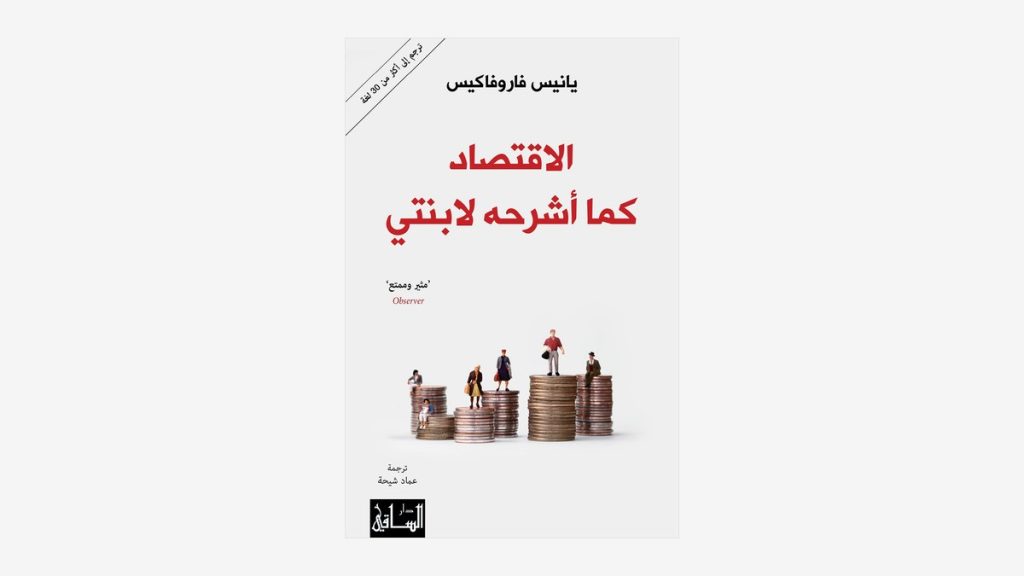
يكتب يانيس فاروفاكيس لابنته كسينيا، البعيدة عنه في أستراليا، كتاباً عن الاقتصاد بلا حواشٍ ولا رطانة، ويتجنّب فيه كلمة «الرأسمالية» ليقول «مجتمع السوق». يروي كيف ولّد الفائض الزراعي اللامساواة، وكيف صار الدَّين والربح والمصارف محرّك مجتمع السوق، ثم يحاجّ بأن المال والآلات والبيئة لا تنفصل عن السياسة، وبأن الاقتصاد أهم من أن يُترك للاقتصاديين.
 ↗ صفحة الكتاب الصوتي لدى ناشره
الخلاصة في دقائق
إن لم يتّسع وقتك إلا لهذه البطاقة، ففيها حجّة الكتاب.
يكتب يانيس فاروفاكيس لابنته كسينيا لأنه يرى أن الاقتصاد أهم من أن يُترك للاقتصاديين، وأن الديمقراطية تحتاج مواطنين يتكلمون فيه بثقة. ويردّ على سؤالها عن اللامساواة بأن الزراعة أنتجت فائضاً يمكن خزنه، ومنه وُلد الدَّين والمال والدولة، ثم أيديولوجيا تُقنع الأغلبية بأن القسمة الجائرة طبيعية. بهذا يفسّر اللامساواة داخل كل مجتمع، أما بين المجتمعات فقد قرّرت الجغرافيا، لا الذكاء ولا الجينات، أين نشأ الفائض.
ثم يروي كيف تحوّل «مجتمعٌ فيه أسواق» إلى «مجتمع السوق» حين صارت قوة العمل والأرض سلعاً، وانتصرت القيمة التبادلية على الاستعمالية. ويحاجّ بأن الانقلاب الكبير جعل صاحب المشروع يقترض قبل أن ينتج، فصار الربح شرطاً لبقائه. ويشرح أن المصارف تخلق المال من العدم وتُفرط في إقراضه حتى تنهار فتنقذها الدولة، وأن الدين العام المذموم «شبح في الآلة» يُبقي مجتمع السوق دائراً. ثم يبيّن أن توقعات جماعية تحقّق ذاتها تحكم سوقَي العمل والمال، لذلك قد لا يُنهي خفضُ الأجور أو الفائدة الركودَ.
ويطبّق تشخيصه على الآلات والمال والكوكب، فيدعو إلى إضفاء الطابع الديمقراطي عليها. ويقترح أن يملك الجميع حصة من آلات كل شركة وأرباحها، وأن يُدار المال وموارد الكوكب بصوت واحد لكل إنسان لا بوزن الثروة، ويقرّ بأن ذلك عسير لكنه قد لا يكون مستحيلاً. ويختم بدعوة ابنته إلى قفزة أرخميدية ترى بها مجتمعها من خارجه بين حين وآخر، وإلى حريةٍ مصدرها فهم الاقتصاد ومعرفة مَن يفعل ماذا بمَن.
تدلّ الأوقات بين معقوفين، مثل [1:12:24]، على موضع الفكرة بالساعات والدقائق والثواني في تسجيل الكتاب الصوتي الإنجليزي، لا على صفحة من الطبعة العربية. وتحمل الفصول عناوين الطبعة العربية نفسها. أما الصندوق الوحيد الموسوم «إضافة من كلود» فليس من الكتاب.
عن المؤلف والطبعات
يانيس فاروفاكيس اقتصاديّ يوناني وُلد في أثينا عام 1961، وتلقّى تعليمه الجامعي في بريطانيا. ثم درّس الاقتصاد في جامعة سيدني من 1988 إلى 2000، والتحق في ذلك العام بجامعة أثينا، ولا يزال أستاذاً فيها. وفي يناير 2015 انتُخب نائباً عن حزب سيريزا، وتولّى وزارة المالية من 27 يناير حتى استقالته في 6 يوليو، أي في اليوم التالي للاستفتاء على خطة الإنقاذ. ثم عاد إلى البرلمان بين 2019 و2023.
وكتب هذا الكتاب باليونانية تلبيةً لدعوةٍ من ناشره، ثم صدر عام 2014 عن دار باتاكيس (Patakis) في أثينا. أما عام 2013 الذي تذكره مقدمته فهو عام الدعوة، لا عام الصدور. وظهرت أولى طبعاته الإنجليزية عام 2017 عن دار بودلي هيد (The Bodley Head)، بترجمةٍ اشترك فيها جاكوب مو (Jacob Moe) مع المؤلف، وفي العام نفسه صدر كتابه الصوتي. ثم نشرت دار الساقي طبعته العربية عام 2020 بترجمة عماد شيحة، وتقع في 208 صفحات بحسب الناشر. ولم يتسنَّ التحقّق من اللغة التي نُقلت عنها هذه الترجمة. وكل ما في هذا الصندوق موثّق في المصادر أدناه، إلا خبر الدعوة، فمصدره مقدمة الكتاب نفسه.
المصادر: daralsaqi.com (صفحة الطبعة العربية) · biblionet.gr (سجلّ الطبعة اليونانية) · openlibrary.org (الطبعة الإنجليزية) · penguin.co.nz (الكتاب الصوتي) · news.utexas.edu (28 يناير 2015) · aljazeera.com (6 يوليو 2015) · abc.net.au (20 فبراير 2015) · en.wikipedia.org.
مقدمة · لماذا لا يُترك الاقتصاد للاقتصاديين
لماذا كتب أستاذُ اقتصاد كتاباً عن الاقتصاد لابنته، ولماذا تجنّب فيه كلمة «الرأسمالية»؟ — [0:00:08 – 0:07:55]
وُلد الكتاب من دعوة تلقّاها فاروفاكيس من ناشره اليوناني عام 2013 ليكلّم الشباب عن الاقتصاد. وكتبه لأنه يرى أن الاقتصاد أهم من أن يُترك للاقتصاديين، مع أنه يقرّ بحكمة ترك بناء الجسور للمهندسين والجراحة للجرّاح، وبقيمة كتب العلوم المبسّطة.
وقد آمن دائماً، بحكم تدريسه الاقتصاد، بأن من لا يستطيع شرحه بلغة يفهمها الشباب لا يفهمه هو نفسه. ثم لاحظ في مهنته مفارقة طريفة زادته اقتناعاً، إذ كلما صارت نماذج الاقتصاد أكثر علمية ابتعدت عن الاقتصاد الفعلي، في حين تزيدنا الفيزياء والهندسة وسائر العلوم الحقيقية فهماً للطبيعة كلما ازدادت دقّةً [0:01:10]. لذلك أراد لكتابه أن يفعل عكس تبسيط علم الاقتصاد. ويرجو، إن بلغ غايته، أن يمسك القارئ بزمام الاقتصاد، ويدرك أن فهمه يقتضي أن يعرف لماذا يخطئ الاقتصاديون دائماً تقريباً، وقد نصّبوا أنفسهم خبراء.
والرهان عنده ديمقراطي، فلا يقوم مجتمع صالح ولا ديمقراطية حقيقية ما لم يُتَح لكل إنسان أن يتكلم في الاقتصاد بثقة، لأن تقلّباته تصوغ حياتنا وآمالنا، وقواه تستخفّ بديمقراطياتنا. وإذا انقدنا لخبراء الاقتصاد وضعنا في أيديهم كل قرار ذي شأن.
كتابٌ إلى ابنةٍ غائبة
وللكتاب سبب شخصي، فابنته كسينيا تكاد تغيب عن حياته، إذ تعيش في أستراليا وهو في اليونان. لذلك أسعده أن يكتب كأنه يحدّثها بما لم يتّسع له وقتهما.
كتبه بلغته الأم في بيته بجزيرة أيجينا [0:03:10]، بلا خطة ولا حواشٍ، وأنجزه في تسعة أيام.
وبعد عام من صدوره دفعه انهيار الاقتصادين اليوناني والأوروبي إلى منصب وزاري هوى به إلى عالم غريب، وسط صدام هائل بين مَن انتخبوه وأوليغارشية (oligarchy) عالمية.
مجتمع السوق بدل الرأسمالية
ويرى أن جدالاتنا اليومية تغفل عن الحقيقة الضخمة التي يتحاشى الجميع ذكرها، أي الرأسمالية، وأنها الوحش المتحكّم في حياتنا، فلا نفهم شيئاً ما لم نواجهها. ومع ذلك لا ترد كلمتا رأس المال والرأسمالية في الكتاب [0:05:35]، لا لخطأ يراه فيهما، بل لأن ما تراكم حولهما من دلالات يعيق إيضاح جوهر ما يشرحه. لذلك يستعمل «مجتمع السوق» (market society) بدل الرأسمالية، والآلات و«وسائل الإنتاج المُنتَجة» (produced means of production) بدل رأس المال.
ويذكر ممن تأثّر بهم دايموند (Jared Diamond) وتيتموس (Richard Titmuss) وبولانيي (Karl Polanyi) وهايلبرونر (Robert Heilbroner) وآتوود (Margaret Atwood)، ثم ماركس وكينز وبريشت (Bertolt Brecht) وتراجيديّي أثينا.
الفصل الأول · لماذا كل هذا القدر من اللامساواة؟ الفائض الذي صنع الغلبة
لماذا غزا البريطانيون أستراليا ولم يغزُ سكانُها الأصليون إنجلترا، ولماذا يتفاوت الناس داخل المجتمع الواحد؟ — [0:07:59 – 0:36:42]
ويدخل فاروفاكيس في صلب الكتاب من مشهد المواليد، فهم يأتون جميعاً بلا ثياب، ثم يكسو المجتمعُ قلّةً منهم ثياباً باهظة ويترك أكثرهم في الأسمال. ولمّا سألته كسينيا عن سرّ هذه اللامساواة، حاول الجواب بسؤال مختلف قليلاً: لماذا لم ينزل محاربون من السكان الأصليين في أستراليا على شاطئ دوفر؟
ويحذّرها من جوابين كسولين، هما أن الأوروبيين كانوا أذكى، أو أن السكان الأصليين كانوا أطيب من أن يغزوا أحداً. فكلاهما في رأيه يزعم فرقاً فطرياً بين الشعبين دون أن يفسّره، وليس أنجع من هذه الحجج في تسويغ جرائم كالتي ارتُكبت بحق السكان الأصليين. لذلك يطلب منها أن تُسكتها، فقد تنبت في رأسها هي.
السوق شيء والاقتصاد شيء آخر
يرى أن السوق مكانٌ للتبادل عرفه البشر قبل الزراعة، أما الاقتصاد فيتجاوز الجمع والصيد إلى إنتاج طعام وأدوات ما كانت لتوجد لولا عمل الإنسان. وقد ولّده النطقُ أولاً، ثم الزراعةُ قبل 12 ألف سنة. ولم تكن الزراعة لحظة فرح، إذ لجأ إليها الناس جائعين بعد أن أفنوا معظم طرائدهم وتكاثروا.
ومع الزراعة ظهر الفائض (surplus)، أي ما يبقى من المحصول بعد أن يأكل الناس ويحفظوا البذور [0:15:43]. ولم يستطع الصيادون وجامعو الثمار أن يراكموا فائضاً، لأن ما يصيدونه ويجمعونه، كالسمك والموز، يفسد سريعاً، بخلاف الحبوب.
الكتابة والدَّين والمال والدولة
ينقل عن علماء الآثار أن الكتابة وُلدت في بلاد الرافدين لتوثيق الحبوب المودعة في مخزن مشترك، كإيصالٍ بما أودعه السيد نابوك. وتُظهر المكتشفات عمّالاً تقاضوا أجورهم أصدافاً نُقش عليها ما يدين لهم به الحكّام من حبوب كثيراً ما لم تُحصد بعد. فكانت الصدفة دَيناً، ومالاً أيضاً لأن العامل يبادلها بما ينتجه غيره.
ولا تعمل هذه الأصداف إلا إذا وثق حاملها، كنابوك، ومن يقبلها منه بأن المخزن سيفي بما عليه [0:20:26]. ومن هنا جاءت الكلمة الإنجليزية الدالّة على الائتمان (credit)، إذ يعني أصلها اللاتيني التصديق. ولكي تدوم الثقة لزم ضامنٌ قويّ، هو الحاكم أولاً ثم سلطةٌ تشبه الدولة تفي بالدَّين ولو مات الحاكم.
ويرى أن الدول الزراعية كلها وزّعت فائضها بتفاوت فاحش، لكن الفلاحين الفقراء كانوا قادرين، لو اتّحدوا، على إسقاط حكّامهم. لذلك احتاج الحكّام إلى أيديولوجيا تُقنع الأغلبية بأن الحكم حقٌّ لهم وحدهم. وتولّى طقوسَها رجالُ الدين، فعاشوا على الفائض وحمَوا سلطة الحاكم عليه، ولهذا ظلّوا هم والدولة شيئاً واحداً آلاف السنين.
وولّد الفائض كذلك الجراثيم في مخازن تحيط بها الحشود والحيوانات، فمات كثيرون ثم صار أحفادهم أكثر مقاومة لها. فلمّا حملها الأوروبيون إلى شعوب لم تعرف الزراعة، مات بها من السكان الأصليين في أستراليا وأمريكا أكثر بكثير ممن ماتوا بأسلحتهم.
ثم يعود إلى سؤاله ليبيّن أن أرض أوراسيا ومناخها رسّخا الزراعة والفائض، فقامت دول تقود جيوشاً مسلّحة بالتكنولوجيا والجراثيم. أما سكان أستراليا فانفردوا بخيرات قارة بحجم أوروبا، فلم يحتاجوا إلى الزراعة، ولم يملكوا ما يصدّون به تلك الجيوش.
وإذا لم تُخرج أفريقيا دولةً تهدّد أوروبا، فليس لأن أهلها أقل قدرة، بل لأنها تمتد من الشمال إلى الجنوب عبر مناخات شتّى بعضها قاسٍ، فعسُر انتقال محاصيلها. أما أوراسيا فتمتد من الغرب إلى الشرق، فانتشر القمح من لشبونة إلى شنغهاي في رقعة زراعية واحدة صلحت للغزو. ويخلص، في تبسيط يراه دقيقاً، إلى أن شكل القارات وموقعها حسما الأمر، لا الجينات ولا الذكاء.
نوع آخر من اللامساواة
غير أن الجغرافيا لا تفسّر اللامساواة داخل المجتمع الواحد. فمراكمة الفائض ركّزت السلطة، ومن ثَمّ الثروة، في يد قلّة حاكمة هي الأوليغارشية [0:32:16]. وتُديم هذه العملية نفسها، لأن من يملك الفائض ينال سلطة يكسب بها حصة أكبر.
ويبيّن أخيراً أن الأيديولوجيا تُقنع الميسورين أيضاً باستحقاق ما عندهم. فكسينيا تتألّم لأطفال ينامون جائعين، وتوقن مع ذلك، ككل الأطفال، أن ألعابها وبيتها حقٌّ لها، إذ يخلط العقل عفوياً، في رأيه، بين الامتلاك والاستحقاق.
ولا يريدها أن تُفرط في القسوة على الميسورين، إذ يسهل على المرء أن يرى ترتيب الأمور منطقياً وطبيعياً وعادلاً، ولا سيما حين يخدمه. أما قسوتها فلتوجّهها إلى ميلها هي إلى التسليم باللامساواة. ويوصيها بأن تُبقي غضبها حيّاً وتديره بتعقّل وحسّ تكتيكي، لتصرفه حين يحين الوقت فيما يجعل العالم منطقياً وطبيعياً وعادلاً حقاً.
الفصل الثاني · ولادة مجتمع السوق: حين غلبت القيمة التبادلية
كيف تحوّلت مجتمعات فيها أسواق إلى مجتمعات سوق يكاد كل شيء فيها يحمل سعراً؟ — [0:36:45 – 1:12:18]
ومن جذور اللامساواة ينتقل فاروفاكيس إلى سؤال القيمة.
في مساء صيفي على جزيرة أيجينا يفسد على ابنته متعة الغروب بشرح علمي، ويُضحك الصبي باريس الجميعَ بنكاته. ثم يرجو القبطان كوستاس كسينيا أن تغوص ليلاً لتمرّر حبلاً في سلسلة مرساته العالقة، فتقفز فخورةً بدور البطلة.
نوعان من القيمة
يسمّي هذه اللحظات خيرات (goods). أما السلعة (commodity) فخيرٌ يُنتَج ليُباع، ويزيد عرضها كلما ارتفع سعرها. أما تلك اللحظات فقد يفسدها المال، فلو تقاضى باريس أجراً عن كل نكتة لربما فقد حسّ الدعابة.
فإن احترف باريس الكوميديا صارت نكاته سلعاً، يعكس سعرُها قيمتها التبادلية (exchange value)، أي ما تساويه مقابل غيرها. أما قبل ذلك فلها قيمة من نوع آخر يقترح أن يسمّيها القيمة الاستعمالية (experiential value)، فالغطسة والغروب والنكتة قد تحمل منها الكثير بلا أي قيمة تبادلية [0:41:15]. ومع ذلك كثيراً ما تُقاس كل قيمة، عند الاقتصاديين على الأقل، كأنها تبادلية، فيُعدّ ما لا سعر له في الغالب بلا قيمة.
ويكشف التبرّعُ بالدم هذا الخلط، إذ لوحظ أن البلدان التي تدفع للمتبرعين تجمع منه أقل بكثير من بلدان التطوّع، ويبدو أن المال يُنفّر منهم أكثر مما يجتذب، لأنه يحوّل العطاء صفقةً تُفسد متعة المتبرّع ولا يعوّضه المبلغ عنها.
تسليع كل شيء
فكيف انتصرت القيمة التبادلية؟ يفرّق أولاً بين تبادلٍ شخصي داخل الأسرة وتبادل السوق العابر البارد. ولأن الإنتاج جرى معظم التاريخ داخل البيت، دلّت كلمة «الاقتصاد» أصلاً على قواعد تدبير البيت. ولا يعني هذا عنده بالضرورة أن ذلك العالم كان أفضل، فقد حُمّلت فيه النساء أسوأ الأعمال، وكدح الأقنان والعبيد.
وخلال القرنين أو الثلاثة الأخيرة زحف التسليع إلى كل شيء. ولأن معظم ما ننتجه ونستهلكه صار يُصنع خارج البيت، يرى أن «أغورانوميا» (agoranomy)، أي قوانين السوق، ربما كانت اسماً أدقّ من «الاقتصاد».
وحين تنازع أياكس وأوديسيوس على سلاح أخيل، كما يروي أوفيد، لم يخطر لأحد أن يُحسم الأمر بمزاد، لأن المزاد في رأيه كان سيُهين الفائز. فما طلبه الرجلان لم يكن القيمة التبادلية للسلاح، بل مكانة من يحكم له رفاقه بأنه أهلٌ له. فالقدماء عاشوا في مجتمعٍ فيه أسواق (society with markets) لم يحكمه منطق السوق، أما نحن فنعيش في مجتمع السوق.
نشأة مجتمعات السوق
ويحتاج الإنتاج عنده إلى ثلاثة عوامل إنتاج (factors of production)، هي وسائل الإنتاج المُنتَجة كالأدوات، والأرض، وقوة العمل. ولم يكن أيٌّ منها سلعة في الإقطاع، فالأقنان لم يبيعوا عملهم، بل أخذ السيد حصة كبيرة من محصولهم بالقوة، وكان بيع أرض الأجداد شناعة.
وبدأ تحوّلها إلى سلع حين فتحت الملاحة المتطوّرة طرق التجارة العالمية. ويصوّر ذلك بسفنٍ تحمل صوف إنجلترا فتبادله بالحرير، والحرير بالسيوف، والسيوف بالتوابل، ثم تعود فتبادل التوابل بصوف أكثر بكثير مما حملته. هكذا صار للصوف سعر عالمي، واغتنى التجار حتى قرّر ملّاك الأراضي أن يلحقوا بمن كانوا يزدرونهم، فسيّجوا ضياعهم وأحلّوا الخراف محلّ الأقنان. وتلك هي التسييجات (enclosures) التي شهدتها بريطانيا، ويعدّها من أعنف ما عرفه البشر من تحوّلات، إذ طُرد فيها أكثر من 70% من الفلاحين، فكانت قاسيةً وناجعةً جداً في آن [0:59:59].
وبطرد الأقنان صارت قوة العمل والأرض سلعتين. فمن يُشرَّد سيطرق على الأرجح أول باب عارضاً أي عمل مقابل الخبز والمأوى، وهكذا تولد سوق العمل. لكن مشتري العمل ظلّوا قلة عقوداً، فعمّت المجاعة والمرض إلى أن ظهرت المصانع الأولى. وصارت الأرض تؤجَّر بريع يتبع سعر الصوف، فغدا بعض الأقنان السابقين مستأجرين يخشون تقلّبه. ثم أضافت محرّكاتُ جيمس وات البخارية الحرارةَ إلى ما هيّأته التسييجات، فبدأت الثورة الصناعية.
التناقض الكبير
ويرى أن انتصار القيمة التبادلية جعل العالم أفضل وأسوأ معاً [1:07:49]. فقد تخلّص الأقنان من قهر القنانة، وعرف الناس معنى جديداً للحرية، وأمكن إلغاء العبودية، وغدت التقنية قادرة على سدّ حاجة الجميع. لكن الحرية حملت معها قيوداً جديدة، فالأجير لا يأمن عيشه إلا ما دام يجد من يشتري عمله، ولا أرض له تقيه التشرّد. وكدح العمال أكثر من أربع عشرة ساعة يومياً، وقُيّد أطفال إلى المحرّكات كما روت الصحف، وظلّ الإنتاج في المستعمرات قائماً على عبيد خُطفوا من أفريقيا وبيعوا. ويسمّي تجاور الثروة الهائلة والعذاب التناقض الكبير (the Great Contradiction)، وبه تفاقمت اللامساواة التي رأيناها في الفصل الأول تفاقماً مذهلاً.
وهكذا انقلب المال من وسيلة إلى غاية. ويردّ ذلك إلى دافع الربح (profit motive)، وهو في رأيه اختراع بشري لا جزء من طبيعة البشر. فالجشع من طبعهم حقاً، أما الربح فشيء مختلف لم يصبح له وزن كبير في التاريخ إلا في زمن غير بعيد نسبياً. ثم يربط صعوده بدورٍ جديد صار يؤدّيه الدَّين.
الفصل الثالث · زواج الدَّين والربح: الانقلاب الكبير
لماذا صار الربح غايةً لا يعيش صاحب المشروع بدونها، وما دور الدَّين في ذلك؟ — [1:12:22 – 1:31:00]
ولشرح هذا الدور يقول فاروفاكيس لابنته إن حكاية فاوست عند مارلو لا تليق بالأطفال لأنها عن الدَّين.
يعرض الشيطان مفيستوفيليس على فاوست 24 سنة من السلطة والمتعة مقابل روحه، فيوقّع العقد بدمه. فلما دنا الأجل غرق فاوست في اليأس والندم، مدركاً فداحة الفائدة المستحقة.
والدَّين قديم، فالجار يردّ لجاره دَين المعروف دون عقد. أما الدَّين الحديث فيضيف العقد الذي يجعل الوعد التزاماً قانونياً، والفائدة التي يدفعها المدين غالباً فوق القرض ربحاً للمُقرض. ويرى أن المسرحية سجّلت قلق الناس في لحظة مؤلمة تحالف فيها الدَّين والربح، وليس صدفةً عنده أنها كُتبت في القرن السادس عشر، حين بدأت القيمة التبادلية تسود شيئاً فشيئاً.
الانقلاب الكبير
في الإقطاع جاء الإنتاج أولاً، ثم التوزيع إذ يأخذ السيد حصته ولو بالقوة، ثم الدَّين والائتمان. فلما صارت الأرض وقوة العمل سلعتين وقع الانقلاب الكبير (the Great Reversal)، فصار التوزيع يسبق الإنتاج [1:17:52].
فالقنّ المطرود من أرضه صار صاحب مشروع صغير، يستأجر أرضاً ويشغّل مطرودين مثله لينتج الصوف للبيع. ولأنه احتاج المال قبل البيع اقترض بفائدة، فجاء الدَّين أولاً. وتحدّدت الأجور والريع وأثمان المواد قبل الإنتاج، فلم يجهل نصيبه إلا صاحب المشروع.
بذلك صار الدَّين زيت الإنتاج، والربح شرطاً للبقاء. فلو هبط سعر الصوف أو قلّصت كارثةٌ المحصول، لجاع صاحب المشروع وغدا مثل فاوست عبداً لديون غير قابلة للسداد.
الثروة والمنافسة
ولأن كل من يقبل الدَّين قد يصير صاحب مشروع، اشتبك الجميع في منافسة حياة أو موت. فالسعر الأدنى يجتذب أكثر الزبائن، والأجر الأدنى يجلب المكسب الأكبر، ويكسب السباقين كليهما من يرفع إنتاجية العمل أسرع. فأقبلوا على التقنيات الجديدة، وهكذا تقريباً انتشر محرّك وات البخاري.
لكن الآلات تُشترى غالباً بدَين إضافي، فتشتدّ المنافسة وتُضغط الأجور، وتنمو ثروة هائلة لقلّة بجوار ديون متضخمة وفقر يتعمّق. فيخلص إلى أن ما أدار الثورة الصناعية حقاً هو الدَّين لا الفحم [1:24:07]. ويجعل مكانته في مجتمع السوق كمكانة الجحيم في المسيحية، فلا أحد يرغب فيه، لكن لا غنى عنه.
فاوست في مواجهة سكروج
ثم يقارن فاوست مارلو بفاوست غوته، الذي كُتب مطلع القرن التاسع عشر. فالأول ينتهي إلى الجحيم، أما الثاني فيدرك خطأه ويعمل للصالح العام، فتنقذه الملائكة وينال الخلاص حين يأتي مفيستوفيليس ليقبض فائدته.
ويقترح تفسيراً ممكناً للفرق، فأهل المال يسمّون سداد الدَّين وفائدته بالكلمة نفسها التي تعني الخلاص (redemption). ولا يرى ذلك صدفة، فالدَّين مسألة دينية قديمة. وكانت المسيحية أيام مارلو تسمّي الفائدة الربا وتعدّها إثماً، فطالب الجمهور بعقاب فاوست. لكنه يحاجّ بأن الثورة الصناعية ما كانت لتقع لولا رفع هذا التحريم، وبأن البروتستانت أسهموا في رفعه إسهاماً حاسماً، إذ جعلوا التاجرَ صاحبَ المشروع بطل كنيستهم، وعدّوا الفائدة والربح من خطة الله. فصار أوروبيو زمن غوته أرحم كثيراً بالمدين ما دام يسدّد القرض وفائدته.
ويرى أن فاوست غوته، بمعنى ما، عكس سكروج في «ترنيمة عيد الميلاد» (A Christmas Carol) لديكنز. فسكروج يكنز الفوائد ويقتّر حتى يُريه شبحٌ موتَه فينفق مستمتعاً بالحياة، بينما يستمتع فاوست 24 سنة ويدفع لقاءها فائدة باهظة. وفاوست في رأيه أنسب لمجتمع السوق، إذ يتوقّف اقتصاده تماماً لو كفّ الجميع عن الاقتراض والإنفاق مثل سكروج.
الفصل الرابع · سحر الأعمال المصرفية الأسود: مالٌ من العدم ودَينٌ عام لا غنى عنه
كيف يفقد مجتمع السوق فجأة قدرته على تدوير المال، وما دور المصرفيين والدولة والدين العام في ذلك؟ — [1:31:04 – 2:10:45]
ثم ينتقل فاروفاكيس إلى ما يُبقي هذا الاقتصاد حياً، فهو في رأيه لا يعيش إلا بإعادة التدوير (recycling)، إذ ينفق العمال أجورهم لدى الشركات، وتنفق الشركات إيراداتها على الأجور. فإذا تعطّلت عمّ البؤس، كما في اليونان وهو يكتب، وفي ثلاثينيات القرن العشرين حين أُتلف الطعام والملايين جياع. ويضع المصرفيَّ في قلب هذا العطب، فمنذ كفّ الربا عن أن يُعدّ خطيئة، كما رأينا في الفصل الثالث، صارت للعمل المصرفي قوّتان خارقتان: أن يطلق إعادة تدوير هائلة، وأن يوقفها فجأةً وقفاً كارثياً.
أصحاب المشاريع مسافرون عبر الزمن
ويشرح ذلك بمشهد من الخيال العلمي، فصاحب المشروع المقترض يمدّ يده عبر غشاء يفصل الحاضر عن المستقبل، ويجلب منه قيمة تبادلية ينفقها الآن. فإن صنع المستقبل الذي توقّعه سدّد دينه، وإن أخطأ أخلّ بالخط الزمني وأفلس. ويجعل المصرفيين وكلاء هذا السفر.
تطلب ميريام، صانعة الدراجات، قرضاً قدره 500,000 جنيه إسترليني لخمس سنوات. فلا يأخذ المصرفي المبلغ من الودائع، بل يكتبه أمام اسمها في سجلّه الإلكتروني، فيولد المبلغ من العدم [1:36:49]. وكأن المصرفي مكّن ميريام اليوم من أخذه من ميريام الناجحة بعد خمس سنوات، ونجاحها ثمرة استثمارها ذلك المبلغ في مشروعها.
الانهيار
ويقول إن العمل المصرفي فقد صوابه في عشرينيات القرن العشرين أو قرابة ذلك. فقد تضخّم الدَّين مع نموّ الاقتصادات بعد الثورة الصناعية، وصار المصرفيون يبيعون القروض حصصاً لمستثمرين تنتقل إليهم الخسارة إن أفلس المقترض. وكلما نقلوا من المستقبل قيمة أكبر زادت أرباحهم، وزاد خطر الإخلال بالخط الزمني.
ويغري الاستقرارُ الظاهر المصرفيين بمزيد من الإقراض، حتى تنقلب تعاويذهم، دون أن يلحظوا تقريباً، إلى سحر أسود. فتتضخّم القروض فوق طاقة الاقتصاد، وتعجز الأرباح عن سدادها، فيقع الانهيار. ويتبعه التهافت على سحب الودائع (bank run)، ثم يأتي الركود فتنقلب إعادة التدوير إلى الوراء. ويستخلص أن ما يولّد الربح يولّد الانهيار أيضاً، وأن عقاب غطرسة المصرفيين يصيب الفقراء والأبرياء أكثر من سواهم.
ولا يوقف هذه الدوامة عنده إلا الدولة، إذ يُقرض المصرف المركزي المصارفَ كي تبقى مفتوحة، بمال يخلقه من العدم أيضاً. ويمنحه دور المُقرض الأخير (lender of last resort) سلطة نظرية على المصارف، لكن الواقع في رأيه لعبة قط وفأر يفلت فيها المصرفيون في كل مرة تقريباً. وليس خلق المال من العدم جديداً، فأصداف السيد نابوك في الفصل الأول كانت أرقاماً تضمنها الدولة، أما الجديد فأن يشارك مصرفيو القطاع الخاص الدولةَ هذا الامتياز.
ولا يُعاقَب المصرفيون حين تُنقَذ مصارفهم، فالسياسيون يُنتخبون في أغلب الأحيان بمعونة تبرّعات المصرفيين، ومن يراقبونهم كثيراً ما يلتحقون بالعمل لديهم. لذلك لا يجدون سبباً للحذر، ولا يتمهّلون بعد الانهيار إلا حيناً. وهنا يصل إلى المفارقة الجوهرية [1:53:48]: فالاقتصاد يدور بالدَّين الذي يقدّمه المصرفيون، لذلك يمكن تقليص عدم الاستقرار الذي يُحدثونه دون القضاء عليه تماماً، وكلما نجحت الدولة في صنع الاستقرار صار خلق الدَّين أكثر أماناً، فاندفع المصرفيون أكثر وزاد عدم الاستقرار.
أما الديون غير القابلة للسداد فلا علاج لها عنده إلا شطبها، وهي مسألة عملية لا أخلاقية. فمجتمعات السوق لم تنجُ من أزمات القرن التاسع عشر إلا حين أقرّ القانون المسؤولية المحدودة (limited liability)، فصارت الشركة المفلسة لا تخسر إلا أملاكها، ويسلم بيت صاحبها ومدّخراته. ولأن المصرفيين يعارضون الشطب بشدة، لا يرى مخرجاً إلا أن يطالب المواطنون الدولة بشطب منسّق، فالسياسة وحدها تُنعش الاقتصاد.
الطفيلي الضروري
وينبّه ابنته إلى نفاق، فالأغنياء يميلون إلى مهاجمة الدولة في الرخاء بوصفها طفيلياً يعيش على الضرائب، ثم يستغيثون بها في انهيار صنعوه. فثروتهم في رأيه قامت على الدولة، إذ قمع جنود الملك تمرّد الفلاحين حين طرد ملّاك الأرض الأقنان، وبمال الدولة بُنيت الطرق والمدارس. فهي في تشبيهه بوليصة تأمين للأغنياء يتهرّبون من أقساطها، والثروة كلها عنده تُنتَج جماعياً لا على يد أفراد أبطال.
الدين العام: شبح في الآلة
وقد ظلت ضرائب الأقوياء عادةً أقلّ مما تنفقه الدولة لأجلهم، وظلت أجور العمال في معظم التاريخ بالكاد تكفي أسرهم، فسُدّت الفجوة بالدين العام الذي يموّله المصرفيون بمال يخلقونه من العدم. فالحكومة تقترض مثلاً 100 مليون جنيه لعشر سنوات، مقابل سند حكومي تتعهّد فيه بالسداد وبفائدة سنوية قدرها 5 ملايين جنيه. ويرى أن كثرة الدين العام مشكلة وقلّته مشكلة أيضاً، فهو عنده شريط مطاطي يتمدّد في الشدة كي لا ينقطع النظام.
ويستعير اسماً أطلقه الفلاسفة والكتّاب على سرٍّ فينا، هو «شبح في الآلة» (ghost in the machine)، فيرى الدين العام شبحاً يُبقي آلة مجتمع السوق دائرة، أحسنت أم أساءت [2:09:06]. ويقرّ، إنصافاً، بأن المصرفيين ليسوا إلا مضخِّمين لصنع الثروة وتدميرها، وبأن جذور عدم الاستقرار تكمن في سلعتين غريبتين، هما قوة العمل والمال.
الفصل الخامس · سوقان أوديبيان: العمل والمال ونبوءات تحقّق ذاتها
هل يكفي خفض الأجور وخفض الفائدة لإخراج الاقتصاد من الركود؟ — [2:10:48 – 2:35:25]
ويبدأ فاروفاكيس بأولى السلعتين الغريبتين، قوة العمل، فيحكي عن صديقه فاسيلي، الذي لم يجد عملاً عام 1989 رغم الدكتوراه في الاقتصاد، فكتب إليه أن أسوأ المصائر أن يعرض المرء روحه يائساً على الشيطان فيردّها. وهذا في رأيه حال ملايين العاطلين الذين يرضون بأجر زهيد فلا يوظّفهم أحد.
منكرو البطالة
أما من يسمّيهم منكري البطالة (unemployment deniers) فيبنون رأيهم على أن العجز عن البيع غير العجز عن نيل السعر المطلوب، فلا بطالة عندهم بل عمّال يرفضون أجراً منخفضاً بما يكفي. ويراه فاروفاكيس لؤماً شديداً يلوم الضحية، لكنه يتجاوزه ليكشف خلله العملي. فالبيوت تُباع كلها في النهاية إن هبطت أسعارها إلى الحضيض، أما العاطلون فلو رضوا جميعاً بأجر زهيد لقلّت الوظائف أكثر على الأرجح.
الظبي والأرانب
ويفسّر ذلك بحكاية روسو عن اصطياد الظبي (stag hunt) [2:14:57]. يحاول صيادون تطويق ظبي يُطعم القبيلة أياماً، وتفشل خطتهم إن انشغل أحدهم بالأرانب السهلة، مع أن الأرنب لا يكفي أسرة إلا وجبة. فإذا وثق كل صياد بثبات رفاقه ثبت معهم، وإن خشي صيادٌ واحد أن يتعثّر أحدهم انصرف إلى الأرانب وتبعه الباقون.
وقوة العمل، خلافاً للبيت، لا يريدها أحد لذاتها، فماريا لا توظّف فاسيلي إلا إذا وثقت ببيع ما يضيفه من ثلاجات بأكثر من كلفته. فإن تفاءل أصحاب المشاريع جميعاً وظّفوا فزادت الدخول وصدق تفاؤلهم، وإن تشاءموا صدق تشاؤمهم.
تقرأ ماريا في ليلة أرق أن قادة النقابات يقبلون خفض الأجور 20% لخلق الوظائف [2:21:29]. ولا يشكّ منكرو البطالة في أنها ستفرح وتوظّف فاسيلي صباحاً، لكن خفض الأجور في كل مكان يُضعف قدرة الزبائن على الدفع. لذلك الأرجح أن تراه نذير سوء، فتتوقع أن تهتزّ ثقة أصحاب المشاريع الآخرين فيكفّوا عن التوظيف ويقلّ الزبائن. فتمتنع، وقد تنتهي كصيادي روسو إلى الأرانب وإن فضّلت الظبي. وهكذا قد لا يجلب خفض الأجور الشامل أي توظيف، بل ربما جلب التسريح.
ويرى في سوق المال (money market) شيطاناً آخر كالذي في سوق العمل. فمن يرون المال سلعة كغيرها يعدّون الفائدة ثمن استئجاره، فكلما انخفضت زاد اقتراض أمثال ميريام، ولذلك يحاول المصرف المركزي خفضها في الأزمات. وهؤلاء في رأيه غالباً منكرو البطالة أنفسهم، ومنطقهم معيب بالقدر نفسه. ولو قرأت ماريا ليلتها عن خفض كبير وشيك للفائدة، لربما رأته علامة يأس وتركت الظبي.
عقدة أوديب في سوقَي العمل والمال
ثم يروي مسرحية سوفوكليس «أوديب ملكاً» (Oedipus Rex). فلولا النبوءات ما أمر لايوس بقتل ابنه طفلاً، ولا فرّ أوديب من كورنثة حيث نشأ، ولا قتل أباه وتزوج أمه دون أن يعرفهما. وكذلك يفعل أصحاب المشاريع، فحين يرون الأجور والفائدة متدنية أو هابطة يتوقعون نشاطاً أضعف أو راكداً، فلا يقترضون ولا يوظّفون، فتبقى متدنية أو تهبط أكثر [2:32:03]. هكذا تصدق نبوءتهم ويتغذّى تشاؤمهم على ذاته بدل أن يتعافى الاقتصاد، وتلك هي النبوءة التي تحقّق ذاتها (self-fulfilling prophecy).
العنصر البشري
ويشبّه الاقتصاد بمحرّك شرارته قوة العمل وزيته المال، ويأسى لأن كليهما يستطيع إدارته وإيقافه. وترويض هذين الشيطانين لن يكون سهلاً، لأنهما مما يجعلنا بشراً، فنحن نتوقع تصرفات غيرنا، ونادراً ما نقاوم دافع حماية أنفسنا العاجل وإن أضرّ بنا. والتوفيق بين سلوك البشر المضطرب وسلاسة آلة اقتصادية مثالية يحتاج في تقديره إلى إعادة تنظيم جذري للمجتمع كالانقلاب الكبير. أما تحوّلنا الجذري الراهن إلى الأتمتة فيبدو أنه يبتعد عن الحل، لأنه يريد إحلال الآلة محلّ الإنسان لا التوفيق بينهما، وإن كانت الروح الإنسانية، أكبر ضحاياه المحتملة، ستنقذنا على الأرجح.
الفصل السادس · آلات مسكونة بالأشباح: عبيد الآلات أم أسيادها؟
لماذا لم تحرّرنا الآلات من الفقر والكدح، وكيف نصير أسيادها لا عبيدها؟ — [2:35:30 – 3:15:28]
ومن الأتمتة التي ختم بها الفصل السابق ينتقل فاروفاكيس إلى الآلات، ويبدأ بحكاية «فرانكنشتاين» (Frankenstein) لماري شيلي كما يرويها، عن طبيب أحيا مخلوقاً من أعضاء الجثث ثم هجره، فانتقم المخلوق بقتل كثيرين، ثم قتل صانعه دفاعاً عن نفسه. ويرى أن الرواية قد تُقرأ تحذيراً من تكنولوجيا تنقلب على صانعيها فتستعبدهم.
متلازمة فرانكنشتاين
وكما رأينا في الفصل الثالث، لم تنتشر الآلات إلا لأنها منحت أصحاب المشاريع المدينين سبقاً في المنافسة. لكنها لم تحقّق حلم «ستار تريك» (Star Trek) بعالم بلا كدح، فالفقر واللامساواة باقيان، حتى ليبدو أحياناً أننا نكدح لخدمتها. ويرى في «الماتريكس» (The Matrix) خَلَفاً جديراً برواية شيلي، ورمزاً على الأقل لميل مجتمع السوق إلى استعمال التكنولوجيا لاستعبادنا لا لتحريرنا، فآلات الفيلم تستمدّ طاقتها من بشر محبوسين، وتُبقيهم أحياء بحياة متخيَّلة تُغفلهم عن عبوديتهم. ويصوّر الفيلم في نظره ذروة ما وصفه ماركس، إذ تصير وسائل الإنتاج المُنتَجة قوة نخضع لها.
متلازمة إيكاروس
غير أن ماركس رأى ما يشبه صمّام أمان، إذ تميل اقتصادات السوق إلى توليد أزمة قبل أن تطرد الآلات البشر من الإنتاج كلياً. ويستعير فاروفاكيس لذلك أسطورة إيكاروس الذي حلّق نحو الشمس فسقط، فالأتمتة تتقدّم ببطء وعناء ثم تنطلق، فتهبط كلفة الإنتاج هبوطاً حاداً [2:47:33]. ولأن الربح يحتاج أسعاراً فوق التكاليف، تدفع ثلاث قوى الأسعار دونها: فالأتمتة تخفض التكاليف، والمنافسة تمنع رفع الأسعار، والروبوتات لا تشتري شيئاً فيضعف الطلب.
عندها تتبخّر أرباح أصحاب المشاريع الذين اقترضوا لشراء أحدث الآلات، فيفلس أضعفهم ويقع الانهيار. لكن الناجين يجدون منافسين أقل وعمالاً أرخص من الآلات، ربما لأن عادة البشر المزعجة في الحاجة إلى الطعام تُلجئهم يوماً إلى قبول أي أجر. هكذا استعاد العمال بعض مواقعهم بعد انهيار 2008.
والعمال، بخلاف الآلات، يشترون بأجورهم ما ينتجون، فإذا مُكنن عملهم هبطت أجورهم حتى تعجز عن دعم المبيعات. لذلك تخدم مقاومتهم للمكننة الجميع، حتى أصحاب العمل في المحصلة، لأنها وحدها تكبح أتمتةً تدمّر الربح. ومن المفارقة أن يعادي أكثر أصحاب العمل تنظيم العمال لأنفسهم، ولا سيما في النقابات، مع أنه في رأيه الترياق لمتلازمة إيكاروس.
سرّ القيمة التبادلية: البشر
ويرى أن أموراً كثيرة تتوقّف على قدرة الآلات على الابتكار، لأن أكبر قيمة تبادلية اليوم يصنعها المصمّمون. ويتوقّع أن تزيل الآلات قريباً ملايين الوظائف، ويشكّ في ظهور بدائل لا يتقنها إلا البشر ما دامت أقلية ضئيلة تملك أرباح الآلات، فكل صاحب عمل يحلم بأن يستغني وحده عن العمال. فإن صحّ شكّه، فهو يخشى عالماً يشبه «الماتريكس» يحكمه رؤساء شركات التكنولوجيا العملاقة بثرائهم ونفوذهم الهائلين، لا الآلات.
أما دعاة ما بعد الإنسان (post-human) فيريدون أن نصير كالآلات ما دام تفوّق الذكاء الاصطناعي محتوماً. ويحاجّ فاروفاكيس بأن مجتمعاً من بشر صاروا آلات معيب اقتصادياً إلى حدّ الاستحالة [3:04:40]، لأن القيمة التبادلية تحتاج بشراً أحراراً واعين يقدّرون الأشياء، وعالم الآلات قد يبني المدن لكنه أشبه بخلية نحل منه بمجتمع.
تحوّل كبير جديد ومختلف
ويعتقد أن الأمل يكمن في قدرة البشر على المقاومة، وفي أزمات تعيد إحياء العمل البشري وإن لم يجز تمنّيها. لكن يغيظه ألا تنجو الروح الإنسانية إلا بقرابين الأزمات، فيدعو إلى تحوّل كبير جديد ومختلف.
ويطرح فكرة عملية بسيطة، هي أن يشترك الناس جميعاً في ملكية جزء من آلات كل شركة، فينال كلٌّ منهم نصيباً متساوياً من صندوق مشترك تُجمع فيه أرباح ذلك الجزء [3:11:11]. بذلك يخفّ ضغط الأتمتة على الطلب، وإن اكتملت يوماً تراجعت الأسعار والدخول حتى تصير السلع كالهواء، مجانيةً لوفرتها.
ولا يعرف طريقاً غير هذه الملكية الجزئية ليصير المجتمع سيّد ما صنع لا عبده. وتقف في وجهها مقاومة شرسة من أقلية ضئيلة نافذة تملك الآلات والأراضي والمصارف، ويأمل أن يبيّن في الفصلين الأخيرين أن الجواب واحد في الآلات والمال والبيئة.
الفصل السابع · الوهم الخطير للمال غير السياسي: من سجائر المعسكر إلى بيتكوين
هل يمكن إبعاد المال عن السياسة، بمصرف مركزي مستقل أو بعملة بلا دولة؟ — [3:15:32 – 3:58:01]
سوق في معسكر للأسرى
وينتقل فاروفاكيس من الآلات إلى المال، فيروي أن ريتشارد رادفورد، الضابط البريطاني دارس الاقتصاد، وصف اقتصاد المعسكر الذي أُسر فيه، إذ وزّع الصليب الأحمر على الأسرى طروداً متطابقة رغم اختلاف أذواقهم، فتبادلوا محتوياتها.
ولمّا تعقّدت المبادلات صارت السجائر وسيطاً فيها، أي عملة. ويعزو ذلك جزئياً إلى المصادفة، وإلى أنها تدوم وتُحمل وتتجزأ ويطلبها الجميع.
وكلما زاد الصليب الأحمر السجائر في طروده صارت كل سيجارة تشتري أقل، فحدث التضخم (inflation). وبعد ليلة قصف دخّن فيها الأسرى بلا توقف، هبط ثمن لوح الشوكولاتة من خمس سجائر إلى واحدة، فحلّ الانكماش (deflation) [3:28:20]. فقيمة العملة عنده تأتي من ندرتها النسبية لا من كلفة صنعها، ولا تعمل إلا بالثقة في قبولها ودوام قيمتها.
ويرى أن الاقتصاد، بخلاف الطبيعة، تصنعه التوقعات (expectations). فلمّا أدرك الأسرى قرب نهاية الحرب دخّنوا ما كنزوه، فانهار اقتصادهم على نحو أوديبي قبل أن يُحرَّروا، وهذا يصدق عنده على كل اقتصاد.
لكنّ مال المعسكر اختلف عن مالنا جوهرياً، فقد تحكّم الصليب الأحمر في كميته دون أن يدري على الأرجح، فكان مالاً غير سياسي (apolitical money) حقاً.
من السجائر إلى المال السياسي
ويقول إن الأغنياء يكرهون دفع الضرائب اللازمة للمجتمع والفقراء يعجزون عنها، وإن الدين العام يعرّض الساسة لهجوم خصومهم، لذلك يميل الساسة إلى مطالبة المصرف المركزي بهدوء بخلق المال. فيقاومهم أصحاب الثروات ويطالبون باستقلاله، كما كره مكتنزو السجائر وصول المزيد منها. ثم يسأل هل عزل المال عن السياسة ممكن أصلاً.
ويلاحظ أن السجائر كانت كل مال المعسكر، أما خارجه فيفوق المال ما يُتداول من عملات بكثير، لأن المصرفيين يخلقونه من العدم كما في قرض ميريام. ثم إن الإنتاج يحوّل الدَّين ربحاً، والمعسكر كان سوقاً بلا إنتاج. والدين العام يُلزم الدولة بالضرائب، فيتشابك المال والدَّين والضرائب.
لذلك يرى أن عزل المال عن السياسة يقتضي عزل قرارات الإنفاق والضرائب ومعاملة المصرفيين عنها [3:44:56]. وما دامت هذه القرارات صميم السياسة، فقد تنفرد بها الأوليغارشية فتفقد طابعها الديمقراطي، لكنها تبقى سياسية. وخلافاً للصليب الأحمر، تعرف السلطات النقدية قوّتها فلا تستطيع الحياد، ويبقى السؤال هل تخدم الكثرة أم القلة. أما استقلال المصرف المركزي (central bank independence) فيُبقي قراراته سياسية، لكن بلا رقابة برلمانية، فيزيده تبعيةً للأوليغارشية.
بيتكوين والوهم الخطير
وبعد انهيار 2008 حلم بعض الغاضبين بعملة بلا دولة، لكنّ ما هو رقمي يمكن نسخه وإنفاقه مرتين. ثم حلّ هذه العقبةَ صاحبُ الاسم المستعار ساتوشي ناكاموتو بخوارزمية بلا سجلّ مركزي قامت عليها بيتكوين (Bitcoin).
لكنّ واحداً أو اثنين ممن عرضوا حفظ عملات الناس اختفوا بعملات قيمتها عدة ملايين دولار، ولم تحمِ الضحايا دولة. ويرى في ذلك تذكيراً بأن المال سياسي بالضرورة، وهو ما لا ينكره أنصارها، فإعجابهم بنزعتها المعادية للسلطة سياسي خالص. لكنهم لن يرضوا بقوله إن تصوّر عزل المال عن الدولة والسياسة وهم خطير.
وأخطر عيوبها عنده منعُ أي تدخّل في كمية المال خشية تلاعب الحكومات والمصرفيين، فلا تُعدَّل كميتها حين تقع أزمة فتشتدّ الأزمة. فخوارزميتها تجعل الكمية ثابتة في جوهرها، تنمو ببطء حتى تبلغ 21 مليون وحدة في وقت ما من عام 2032 كما يذكر [3:53:30].
ومع تكاثر السلع تندر وحداتها وتهبط الأسعار، وهذا لا يضرّ بذاته. لكن إن هبطت الأجور أسرع منها ضعفت قدرة العمال على الشراء، فقلّت المبيعات وصار الانهيار أرجح. وبعده ينبغي أن تعوّض الحكومة سريعاً بعض المال الغائب، وإلا جرّت الإفلاسات الجميع إلى ركود كركود الثلاثينيات، وهذا التعويض مستحيل مع بيتكوين.
ويؤكد أن هذا حدث فعلاً حول انهيار 1929 مع قاعدة الذهب (gold standard)، التي ربطت كمية المال بالذهب بنسبة ثابتة، ولم يأتِ بعض الفرج إلا حين فكّت بريطانيا (1931) وحكومة روزفلت (1933) هذا الربط، فعاد المال السياسي.
ويخلص إلى أن التحكّم في كمية المال أملنا الواهن الوحيد لتجنّب خطرَي الفقاعات والديون، والانكماش والركود، لكنه لا يحايد أبداً، إذ يصيب الأغنياء غير ما يصيب الفقراء. لذلك لا يرى سبيلاً نعرفه يمكن الدفاع عنه إلا إضفاء الطابع الديمقراطي على المال، بصوت واحد لكل فرد. وهذا يشترط إضفاءه على الدولة أولاً، وهي مهمة شاقة لكنها ربما ليست مستحيلة.
الفصل الثامن · فيروسات غبية؟ القيمة التبادلية في مواجهة كوكب الأرض
هل البشر كالفيروس كما يقول العميل سميث، وكيف نثبت أنه مخطئ؟ — [3:58:05 – 4:26:53]
وبعد الآلات والمال يصل فاروفاكيس إلى الكوكب، فيفتتح الفصل بمشهد من «الماتريكس» يشبّه فيه العميل سميث البشر بالفيروس، لأنهم خلافاً لسائر الثدييات لا يتوازنون مع محيطهم. ويعترف بأننا نخشى أن يكون محقاً، بل يراه متساهلاً، فقد أبدنا ثلثي غابات الكوكب. لكن ابتكارنا شخصية كهذه ربما يدل على أن لنا ضميراً.
القيمة التبادلية مقابل كوكب الأرض
ويرى أن غلبة القيمة التبادلية تسوقنا إلى الاصطدام بقدرة الأرض على إدامة الحياة.
يشاهد من أيجينا حريقاً مفجعاً في البيلوبونيز، ومع ذلك يؤكد، مقرّاً بأن كلامه يبدو عبثياً، أن الاقتصاد يكسب من الحريق بمقاييس عدة [4:02:36]. فالصنوبر المحترق ليس سلعة، فلا قيمة تبادلية له مهما عظمت قيمته الاستعمالية، ولا يُحسب احتراقه خسارة. أما وقود طائرات الإطفاء وإعادة بناء البيوت فتضيف قيمة تبادلية.
ويسلّم بقِدم تدمير البيئة، لكنه يرى أنه ظلّ في معظم التاريخ كوارث معزولة حتى جاء مجتمع السوق.
«الإيديوت»: المعنى الأصلي
ويشرح ذلك بنهر فيه سلمون مرقّط. فإن بيعت السمكة بـ5 جنيهات وكان أجر ساعة المصنع 10 جنيهات، ظلّ الصيد أربح للصياد ما دام يصيد في الساعة أكثر من سمكتين ولو بقليل. ويستطيع 100 صياد أن يتفقوا على ساعة يومياً فيصيدوا 200 سمكة. لكن كل صياد في مجتمع السوق ينافس غيره، فيُدفع إلى ساعة ثانية وثالثة ما دامت كل ساعة إضافية تجلب سمكتين على الأقل. وقد يتجاوز الصيد أولاً 200 سمكة بكثير، ثم يكاد السمك يختفي، فيصيدون طوال اليوم لينالوا الـ200 نفسها [4:08:49]. ويسمّي ذلك الغباء المنظَّم (orchestrated stupidity).
وكان اليونانيون القدماء يسمّون المنكفئ على شأنه الخاص، غير المبالي بالصالح العام، «الإيديوت» (idiot). ثم صارت الكلمة بالإنجليزية تعني الأحمق، وقد جعلتنا مجتمعات السوق في رأيه كذلك بالمعنيين.
ويؤكد إمكان الجمع بين المصلحة الخاصة ومصلحة الكوكب، وقد جُرّبت بشيء من النجاح قيود قانونية على السعي إلى الربح. لكن السؤال الأكبر عنده هو كيف نصون موارد الكوكب جماعياً، في حين تقاوم هذه القوانينَ أقليةٌ تملك الأرض والآلات ولها نفوذ حاسم في الحكومات.
مفارقة الحلول السوقية
فالعامل بلا أرض قد يجيب بملكية جماعية تُدار ديمقراطياً، أما المالك الكبير فيطلب على الأرجح مزيداً من الأسواق، أي تسليم الغابة والنهر والجو لمن يقدر على التربّح منها، وليكن هو مثلاً، كي يحميها. ويرى المفارقة في إنقاذ القيمة الاستعمالية بتحويل ما بقي منها إلى قيمة تبادلية. ومن هذه الحلول أن منحت بعض الحكومات كل شركة حصة من حقوق الانبعاث القابلة للتداول (tradable emission rights). لكن هذا الحل، الذي اختير لانعدام الثقة بالحكومة، لا يعمل إلا بدولة تحدد الحصص وتراقب وتغرّم. فالأغنياء في رأيه لا يعادون الحكومة إلا إذا مسّت ملكيتهم أو هددت بإضفاء الطابع الديمقراطي على ما يتحكمون فيه، ولا يضيرهم أن يملكوا الكوكب.
الحل العملي الوحيد: الديمقراطية الحقيقية
ويمدّ دعوته السابقة إلى إضفاء الطابع الديمقراطي على المال والتكنولوجيا لتشمل موارد الكوكب. ويتوقع أن يسم عصرَ ابنته صدامٌ بين «إضفاء الطابع الديمقراطي على كل شيء» (democratise everything) و«تسليع كل شيء» (commodify everything) [4:22:19]. ولا يتظاهر بالحياد، بل يجزم بأن التسليع لن ينجح. صحيح أن الأسواق عنده تحسن توزيع المقاهي، لكن حلّها للبيئة يجمع أسوأ ما فيها إلى عيوب تدخّل الدولة.
ويقرّ بأن بيان كيف تنقذ الديمقراطية الكوكب يحتاج كتاباً آخر، ويلمّح إلى أن الشراء تصويتٌ في السوق. أما في الديمقراطية فلكل فرد صوت واحد، وهذا شرط الإيسيغوريا (isegoria)، أي تكافؤ وزن الآراء، بينما تُوزن الأصوات في السوق بالثروة، فمن يملك 51% من أسهم شركة يحكمها حكماً مطلقاً. فلو خُصخص الجو، لصار مصير بيوت الملايين ومزارعهم في سواحل منخفضة كبنغلاديش وجزر المالديف بيد كبار مساهمين تحميهم ثرواتهم من ارتفاع البحر، وتنقص أرباحهم إن خُفّضت الانبعاثات. لذلك يرى أن تصويت المساهمين لن يحمي الكوكب كما قد تحميه الديمقراطية، فهي تبقى، على نقصها وفسادها، فرصتنا الوحيدة لنثبت خطأ العميل سميث.
خاتمة · آلة المتعة والقفزة الأرخميدية
لماذا يعنينا أن نفهم الاقتصاد إن كان أكثر ما نريده أن نستمتع بحياتنا؟ — [4:26:54 – 4:49:05]
وفي ختام ما شرحه يخشى فاروفاكيس ألّا تكون ابنته اكترثت به، فأكثر الناس في ظنّه لا يجدون وقتاً لتمحيص المجتمع.
يتخيّل أن صديقهما العالِم كوستاس صنع حاسوب «هال-بيفام» (HALPEVAM)، أي «محفز المتعة الخوارزمية الاستكشافية والقيمة الاستعمالية»، وهو يقرأ دماغ مستخدمه ويبني له حياة افتراضية مثالية بمقاييسه، دون أن يغيّر رغباته. ويهدي كوستاس كسينيا قلماً ترسم به دائرة على جدار فتعبر إلى هذا النعيم، بشرط ألّا تعود. فهل تعبر؟
ما وراء الإشباع
فإن رفضت العبور، فقد رفضت أن يكون إشباع الرغبات (preference satisfaction) كلَّ ما يهمّ، وإن عظمت أهميته في رأيه. فالسعادة الحقيقية (authentic happiness) عنده تحتاج حياة تتبدّل فيها رغباتنا بفعل صراعنا مع عالم لا يلبّي كل ما نشتهي دفعة واحدة، ومع أنفسنا حين نسأل هل ينبغي أن نريد ما نريد. لذلك نحتاج إلى حرية عدم الرضا (liberty to be dissatisfied)، أما الآلة، وإن حسنت نيتها، فتحبسنا في استبداد رغباتنا المتجمّدة.
وصلة ذلك بالاقتصاد، في رأيه، أن مجتمع السوق يطارد هدف الآلة نفسه، ويفشل فيه فشلاً ذريعاً إن حكمنا بالتعاسة حولنا، والأسوأ أن هدفه لا ينبغي أن يتحقّق أصلاً.
الحرية ومراكز التسوق
ولأن السعادة عند ثورو (Henry David Thoreau) تفرّ ممن يطاردها، يترك لابنته أن تجد غاية أخرى، مكتفياً بأفكار شخصية، منها أن أشدّ الناس عبوديةً مَن لُقِّنوا حتى أحبّوا قيودهم. وفي تقديره أن مجتمع السوق يصنع فينا الرغبات التي تديمه، ومثاله مركز التسوق المصمَّم ليخدّر العقل، وأن أقوى أدوات التلقين علم الاقتصاد.
لاهوت بالمعادلات
ويعود إلى الفصل الأول، فكل حكم يحتاج أيديولوجيا تبرّره. وقد صوّر الدين المنظَّم سلطة الحكام نظاماً طبيعياً بتفويض إلهي، حتى كشف العلم أن ذلك مجرد اعتقاد، فاستعارت الطبقة الحاكمة رياضيات الفيزيائيين لتصوّر مجتمع السوق نظاماً طبيعياً. هكذا صار علم الاقتصاد ديناً علمانياً (secular religion) يميل من يسمع دعاته إلى ترك الاقتصاد للخبراء. لكنه يرى ألّا خبراء حقيقيين، وأن الاقتصاد أهم من أن يُترك للاقتصاديين.
فأذكى الاقتصاديين في رأيه لا يحلّون نماذجهم إلا بعد نزع حقيقة قوة العمل والمال والدَّين منها، فتفقد صلتها بمجتمعات السوق. ويشبّههم بعرّافي قبيلة الأزاندي التي درسها إيفانز-بريتشارد (E. E. Evans-Pritchard) [4:41:17]. فكما تفسّر القبيلة كل نبوءة خائبة بتصوّرات غيبية أخرى، يفسّر الاقتصاديون فشل تنبؤاتهم، وهو دائم تقريباً، بالمفاهيم نفسها أو بمفاهيم جديدة، ومنها البطالة الطبيعية (natural unemployment) التي ابتُكرت لتفسير عجز مجتمعات السوق عن التشغيل الكامل.
ويصف بالهراء القولَ إن الاقتصاد علم كالفيزياء لأنه يستعمل الرياضيات، إذ لا مختبر يمتحن الاقتصاد بحياد كما تمتحن الطبيعة الفيزياء. أما إن أقرّ الاقتصاديون بأنهم في أحسن الأحوال فلاسفة الدنيا (worldly philosophers)، فالأرجح أن تكفّ الطبقة الحاكمة عن مكافأتهم بسخاء، لأن ادّعاءهم العلم يمنح مجتمع السوق شرعيته.
قفزة أرخميدية
وأياً كان طريق كسينيا، يوصيها بفكرة أرخميدس أن المسافة الكافية تجعل كل شيء ممكناً [4:46:06]. فأنظمة الهيمنة تلفّنا بحكاياتها، والنظر إليها من الخارج يكشف نقصها وسخفها، ويظنّ أن ابنته رفضت الآلة لأن هذه النظرة مستحيلة داخلها. ومجتمع السوق يزرع فينا أوهاماً هو الآخر، فيقودنا إلى سلوك يقوّيه على حساب إنسانيتنا وكوكبنا. لذلك يعدّ القفزة الأرخميدية (Archimedean leap)، أي الانسحاب الذهني من يقينيات المجتمع بين حين وآخر، ضرورة.
وقد أحبّ اسمها المشتق من «كسينوس» (xenos)، أي الغريب، لأسباب منها إيمانه بأن المجتمع يُرى على حقيقته بعين الغريب أو اللاجئ. ويؤكّد أن عليها تنمية حرية نادرة يمنحها فهم الاقتصاد ومعرفة مَن يفعل ماذا بمَن. ويعود في الختام إلى سؤاله الأول عن اللامساواة، فيقرّ بأنها قد ترى وقتها ضائعاً، ولا يردّ إلا بأبيات يحبّها عن بحثٍ يعيدنا إلى حيث بدأنا فنبصره بعين جديدة.
الكتاب في جدول · سؤال كل فصل وجواب فاروفاكيس
| الفصل | سؤاله | جواب الكتاب |
|---|---|---|
| مقدمة | لماذا يكتب اقتصاديٌّ عن الاقتصاد لابنته؟ | يرى أن الاقتصاد أهم من أن يُترك للاقتصاديين، وأن الديمقراطية الحقيقية تحتاج مواطنين يناقشونه بثقة، وطابت له مخاطبة ابنته البعيدة. |
| الأول | لماذا يتفاوت الناس بين الشعوب وداخلها؟ | يحاجّ بأن الجغرافيا، لا الجينات، منحت أوراسيا فائضاً زراعياً ولّد أدوات الغزو، وبأن المسيطر على الفائض ينال سلطةً تزيد حصته، ثم تسوّغ الأيديولوجيا امتيازه. |
| الثاني | كيف صار لكل شيء تقريباً سعر؟ | حوّلت التجارة العالمية والتسييجات قوة العمل والأرض إلى سلع، فغلبت القيمة التبادلية ووُلد مجتمع السوق. |
| الثالث | لماذا صار الربح غاية؟ | جعل الانقلاب الكبير صاحب المشروع يقترض قبل أن ينتج، فغدا الربح شرط بقائه. |
| الرابع | لماذا تنهار الاقتصادات فجأة؟ | يرى أن المصارف تخلق المال من العدم وتُفرط في إقراضه حتى ينهار الاقتصاد، لكنه يُنصف المصرفيين فيعدّهم مجرد مضخّمين لاضطرابٍ جذوره في قوة العمل والمال. |
| الخامس | أيُنهي خفضُ الأجور والفائدة الركود؟ | قد لا ينهيه، بل قد يزيد التسريح، لأن التوظيف والاقتراض يتبعان توقعات أصحاب المشاريع عن الاقتصاد كله، وقد يقرؤون الخفض نذير سوء فيحقّقه تشاؤمهم. |
| السادس | لماذا لم تحرّرنا الآلات؟ | يرى أن قلةً تملكها وتسخّرها لتزيد ربحها وسلطتها، ويقترح أن يملك الجميع حصة من آلات كل شركة، والنسبة نفسها من أرباحها في صندوق يتقاسمونه بالتساوي. |
| السابع | أيمكن إبعاد المال عن السياسة؟ | يعدّه وهماً خطيراً، إذ تنفع إدارة كمية المال الكثرة أو القلة، فيدعو إلى إضفاء الطابع الديمقراطي عليه بشرط إضفائه أولاً على الدولة، وذلك عسير لعله غير مستحيل. |
| الثامن | هل البشر فيروس كما يقول العميل سميث؟ | يرى أن غلبة القيمة التبادلية وضعتنا في صدام مع الكوكب، وأن تسليع الطبيعة لا ينقذه، وأن الديمقراطية على عيوبها فرصتنا الوحيدة لنثبت خطأ العميل سميث. |
| خاتمة | لماذا يعنينا فهم الاقتصاد؟ | تحتاج السعادة الحقيقية حرية عدم الرضا، لكن مجتمع السوق يسعى إلى إشباع رغباتنا ويصنعها، فيحتاج بقاؤنا أحراراً إلى القفزة الأرخميدية وفهم الاقتصاد لنعرف مَن يفعل ماذا بمَن. |
ملاحظات على المصدر
ما حدود التسجيل الذي لُخّص منه الكتاب، وما الذي بقي ملتبساً فيه؟
- لم يُبنَ الملخص على النص العربي، لذلك جاءت صياغته صياغتنا لا صياغة المترجم، إلا ما عُثر عليه من عناوينه ومصطلحاته.
- كُتبت المقدمة المسموعة للطبعة الإنجليزية، إذ يذكر فيها المؤلف أسبوعاً عمل فيه عليها في يوليو 2017، فقد يغيب بعض تفاصيلها عن المقدمة العربية، ولم نتحقق من ذلك.
- كُتب اسم السيد نابوك كما سُمع، وجاء القول الأثيني عن «الإيديوت» غامضاً [4:10:17]، فاكتفينا بمعنى الكلمة كما شرحه الكتاب.
- يذكر التسجيل أن بيتكوين تبلغ سقفها، 21 مليون وحدة، في عام 2032 [3:53:44]، ونقلناه كما ورد. أما بحسب تصميم خوارزميتها فيتباطأ إصدارها تدريجياً، ولا يكتمل السقف قبل نحو عام 2140، وهذه معلومة من خارج الكتاب.
- يجعل الكتاب الدَّينَ في الفصل الثالث زيتَ الإنتاج [1:19:43] ووقودَ الثورة الصناعية [1:24:07]، ثم ينقل دور الزيت إلى المال في الخامس ويُبقي الدَّين وقوداً [2:33:13]، ونُقل كلٌّ كما ورد في فصله.
- لم يوضّح الكتاب هل العالِم كوستاس في الخاتمة هو كوستاس قبطان الفصل الثاني.
- أرقام قرض ميريام والسند الحكومي ونهر السلمون المرقّط أمثلة افترضها المؤلف، وليست بيانات.
المنهجية. أُعدّ الملخص في 15 سبتمبر 2026 من التفريغ الآلي الكامل لمقطع يوتيوب أرسله المالك، وهو تسجيل صوتي إنجليزي للكتاب سُحب تفريغه بأداة yt-dlp. ولا يسمّي التسجيل ناشره ولا قارئه، والأرجح أنه طبعة Vintage Digital الصوتية لعام 2017. وقُرئ التفريغ كاملاً فصلاً فصلاً، ودُوّنت ملاحظاته بمواضعها الزمنية. ثم تُحقّق من عنوان الطبعة العربية ومترجمها وناشرها ومن عناوين فصولها وبعض مصطلحاتها، عبر صفحة الناشر والبحث داخل نسختها الرقمية. وكل رقم في متن التلخيص قولُ الكتاب لا قياسٌ منّا، أما مدة القراءة فمحسوبة عن الصفحة، ومدة التسجيل مأخوذة منه، وتواريخ الطبعات من البحث المستقل. ولا اقتباس مباشراً من الكتاب لأنه محميّ بحقوق النشر، فأفكاره مصوغة بكلماتنا ومنسوبة إلى أصحابها، وحلّ وصفٌ عامّ محلّ العلامات التجارية التي ضربها أمثلةً. ولا تجمع الخلاصة والجدول الختامي إلا ما في الفصول، ولا تُظهر رسومنا التسعة إلا علاقات نصّ عليها الكتاب. وفي الصفحة إضافتان من خارج الكتاب: صندوق المؤلف والطبعات، وهو بحث مستقل مصادره داخله، وتاريخ اكتمال سقف بيتكوين في ملاحظات المصدر، وقد أذن بهما المالك بقوله: «لا تعتمد على المقطع المرسل من قبلي ولكن توسع في البحث». وحُدّد الطول بطلبه «30-45 دقيقة للقراءة»، وتُظهر الشريحة الأولى المدة الفعلية. النشر: رُفعت هذه الصفحة على shortitfor.me/economy-daughter بتاريخ 15 سبتمبر 2026، بأمر المالك النصّي الصريح لهذا الملف بعينه: «ابدع وارفعه مباشرة على المدونة وارسلي الرابط»، وفق المادة 6 من دستور الملخصات، والصفحة موسومة noindex كما توجب المادة نفسها.
Yanis Varoufakis writes a book about the economy for his daughter Xenia, who lives far from him in Australia. It has no footnotes and no jargon, and in it he avoids the word “capitalism”, saying “market society” instead. He recounts how the agricultural surplus bred inequality, and how debt, profit and banks became the engine of market society. He then argues that money, machines and the environment cannot be separated from politics, and that the economy matters too much to be left to economists.
↗ The audiobook’s page on its publisher’s site
The gist in a few minutes
If you only have time for this card, it holds the book’s argument.
Yanis Varoufakis writes for his daughter Xenia because, in his view, the economy matters too much to be left to economists, and democracy needs citizens who can speak about it with confidence. To her question about inequality he answers that agriculture produced a surplus that could be stored, out of which came debt, money, the state and then an ideology that persuades the majority that an unjust share-out is natural. That is how he explains inequality within every society; between societies, it was geography, not intelligence or genes, that decided where the surplus arose.
He then recounts how a “society with markets” became a “market society” once labour and land turned into commodities and exchange value triumphed over experiential value. He argues that the Great Reversal made the entrepreneur borrow before producing, so that profit became a condition of his survival. He explains that banks create money out of nothing and lend it to excess until they crash and the state rescues them, and that the much-maligned public debt is a “ghost in the machine” that keeps market society running. He goes on to explain that self-fulfilling collective expectations govern the labour and money markets, which is why cutting wages or interest rates may not end a recession.
He applies his diagnosis to machines, money and the planet, and so calls for their democratisation. He proposes that everyone should own a share of every company’s machines and profits, and that money and the planet’s resources should be governed by one person, one vote rather than by the weight of wealth; he admits that this is hard but perhaps not impossible. He closes by calling his daughter to an Archimedean leap that lets her see her own society from outside now and then, and to a freedom that comes from understanding the economy and knowing who is doing what to whom.
Times in square brackets, such as [1:12:24], give the position of an idea in the recording of the English audiobook, in hours, minutes and seconds; they do not refer to a page of the Arabic edition. The chapters carry the Arabic edition’s own titles, here in English translation. The single box tagged “Addition by Claude” is not from the book.
About the author and the editions
Yanis Varoufakis is a Greek economist, born in Athens in 1961 and educated at university in Britain. He went on to teach economics at the University of Sydney from 1988 to 2000, and in that year he joined the University of Athens, where he is still a professor. In January 2015 he was elected a member of parliament for Syriza, and he headed the Ministry of Finance from 27 January until he resigned on 6 July, the day after the referendum on the bailout. He then sat in parliament again from 2019 to 2023.
He wrote this book in Greek in response to an invitation from his publisher, and it came out in 2014 from the Athens publisher Patakis. The year 2013 mentioned in its introduction is the year of the invitation, not of publication. Its first English edition appeared in 2017 from The Bodley Head, in a translation Jacob Moe made together with the author, and its audiobook came out the same year. Dar Al Saqi then published the Arabic edition in 2020, translated by Imad Shiha; it runs to 208 pages, according to the publisher. It has not been possible to establish which language this translation was made from. Everything in this box is documented in the sources below, except the account of the invitation, which comes from the book’s own introduction.
Sources: daralsaqi.com (the Arabic edition’s page) · biblionet.gr (the Greek edition’s record) · openlibrary.org (the English edition) · penguin.co.nz (the audiobook) · news.utexas.edu (28 January 2015) · aljazeera.com (6 July 2015) · abc.net.au (20 February 2015) · en.wikipedia.org.
Introduction · Why the economy should not be left to economists
Why did an economics professor write a book about the economy for his daughter, and why did he avoid the word “capitalism” in it? — [0:00:08 – 0:07:55]
The book grew out of an invitation Varoufakis received from his Greek publisher in 2013 to speak to the young about the economy. He wrote it because he believes the economy matters too much to be left to economists, although he acknowledges that it is wise to leave bridge-building to engineers and surgery to surgeons, and that popular science books have their value.
As someone who teaches economics, he has always been convinced that anyone who cannot explain it in words the young can follow does not understand it himself. Then, in his profession, he noticed a curious paradox that strengthened that conviction: the more scientific economic models became, the further they strayed from the actual economy, whereas physics, engineering and the other genuine sciences deepen our grasp of nature the more precise they grow [0:01:10]. That is why he wanted his book to be the opposite of economics made simple. If the book reaches its goal, he hopes the reader will take the reins of the economy and see that understanding it requires knowing why economists, self-appointed experts as they are, get it wrong almost all the time.
For him the stakes are democratic: there can be no good society and no real democracy unless every person is able to speak about the economy with confidence, because its swings shape our lives and our hopes, and its forces treat our democracies with contempt. If we let ourselves be led by economic experts, we place every decision of consequence in their hands.
A book for an absent daughter
There is also a personal reason for the book: his daughter Xenia is almost absent from his life, since she lives in Australia and he lives in Greece. So he was glad to write as though he were telling her the things their time together had not left room for.
He wrote it in his mother tongue at his home on the island of Aegina [0:03:10], with no plan and no footnotes, and finished it in nine days.
A year after its publication, the economic collapse of Greece and of Europe propelled him into a ministerial post that plunged him into a strange world, amid a colossal clash between those who had elected him and a global oligarchy.
Market society instead of capitalism
In his view, our everyday debates overlook the enormous truth that everyone avoids mentioning: capitalism is the beast that controls our lives, and we understand nothing unless we confront it. Even so, the words capital and capitalism do not appear in the book [0:05:35], not because he sees any fault in them, but because the connotations that have piled up around them make it harder to bring out the essence of what he is explaining. So he uses “market society” instead of capitalism, and machines and “produced means of production” instead of capital.
Among those who influenced him he names Jared Diamond, Richard Titmuss, Karl Polanyi, Robert Heilbroner and Margaret Atwood, and then Marx, Keynes, Bertolt Brecht and the Athenian tragedians.
Chapter One · Why is there so much inequality? The surplus that forged supremacy
Why was it the British who conquered Australia, and not Aboriginal Australians who conquered England, and why are people unequal within one society? — [0:07:59 – 0:36:42]
Varoufakis gets to the heart of the book through the image of newborn babies: they all arrive without clothes, and then society dresses a few of them in costly garments and leaves most of them in rags. When Xenia asked him what lay behind this inequality, he tried to answer with a slightly different question: why did Aboriginal Australian warriors never land on the beach at Dover?
He warns her against two lazy answers: that Europeans were cleverer, or that Aboriginal Australians were too good-natured to invade anyone. In his view, both assert an innate difference between the two peoples without explaining it, and no arguments are more effective at justifying crimes like those committed against Aboriginal people. He therefore asks her to silence them, for they may take root in her own mind.
A market is one thing, an economy another
He believes that a market is a place of exchange that humans already had before agriculture, whereas an economy goes beyond gathering and hunting to the production of food and tools that would not exist without human labour. Speech first gave birth to the economy, and then, 12,000 years ago, agriculture did. Agriculture was no moment of joy: people turned to it hungry, having wiped out most of their game and grown in number.
With agriculture came surplus, meaning what is left of the harvest once people have eaten and set aside seed [0:15:43]. Hunters and gatherers could not build up a surplus, because the things they hunted and gathered, such as fish and bananas, spoil quickly, unlike grain.
Writing, debt, money, the state
He reports, citing archaeologists, that writing was born in Mesopotamia to keep track of grain placed in a common storehouse, much like a receipt for what Mr Nabuk had deposited. The finds show workers who received their wages in shells engraved with the amount of grain the rulers owed them, grain that often had not yet been harvested. The shell was thus a debt, and money as well, because the worker could exchange it for what others produced.
Such shells work only if both their holder, Nabuk for instance, and whoever accepts them from him trust that the storehouse will make good on what it owes [0:20:26]. Hence the English word credit, whose Latin root means to believe. For that trust to last, a strong guarantor was needed: first the ruler, then a state-like authority that would honour the debt even if the ruler died.
He believes that every agrarian state shared out its surplus with gross inequality, yet the poor peasants, had they united, could have overthrown their rulers. That is why the rulers needed an ideology to convince the majority that the rulers alone were entitled to govern. The clergy took charge of its rituals, living off the surplus and protecting the ruler’s power over it, which is why they and the state remained one and the same for thousands of years.
The surplus also bred germs in storehouses surrounded by crowds and animals: many people died, and in time their descendants grew more resistant to them. When Europeans carried them to peoples who had not known agriculture, the germs killed far more among the indigenous peoples of Australia and the Americas than European weapons did.
He then returns to his question to explain that the land and climate of Eurasia entrenched agriculture and surplus, so states arose, leading armies equipped with technology and germs. The people of Australia, by contrast, had the riches of a continent as large as Europe all to themselves, so they had no need of agriculture and nothing with which to repel those armies.
If Africa produced no state that threatened Europe, it was not because its people were less capable, but because the continent stretches from north to south across many climates, some of them harsh, which made it hard for its crops to spread. Eurasia, on the other hand, stretches from west to east, so wheat spread from Lisbon to Shanghai across a single farming belt that lent itself to conquest. He concludes, in a simplification he considers accurate, that the shape and position of the continents settled the matter, not genes or intelligence.
Another kind of inequality
Geography, however, does not explain inequality within a single society. Accumulating a surplus concentrated power, and with it wealth, among a ruling few: the oligarchy [0:32:16]. The process sustains itself, because whoever holds the surplus gains power that lets them win a larger share.
Finally, he explains that ideology convinces the well-off, too, that they merit what they possess. Xenia is pained by children who go to bed hungry, yet, like all children, she is certain that her toys and her home are hers by right, because the mind, in his view, unthinkingly confuses having with deserving.
He does not want her to be too harsh on the well-off, since it is easy for anyone to see the order of things as logical, natural and fair, especially when it serves them. She should turn that harshness instead on her own tendency to accept inequality. He advises her to keep her anger alive and to manage it with good sense and tactical judgement, saving it to spend, when the moment arrives, on making the world genuinely logical, natural and fair.
Chapter Two · The birth of market society: when exchange value prevailed
How were societies with markets transformed into market societies where almost everything carries a price? — [0:36:45 – 1:12:18]
From the roots of inequality, Varoufakis moves on to the question of value.
One summer evening on the island of Aegina, he spoils his daughter’s enjoyment of the sunset with a scientific explanation, while the boy Paris has everyone laughing at his jokes. Then Captain Costas pleads with Xenia to dive at night and thread a rope through his snagged anchor chain, and she jumps in, proud to play the heroine.
Two kinds of value
He calls such moments goods. A commodity, by contrast, is a good produced to be sold, and its supply rises as its price does. Money, however, may spoil those moments: if Paris were paid for every joke, perhaps he would lose his sense of humour.
If Paris took up comedy as a profession, his jokes would become commodities, and their price would reflect their exchange value, that is, their worth measured against other things. Before that, though, they have a value of another kind, which he proposes to call experiential value: the dive, the sunset and the joke may hold a great deal of it without any exchange value at all [0:41:15]. Even so, all value is often measured, by economists at least, as though it were exchange value, so that whatever has no price is usually counted as worthless.
Blood donation exposes this confusion: countries that pay their donors have been observed to collect far less blood than countries that rely on volunteers, and money seems to drive away more donors than it draws in, because it turns giving into a transaction that spoils the donor’s pleasure, a loss the payment does not make up for.
The commodification of everything
So how did exchange value win? He first distinguishes personal exchange within the family from fleeting, cold market exchange. Because for most of history production took place inside the home, the word “economy” originally referred to the rules of running a household. For him, this need not mean that such a world was better: women were saddled with the worst tasks in it, while serfs and slaves toiled.
Over the last two or three centuries, commodification has crept into everything. Because most of the things we make and consume are now produced outside the home, he believes that “agoranomy”, meaning the laws of the market, would perhaps be a more accurate name than “economy”.
When Ajax and Odysseus quarrelled over the arms of Achilles, as Ovid tells it, it occurred to no one to settle the matter by auction, because an auction, in Varoufakis’s view, would have humiliated the winner. What the two men wanted was not the exchange value of the arms but the standing of the one whose comrades judged him worthy of them. The ancients lived in a society with markets that was not governed by market logic, whereas we live in a market society.
The rise of market societies
For him, production needs three factors of production: produced means of production, such as tools, along with land and labour. Under feudalism none of them was a commodity. Serfs did not sell their labour; instead, the lord forcibly took a large share of their harvest, and selling ancestral land was an outrage.
Their transformation into commodities began when advances in navigation opened up global trade routes. He pictures this with ships that carry England’s wool abroad and trade it for silk, the silk for swords, the swords for spices, and then come home and trade the spices for far more wool than they set out with. That is how wool acquired a global price, and merchants grew so rich that landowners decided to catch up with the people they had looked down on: they enclosed their estates and put sheep where the serfs had been. These were the enclosures that Britain went through. He counts them among the most violent transformations humanity has known, since more than 70% of the peasants were driven out, and so they were at once extremely harsh and extremely effective [0:59:59].
With the serfs driven out, labour and land became commodities. Anyone made homeless will most likely knock at the first door they find and offer to do any work for bread and a roof, and that is how the labour market is born. But for decades the buyers of labour remained few, so famine and disease spread until the first factories appeared. Land came to be let for a rent that followed the price of wool, and some former serfs became tenants who feared its swings. Then James Watt’s steam engines added heat to what the enclosures had prepared, and the Industrial Revolution began.
The Great Contradiction
He believes the triumph of exchange value made the world both better and worse [1:07:49]. Serfs escaped the oppression of serfdom, people discovered a new meaning of freedom, the abolition of slavery became possible, and technology grew capable of meeting everyone’s needs. But freedom brought new chains with it: a wage earner’s livelihood is safe only while he can find a buyer for his labour, and he has no land to shelter him from homelessness. Workers toiled for more than fourteen hours a day, children were chained to engines, as the newspapers reported, and production in the colonies continued to rest on slaves abducted from Africa and sold. He calls this coexistence of vast wealth and torment the Great Contradiction, and through it the inequality we met in Chapter One grew staggeringly worse.
In this way money stopped being a means and became an end. He traces this to the profit motive, which in his view is a human invention, not part of human nature. Greed truly is part of that nature; profit, however, is something different, which came to carry great weight in history only relatively recently. He then links its rise to a new role that debt had come to play.
Chapter Three · Debt’s marriage to profit: the Great Reversal
Why did profit become an end the entrepreneur cannot survive without, and what part did debt play in that? — [1:12:22 – 1:31:00]
To explain this role, Varoufakis tells his daughter that Marlowe’s story of Faustus is not suitable for children, because it is about debt.
The devil Mephistopheles offers Faustus 24 years of power and pleasure in return for his soul, and Faustus signs the contract in his blood. As the deadline nears, he sinks into despair and remorse, realising the enormity of the interest now due.
Debt is old: a neighbour who owes another a kindness repays it without any contract. Modern debt adds the contract, which makes a promise a legal obligation, and interest, which the debtor usually pays on top of the loan as profit for the lender. He believes the play recorded people’s anxiety at a painful moment, as debt and profit were joining forces, and for him it is no accident that it was written in the sixteenth century, when exchange value was gradually beginning to prevail.
The Great Reversal
Under feudalism production came first, then distribution, with the lord taking his share, by force if necessary, and after that debt and credit. Once land and labour became commodities, the Great Reversal took place, and distribution came to precede production [1:17:52].
The serf driven off his land became a small entrepreneur, renting land and employing others evicted like him to produce wool for sale. Because he needed money before he could sell anything, he borrowed at interest, and so debt came first. Wages, rent and the price of materials were all settled before production began, so only the entrepreneur was left not knowing what his share would be.
In this way debt became the oil of production, and profit a condition of survival. Should the price of wool fall, or a disaster shrink the harvest, the entrepreneur would go hungry and become, like Faustus, a slave to unpayable debts.
Wealth and competition
Because anyone willing to take on debt could become an entrepreneur, everyone was locked in a life-or-death competition. The lowest price attracts the most customers, the lowest wage brings the biggest gain, and whoever raises labour productivity fastest wins both races. So they rushed to adopt new technologies, and that, more or less, is how Watt’s steam engine spread.
But machines are usually bought with yet more debt, so competition grows fiercer and wages are squeezed, and vast wealth builds up for a few alongside swelling debts and deepening poverty. He concludes that what truly powered the Industrial Revolution was debt, not coal [1:24:07]. He gives debt the same place in market society that hell has in Christianity: nobody wants it, yet it is indispensable.
Faust versus Scrooge
He then compares Marlowe’s Faustus with Goethe’s Faust, written at the start of the nineteenth century. The first ends up in hell; the second recognises his error and works for the common good, so the angels rescue him and he finds salvation when Mephistopheles comes to collect his interest.
He suggests a possible explanation for the difference. When financiers speak of paying off a debt and its interest, they use the very word that means salvation: redemption. He does not think this is a coincidence, since debt is an ancient religious matter. In Marlowe’s day Christianity called interest usury and counted it a sin, so the audience demanded that Faustus be punished. But he argues that the Industrial Revolution could not have happened had this ban not been lifted, and that Protestants played a decisive part in lifting it, by making the merchant entrepreneur the hero of their church and holding that interest and profit belonged to God’s plan. By Goethe’s time, then, Europeans had become far more forgiving towards a debtor, as long as he repaid the loan and its interest.
He believes that Goethe’s Faust is, in a sense, the opposite of Scrooge in Dickens’s “A Christmas Carol”. Scrooge hoards interest and pinches every penny until a ghost lets him see his death, and he starts spending and enjoying life, whereas Faust enjoys himself for 24 years and pays exorbitant interest in return. Faust, in his view, is the better fit for market society, whose economy would grind to a complete halt if everyone, like Scrooge, stopped borrowing and spending.
Chapter Four · Banking’s black magic: money out of nothing and an indispensable public debt
How does a market society suddenly lose its ability to recycle money, and what part do bankers, the state and public debt play in that? — [1:31:04 – 2:10:45]
Varoufakis then turns to what keeps this economy alive. In his view it survives only through recycling: workers spend their wages at companies, and companies spend their revenue on wages. When that recycling breaks down, misery spreads, as in Greece while he was writing, and in the 1930s, when food was destroyed as millions went hungry. He puts the banker at the centre of this breakdown. Ever since usury stopped being counted a sin, as we saw back in Chapter Three, banking has had two supernatural powers: to set off recycling on an enormous scale, and to halt it abruptly, with catastrophic effect.
Entrepreneurs as time travellers
He explains this with a science-fiction scene. An entrepreneur who borrows reaches through a membrane separating the present from the future and brings back exchange value to spend now. If he builds the future he anticipated, he repays his debt; if he is wrong, he disrupts the timeline and goes bankrupt. He casts bankers as the travel agents for these journeys.
Miriam, a bicycle maker, asks for a loan of £500,000 over five years. The banker does not take the sum from deposits; he enters it against her name in his electronic ledger, and the money comes into being out of nothing [1:36:49]. It is as though the banker has allowed today’s Miriam to take it from a successful Miriam five years on, whose success comes from investing that same sum in her business.
The crash
He says banking lost its senses somewhere around the 1920s. Debt had ballooned as economies grew after the Industrial Revolution, and bankers had started selling shares in their loans to investors, who would take the loss if the borrower went bankrupt. The more value they brought across from the future, the larger their profits grew, and the greater the risk of disrupting the timeline.
Apparent stability tempts bankers to lend more, until their spells turn, almost without their noticing, into black magic. Loans swell beyond what the economy can bear, profits cannot pay them back, and the crash comes. A bank run follows, then recession sets in and recycling runs in reverse. He concludes that what generates profit also generates the crash, and that the punishment for the bankers’ arrogance hits the poor and the blameless harder than anyone else.
For him, only the state can stop this spiral: the central bank lends to the banks to keep them open, with money that it, too, creates out of nothing. Its role as lender of last resort gives it authority over the banks in theory, but in reality, in his view, it is a cat-and-mouse game in which the bankers get away almost every time. Creating money out of nothing is not new: Mr Nabuk’s shells in Chapter One were numbers guaranteed by the state. What is new is that private-sector bankers share this privilege with the state.
Bankers are not punished when their banks are rescued, because politicians are, more often than not, voted in with the aid of bankers’ donations, and those who supervise them often end up working for them. So bankers see no cause for caution, and after a crash they slow down only for a while. Here he reaches the fundamental paradox [1:53:48]: the economy turns on the debt that bankers supply, so the instability they create can be reduced but not wiped out altogether; and the more successfully the state creates stability, the safer it becomes to create debt, so bankers rush in all the more and instability grows.
As for unpayable debts, for him the only cure is writing them off, and that is a practical question, not a moral one. Market societies came through the crises of the nineteenth century only when the law introduced limited liability, so that a bankrupt company lost only its own assets while its owner’s house and savings were spared. Because bankers fiercely oppose write-offs, he sees no way out other than for citizens to demand that the state carry out a coordinated write-off, since politics alone can revive the economy.
The necessary parasite
He points out a hypocrisy to his daughter. In good times the rich tend to attack the state as a parasite living off taxes, then cry out to it for help in a crash of their own making. Their wealth, in his view, was built on the state: the king’s soldiers crushed the peasants’ rebellion when landowners drove out the serfs, and roads and schools were built with the state’s money. He likens the state to an insurance policy for the rich, who dodge its premiums, and for him all wealth is produced collectively, not by heroic individuals.
Public debt: a ghost in the machine
The taxes of the powerful have usually fallen short of what the state spends on their behalf, and for most of history workers’ wages have barely covered their families’ needs, so the gap has been filled with public debt, which bankers finance with money they create out of nothing. A government borrows, say, £100 million for ten years, in exchange for a government bond in which it pledges repayment plus annual interest of £5 million. He believes that having too much public debt is a problem, and so is having too little: for him it is an elastic band that stretches in hard times so that the system does not snap.
He borrows a name that philosophers and writers have given to a mystery within us, the “ghost in the machine”, and sees public debt as a ghost that keeps the machine of market society running, whether it performs well or badly [2:09:06]. He admits, in fairness, that bankers are no more than amplifiers of the creation and destruction of wealth, and that the roots of instability lie in two strange commodities, labour and money.
Chapter Five · Two Oedipal markets: labour, money and self-fulfilling prophecies
Is cutting wages and cutting interest rates enough to lift the economy out of recession? — [2:10:48 – 2:35:25]
Varoufakis begins with the first of the two strange commodities, labour, and tells of his friend Vassili, who could not find work in 1989 despite a doctorate in economics and wrote to him that the worst of all fates is to offer the devil your soul in desperation and have him turn it down. In his view, this is the plight of the millions of unemployed who would settle for a pittance and still find no one to hire them.
The unemployment deniers
Those he calls unemployment deniers base their view on the idea that being unable to sell is not the same as being unable to get one’s asking price, so for them unemployment does not exist, only workers unwilling to accept a sufficiently low wage. Varoufakis regards this as deeply mean-spirited, a way of blaming the victim, but he goes beyond that to expose its practical flaw. All houses will sell in the end if their prices drop to rock bottom, but if the unemployed all accepted a pittance, there would most likely be even fewer jobs.
The stag and the hares
He accounts for this with Rousseau’s parable of the stag hunt [2:14:57]. A band of hunters try to surround a stag that would feed the tribe for days, and their plan fails if one of them is distracted by the easy hares, even though a hare will feed a family for only one meal. If each hunter trusts his companions to stand firm, he stands firm with them; but if a single hunter fears that one of them will falter, he turns to the hares and the rest follow.
Labour, unlike a house, is wanted by no one for its own sake: Maria will hire Vassili only if she is confident of selling the extra fridges he would produce for more than they cost. If entrepreneurs are all optimistic, they hire, incomes rise and their optimism is vindicated; if they are pessimistic, their pessimism is vindicated instead.
Lying awake one night, Maria reads that union leaders are accepting a 20% wage cut to create jobs [2:21:29]. The unemployment deniers have no doubt that she will be delighted and hire Vassili in the morning, but cutting wages everywhere weakens customers’ ability to pay. That is why she will most likely read the news as a bad omen, expecting the other entrepreneurs’ confidence to be shaken, so that they stop hiring and customers dwindle. She holds back, and like Rousseau’s hunters she may end up with the hares even though she would rather have the stag. A general wage cut may thus bring no hiring at all, and perhaps even layoffs.
He sees in the money market another devil, akin to the labour market’s. Those who regard money as an ordinary commodity count interest as the price of renting it: the lower it goes, the more people like Miriam borrow, which is why the central bank attempts to bring it down in crises. These, in his view, are often the unemployment deniers themselves, and their logic is just as flawed. Had Maria read that night about a large and imminent cut in interest rates, she might have taken it as a sign of desperation and let the stag go.
The Oedipus complex in the labour and money markets
He then recounts Sophocles’ play “Oedipus Rex”. Had it not been for the prophecies, Laius would not have ordered his son killed as a baby, Oedipus would not have fled Corinth, where he grew up, and he would not have killed his father and married his mother without knowing who they were. Entrepreneurs behave the same way: when wages and interest rates look low or are falling, they expect weaker or stagnant activity, so they neither borrow nor hire, which keeps both down or pushes them lower still [2:32:03]. Their prophecy thus comes true, and their pessimism feeds on itself instead of the economy recovering; that is what a self-fulfilling prophecy is.
The human element
He likens the economy to an engine whose spark is labour and whose oil is money, and laments that each of them can both keep it running and bring it to a halt. Taming these two devils will not be easy, because they are part of what makes us human: we anticipate how others will behave, and we rarely resist the urgent impulse to protect ourselves, even when it harms us. By his reckoning, reconciling erratic human behaviour with the smooth running of an ideal economic machine would take a radical reorganisation of society, like the Great Reversal. Our present radical turn towards automation, by contrast, seems to be moving away from the solution, because it aims to replace humans with machines rather than reconcile the two, although the human spirit, its greatest potential victim, will most likely save us.
Chapter Six · Haunted machines: their slaves or their masters?
Why have machines not freed us from poverty and toil, and how do we become their masters rather than their slaves? — [2:35:30 – 3:15:28]
Having closed the previous chapter on automation, Varoufakis turns to machines, beginning with Mary Shelley’s “Frankenstein” as he tells it: a doctor brings to life a creature assembled from the body parts of corpses and then abandons it; the creature takes its revenge by killing many people, and then kills its maker in self-defence. In his view the novel may be read as a warning about technology that turns on its makers and enslaves them.
The Frankenstein syndrome
As we saw back in Chapter Three, machines spread only because they gave indebted entrepreneurs an edge over their competitors. But they have not fulfilled the “Star Trek” dream of a world without toil: poverty and inequality remain, so much so that it sometimes seems we toil in their service. He sees “The Matrix” as a worthy successor to Shelley’s novel, and at the very least a symbol of market society’s tendency to use technology to enslave us rather than to free us: the film’s machines draw their energy from imprisoned humans and keep them alive inside an imagined life that leaves them unaware of their slavery. As he sees it, the film portrays the culmination of what Marx described, when the produced means of production become a power to which we submit.
The Icarus syndrome
Marx, however, saw something like a safety valve: market economies tend to produce a crisis before machines push humans out of production entirely. For this Varoufakis borrows the myth of Icarus, who flew towards the sun and fell: automation advances slowly and laboriously, then takes off, and production costs plunge [2:47:33]. Since profit needs prices above costs, three forces push prices below them: automation cuts costs, competition rules out raising prices, and robots buy nothing, so demand weakens.
At that point the profits of the entrepreneurs who borrowed to buy the latest machines evaporate, the weakest of them go bankrupt and the crash comes. Yet the survivors find fewer competitors, and workers who cost less than machines, perhaps because humans’ annoying habit of needing food eventually forces them to accept any wage. That is how workers won back some of their ground after the crash of 2008.
Workers, unlike machines, spend their wages on what they produce, so when their work is mechanised their wages fall until they can no longer sustain sales. That is why their resistance to mechanisation serves everyone, even employers in the end, because it alone restrains automation that destroys profit. Paradoxically, most employers are hostile to workers organising themselves, especially in trade unions, even though in his view this is the Icarus syndrome’s antidote.
The secret of exchange value: human beings
In his view, a great deal hinges on whether machines can innovate, because the greatest exchange value today is created by designers. He expects machines soon to wipe out millions of jobs, and he doubts that replacement jobs only humans can master will appear as long as a tiny minority owns the machines’ profits, since every employer dreams of being the only one to do without workers. If his doubt is justified, he fears a world like “The Matrix”, ruled by the bosses of the giant technology companies through their immense wealth and influence, rather than by machines.
The advocates of the post-human, for their part, want us to become like machines, on the grounds that the superiority of artificial intelligence is inevitable. Varoufakis argues that a society of humans turned into machines is economically flawed to the point of impossibility [3:04:40], because exchange value needs free, conscious human beings who value things; a world of machines might build cities, but it would be more like a beehive than a society.
A great transformation of a new and different kind
He believes that hope lies in humans’ capacity to resist, and in crises that bring human labour back to life, even though they are not something one should wish for. But it angers him that the human spirit can survive only through the sacrifices that crises exact, so he calls for a great transformation of a new and different kind.
He puts forward a simple, practical idea: that everyone should jointly own a portion of every company’s machines, each receiving an equal share of a common fund into which that portion’s profits are pooled [3:11:11]. This would ease the pressure of automation on demand, and if automation were one day complete, prices and incomes would fall until commodities became like air, free because of their abundance.
He knows of no way but this partial ownership for society to become the master, not the slave, of what it has made. Against it stands fierce resistance from a tiny, powerful minority that owns the machines, the land and the banks, and he hopes to explain in the last two chapters that the answer is the same for machines, money and the environment.
Chapter Seven · The dangerous illusion of apolitical money: from camp cigarettes to Bitcoin
Can money be kept apart from politics, through an independent central bank or a currency without a state? — [3:15:32 – 3:58:01]
A market in a prisoner-of-war camp
Varoufakis now moves from machines to money. He recounts how Richard Radford, a British officer who had studied economics, described the economy of the camp where he was held prisoner: the Red Cross handed the prisoners identical parcels even though their tastes differed, so they swapped the contents.
As the exchanges grew more complicated, cigarettes became their medium, in other words a currency. He puts this down partly to chance, and to the fact that cigarettes last, can be carried and divided, and are wanted by everyone.
Whenever the Red Cross put more cigarettes in its parcels, each cigarette bought less, and inflation followed. After a night of bombing in which the prisoners smoked without pause, the price of a chocolate bar dropped from five cigarettes to one, and deflation set in [3:28:20]. For him, then, a currency’s value comes from its relative scarcity, not from what it costs to make, and it works only as long as people trust that it will be accepted and will hold its value.
In his view, an economy, unlike nature, is the product of expectations. When the prisoners realised the war was nearly over, they smoked the cigarettes they had hoarded, and their economy collapsed, in Oedipal fashion, before they were freed; for him, this holds for every economy.
Yet the camp’s money differed from ours in a fundamental way: the Red Cross controlled its quantity, most likely without realising it, so it was truly apolitical money.
From cigarette money to political money
He says the rich hate paying the taxes society needs while the poor are unable to pay them, and that public debt exposes politicians to attack from their opponents, so politicians tend to ask the central bank, quietly, to create money. The wealthy resist them and demand the bank’s independence, just as the cigarette hoarders hated seeing more cigarettes arrive. He then asks whether isolating money from politics is possible at all.
He notes that cigarettes were the camp’s entire money supply, whereas outside the camp money far exceeds the currency in circulation, because bankers create it out of nothing, as with Miriam’s loan. Production, moreover, turns debt into profit, and the camp was a market without production. Public debt, for its part, commits the state to taxation, so money, debt and taxes become intertwined.
So he believes that isolating money from politics would require doing the same with the decisions on spending, on taxes and on how bankers are treated [3:44:56]. Since such decisions lie at the heart of politics, the oligarchy may monopolise them, and they then lose their democratic character, but they remain political. Unlike the Red Cross, monetary authorities know their own power and so cannot be neutral; the question remains whether they serve the majority or a minority. As for central bank independence, it leaves the bank’s decisions political, only without parliamentary oversight, and so makes the bank more dependent on the oligarchy.
Bitcoin and the dangerous illusion
After the crash of 2008, some angry people dreamed of a currency without a state, but anything digital can be copied and spent twice. Then the pseudonymous Satoshi Nakamoto overcame this obstacle with an algorithm that works without a central ledger, and Bitcoin was built on it.
Yet one or two of those who offered to keep people’s coins safe vanished with coins worth several million dollars, and no state protected the victims. He sees in this a reminder that money is necessarily political, something Bitcoin’s supporters do not deny, since their admiration for its anti-authority streak is purely political. But they will not accept his view that the notion of isolating money from the state and politics is a dangerous illusion.
For him, Bitcoin’s gravest flaw is that it rules out any intervention in the quantity of money, for fear that governments and bankers will manipulate it; so the quantity is not adjusted when a crisis strikes, and the crisis deepens. The algorithm keeps the quantity essentially fixed, growing slowly until it reaches 21 million units at some point in 2032, as he mentions [3:53:30].
As commodities multiply, Bitcoin’s units grow scarcer and prices fall, which does no harm in itself. But if wages drop more quickly than prices, workers’ ability to buy weakens, sales shrink and a crash becomes more likely. After a crash the government ought to replace some of the missing money quickly; otherwise bankruptcies drag everyone into a recession like that of the 1930s, and with Bitcoin such replacement is impossible.
He insists that this really did happen around the crash of 1929 under the gold standard, which tied the quantity of money to gold at a fixed ratio; some relief came only when Britain (1931) and the Roosevelt administration (1933) broke that link, and political money returned.
He concludes that controlling the quantity of money is our one faint hope of avoiding two dangers, bubbles and debts on one side and deflation and recession on the other, yet it is never neutral, since it affects the rich differently from the poor. So he sees no defensible path that we know of other than democratising money: one person, one vote. This requires democratising the state first, a hard task but perhaps not an impossible one.
Chapter Eight · Stupid viruses? Exchange value versus planet Earth
Are humans like a virus, as Agent Smith says, and how do we prove him wrong? — [3:58:05 – 4:26:53]
After machines and money, Varoufakis comes to the planet. He opens the chapter with a scene from “The Matrix” in which Agent Smith likens humans to a virus, because, unlike all other mammals, they do not settle into balance with their surroundings. He acknowledges that we fear Smith may be right; indeed, he thinks Smith lets us off lightly, since we have wiped out two-thirds of the forests on the planet. Yet the fact that we invented such a character perhaps suggests that we have a conscience.
Exchange value against planet Earth
He believes that the supremacy of exchange value is steering us into a collision with the Earth’s capacity to sustain life.
From Aegina he watches a heartbreaking fire in the Peloponnese, and yet he insists, admitting that it sounds absurd, that by several measures the economy gains from the fire [4:02:36]. The burnt pines are not commodities, so they have no exchange value however great their experiential value, and their burning is not counted as a loss. The fuel for the firefighting aircraft and the rebuilding of houses, by contrast, add exchange value.
He grants that environmental destruction goes back a long way, but he believes that for most of history it remained a matter of isolated disasters, until market society arrived.
“Idiot”: the original meaning
He explains this with a river that has trout in it. If a fish sells for £5 and an hour’s factory work pays £10, fishing remains the better earner for a fisherman provided he lands more than two fish an hour, even if only slightly more. If 100 fishermen agreed on one hour a day, they could catch 200 fish. But in market society each fisherman competes with the others, and so he is pushed into a second and a third hour, as long as every extra hour brings in at least two fish. At first the catch may far exceed 200 fish; then the fish all but disappear, and they spend the whole day fishing to land the same 200 [4:08:49]. He calls this orchestrated stupidity.
The ancient Greeks called someone wrapped up in their own private affairs and indifferent to the common good an “idiot”. In English the word later came to mean a fool, and in his view market societies have made us idiots in both senses.
He insists that private interest and the planet’s interest can be reconciled, and legal curbs on the pursuit of profit have been tried, with a measure of success. But the bigger question, for him, is how we are to safeguard the planet’s resources collectively when these laws are resisted by a minority that owns the land and the machines and holds decisive sway over governments.
The paradox of market solutions
A landless worker might answer with collective ownership run democratically, whereas the big landowner will most likely call for more markets: handing the forest, the river and the air to whoever can profit from them, himself for instance, so that he will protect them. He sees the paradox in rescuing experiential value by turning what is left of it into exchange value. In one such solution, some governments gave each company a share of tradable emission rights. But this solution, chosen out of distrust of government, works only with a state that sets the quotas, monitors and imposes fines. In his view, the rich are hostile to government only when it encroaches on their property or threatens to democratise what they control, and owning the planet does not trouble them.
The only practical solution: real democracy
He widens his earlier call to democratise money and technology so that it covers the planet’s resources too. He expects his daughter’s era to be marked by a clash between “democratise everything” and “commodify everything” [4:22:19]. He makes no pretence of neutrality; he states flatly that commodification will not work. Markets, for him, are admittedly good at distributing cafés, but their solution for the environment combines the worst of markets with the flaws of state intervention.
He admits that explaining how democracy would save the planet needs another book, and he hints that buying is a way of voting in the market. In a democracy, by contrast, each person has one vote, and this is the condition for isegoria, the equal weight of every opinion, whereas in the market votes are weighted by wealth, so whoever owns 51% of a company’s shares rules it absolutely. If the air were privatised, the fate of the homes and farms of millions on low-lying coasts such as those of Bangladesh and the Maldives would rest with major shareholders whose wealth shields them from the rising sea, and whose profits would shrink if emissions were cut. That is why he believes shareholder voting will not safeguard the planet the way democracy might; for all its shortcomings and corruption, democracy remains our sole chance of proving that Agent Smith is wrong.
Conclusion · The pleasure machine and the Archimedean leap
Why should understanding the economy matter to us if what we want most is to enjoy our lives? — [4:26:54 – 4:49:05]
At the close of his explanations, Varoufakis fears that they have left his daughter indifferent, since most people, he suspects, find no time to scrutinise society.
He imagines that their friend Costas the scientist has built a computer called “HALPEVAM”, that is, the “stimulator of algorithmic exploratory pleasure and experiential value”. It reads its user’s brain and constructs a perfect virtual life for them by their own standards, without changing their desires. Costas gives Xenia a pen with which to draw a circle on a wall and pass through into this bliss, on condition that she never returns. Would she go through?
Beyond satisfaction
If she refuses to go through, she has refused to let preference satisfaction be all that matters, even though in his view it matters a great deal. For him, authentic happiness requires a life in which our desires change through our struggle with a world that does not grant everything we crave in one go, and with ourselves, when we ask whether we should want what we want. We therefore need the liberty to be dissatisfied, whereas the machine, however good its intentions, locks us inside the tyranny of our frozen desires.
The link with the economy, in his view, is that market society is chasing the machine’s very goal, and failing at it abysmally if we judge by the unhappiness around us; worse still, its goal should not be achieved at all.
Freedom and shopping centres
Because happiness, for Henry David Thoreau, flees those who chase it, Varoufakis leaves it to his daughter to find some other aim and offers only thoughts of his own, among them that the most enslaved people are those who have been indoctrinated into loving their chains. By his reckoning, market society manufactures in us the desires that keep it going (his example is the shopping centre built to dull the mind), and economics is the most powerful instrument of indoctrination.
Theology in equations
He goes back to Chapter One: every form of rule needs an ideology to justify it. Organised religion portrayed the rulers’ power as a natural order resting on a divine mandate, until science revealed that this was merely a belief; the ruling class then borrowed the physicists’ mathematics to portray market society as a natural order. That is how economics became a secular religion, and those who listen to its preachers tend to hand the economy over to experts. Yet in his view there are no genuine experts, and the economy matters too much to be left to economists.
The cleverest economists, in his view, can solve their models only after stripping out the reality of labour, money and debt, so the models lose their connection with market societies. He likens them to the soothsayers of the Azande tribe, which E. E. Evans-Pritchard studied [4:41:17]. Just as the tribe explains each failed prophecy with further supernatural notions, economists explain the almost constant failure of their forecasts with the same concepts or with new ones, among them natural unemployment, invented to account for the inability of market societies to achieve full employment.
He dismisses as nonsense the claim that, because it uses mathematics, economics counts as a science like physics, since no laboratory tests economics impartially the way nature tests physics. If, on the other hand, economists admitted that they are at best worldly philosophers, the ruling class would most likely stop rewarding them so generously, because their claim to scientific status lends market society its legitimacy.
An Archimedean leap
Whatever path Xenia takes, he commends to her Archimedes’ idea that enough distance makes anything possible [4:46:06]. Systems of domination wrap us in their stories, and looking at them from outside exposes their flaws and their absurdity; he suspects that his daughter turned the machine down because no such view is possible inside it. Market society, too, plants illusions in us, steering us towards behaviour that strengthens it at the cost of our humanity and our planet. That is why he considers the Archimedean leap, an occasional mental withdrawal from society’s certainties, a necessity.
He loved her name, derived from “xenos”, meaning the stranger, partly because he believes that society is seen for what it truly is through the eyes of a stranger or a refugee. He insists that she must cultivate a rare freedom, one granted by understanding the economy and knowing who is doing what to whom. Finally he returns to his opening question about inequality and admits that she may feel her time has been wasted; his only answer is some lines of verse he loves about a quest that leads us back to our starting point, which we then see with new eyes.
The book in a table · Each chapter’s question and Varoufakis’s answer
| Chapter | The question | The book’s answer |
|---|---|---|
| Introduction | Why does an economist write about the economy for his daughter? | The economy, in his view, matters too much to be left to economists, and real democracy needs citizens who discuss it with confidence. He also enjoyed addressing his faraway daughter. |
| One | Why is there inequality between peoples and within them? | He argues that geography, not genes, gave Eurasia an agricultural surplus that bred the tools of conquest, and that whoever controls the surplus gains power that enlarges his share, with ideology then justifying his privilege. |
| Two | How did almost everything come to have a price? | Global trade and the enclosures turned labour and land into commodities, so exchange value prevailed and market society was born. |
| Three | Why did profit become an end? | The Great Reversal made the entrepreneur borrow before producing, so profit became the condition of his survival. |
| Four | Why do economies suddenly collapse? | He believes that banks create money out of nothing and lend too much of it until the economy collapses, but he is fair to bankers, counting them mere amplifiers of an instability whose roots lie in labour and money. |
| Five | Does cutting wages and interest rates end a recession? | It may not, and may even increase layoffs, because hiring and borrowing follow entrepreneurs’ expectations for the whole economy, and they may read the cuts as a bad omen that their pessimism then makes come true. |
| Six | Why have machines not freed us? | In his view, a few people own them and harness them to increase their profit and power, and he proposes that everyone should own a share of every company’s machines, with the same proportion of its profits going into a fund they divide equally. |
| Seven | Can money be kept apart from politics? | He considers the idea a dangerous illusion, since managing the quantity of money benefits either the majority or a minority, so he calls for democratising money, provided the state is democratised first, which is hard, though perhaps not impossible. |
| Eight | Are humans a virus, as Agent Smith says? | He believes that the supremacy of exchange value has brought us into conflict with the planet, that commodifying nature does not save it, and that democracy, for all its faults, is our only chance of proving Agent Smith wrong. |
| Conclusion | Why should understanding the economy matter to us? | Authentic happiness needs the liberty to be dissatisfied, but market society seeks to satisfy our desires and also manufactures them, so staying free requires the Archimedean leap and an understanding of the economy that lets us know who is doing what to whom. |
Notes on the source
What are the limits of the recording this summary was made from, and what remained unclear in it?
- The summary was not based on the Arabic text, so its wording is our own, not the translator’s, except for those headings and terms of the Arabic text that we were able to find.
- The introduction heard in the recording was written for the English edition, since in it the author mentions a week in July 2017 during which he worked on that edition; some of its details may therefore be missing from the Arabic introduction, and we have not checked this.
- Mr Nabuk’s name is spelled as it was heard, and the Athenian saying about the “idiot” was unclear [4:10:17], so we kept only the meaning of the word as the book explains it.
- The recording states that Bitcoin reaches its cap of 21 million units in 2032 [3:53:44], and we have reported this as given. Its algorithm, however, is designed so that issuance slows down gradually and the cap is not fully reached until around 2140; this is information from outside the book.
- In Chapter Three the book makes debt the oil of production [1:19:43] and the fuel of the Industrial Revolution [1:24:07], then in Chapter Five it passes the role of oil to money and keeps debt as the fuel [2:33:13]; each is reported as it appears in its own chapter.
- The book does not make clear whether Costas the scientist in the Conclusion is Captain Costas of Chapter Two.
- The figures for Miriam’s loan, the government bond and the trout river are hypothetical examples devised by the author, not data.
Methodology. This summary was prepared on 15 September 2026 from the complete auto-generated transcript of a YouTube clip the owner sent, which is an English audio recording of the book; its transcript was retrieved with the yt-dlp tool. The recording names neither its publisher nor its narrator; most likely it is the 2017 Vintage Digital audiobook edition. The transcript was read in full, chapter by chapter, and notes were taken with their timestamps. The Arabic edition’s title, translator and publisher, its chapter headings and some of its terms were then verified through the publisher’s page and by searching inside its digital copy. Every figure in the body of the summary is the book’s own statement, not a measurement of ours, whereas the reading time is calculated from the page, the length of the recording is taken from the recording itself and the edition dates come from independent research. There is no direct quotation from the book, because it is protected by copyright: its ideas are put in our own words and attributed to their authors, and a general description stands in for the brand names it gives as examples. The gist and the closing table draw only on what is in the chapters, and our nine diagrams show only relationships the book spells out. The page contains two additions from outside the book: the box on the author and the editions, an independent piece of research whose sources are given inside it, and the date by which Bitcoin’s cap will be fully reached, in the notes on the source. The owner authorised both in these words: “Don’t rely on the clip I sent, but research more widely.” The length was set by the owner’s request for “a 30–45 minute read”, and the first chip shows the actual reading time. Publication: this page was published at shortitfor.me/economy-daughter on 15 September 2026, on the owner’s explicit written order for this particular file: “Get creative, upload it straight to the blog and send me the link”, under Article 6 of the Summaries Constitution, and the page is tagged noindex as that article requires.