لا ثروة بلا دَين — كيف يستخدم الأثرياء الدَّين
خلاصة فيديو «You can't build wealth without debt» لمارك موس (Mark Moss): الفرق بين الغنى والثروة، وكيف يغيّر الدَّين حساب العائد، ومتى يصير خطراً. ومعها قسم موسَّع بالتحقّق من ادّعاءاته الواقعية وبيانات التضخّم التي تقوم عليها حجّته.
 ▶ شاهد الفيديو الأصلي
الادّعاء الذي يفتتح به
«لا تستطيع بناء الثروة بلا دَين. الشخص العادي عليه ١٠٨ آلاف دولار ديوناً الآن. قارنه بلاري إليسون الذي عليه ١٫٢ مليار. فلماذا الدَّين سيّئ حين تفعله أنت، وجيّد حين يفعله لاري؟ السبب شيء لا تعرفه عن المال.»
ووعده: «سأعلّمك كيف تستخدم الدَّين كما يستخدمه الأثرياء لبناء ثروة حقيقية». يعرض ذلك في خمسة مبادئ يسمّيها «فصولاً» على الشاشة [10:55].
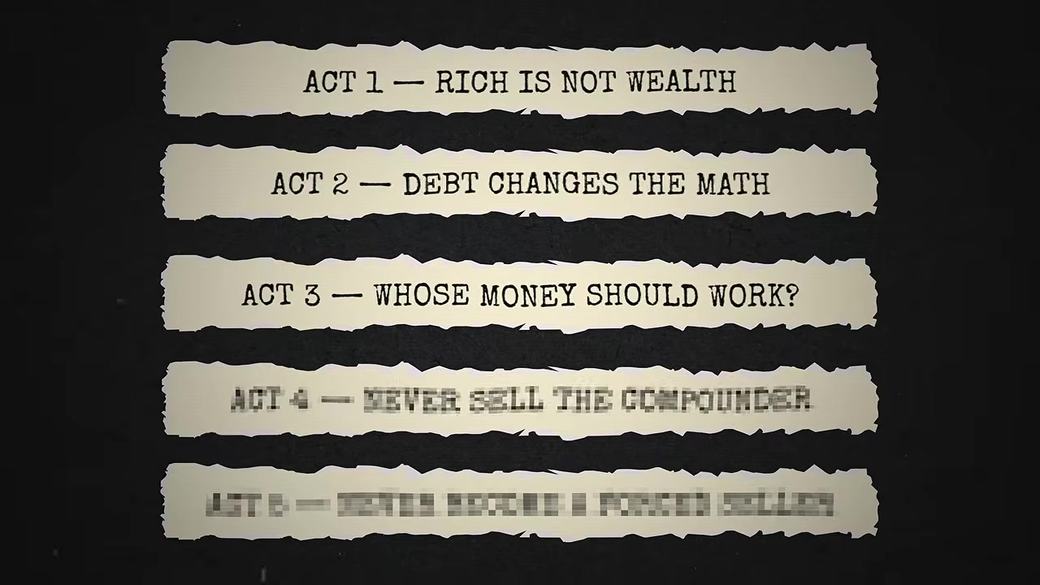
المبدأ الأول · الغنى ليس ثروة
Rich is Not Wealth [0:25 – 3:31]
يفرّق بين كلمتين يظنّهما الناس واحدة: «الدخل ما تكسبه، والثروة ما تملكه». قد تكسب ٢٥٠ ألف دولار في السنة، أو نصف مليون، أو مليوناً — «لكن إن توقّف المال حين تتوقّف عن العمل، فقد بنيتَ دخلاً ممتازاً، ولم تبنِ ثروة بالضرورة» [0:59].
تعريفه للثروة: «أن تملك من الأصول المنتِجة ما يكفي لتدفع تلك الأصول، يوماً ما، ثمن حياتك». قد تكون شركة، أو عقاراً مُدرّاً للدخل، أو حصصاً في شركات منتِجة — «الأصول تتغيّر، والمهم أن يُنتج ما أملكه قيمةً لي بدل أن أحتاج عملي لإنتاج كل دولار» [0:59] [1:26].
الطريق التقليدي كما يصفه: تكسب، تدفع الضرائب، تعيش على الباقي، تدّخر، تستثمر قليلاً في الآخر، تكرّر ذلك ٣٠ أو ٤٠ سنة، تتقاعد، ثم تبيع الكومة التي بنيتَها طوال حياتك شيئاً فشيئاً. «لا أريد كومةً تتناقص. أريد ميزانيةً تنمو، بأصول تظلّ تُنتج وتتراكم» [1:26] [1:59].
لنقل أن دخلك ٢٥٠ ألف دولار سنوياً وتريد أصولاً تُعوّضه. إن أنتجت الأصول، لنقل، ٥٪، فستحتاج نحو ٥ ملايين دولار من الأصول. حتى لو ادّخرتَ ١٠٠ ألف كل سنة، فستحتاج ٥٠ سنة لتجمعها — على افتراض ألّا تلمس المال أبداً. «هل ستعمل فعلاً حتى تدفع نقداً ثمن قاعدة الأصول كاملةً، ثم تبدأ بناء الثروة بعدها؟ بعد خمسين سنة؟ ذلك هو حدّ السرعة.»
ومن هنا يقلب السؤال: «إن كان كل دولار ملكية يحتاج دولاراً كسبتُه ودفعتُ ضريبته وادّخرتُه، فلن تنمو أصولي إلا بسرعة ادّخاري. فالسؤال لم يعد: كيف أكسب أكثر؟ بل: كيف أتحكّم في ٥ ملايين دولار من الأصول المنتِجة دون أن أدّخر ٥ ملايين أولاً؟» — «والنظام المالي عنده الجواب أصلاً. الناس فقط عُلِّموا ألّا يستخدموه. الجواب هو الدَّين» [2:54] [3:23].
المبدأ الثاني · الدَّين يغيّر الحساب
Debt Changes the Math [3:31 – 6:44]
يبدأ من العقار لأنه بديهي — «لا أحد يقول: أريد عمارة بخمسة ملايين، فلأدّخر خمسة ملايين أولاً. تموّلها» — ثم ينتقل إلى مثال يراه أوضح حساباً: شراء شركة [3:23].
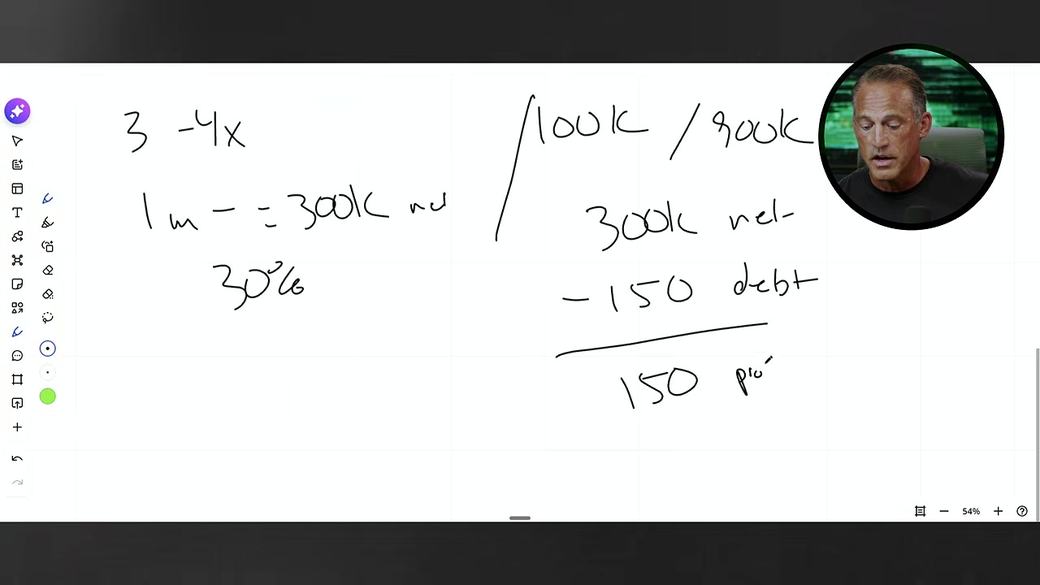
الشركات الخدمية تُباع عادةً — ربما — بـ٣ إلى ٤ أضعاف صافي ربحها السنوي. فشركة بمليون دولار تُدرّ نحو ٣٠٠ ألف سنوياً.
نقداً: تدفع المليون كاملاً، وتسترد ٣٠٠ ألف — عائد ٣٠٪ على مالك. «ليس سيّئاً».
بالتمويل: الشركة نفسها، العملاء أنفسهم، الموظفون أنفسهم، الربح نفسه — لكنك تدفع ١٠٠ ألف فقط وتموّل الـ٩٠٠ ألف بقرض. خدمة الدَّين السنوية، لنقل، ١٥٠ ألفاً. يبقى لك نحو ١٥٠ ألف ربحاً. «وضعتُ ١٠٠، وأسترد ١٥٠.»
«الشركة نفسها. الشركة لم تصر أكثر إنتاجاً — رأس مالي هو الذي صار أكثر إنتاجاً. وما زالت الـ٩٠٠ ألف متاحة لتفعل أشياء أخرى. هذا ما يفكّر فيه الأثرياء: ليس ما عائد الأصل — ذلك السؤال الخطأ — بل ما عائدي على رأس المال الذي اضطررتُ فعلاً إلى وضعه.»
وهكذا «يغيّر الدَّين سرعة بناء الثروة: بدل أن يُنتج عملي دخلي كلّه، أبدأ بمراكمة ملكية تُنتج لي الدخل. الدخل يصير ملكية، والملكية تصير ثروة» [5:40].
تحذيره الوحيد في هذا الفصل: «هذا لا يُصلح شركة سيّئة. إن هبط ربح الـ٣٠٠ ألف تحت خدمة الدَّين، فعندي مشكلة. الدَّين مُضخِّم: يُضخّم الاقتصاد الجيّد، ويُضخّم السيّئ أيضاً» [5:40] [6:08]. ثم أول إعلان عن ورشته «نظام تشغيل الثروة» [6:08].
المبدأ الثالث · مالُ مَن الذي يعمل؟
Who's Money is at Work? [6:44 – 10:55]
يعترف أولاً بقيمة النصيحة التقليدية: اعمل بجدّ، ادّخر، ادفع نقداً، ابتعد عن الدَّين، وإن كان عليك دَين فسدّده بأسرع ما يمكن — «نصيحة ممتازة إن كنت تستخدم الدَّين لتشتري نمط حياة لا تستطيعه. لكننا لا نتحدث عن ذلك. نتحدث عن بناء الثروة» [6:34] [7:02].
١٩٧١: النظام الذي نبني فيه ليس النظام الذي تعلّمنا منه
«أحد أكبر الانكسارات وقع في ١٩٧١، حين أنهت الولايات المتحدة الغطاء الذهبي للدولار — الرئيس نيكسون أخرجه عن معيار الذهب. انتقلنا من نظام نقدي مغطّى بالذهب، قائم على الملكية، إلى ما يُسمّى نظاماً نقدياً قائماً على الدَّين: المال فيه يُخلَق عبر إصدار الدَّين» [7:02].
ويعود إلى درس والديه — «أتظنّ المال ينمو على الشجر؟» — ليقلبه: «كنتُ أتصوّر المال كومةً ثابتة على أحد أن يكسبها أولاً. لكن المصارف الحديثة لا تعمل هكذا: حين يُنشئ المصرف قرضاً جديداً، فهو يُنشئ قوة شرائية جديدة. لا، ليست هناك شجرة مال في الفناء الخلفي — لكن، نوعاً ما، هناك» [7:34] [7:59].
مثال كوكاكولا
«كوكاكولا تُولّد مليارات الدولارات نقداً. عندها من النقد ما يُغنيها عن الدَّين — ومع ذلك تأخذ مليارات من الديون، بعضها يستحقّ في ٢٠٩٣. شركة بتدفّق نقدي هائل تختار أن تقترض لمدة أطول من أعمار معظمنا. لماذا؟» [7:59] [8:27].
«لأن كوكاكولا لا تسأل: هل عندنا نقد؟ — بالطبع عندها. تسأل: ما الاستخدام الأعلى والأفضل لرأس مالنا؟ فإن استطاعت أن تقترض بشروط جذّابة وتُبقي رأس مالها يعمل في مكان أكثر إنتاجاً، فلماذا يكون الدفع نقداً أفضل تلقائياً؟ … كوكاكولا لا تستخدم الدَّين لأنها لا تملك المال. تستخدمه لأنها تفهم رأس المال.»
ويسمّي ما يضيع حين تحبس نقدك في شيء واحد: تكلفة الفرصة الضائعة. والتحوّل الذهني كلّه في جملتين: «معظم الناس يفكّرون: لا أملك المال، فعليّ أن أقترض. أما الثريّ فيستطيع أن يقول: أملك المال — لكن عندي استخدام أفضل له» [9:22].
أثر كانتيون — والقرار الذي يترتّب عليه
يشرح أثر كانتيون (Cantillon effect): في نظام نقدي ورقي يُطبَع فيه المال، يصل الجديد منه أولاً إلى الأقرب من مصدره — ومصدره الدَّين — فيشترون الأصول أولاً ويجنون أول الفائدة، وحين يتسرّب المال إلى الجميع في الأسفل تكون الأسعار قد ارتفعت [9:50] [10:22].
«تلك هي القواعد. أستطيع أن أقضي حياتي أشكو منها، أو أفهمها بما يكفي لأكفّ عن التطوّع لأكون آخر الصفّ. فالدَّين يكفّ عن كونه شيئاً تستخدمه حين تكون مفلساً، ويصير قراراً في تخصيص رأس المال: مالُ مَن الذي ينبغي أن يعمل؟ مالي.»
المبدأ الرابع · لا تكسر التراكم
Never Break Compounding [10:55 – 13:38] — «ليس كيف تشتري الأصل فقط، بل كيف تحتفظ به».
«كلنا سمعنا: اشترِ رخيصاً وبع غالياً. هذا منطقي إن كنت تتاجر. لكني لا أحاول أن أتاجر. أحاول أن أبني ميزانية تتراكم. وبيع أصل ممتاز لمجرّد أني أحتاج نقداً مكلف إلى حدّ لا يُصدَّق» [10:49].
صفقة تويتر (X الآن) كانت نحو ٤٤ مليار دولار. حاول أولاً رهن أسهمه في تسلا ليحصل على السيولة دون التخلّي عن الملكية، لكنه انتهى إلى بيع مليارات الدولارات من أسهم تسلا لتمويل الصفقة. «والجزء الذي يفوت الناس عادةً: كلفة البيع لم تكن قيمة الأسهم يوم باعها فقط، بل كل التراكم المستقبلي الذي تخلّى عنه معها. بحساباتي، ومع استمرار صعود تسلا بعد البيع، خسر أكثر من ١٢ مليار دولار — وكل دولار ترتفعه تسلا من هنا إلى الأبد، يخسر ربحه لو كان احتفظ بها.»
ويحدّد الفرق: «لم يبع لأن تسلا صارت أصلاً سيّئاً فجأة. باع لأنه احتاج سيولة لصفقة أخرى. فالبيع يعطيك النقد، نعم، لكن ما بعتَه يتوقّف عن التراكم لك إلى الأبد» [11:47].
البديل: إصدار ائتمان مقابل الأصل
«حين أملك أصلاً عالي الجودة وأحتاج سيولة، لا أريد بيعه تلقائياً — إن كانت البنية منطقية. قد أستطيع إصدار ائتمان مقابله بدل ذلك.» ويشدّد على اللغة: «لا أقول أقترض عليه. عليك أن تتعلّم كلمات الأثرياء. الاقتراض يعني أني مفلس. أما إن كنت أملك الأصل، فأنا أُصدر ائتماناً مقابل شيء أملكه لأخلق سيولة. الشيء نفسه تقريباً — وهو مختلف تماماً» [12:20].
«هذا ما أعنيه بـحصاد ارتفاع الأصل دون بيعه. الهدف أن أحصل على السيولة التي أحتاجها دون أن أتخلّى تلقائياً عن الملكية والتراكم المستقبلي. الأصول للتراكم، والائتمان للسيولة.»
وليس هذا «لا تبع أبداً»: «إن كنت أبيع أصلاً لأشتري أصلاً أفضل، فممتاز. وإن لم يعد الاقتصاد منطقياً، فتلك قصة أخرى» [12:49] [13:15]. لكن إصدار الائتمان يخلق خطراً جديداً كلياً: «صار لشخص آخر حقّ على أصلي. وإن أسأتُ هيكلة ذلك الحقّ، فقد يتحكّم المُقرض في نهاية المطاف فيما يحدث له. هذا بالضبط ما أخطأتُ فيه في 2008» [13:15].
المبدأ الخامس · لا تصبح بائعاً مُجبَراً
Never Become a Forced Seller [13:38 – 18:23] — أطول فصل، وفيه قصته وأسئلته الخمسة.
ما حدث له في ٢٠٠٨ — بروايته
«جزء من سبب احتراقي الشديد بالدَّين في 2008 أني تعلّمتُ الدرس الخطأ أولاً: ظننتُ أن الدَّين هو المشكلة. فبعد أن بدأتُ إعادة البناء، ذهبتُ في الاتجاه المعاكس ودفعتُ نقداً لكل شيء. لكني أدركتُ في النهاية أن المشكلة الحقيقية كانت الطريقة التي هندستُ بها النظام حول الدَّين» [13:38].
التفاصيل كما سردها: باع شركتين تشغيليتين قبل 2008 ونقل رأس المال كلّه تقريباً إلى العقار — «فصار عندي الأصول، لكني أزلتُ الدخل التشغيلي، أزلتُ التمويل». ثم انهارت الأسواق ولم يكن خلف الأصول سيولة كافية. و«كل قروض المال الصعب التي كنت أبني بها كانت مركّزة عند مُقرض واحد. فلمّا خرج ذلك المُقرض من السوق، استُحقّت كل قروضي دفعةً واحدة. ولم يعد يهمّ إن كنت أريد الاحتفاظ بالعقار طويلاً أم لا — المُقرض هو الذي تحكّم في التوقيت» [13:41] [14:09].
«ذلك وضع لا أريد أن أكون فيه مرة أخرى أبداً. لا أريد أن يقرّر شخص آخر متى عليّ أن أبيع أصلاً جيّداً. ولهذا أُمرّر الدَّين اليوم عبر خمسة أسئلة.»
الأسئلة الخمسة
| # | السؤال | ما يفتّش عنه — بألفاظه | الموضع |
|---|---|---|---|
| ١ | ما غرض الدَّين؟ | «هل أسحب الاستهلاك إلى الأمام لأشتري نمط حياة لم أكسبه بعد؟ أم أستخدمه لأقتني أصولاً أو أوسّعها أو أحفظها؟» — «وهذا لا يجعل الثاني جيّداً تلقائياً: تستطيع تماماً أن تشتري بالدَّين أصلاً فظيعاً. لكن عليّ أن أعرف الوظيفة التي يُفترض أن يؤدّيها الدَّين.» | [14:36] |
| ٢ | مَن يسدّده؟ | إن اشتريتَ شركة مُدرّة فربما تساعد الشركة في خدمة الدَّين. أما إن أصدرتَ ائتماناً مقابل أصل لتشتري ما لا يُدرّ نقداً، «فعليّ أن أعرف بالضبط من أين يأتي السداد»: شركة أخرى، فائض دخل تشغيلي، تدفّق من المحفظة، احتياطيات. «ليس هناك جواب واحد يصلح للجميع — لكن «أرجو أن تسير الأمور» ليست خطة.» | [14:36] [15:06] |
| ٣ | ما الشروط؟ | «أصل ممتاز بتمويل فظيع قد يصير مركزاً فظيعاً.» كم مدّته؟ الفائدة ثابتة أم متغيّرة؟ هل يمكن استدعاؤه؟ هل يستحقّ قبل أن يُثمر استثماري؟ هل أعتمد على أن يُعيد أحدٌ تمويلي لاحقاً؟ — «دَين قصير قابل للاستدعاء مقابل أصل متقلّب طويل الأجل خطرٌ مختلف تماماً عن رهن عقاري ثابت لثلاثين سنة. الكلمة نفسها — دَين — والخطر مختلف كلياً.» | [15:06] [15:36] |
| ٤ | ما الذي يحميني حين يسوء شيء؟ | «لأن شيئاً ما سيسوء في النهاية»: ربع سيّئ، مستأجر يرحل، سوق يهبط، ائتمان يشحّ. جوابه: السيولة في طبقات — انظر الهرم أدناه. | [16:03] |
| ٥ | ما الذي قد يجعلني بائعاً مُجبَراً؟ | «هل يستطيع المُقرض استدعاء القروض كما حدث لي في 2008؟ هل يمكن لحدّ هامش، أو تاريخ استحقاق، أو انقطاع دخل، أو هبوط في الضمان أن ينتزع مني التحكّم في الخروج؟ أريد أن أعرف ما قد يُفشلني قبل أن آخذ الدَّين لأُخفّفه — لا أن أكتشفه والسوق ينهار.» | [17:30] [17:57] |
هرم السيولة الرباعي
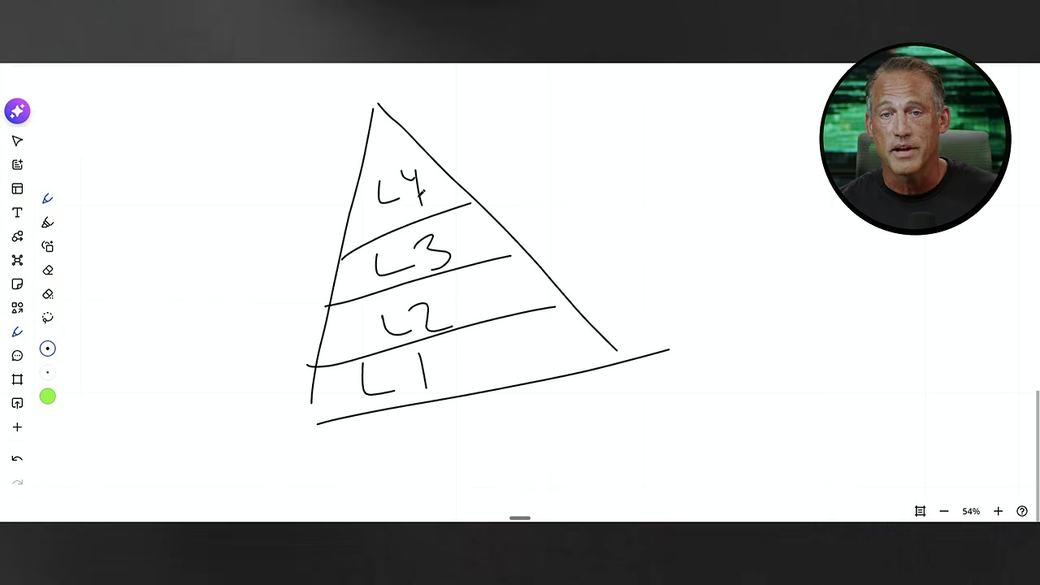
- الطبقة الأولى — الدخل التشغيلي أو التدفّق النقدي.
- الطبقة الثانية — النقد وما يعادله.
- الطبقة الثالثة — سيولة أستطيع الوصول إليها مقابل أصول أخرى أملكها.
- الطبقة الرابعة والأخيرة — بيع الأصول: «التي لا أريد بلوغها أبداً إلا مضطرّاً» [16:03] [16:33].
وتشبيهه: «السباحة في المحيط خطرة، وكثيرون يغرقون. أن تُجيد السباحة يخفّف بعض الخطر. سترة نجاة طبقة أخرى. عوّامة معك طبقة ثالثة. قارب قريب طبقة رابعة. لا طبقة منها تجعل المحيط آمناً تماماً، لكنها تعطيك طرقاً أكثر للنجاة حين يسوء شيء. هكذا أفكّر في السيولة: ليست النقد فقط، بل الوصول إلى رأس المال. النقد سيولة — لكن السيولة ليست نقداً» [16:33] [17:02] [17:30].
«يصير الدَّين خطراً حين أستخدمه دون أن أهندس المخاطر حوله، ويصير قوياً حين يساعدني على بناء ملكية منتِجة وحفظها دون أن أفقد التحكّم في الخروج. تلك هي القاعدة: لا تدع الدَّين يجعلك بائعاً مُجبَراً.»
الخلاصة كما ربطها بالعنوان
«الدخل قد يجعلك غنياً، لكن الملكية — امتلاك الأصول — هي التي تجعلك ثرياً. وللدَّين وظيفتان في هذا النظام: أن يساعد رأس المال الذي تملكه على التحكّم في ملكية منتِجة أكبر فتبني الثروة أسرع، وأن يخلق سيولة دون أن يُجبرك على بيع ما تملك فتحتفظ به ليتراكم. وكلتاهما لا تعملان إلا إن احتفظتَ بالتحكّم في الأصل وفي الخروج» [18:23] [18:57].
«الهدف ليس أن تدخل في الدَّين أو تخرج منه. الهدف أن تبني وتحفظ من الأصول المنتِجة ما يدفع ثمن حياتك … الهدف ليس أن تموت بلا ديون. الهدف أن تبني أصولاً منتِجة تكفي لتجعل العمل اختيارياً، وأن تُبقيها تتراكم، وألّا تدع أحداً يُجبرك على البيع.»
ويختم بأن من لا يستطيع الجواب عن الأسئلة الخمسة «لا يفهم الدَّين بعد» [19:24]، وبثالث دعوة إلى ورشته المجانية «نظام تشغيل الثروة» — ويقدّمها بأنها المكان الذي يشرح فيه «كيف يجب أن ينمو رأسمالك ليعوّض دخلك»، مع رمز QR على الشاشة [19:24] [19:52].
قسم موسَّع · التحقّق من ادّعاءاته، والبيانات التي يبني عليها حجّته
هذا القسم ليس من الفيديو. أضفتُه ببحث مستقلّ بناءً على إذنك النصّي بالتوسّع، ووسمتُه بحسب المادة 4 من الدستور. غايته أن تعرف أيّ ادّعاءاته الواقعية يصمد أمام المصادر، وما الذي يسكت عنه.
١ · الادّعاءات الواقعية الخمسة — ماذا تقول المصادر؟
| ما قاله | ما وجدتُه | الحكم |
|---|---|---|
| كوكاكولا تقترض بسندات تستحقّ في 2093 [8:27] | صحيح ودقيق. أصدرت الشركة في 29 يوليو 1993 سندات بقيمة 150 مليون دولار تستحقّ في 29 يوليو 2093، بكوبون ثابت 7.375٪، وغير قابلة للاستدعاء المبكّر. وفعلت ديزني الشيء نفسه في السنة ذاتها حين كان منحنى العائد مسطّحاً فصار تمديد الاستحقاق رخيصاً. | ✓ مؤكَّد |
| ماسك باع «مليارات» من أسهم تسلا لتمويل تويتر، وخسر «بحساباتي أكثر من 12 مليار» [11:19] | البيع مؤكَّد ومُوثَّق: نحو 22.9 مليار دولار على أربع دفعات في 2022 (أبريل 8.5 · أغسطس 6.9 · نوفمبر 3.95 · ديسمبر 3.6)، والصفقة 44 مليار. لكن التمويل شمل أيضاً ديوناً مصرفية وقروضاً مضمونة بأسهم تسلا — فقصّة «فشل الرهن ثم باع» أبسط من الواقع. أما «12 مليار خسارة» فحسابه هو، ويتوقّف على سعر تسلا يوم حسبه؛ لا يمكن التحقّق منه مستقلاً. | ✓ البيع · ؟ الخسارة |
| الشخص العادي عليه 108 آلاف دولار ديوناً [0:00] | الرقم قريب لا مطابق: Experian تضع متوسط دَين الأمريكي عند 105,444 دولاراً (سبتمبر 2025). والأهم لحجّته هو: معظم هذا المبلغ رهن عقاري؛ فالدَّين غير العقاري نحو 21,603 فقط. أي أن «الشخص العادي» يستخدم الدَّين أصلاً في الغالب لشراء أصل — وهو ما يدعو إليه. | ≈ قريب |
| لاري إليسون عليه 1.2 مليار دولار ديوناً [0:00] | لم أجد هذا الرقم في أي مصدر حديث. ما تُظهره إفصاحات أوراكل أكبر منه بكثير: إليسون رهن 346 مليون سهم — نحو 30٪ من حصته، بقيمة سوقية تقارب 40 مليار دولار — ضماناً لقروض شخصية طويلة الأجل، ومبلغ المسحوب منها غير مُعلَن. فالحقيقة تخدم حجّته أكثر من رقمه. | ✗ غير مؤكَّد |
| في 1971 أخرج نيكسون الدولار عن الذهب [7:02] | صحيح: أعلن نيكسون تعليق تحويل الدولار إلى ذهب في 15 أغسطس 1971 — ما يُعرف بـ«صدمة نيكسون». | ✓ مؤكَّد |
٢ · البيانات التي تقوم عليها حجّته ولا يعرضها: ماذا يفعل التضخّم بدَين ثابت؟
وصف الفيديو الرسمي يقول إنه سيشرح «كيف يغيّر التضخّم قيمة الدَّين طويل الأجل» — لكن الفيديو نفسه لا يعرض رقماً واحداً عن التضخّم. وهذه هي الآلية الصامتة خلف كل مثال فيه، من سندات كوكاكولا إلى «الرهن الثابت لثلاثين سنة»:
هذا ما يجعل المقترض طويل الأجل بفائدة ثابتة يكسب من التضخّم — ولهذا تقترض كوكاكولا لمئة سنة. لكن للصورة وجهاً آخر لا يذكره الفيديو: سعر الفائدة الاسمي يُسعّر التضخّم المتوقَّع مسبقاً؛ كوبون كوكاكولا 7.375٪ في 1993 لم يكن هديّة. المقترض لا يربح إلا حين يأتي التضخّم أعلى ممّا سعّره المُقرض، أو حين ينمو الأصل الممَوَّل أسرع من الفائدة. وبالدَّين المتغيّر الفائدة، أو القصير، تنقلب المعادلة رأساً على عقب — وهو ما يعترف به هو في السؤال الثالث.
٣ · ما يسكت عنه الفيديو — سياق لازم لفهمه لا للأخذ به
- المُضخِّم يعمل في الاتجاهين بالتساوي — وهو يقولها مرة واحدة ثم يمضي. في مثاله نفسه: لو هبط ربح الشركة من 300 ألف إلى 140 ألفاً، فالمشتري نقداً لا يزال يربح 14٪، بينما المشتري بالتمويل صار يدفع من جيبه لخدمة الدَّين. الرافعة نفسها التي رفعت عائده من 30٪ إلى 150٪ هي التي تُطيح به أولاً.
- ما أطاح به في 2008 هو بالضبط ما ينصح به الآن. قروض قصيرة قابلة للاستدعاء مقابل أصول طويلة (السؤال الثالث)، مركّزة عند مُقرض واحد، بلا طبقات سيولة (السؤال الرابع). أسئلته الخمسة مستخلَصة من كارثته — وهذا يمنحها مصداقية، لكنه يذكّر بأن الطريقة التي يشرحها بثقة هي نفسها التي أفلسته حين طُبّقت بلا هندسة.
- «إصدار ائتمان مقابل الأصل» و«الاقتراض عليه» الشيء نفسه قانونياً. هو يقرّ بذلك («الشيء نفسه تقريباً») ويجعل الفرق لغوياً. حقّ المُقرض على الأصل واحد في الحالتين، وشروط الاستدعاء وحدود الهامش هي التي تحدّد الخطر — لا الكلمة.
- الاستراتيجية التي يصفها في المبدأ الرابع لها اسم في التخطيط المالي: «اشترِ، اقترض، مُت». تقوم على أن من يملك أصولاً ضخمة مرتفعة القيمة يقترض مقابلها بدل بيعها. وهي متاحة عملياً لمن لديه أصول كافية ليقبلها المُقرض ضماناً — أي أنها تخدم من في أعلى «طابور كانتيون» أكثر ممّن عليه 108 آلاف دولار معظمها رهن بيته.
- أرقام أمثلته افتراضية. «3–4 أضعاف الربح»، و«خدمة دَين 150 ألفاً على قرض 900 ألف»، و«عائد 5٪» — كلها فرضيات مبسَّطة يسمّيها هو «حساباً على ظهر منديل». خدمة دَين بـ150 ألفاً سنوياً على 900 ألف تعني فائدة وأقساطاً تقارب 16.7٪ من أصل القرض سنوياً — وهذا مثال توضيحي لا عرض تمويل حقيقي.
المصادر المستخدمة في هذه الإضافة
سندات كوكاكولا المئوية: The Seattle Times، 23 يوليو 1993 · Cbonds — Coca-Cola 7.375% 29 Jul 2093
مبيعات ماسك من تسلا: Forbes، 15 ديسمبر 2022 · CNBC، 8 نوفمبر 2022 · إفصاح Twitter لدى SEC عن الصفقة
متوسط الدَّين الأمريكي: Experian — Consumer Credit Review 2025
أسهم إليسون المرهونة: IFR — Ellison pledges 30% of Oracle shares · The Motley Fool، يوليو 2026
مؤشر الأسعار: BLS — CPI August 2026 · جدول CPI-U السنوي 1913–2026 · FRED — CPIAUCSL
حدود هذه الإضافة: كل رقم فيها منقول عن مصدره المذكور، عدا نسب الرسم البياني المحسوبة من قيم المؤشر بالمعادلة المذكورة تحته، ومثال هبوط الربح في البند الأول المبنيّ على أرقام الفيديو نفسها. ليس في هذا القسم نصيحة مالية ولا توصية باقتراض أو استثمار — هو تحقّق من وقائع وسياق لفهم الحجّة. والفيديو نفسه يُقرّ في وصفه الرسمي بأن صاحبه «ليس مستشاراً مالياً».
ملاحظات على المصدر
ما ورد ملتبساً أو بلا سند في الفيديو نفسه. أُثبت ولم يُحسم.
- الفيديو قطعة تسويقية لورشته. ورشة «نظام تشغيل الثروة» تُذكر ثلاث مرات [6:08] [19:24] [19:52] مع رابط ورمز QR، والمبادئ الخمسة مقدَّمة بوصفها «ما تحلّه الورشة».
- ادّعاءاته الواقعية بلا مصدر داخل الفيديو. لم يُحل إلى أي مصدر لأرقام دَين الشخص العادي وإليسون، ولا لسندات كوكاكولا (يُحيل إلى فيديو له)، ولا لخسارة ماسك («بحساباتي»). وقد تحقّقتُ منها في القسم الموسَّع أعلاه.
- الرقم «900» يؤدّي دورين في مثاله: مرّةً هو المبلغ الممَوَّل بالقرض («أموّل الـ900 ألف الباقية») [4:19]، ومرّةً هو رأس المال الذي «ما زال متاحاً ليفعل أشياء أخرى» [5:12]. نُقلت الجملتان كما قالهما، ولم تُفسَّرا.
- «الأصل لا يزال تحت رهن»: في مثال الشركة لا يذكر ما الضمان الذي يقدّمه لقرض الـ900 ألف، ولا سعر الفائدة، ولا مدّة القرض — وهي الأمور التي يجعلها لاحقاً جوهر السؤال الثالث.
- الأسئلة الخمسة وعنوان الفصل: يقول «الأسئلة الخمسة» ثم يعدّها في الفصل الخامس، لكن بطاقة الفصول على الشاشة تُسمّي المبدأ الرابع «لا تبع المُركِّب» بينما فهرس الوصف يسمّيه «لا تكسر التراكم» [10:55]. المعنى واحد، والتسمية مختلفة.
- جملة مضطربة في التفريغ الآلي: ورد عند [15:06]: «but I hope it works out. That's not a pair.» — والسياق يقتضي «That's not a plan» (ليست خطة). اعتُمد هذا المعنى وأُفصح عنه هنا.
- «باع شركتين تشغيليتين» [13:41] — لا يسمّيهما ولا يذكر قيمتهما ولا سنة البيع، ولا اسم المُقرض الذي «خرج من السوق».
- ما استُبعد: الإعلانات الثلاثة بصيغتها الكاملة، ودعوة التعليق في الختام، والإحالة إلى فيديو كوكاكولا. أُبقي منها ما كان جزءاً من البنية أو من الإفصاح.
المنهجية: أُعدّ هذا الملخص في 12 سبتمبر 2026 من مصدرين من الفيديو نفسه: (١) التفريغ النصي الآلي بلغته الأصلية (الإنجليزية)، مسحوباً بأداة yt-dlp بصيغة json3 — نحو 4,819 كلمة، وقُرئ كاملاً؛ (٢) ثلاث لقطات استُخرجت من ملف الفيديو مباشرة بأداة ffmpeg عند الطوابع الزمنية المذكورة تحتها، غير معدّلة ولا مقصوصة — وهي وحدها ما يحمل معلومة لا ينقلها الكلام: سبّورته، وبطاقة الفصول، وهرم السيولة. القسم الأول (المبادئ الخمسة) خلاصة أمينة للفيديو بالمادة 3.4 المُعدَّلة: الترجمة بالمعنى في عربية سلسة، مع أمانة مطلقة للمحتوى — لا معنى أُضيف ولا حُذف، والتحفّظات والأرقام كما وردت، وأرقام أمثلته الافتراضية موضوعة في صناديق «مثال» مميّزة حتى لا تُقرأ وقائع. القسم الموسَّع إضافة كُتبت بناءً على إذنك النصّي «لو احتجت التوسع … توسّع»، ووُضعت كاملةً في صندوق موسوم بحسب المادة 4، ومعها مصادرها وحدودها؛ الرسم البياني فيها من إعدادي من بيانات مؤشر الأسعار الرسمية، بلون واحد لأن لوحة البراند لا تحتمل سلسلتين (فحصٌ سابق بمُدقّق الألوان). لا نصيحة مالية في أي موضع من الصفحة. النشر: رُفعت هذه الصفحة أول مرة بتاريخ 12 سبتمبر 2026، بناءً على أمرك النصّي الصريح لهذا الملف بعينه — وهو استثناء موثَّق من المادة 6 من دستور الملخصات التي تجعل الملخصات ملفات محلية بشكل افتراضي. وتبقى الصفحة موسومة noindex بعد النشر كما توجب المادة نفسها. والنشر على «ملخصاتي»: رُفعت هذه الصفحة على shortitfor.me/debt بتاريخ 13 سبتمبر 2026، بناءً على أمر المالك النصّي الصريح لهذا الملف بعينه («ارفعها على موقع ملخصاتي») — استثناءٌ موثَّق من المادة 6 من دستور الملخصات، والصفحة موسومة noindex كما توجب المادة نفسها.
A summary of Mark Moss's video “You can't build wealth without debt”: the difference between rich and wealthy, how debt changes the math on returns, and when it becomes dangerous. Alongside it, an extended section fact-checking his factual claims and the inflation data his argument rests on.
▶ Watch the original video
The claim he opens with
“You can't build wealth without debt. The average person, though, uses debt. They have 108,000 in debt right now, but then you compare to Larry Ellison, who has 1.2 billion in debt. So, why is it bad when you do it, but it's good when Larry does? It comes down to … something you don't know about money.”
And his promise: “I'm going to teach you how to use debt like the wealthy do to build real wealth.” He lays this out in five principles he calls “acts” on screen [10:55].
Principle 1 · Rich Is Not Wealth
Rich is Not Wealth [0:25 – 3:31]
He separates two words people treat as one: “Income is what you earn, wealth is what you own.” You could make $250,000 a year, or half a million, or a million — “if the money stops when you stop working, then, yeah, you built a great income, but you haven't necessarily built wealth” [0:59].
His definition of wealth: “owning enough productive assets that … eventually, they can pay for your life.” It might be a business, income-producing real estate, or stakes in productive companies — “The assets can change, but the point is, I want things that I own to be producing value for me instead of me needing my labor to produce every dollar” [0:59] [1:26].
The traditional path, as he describes it: earn, pay taxes, live on what's left, save, invest a little at the end, repeat that for 30 or 40 years, retire, then slowly sell off the pile you spent your whole life building. “I don't want a shrinking pile. I want a growing balance sheet with assets that keep producing and compounding” [1:26] [1:59].
Let's say you make $250,000 a year and want assets that will replace that income. If those assets produce, let's say, 5%, you'd need roughly $5 million of assets. Even if you saved $100,000 every single year, it would take 50 years to accumulate it — assuming you never touch the money. “So, are you really going to work until you can pay cash for the entire asset base? And then, only then you're going to start building wealth after that? 50 years later? That's the speed limit.”
From there he flips the question: “If every dollar of productive ownership requires a dollar that I already earned, I already paid tax on, I already saved, then my asset base can only grow as fast as I can save. … It's no longer just how do I make more money, it becomes how do I control $5 million of productive assets without first having to save $5 million?” — “The financial system already has an answer to that. You see, most people were simply just taught not to use it. … And of course, the answer is debt” [2:54] [3:23].
Principle 2 · Debt Changes the Math
Debt Changes the Math [3:31 – 6:44]
He starts with real estate because it's intuitive — “Nobody says, ‘I want to buy a $5 million apartment building, so let me first save up $5 million.’ You finance it” — then moves to an example he finds clearer on the math: buying a business [3:23].
Service-based businesses typically sell — maybe — for 3 to 4 times annual net profit. So a $1 million business generates about $300,000 a year.
Cash: you pay the full million and get $300,000 back — a 30% return on your money. “Not bad.”
Financed: same business, same customers, same employees, same profit — but you put down only $100,000 and finance the other $900,000 with a loan. Annual debt service, let's say, $150,000. That leaves you roughly $150,000 in profit. “I invested 100, I'm making back 150.”
“It's the same business. The business didn't become more productive, my capital became more productive. … This 900,000 is still available to go do other things. … That's what wealthy people are thinking about. Not just what's the return of the asset, right? That's the wrong question. The better question is, what's my return on the capital I actually had to put in?”
And that is how “debt changes the speed of wealth creation. Instead of my labor producing all of my income, I start accumulating ownership that produces income for me. The income becomes the ownership and then the ownership becomes the wealth” [5:40].
His one warning in this act: “That doesn't fix a bad business. If that $300,000 of profit drops below my debt service, then yeah, I've got problems. That's why debt is an amplifier. Good economics get amplified, bad economics, they also get amplified, too” [5:40] [6:08]. Then comes the first plug for his “Wealth Operating System” workshop [6:08].
Principle 3 · Whose Money Should Work?
Who's Money is at Work? [6:44 – 10:55]
He first concedes the value of the traditional advice: work hard, save money, pay cash, stay out of debt, and if you do have debt, pay it down as fast as you can — “That's great advice if you're using debt to buy a lifestyle that you can't afford. But we're not talking about a lifestyle you can't afford. We're talking about building wealth” [6:34] [7:02].
1971: The system we build in is not the one we learned from
“One of the biggest breaks happened in 1971. That's when the United States ended the gold-backed currency. That's when President Nixon took the dollar off of the gold standard. … We went from a gold-backed system, an equity-based monetary system, and we went into now what's called a debt-based monetary system. And what that means … is that money is created through debt, through debt issuance” [7:02].
He goes back to his parents' lesson — “What, do you think money grows on trees?” — and turns it on its head: “As a kid, I pictured money as like this fixed pile. So, someone had to earn it first. … But modern banking doesn't work that way. When a bank creates a new loan, then it can create new purchasing power in that process. So, no, there's not literally a money tree in the backyard, but we sort of do” [7:34] [7:59].
The Coca-Cola example
“Coca-Cola generates billions of dollars in cash. And they have so much cash that they don't need the debt, but yet they're still taking on billions of dollars of debt … some with maturities all the way out to 2093. … A company with enormous cash flow chooses to borrow money for longer than most of us are even going to be alive. So, the question is, why?” [7:59] [8:27].
“It's because Coke isn't asking, do we have the cash? Like, of course they have the cash. What they're asking is, what is the highest and best use of our capital? Because if they can borrow on attractive terms, and they can keep their own capital working somewhere more productive, why would paying cash automatically be better? … Coca-Cola doesn't use debt because it doesn't have money. It uses debt because it understands capital.”
He has a name for what is lost when you lock your cash into one thing: lost opportunity cost. The entire mindset shift fits in two sentences: “Most people think, I don't have the money, so I need to borrow. A wealthy person can say, I have the money. I just have a better use for it” [9:22].
The Cantillon effect — and the decision that follows from it
He explains the Cantillon effect: in a fiat-based monetary system where money is just printed, the new money reaches those closest to its source first — and that source is debt — so they buy assets first and get the first benefit, and by the time the money trickles down to everyone else at the bottom, prices have already gone up [9:50] [10:22].
“Those are the rules. Now, I can spend my life complaining about those rules, or I can understand them well enough to stop volunteering to be the last in the line. Because debt stops being something you only use when you're broke, and it becomes a capital allocation decision. Now, whose money should be doing the work? Well, my money should be doing the work.”
Principle 4 · Never Break Compounding
Never Break Compounding [10:55 – 13:38] — “It's not just how you acquire the asset, it's how you keep the asset.”
“We've all heard the saying … buy low, sell high. And that makes sense if you're trading, but I'm not trying to trade. I'm trying to build a compounding balance sheet. … And so selling a great asset just because I need some cash is incredibly expensive” [10:49].
The Twitter (now X) deal was worth about $44 billion. He originally tried to use his Tesla shares as collateral so he could raise liquidity without giving up ownership, but to ultimately fund the deal he ended up selling billions of dollars of Tesla stock. And the part people usually miss, in his telling, is that the cost of selling those shares wasn't just what they were worth the day he sold them: “It was all the future compounding he gave away with them. Now, by my calculations, as Tesla has continued to move higher since that sell went through, he's lost over 12 billion dollars. Now, every dollar that Tesla continues to go up from here, forever, he's going to continue to lose the profit he would have made if he would have been able to hold on to those.”
And he pins down the distinction: “He didn't sell, you know, because Tesla suddenly became a bad asset. He sold because he needed the liquidity for another transaction. … So, selling the asset, yes, it gives me the cash, but the portion that I sold stops compounding for me forever” [11:47].
The alternative: issuing credit against the asset
“When I own a high-quality asset and I need liquidity, I don't automatically want to sell the asset, of course, if the structure makes sense. I may be able to issue credit against the asset instead.” And he insists on the wording: “Why do I say issue credit against it instead of borrow against it? And that's because you have to learn the words of the wealthy. … Borrowing means that I'm borrowing because I'm broke. But if I own the asset, I'm issuing credit against something that I already own to create liquidity. It's kind of the same thing, but it's completely different” [12:20].
“That's what I mean by saying harvesting the appreciation of the asset without selling the asset. The goal is to get the liquidity that I need without automatically giving up the ownership and the future compounding that I'll get of the assets. Because assets are for compounding and credit is for liquidity.”
And this does not mean “never sell an asset”: “Let's say I'm selling one asset to buy another asset, a better asset, great. If the economics no longer make sense, of course, that's a different story” [12:49] [13:15]. But issuing credit creates a new risk entirely: “Somebody else now has a claim against my asset. Now, if I structure that claim badly, the lender can eventually control what happens to it. That's exactly what I got wrong back in 2008” [13:15].
Principle 5 · Never Become a Forced Seller
Never Become a Forced Seller [13:38 – 18:23] — the longest act, and the one with his story and his five questions.
What happened to him in 2008 — in his telling
“Part of the reason I got burned so badly using debt in 2008 was at first I learned the wrong lesson. I thought debt was the problem. So, after all that I started rebuilding, I went the other direction. I paid cash for everything. But eventually I realized the real problem was the way that I engineered the system around the debt” [13:38].
The details as he told them: going into 2008 he had sold two operating businesses and moved almost all of that capital into real estate — “now I had the assets, but I removed the operating income. I removed the funding.” Then the markets crashed, and there wasn't enough liquidity behind the assets. And “almost all my hard money loans that I was using to build were concentrated with a single lender. Now, when that lender went out of business, then all my loans got called due. And it suddenly didn't matter whether I wanted to hold the real estate long term or not. The lender controlled the timing” [13:41] [14:09].
“That's the situation I never want to be in again. I never want somebody else deciding when I have to sell a good asset. So, today I run debt through five different questions.”
The five questions
| # | Question | What he's looking for — in his words | Where |
|---|---|---|---|
| 1 | What is the purpose of the debt? | “Am I pulling consumption forward to buy a lifestyle that I haven't earned yet? Or am I using the debt to acquire, expand, or preserve my assets?” — “Now, that doesn't automatically make the second one good. And you can absolutely use debt to buy a terrible asset. But I need to know the job the debt is supposed to do.” | [14:36] |
| 2 | Who pays it? | If you buy a cash-flowing business, maybe the business helps service the debt. But if you issue credit against an asset to buy something that doesn't produce cash flow, “I need to know exactly where the payment comes from”: another business, an operating income surplus, portfolio cash flow, reserves. “There isn't one universal answer, but ‘I hope it works out.’ That's not a plan.” | [14:36] [15:06] |
| 3 | What are the terms? | “A great asset with terrible financing can still become a terrible position.” How long is the debt? Is the rate fixed or variable? Can it be called? Does it mature before my investment has time to work? Am I dependent on somebody else refinancing for me later? — “Short-term callable debt against a volatile long-term asset is a very different risk than, say, a 30-year fixed mortgage. It's the same word, debt, but it's completely different risk.” | [15:06] [15:36] |
| 4 | What protects me when something goes wrong? | “Because eventually something will”: a bad quarter, a tenant who moves out, a market that drops, credit that tightens. His answer: liquidity in layers — see the pyramid below. | [16:03] |
| 5 | What can make me a forced seller? | “Could the lender call the loans due like what happened to me in 2008? Could a margin threshold, maturity date, income interruption, or collateral decline take control of the exit and take it away from me? I want to know what could cause my failure before I take on the debt so I could mitigate those things. I don't want to find out when the market's falling apart.” | [17:30] [17:57] |
The four-layer liquidity pyramid
- Layer 1 — operating income or cash flow.
- Layer 2 — cash and cash equivalents.
- Layer 3 — liquidity I can access against other assets I own.
- Layer 4, the final layer — selling the assets: “the one I never want to reach unless I absolutely have to” [16:03] [16:33].
His analogy: “Swimming in the ocean, it's very dangerous. A lot of people die, they drown in the ocean. But knowing how to swim, that mitigates some of the risk. … I could put a life jacket on, that gives me another layer of protection. I could swim, put a life jacket on, and bring a float with me, that's another layer of protection. I could bring a boat nearby with me, and that's layer four. … None of those layers of protection makes the ocean perfectly safe. But what they do is they give me more ways to survive if or when something goes wrong. That's how I think about liquidity. It's not just cash, it's the access to capital. Cash is liquidity, but liquidity is not cash” [16:33] [17:02] [17:30].
“Debt becomes dangerous when I use it without engineering the risks around it, and it becomes powerful when it helps me build and preserve productive ownership without losing control of the exit. So, that's the rule. Never let the debt make you a forced seller.”
The takeaway, tied back to the title
“Income can make you rich, but ownership, owning assets is what make you wealthy. And debt has two big jobs in that system. One, it can help the capital that you already have control more productive ownership, so build wealth faster, and it can create liquidity without automatically forcing you to sell the assets that you already own, so it allows you to hold them for compounding. But both of those can only work if you keep control of the asset and keep control of the exit” [18:23] [18:57].
“The goal isn't simply to get into debt or get out of debt. The goal is to build and preserve enough productive assets to pay for your life … The goal isn't to die debt-free. The goal is to build enough productive assets to make work optional for you. Keep those assets compounding and never let somebody force you to sell.”
He closes by saying that if you can't answer the five questions, “you don't understand debt yet” [19:24], and with a third invitation to his free “Wealth Operating System” workshop — which he presents as the place where he explains “how fast your wealth has to grow for your assets to replace your income,” with a QR code on screen [19:24] [19:52].
Extended section · Fact-checking his claims, and the data his argument rests on
This section is not from the video. I added it through independent research, based on your written permission to expand, and tagged it under Article 4 of the Constitution. Its purpose is to let you know which of his factual claims hold up against the sources, and what he leaves unsaid.
1 · The five factual claims — what do the sources say?
| What he said | What I found | Verdict |
|---|---|---|
| Coca-Cola borrows with bonds that mature in 2093 [8:27] | Correct and precise. On 29 July 1993 the company issued $150 million in bonds maturing on 29 July 2093, with a fixed 7.375% coupon, and non-callable. Disney did the same thing that same year, when the yield curve was flat and extending the maturity had become cheap. | ✓ Confirmed |
| Musk sold “billions” of Tesla stock to fund Twitter, and lost, “by my calculations … over 12 billion dollars” [11:19] | The sale is confirmed and documented: about $22.9 billion in four tranches in 2022 (April 8.5 · August 6.9 · November 3.95 · December 3.6), against a $44 billion deal. But the financing also included bank debt and loans secured by Tesla shares — so the “collateral failed, then he sold” story is simpler than what actually happened. As for the “$12 billion loss,” that is his own calculation and depends on Tesla's share price on the day he ran it; it cannot be independently verified. | ✓ Sale · ? Loss |
| The average person has $108,000 in debt [0:00] | Close, but not exact: Experian puts the average American's debt at $105,444 (September 2025). More important for his argument: most of that amount is a mortgage; non-mortgage debt is only about $21,603. In other words, the “average person” is already using debt mostly to buy an asset — which is exactly what he advocates. | ≈ Close |
| Larry Ellison has $1.2 billion in debt [0:00] | I could not find this figure in any recent source. What Oracle's disclosures show is far larger: Ellison has pledged 346 million shares — about 30% of his stake, with a market value of roughly $40 billion — as collateral for long-term personal loans, and the amount drawn against them is undisclosed. The reality serves his argument better than his figure does. | ✗ Unconfirmed |
| In 1971, Nixon took the dollar off gold [7:02] | Correct: Nixon announced the suspension of the dollar's convertibility into gold on 15 August 1971 — what is known as “the Nixon shock.” | ✓ Confirmed |
2 · The data his argument rests on but never shows: what does inflation do to fixed-rate debt?
The video's official description says it will explain “how inflation changes the value of long-term debt” — but the video itself does not show a single inflation figure. And this is the silent mechanism behind every example in it, from Coca-Cola's bonds to the “30-year fixed mortgage”:
This is what lets a long-term, fixed-rate borrower gain from inflation — and why Coca-Cola borrows for a hundred years. But there is another side to the picture that the video does not mention: the nominal interest rate prices in expected inflation up front; Coca-Cola's 7.375% coupon in 1993 was no gift. The borrower only wins when inflation comes in higher than what the lender priced in, or when the financed asset grows faster than the interest. With variable-rate or short-term debt, the equation turns upside down — as he himself acknowledges in the third question.
3 · What the video leaves out — context needed to understand it, not to act on it
- The amplifier works both ways, equally — and he says it once, then moves on. In his own example: if the business's profit dropped from $300,000 to $140,000, the cash buyer still earns 14%, while the financed buyer is now paying out of pocket to service the debt. The same leverage that lifted his return from 30% to 150% is what knocks him down first.
- What took him down in 2008 is exactly what he now recommends. Short-term callable loans against long-term assets (Question 3), concentrated with a single lender, with no liquidity layers (Question 4). His five questions are distilled from his own disaster — which gives them credibility, but it is also a reminder that the method he explains so confidently is the very one that bankrupted him when applied without engineering.
- “Issuing credit against the asset” and “borrowing against it” are legally the same thing. He admits as much (“it's kind of the same thing”) and makes the difference a matter of language. The lender's claim on the asset is identical in both cases, and it is the call provisions and margin thresholds that determine the risk — not the word.
- The strategy he describes in Principle 4 has a name in financial planning: “Buy, Borrow, Die.” It rests on someone who owns large, high-value assets borrowing against them instead of selling them. In practice it is available to those with enough assets for a lender to accept as collateral — which means it serves those at the head of the “Cantillon line” more than someone with $108,000 in debt, most of it the mortgage on their house.
- The numbers in his examples are hypothetical. “Three to four times net profits,” 150k of debt service on a 900k loan, and a “5% return” — all simplified assumptions that he himself calls “back-of-the-napkin math.” Debt service of $150,000 a year on $900,000 implies interest and principal of roughly 16.7% of the loan amount per year — an illustration, not a real financing offer.
Sources used in this addition
Coca-Cola's 100-year bonds: The Seattle Times, 23 July 1993 · Cbonds — Coca-Cola 7.375% 29 Jul 2093
Musk's Tesla sales: Forbes, 15 December 2022 · CNBC, 8 November 2022 · Twitter's SEC filing on the deal
Average American debt: Experian — Consumer Credit Review 2025
Ellison's pledged shares: IFR — Ellison pledges 30% of Oracle shares · The Motley Fool, July 2026
Price index: BLS — CPI August 2026 · annual CPI-U table 1913–2026 · FRED — CPIAUCSL
Limits of this addition: Every figure in it is taken from the source cited, except the chart's ratios, which are computed from the index values using the formula stated beneath it, and the profit-drop example in the first item, which is built on the video's own numbers. Nothing in this section is financial advice or a recommendation to borrow or invest — it is a check of the facts, and context for understanding the argument. The video itself acknowledges in its official description that its creator is “not a financial advisor.”
Notes on the source
What was ambiguous or unsupported in the video itself. Recorded, not resolved.
- The video is a marketing piece for his workshop. The “Wealth Operating System” workshop is mentioned three times [6:08] [19:24] [19:52], with a link and a QR code, and the five principles are presented as “the bigger problem that we solve inside the wealth operating system.”
- His factual claims are unsourced within the video. He cites no source for the average person's and Ellison's debt figures, none for Coca-Cola's bonds (he refers to a video of his own), and none for Musk's loss (“by my calculations”). I checked them in the extended section above.
- The number “900” plays two roles in his example: once as the amount financed by the loan (“I'm going to finance the other 900k”) [4:19], and once as the capital that “is still available to go do other things” [5:12]. Both sentences are reported as he said them, without interpretation.
- “The asset is still under a lien”: In the business example he doesn't say what collateral he puts up for the $900k loan, nor the interest rate, nor the loan term — the very things he later makes the heart of the third question.
- The five questions and the act's title: He says “five different questions” and then counts them off in the fifth act, but the acts card on screen calls the fourth principle “Never Sell the Compounder,” while the description's chapters call it “Never Break Compounding” [10:55]. Same meaning, different name.
- A garbled sentence in the auto-transcript: At [15:06] it reads: “but I hope it works out. That's not a pair.” — the context calls for “That's not a plan”. That reading was adopted and is disclosed here.
- “Sold two different operating business[es]” [13:41] — he doesn't name them, give their value or the year of the sale, or name the lender that “went out of business.”
- What was left out: the three ads in full, the closing call for comments, and the referral to the Coca-Cola video. Only what was part of the structure or of the disclosure was kept.
Methodology: This summary was prepared on 12 September 2026 from two sources from the video itself: (1) the automatic transcript in its original language (English), pulled with yt-dlp in json3 format — about 4,819 words, read in full; (2) three frames extracted directly from the video file with ffmpeg at the timestamps given beneath them, unedited and uncropped — the only ones that carry information the speech does not convey: his whiteboard, the acts card, and the liquidity pyramid. The first section (the five principles) is a faithful digest of the video under amended Article 3.4: translated for meaning into fluent Arabic, with absolute fidelity to the content — no meaning added or removed, hedges and figures as stated, and the hypothetical numbers of his examples placed in clearly marked “Example” boxes so they are not read as facts. The extended section is an addition, written on the basis of your written permission (“if you need to expand … expand”), placed in full inside a box tagged per Article 4, together with its sources and its limits; the chart in it is my own, built from official price-index data, in a single color because the brand palette cannot support two series (an earlier check with the color validator). There is no financial advice anywhere on the page. Publication: This page was first published on 12 September 2026, on your explicit written instruction for this specific file — a documented exception to Article 6 of the Summaries Constitution, which makes summaries local files by default. The page remains tagged noindex after publication, as the same article requires. Publication on “My Summaries”: This page was uploaded to shortitfor.me/debt on 13 September 2026, on the owner's explicit written instruction for this specific file (“upload it to the My Summaries site”) — a documented exception to Article 6 of the Summaries Constitution, and the page is tagged noindex as the same article requires.