ستة خطوات لآلة عملاء من السوشال ميديا — خلاصة فيديو Kallaway
تلخيص حرفي لفيديو «I Blew Up On Social Media in 100 Days to Prove It's Not Luck (Again)» لصاحب قناة Kallaway، يشرح فيه المخطط السداسي الذي طبّقه على حساب إنستغرام جديد خلال أول 100 يوم. اللقطات في هذه الصفحة مأخوذة من الفيديو نفسه بطوابعها الزمنية.
 ▶ شاهد الفيديو الأصلي
الادّعاء المركزي: النمو بلا فيروسية
يفتتح الفيديو بنفي الفرضية التي يقوم عليها معظم محتوى النمو.
يقول إنه أدار «استراتيجية سوشال ميديا مختلفة تماماً عمّا تراه عادةً»، وإنه صمّمها لتنمية سلطته المعرفية ومتابعيه بسرعة دون الحاجة إلى الانتشار الفيروسي [0:00]. والدليل الذي يقدّمه على ذلك رقمي:
«من بين 85 فيديو نشرتها، ستة فقط تجاوزت 100,000 مشاهدة. ولا واحد منها تجاوز مليوناً. وكان ذلك مقصوداً تماماً.»
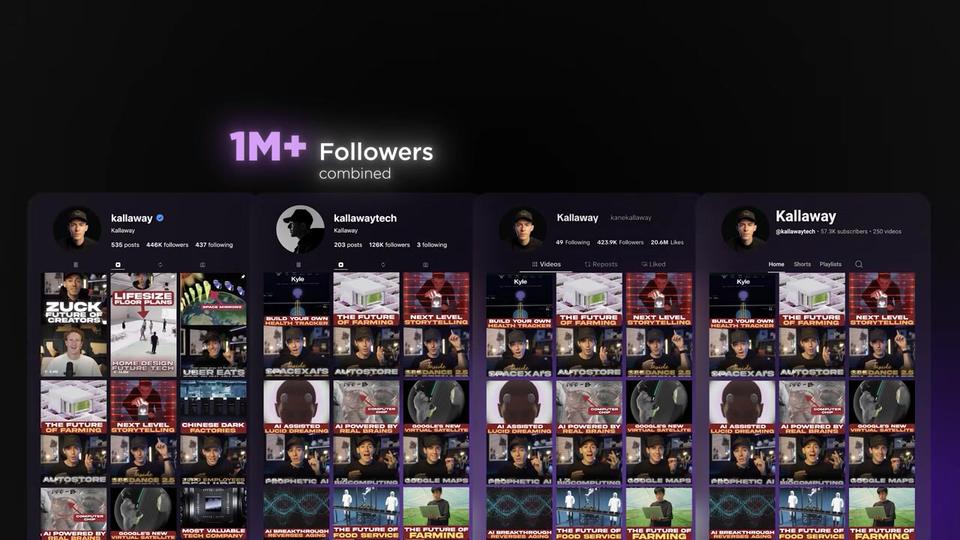
ويستبق الاعتراض بأنه لا يعرف كيف ينتشر: «على قنواتي الأخرى في التقنية والذكاء الاصطناعي، لديّ أكثر من مليون متابع مجتمعين، وتعمّدتُ أن أصير فيروسياً بشدّة في كل فيديو. حصلت على أكثر من مليون مشاهدة في أكثر من 100 مرة مختلفة. فالمسألة ليست أني لا أعرف كيف أنتشر — بل أني أدركتُ أنك للتحويل لا تريد الانتشار الضخم فعلاً، خصوصاً لا في البداية» [0:57].
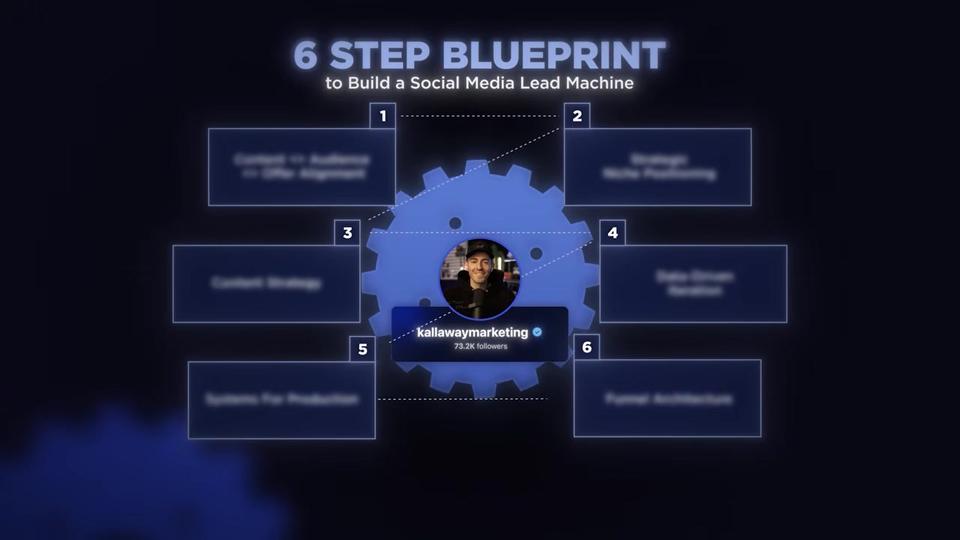
ويحدّد نطاق ما يقدّمه بوضوح: «أريد أن أكون واضحاً جداً. هناك طرق كثيرة مختلفة للعب لعبة المحتوى. الطريقة التي أديرها على هذا الحساب ليست مصمَّمة للانتشار الفيروسي» [1:28]. ويصف الخطوتين الأوليين بأنهما «تموضع استراتيجي في مجالك»، ويشدّد: «الاستراتيجية والتموضع أمران حاسمان لا يمكنك تجاهلهما قبل أن تبدأ النشر».
الخطوة ١ · مواءمة المحتوى مع الجمهور مع العرض
Content–Audience–Offer Alignment [1:47 – 6:07]
«هذا معاكس للحدس قليلاً، لكن إن أردت صناعة محتوى يقود إيراداً، فأنت في الحقيقة لا تريد أن تبدأ من المحتوى. تريد أن تبدأ من العرض وتعمل رجوعاً منه. لأنه من الصعب جداً بناء نظام يطبع عملاء ومبيعات ما لم تكن واضحاً وضوحاً تاماً بشأن ما هو العرض ومن هو المشتري الذي يشتريه» [1:59].
«أي شخص تعمل معه ويساعدك في المحتوى ولا يبدأ من عرضك، فهو يهدر وقتك ومالك.»
والسبب الذي يعطيه: «حين تتّضح لك صورة العرض، تتّضح لك أيضاً صورة المشتري النموذجي، وما نقاط الألم التي لديه فعلاً، وما نقاط الألم التي يظنّ أنها لديه، وأفضل الكلمات والرسائل والعبارات التي سبق أن لاقت صدى ودفعته لشراء عرضك أصلاً» [2:27].
وأضاف تحفّظاً لمن ليس لديه عرض بعد: «إن كنت تشاهد هذا الفيديو الآن ولا تعرف ما هو عرضك، فلا بأس. لا يزال بإمكانك صناعة محتوى يحصد مشاهدات قيّمة، لكن سيكون من الصعب بناء آلة مال من المحتوى ما لم تكن لديك وسيلة لتحصيل المال فعلاً» — ولذلك سمّاها «الخطوة صفر» [2:27].
تمرين «بيان السلطة المستهدَفة» — ومخرجاته الأربعة
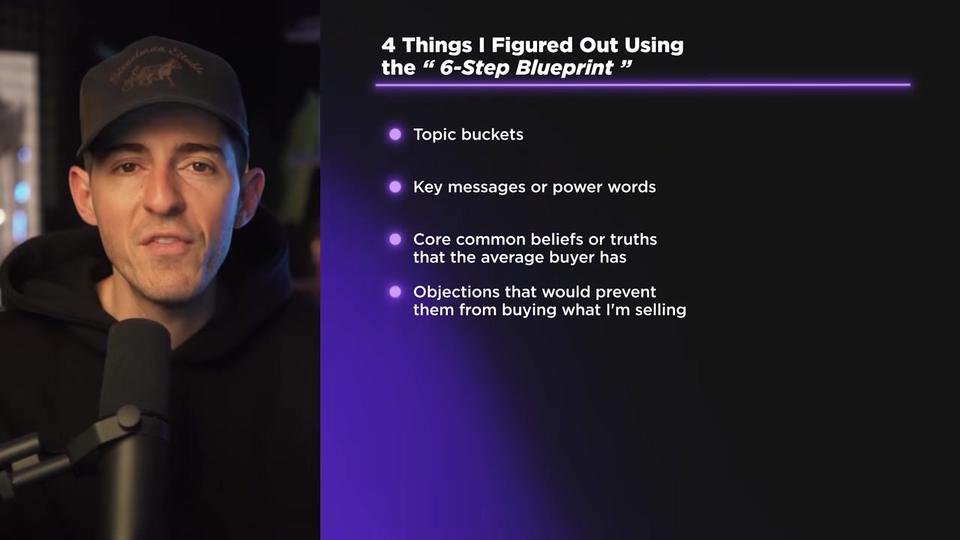
«لديّ تمرين محدّد جداً أُخضِع له كل صاحب عمل بمجرد أن نبدأ العمل معاً، ليساعده على تحديد بيان سلطته المستهدَفة (target authority statement). وهذا يساعده على رسم خريطة عميقة لما هو عرضه بالضبط ومن هو المشتري النموذجي» [4:21]. ومخرجاته أربعة:
وكلفة تجاهل التمرين بالأرقام التي ذكرها: «بدون معرفة هذه الأشياء مسبقاً، يمكنك محاولة صناعة المحتوى، لكن الأرجح أن الأمر سيستغرق منك 20 إلى 50 فيديو من التخمين قبل أن تبدأ في تلقّي إشارة عمّا ينجح فعلاً. أما إن أجريت هذه التمارين وعرفت هذه الأشياء من البداية، فالعملاء يتدفّقون فوراً تقريباً» [4:50].
السبب الكلّي: الثقة تتراكم اتجاهياً
«السبب الكلّي وراء أهمية هذا كله هو أنك لكي تُخرج عملاء ومبيعات من محتواك، تحتاج أن تتراكم الثقة اتجاهياً نحوك في المجال الذي تتحدث عنه. إن كنت تصنع محتوى محاسبة وتبيع خدمات محاسبة، فصناعتك فيديو عن ثقافة البوب قد تجلب ملايين المشاهدات، لكنها لا تراكم ثقة اتجاهياً في مجال المحاسبة لصالحك. ولهذا لا تقود تلك الفيديوهات إلى مبيعات» [5:19].
وكيف طبّقه على نفسه: ذكر عرضين أساسيين — الأول Short Form Academy، يعمل فيه مع أصحاب الأعمال فردياً لتركيب هذه الآلة نفسها: «أرفع مستوى مهاراتهم في المحتوى من 1 من 10 إلى 8 من 10. أراجع شخصياً عدداً من فيديوهاتهم كل أسبوع، وأعطيهم ثلاثة إلى خمسة أمور تكتيكية للتحسين… وبعد 6 إلى 12 شهراً يتخرّجون ويبدأون التوسّع بأنفسهم». والثاني Sandcastles، «منصّتي لصناعة الفيديو القصير أسرع بعشر مرات… طبقة ذكاء البيانات للسوشال ميديا» [2:57].
الخطوة ٢ · التموضع الاستراتيجي في المجال
Strategic Niche Positioning [6:07 – 13:23]
«حيث كانت الخطوة الأولى نظرةً من الداخل إلى الخارج على عرضك لرسم من سيكون المشتري، فالخطوة الثانية من الخارج إلى الداخل: ننظر فعلاً إلى المجال على السوشال ميديا، ومن هم اللاعبون فيه، ونحاول إيجاد مساحة بيضاء نحفر فيها مسارنا الخاص» [5:53].
«الحقيقة أن المشاهد المتوسط لا يملك مساحة ذهنية إلا لتذكّر شخص واحد لكل مسار في كل مجال. لا يستطيع أن يرتّبها كلها إن كنت مشتقّاً من مشتقّ.»
ويسمّي المخرج: «أسمّي هذا زاوية تموضعك الفريدة أو UPA (unique positioning angle). وهناك سبع صفات تموضع يمكنك استخدامها وتكديسها معاً لخلق مسار جديد لك» [6:56].
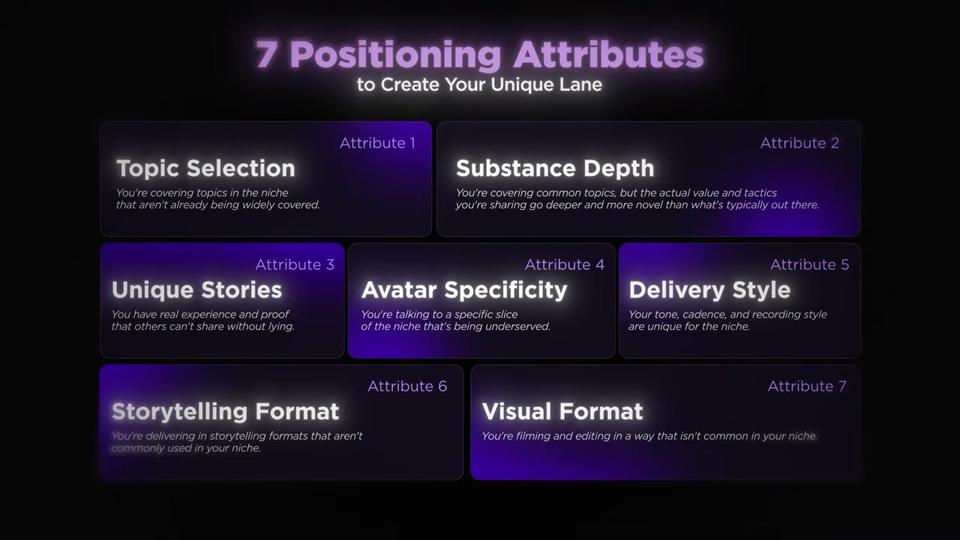
| # | الصفة | معناها كما شرحها |
|---|---|---|
| 1 | اختيار الموضوعات Topic Selection | «تغطّي موضوعات لا تُغطّى عادةً في مجالك.» |
| 2 | عمق الجوهر Substance Depth | «تغطّي موضوعات يُتحدَّث عنها كثيراً أصلاً في مجالك، لكن الجوهر والعمق والقيمة التي توصلها على مستوى آخر تماماً.» |
| 3 | القصص أو المواقف الفريدة Unique Stories | «أن تكون لديك خبرة محدّدة لا يستطيع غيرك مجاراتها إلا بالكذب على أشياء لم يفعلها.» |
| 4 | تخصيص الشريحة Avatar Specificity | «أن تخاطب شريحة محدّدة أو نمطاً معيّناً داخل المجال يُخدَم حالياً خدمةً ناقصة.» |
| 5 | أسلوب الإلقاء Delivery Style | «نبرتك، وإيقاعك، وانسيابك، وطريقتك في سرد القصص — مختلفة نسبةً إلى الآخرين في المجال.» |
| 6 | صيغة سرد القصة Storytelling Format | «أن تستخدم في فيديوهاتك صيغاً ليست مشبَعة حالياً في المجال.» |
| 7 | الصيغة البصرية Visual Format | «أن يتمايز مونتاجك وأسلوبك البصري عن بقية الناس في المجال.» |
وقاعدة الاستخدام: «الهدف أن تكدّس التفرّد عبر أكبر عدد ممكن من هذه المجالات السبعة. وكلما زاد عددها، بنيتَ مساراً أكثر تفرّداً، لأنها تتضاعف معاً لتخلق هذا العنصر الفريد» [8:00]. مع تحفّظ: «بعض الناس في بعض المجالات يستطيعون خلق مساحة بيضاء بالتمايز في عنصر واحد فقط. وآخرون يهاجمون السبعة كلها في آنٍ واحد» [8:27].
ما اختاره لنفسه: أربع من سبع
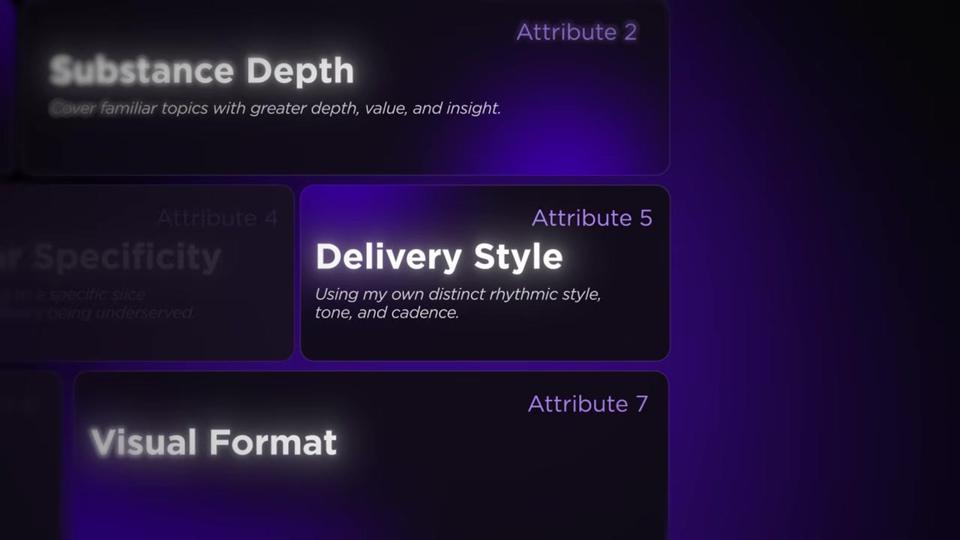
وصرّح بما لم يستطع التمايز فيه: «بالنسبة لثلاث منها — القصص الفريدة، وتخصيص الشريحة، وصيغة سرد القصة — لم أستطع إيجاد طرق للتمايز، لأن ما أردتُ فعله بصدق كان يفعله أشخاص آخرون في المجال أصلاً. فلم أحاول المنافسة هناك» [8:55]. أما الأربع التي اختارها:
- الجوهر: «سأغطّي معظم الموضوعات المغطّاة أصلاً، لكن بمستوى وقيمة وعمق مختلف تماماً في المجال.»
- أسلوب الإلقاء: «كما تلاحظ، لديّ أسلوبي الإيقاعي الخاص ونبرتي وإيقاع إلقائي.»
- الصيغة البصرية: «معظم الصيغ البصرية في المجال خام… أنا اتّخذت نهجاً مختلفاً تماماً: شاشة مقسومة، وموشن جرافيكس راقٍ، ومرئيات راقية. فنفذتُ فوراً لأن قليلين كانوا يفعلون ذلك.»
- سلة موضوعات: «معظم موضوعاتي كانت أشياء يتحدث عنها الناس عادةً — الخطّافات وكتابة السكربت والسرد — لأني أعرف أنها مشبَعة. لكن كانت هناك مساحة بيضاء في سير عمل الذكاء الاصطناعي… أخذ بيانات السوشال ميديا وبناء سير عمل حولها. فتلك كانت السلة التي عرفتُ أني أستطيع الفوز بها لأن معظم الناس لم يكونوا يتحدثون عنها.» [9:25]
القيود الإبداعية — الفائدة الخفية للتموضع
«ما إن تختار تموضعك، فجمالُه أنه يمنحك قيوداً إبداعية. ومن المفارقة أن القيود أفضل شيء تضيفه إن كنت تحاول أنظمة عملك والتوسّع أسرع… إن كان بإمكانك صناعة أي شيء بأي أسلوب لأي شخص بأي طريقة، فذلك يصير محيطاً أزرق. وذلك المحيط الأزرق خانق فعلاً لمعظم الناس» [10:56].
«لديّ قاعدة على قنواتي: إن كان عليّ أن أقوم من هذا الكرسي لتصوير شيء، فلن أصنع تلك الصيغة ولن أصنع ذلك التخطيط البصري… هذا القيد وحده في فئة التخطيط البصري يقلّص خياراتي من نحو 30 تخطيطاً مختلفاً إلى خمسة. وذلك يجعلني أنتقل من الفكرة إلى النشر أسرع بكثير بلا شلل تحليلي.»
ثم فصل بين قيوده الشخصية والقاعدة العامة: «الجميع سيضعون قيوداً إبداعية مختلفة على أنفسهم. أنا هكذا فقط: لا أريد أن أكون صانع محتوى متفرّغاً. أريد صناعة المحتوى وتنمية عملي… أنا لا أخبرك أي قيود إبداعية تضيف. أنا فقط أخبرك أن تضيف بعضها، لأنك بإضافتها تزيل الاختيارية، وذلك يساعدك على التحرك أسرع بكثير» [12:21].
وحدّد الوقت المطلوب للخطوتين معاً: «لا تحتاج إلى إنفاق وقت كثير على ذلك. 30 إلى 60 دقيقة للاثنتين مجتمعتين. هذا كل شيء. لا تماطل وتنفق أسابيع في هذا» [12:46].
الخطوة ٣ · استراتيجية المحتوى: نظام «3-2-1»
Content Strategy [13:23 – 23:39] — أطول فصل في الفيديو، وأكثره تفصيلاً تنفيذياً.
«أوصي كل صاحب عمل بتشغيل ما أسمّيه استراتيجية 3-2-1. لقد أدرتُ استراتيجيات محتوى كثيرة لي على قنوات متعددة ولعدد من أصحاب الأعمال الذين عملت معهم. أنا واثق جداً أن هذه أفضل مزيج محتوى وأسهله تطبيقاً لأي صاحب عمل يحاول جلب عملاء ومبيعات» [13:39].
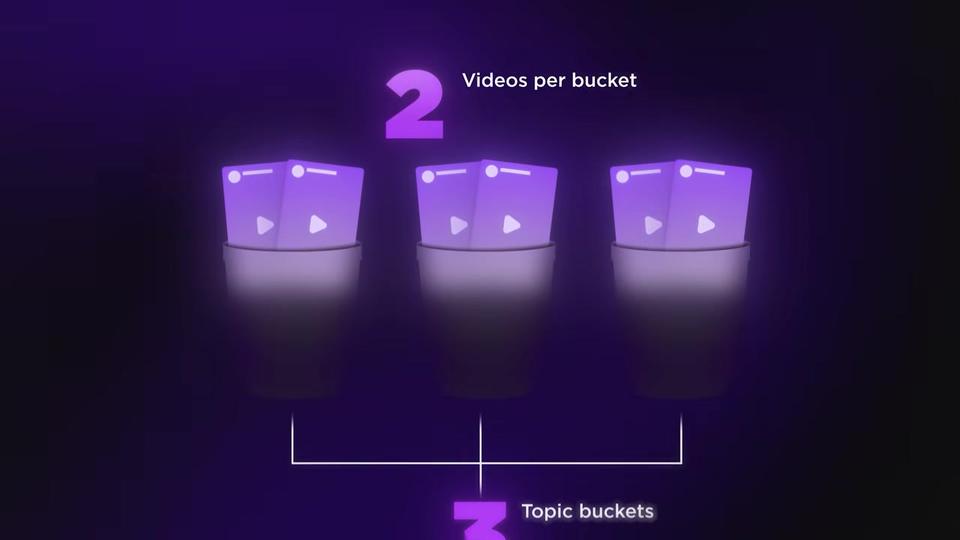
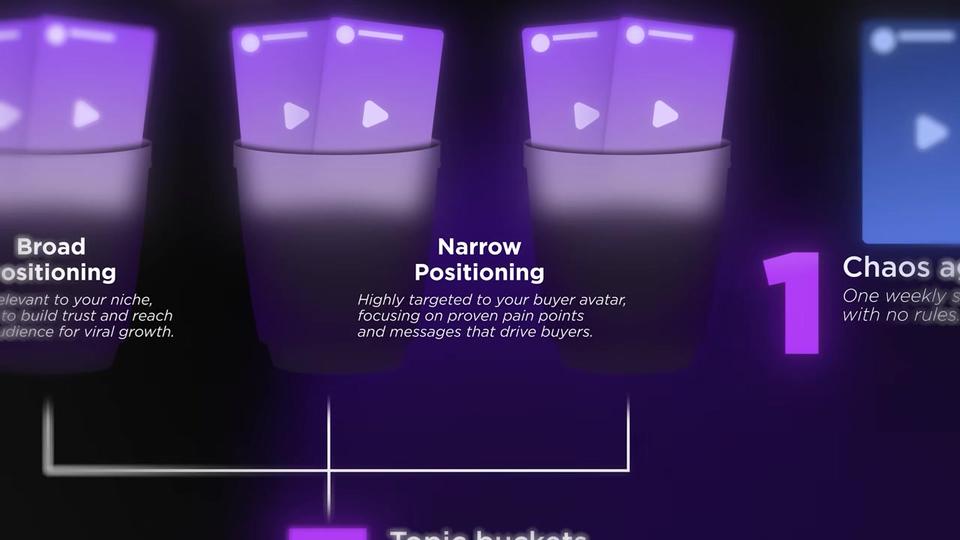
البنية بحسابه: «لديك سبعة أيام في الأسبوع. لديك سبعة فيديوهات في الأسبوع. ثلاث سلال، فيديوهان لكل سلة. ذلك ستة، زائد عامل فوضى واحد. عامل الفوضى يمكن أن يكون مضاعفة على أي من السلال أو أي شيء عشوائي تجده. إن رأيت شيئاً جنونياً وأردت تجربته، فلديك محاولة واحدة في الأسبوع بلا قواعد. أما الستة الأخرى، فنُدير استراتيجية السلال الثلاث بصرامة شديدة» [13:39].
وتوزيع العرض والضيق: «واحدة من السلال، فيديوان منها، تكون موضوعة بشكل أعرض، لكن لا تزال داخل مجالك… مصمَّمة لتنطبق على كثير من الناس في مجالك لتمنحك فرصة نمو فيروسي عريض. هذه هي التي سترفعك بضعة آلاف متابع في المرة. أما السلّتان الأخريان، أربعة فيديوهات، فمصمَّمة لتكون أضيق بكثير ومستهدِفة تحديداً مشتريك النموذجي. هذه ليست مقصودة للانتشار العريض. قد تنتشر، وقد تحالفك الصدفة، لكنها ليست مقصودة لذلك حقاً» [14:05].
كيف تختار السلال الثلاث: مسار التخمين مقابل مسار البيانات
«لديك مساران. الأول أن تخمّن عشوائياً… ستستغرق على الأرجح 20 إلى 30 فيديو لتكتشف إن كانت تنجح فعلاً. الخيار الثاني أن تستخدم البيانات، وأن تدرس أولاً إجابةَ ما الذي نجح فعلاً ثم تهتدي بها. هذا ما أدرتُه بنفسي وما أعلّمه لكل أصحاب الأعمال» [15:07].
وخطوات المسار الثاني كما عدّها:
- حدّد المنافسين: «ستبحث عن أفضل المنافسين بين 10,000 و250,000 متابع في مجالك… نريد الوصول إلى 20 إلى 25 قناة» [15:32].
- ابنِ قائمة المراقبة: عبر البحث بالاسم، أو بلصق رابط الحساب، أو بزرّ التوصيات، أو بوصف المجال إن كنت لا تعرف أحداً. وحكمُه هنا قاطع: «لا يوجد مجال على وجه الأرض تخترعه أنت. أنت فقط لم تبحث بما يكفي لتجد أناساً يخاطبون ذلك النمط من الجمهور» [16:28].
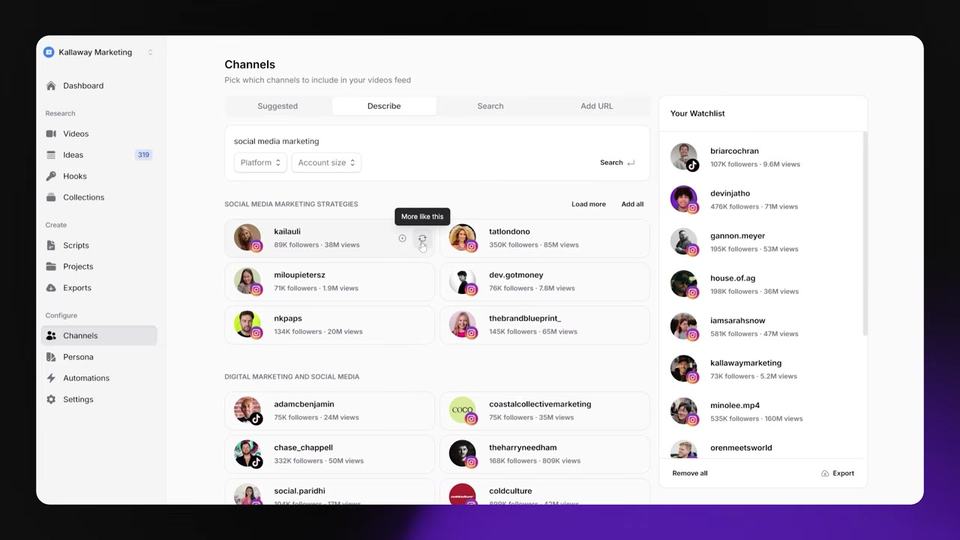
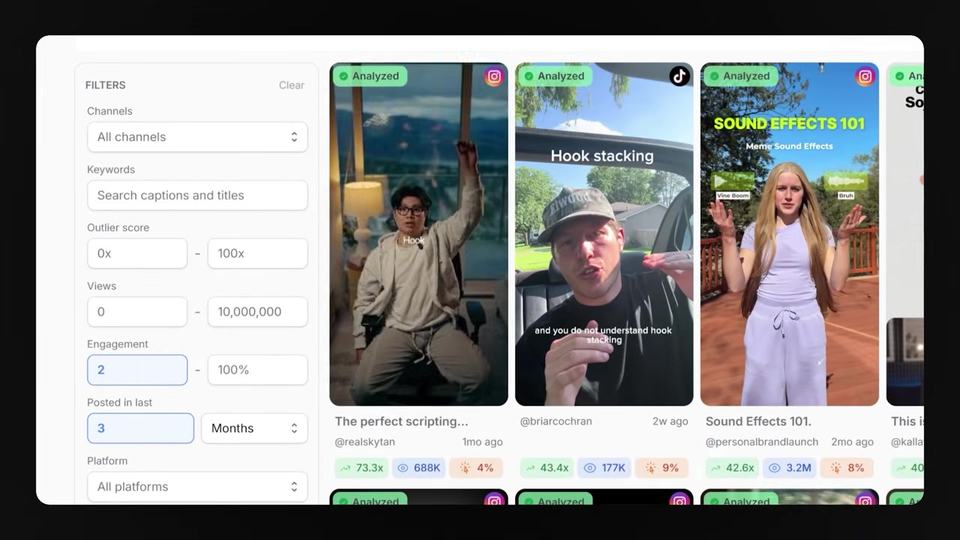
- رشّح الفيديوهات: «اذهب إلى تبويب الفيديوهات… اختر آخر 3 أو 6 أشهر في المرشّحات، واضبط معدل التفاعل على 2٪ كحدّ أدنى — سيستبعد ذلك صفقات الرعاية، ثم رتّب حسب outlier score» [17:21].
- حلّل أفضل 50 إلى 100 منشور: إما واحداً واحداً بعد مشاهدته، أو دفعةً واحدة. «سيستهلك ذلك رصيداً واحداً لكل فيديو. إن كنت على الخطة الاحترافية فلديك 100 رصيد… أوصي بأن تبدأ بـ50 فقط. سيستغرق التشغيل 3 إلى 5 دقائق» [17:48].
- صدّر البيانات: «اضغط زرّ التصدير… اختر CSV. هذا يعطيك الآن كل البيانات المتقدمة عن كل واحد من تلك الفيديوهات، بما فيها الموضوعات، في تقرير CSV واحد» [18:15].
- اسأل نموذج الذكاء الاصطناعي: «ستذهب إلى Claude أو ChatGPT أو Codex، أياً كانت المنصة التي تستخدمها. ستسحب الملف وتشغّل هذا الأمر» [18:42].
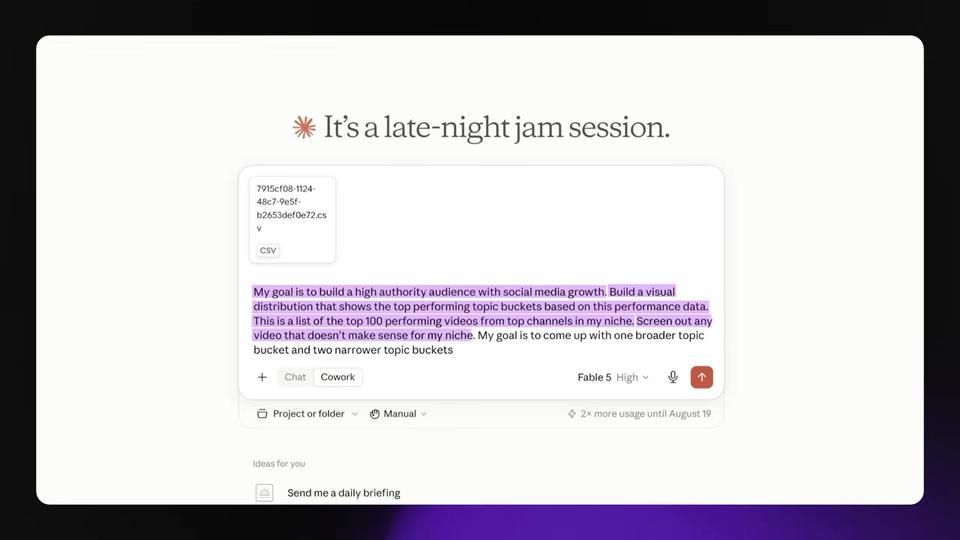
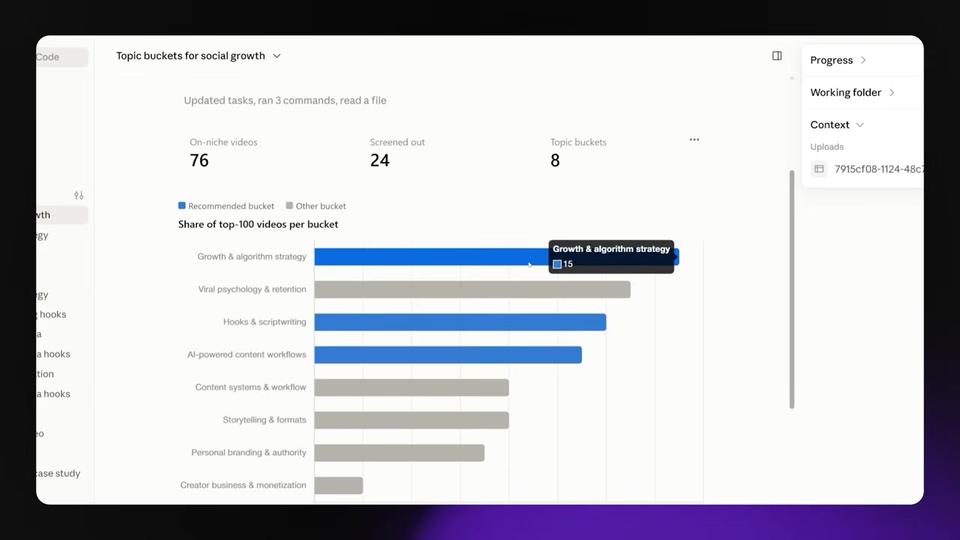
وتوقّعه من هذا المخرَج: «لن تكون ثلاثاً فقط. ستكون على الأرجح خمساً أو ستاً أو سبعاً من السلال. يمكنك من هنا انتقاء ما تريد أن تكون سلالك الثلاث. هذا وحده لن يعطيك الموضوعات لكل فيديو، لكنه يعطيك السلة — فيضيف لك القيود لتبتكر داخلها» [19:12].
دورة إعادة التقييم: أسبوعان
«ستصنع أول سبعة فيديوهات في الأسبوع الأول. ثم تفعل ذلك مرة أخرى في الأسبوع الثاني. عند أسبوعين، ستعيد التقييم: هل أي من السلال تتفوّق حقاً؟ هل أي منها غير متوائم مع ما أشعر بصدق أنه خبرتي أو بصيرتي؟ إن كان كذلك، فاقتلها وأدخِل سلة جديدة. وإن كانت واحدة تعمل حقاً، فضاعِف عليها» [19:38].
«الموضوعات هي العنصر الحامل للمحتوى. هي أعلى رافعة لتحريك أدائك. وكل ما عدا الموضوعات — الخطّافات، البنية، المرئيات — كلّه تزيين. يمكننا إصلاح ذلك لاحقاً. الموضوعات هي قاعدة 80/20.»
ووصف الخطأ الذي يراه يتكرّر: «عادةً مسار من لا يستخدم طريقة البيانات: يصنع 20 إلى 30 فيديو، لا ينجح أيٌّ منها… ثم يبدأ يتلفّت. يقول: لماذا لا ينجح محتواي؟ لماذا أنا في سجن الـ200 مشاهدة؟ يتلفّت، فيرى فيديوهات فيروسية ضخمة لأناس آخرين، فيقول: ربما يجب أن أصنع بعضها. فيبدأ يخرج عن مجاله إلى موضوعات ثقافية كبرى… يصنع بضعة، ربما ينجح واحد، فيحصل على 200,000 مشاهدة ودفقة متابعين ويظن أن الأمر ينجح. لكن ذلك لا ينتهي أبداً إلى عملاء ومبيعات، لأنك خرجت عن شريحة موضوعاتك المعتادة. أنت لا تراكم ثقة اتجاهياً في مجالك. وذلك خطأ فادح» [20:44].
وأعطى مثالاً على أن بعض الموضوعات ميتة مهما فعلت: «خُذ مجال نمو السوشال ميديا عندي. مهما صنعتُ من فيديوهات ومهما قلت، الناس لا يهتمون بالأفكار ولا الاستراتيجية ولا التصوير ولا الإلقاء ولا حتى المونتاج. لا يهتمون بهذه الموضوعات. يهتمون حقاً بالخطّافات وكتابة السكربت والسرد وسير عمل الذكاء الاصطناعي. مهما فعلت، لو صنعت فيديو عن التصوير فلن يبلي حسناً، لأن الموضوع ليس قوياً» [22:07].
نتيجته هو على أول دفعة
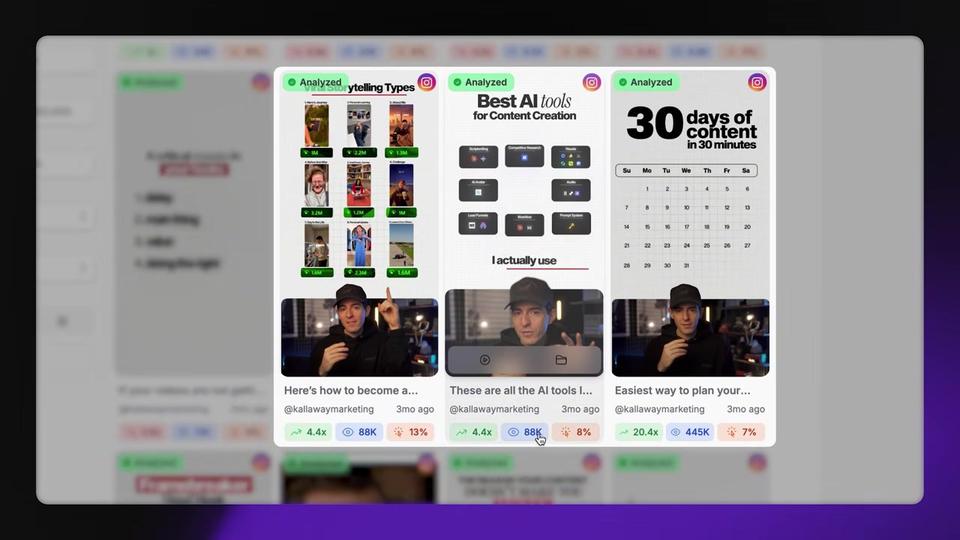
«درستُ حقاً من كان يفوز في السوشال ميديا وبماذا كانوا يفوزون موضوعياً. أدخلتُ ذلك في Claude من Sandcastles. حصلتُ على السلال فقلت: يبدو أن استراتيجية المحتوى والخطّافات والسرد هي ما ينجح الآن. فصنعتُ أول سبعة فيديوهات عليها. حصلتُ على ثلاث ضربات. انتقلتُ من صفر إلى 8 آلاف متابع بسرعة. أظن أني بلغتُ 10 آلاف متابع في نحو 12 يوماً» [22:35].
وأتبعه بتحفّظ صريح: «لن أضمن لك أنك ستبلغ 10 آلاف في 12 يوماً» — «لكن لأني صوّبتُ انتباهي نحو سلال موضوعات مُصادَق عليها مسبقاً، ثم أبدعتُ داخل تلك القيود، استطعتُ الفوز أسرع بكثير» [23:03].
الخطوة ٤ · حلقة التكرار المدفوعة بالبيانات
Data-Driven Iteration [23:39 – 28:47]
«أحبّ أن أسمّيها الحلقة التكرارية المدفوعة بالبيانات. أنشر سبعة فيديوهات. أدع البيانات تخبرني بما ينجح. السبعة التالية أستخدم البيانات. والسبعة التالية أستخدم البيانات. وأعزّز تعلّمي باستمرار لأتخذ قرارات أفضل فأفضل» [23:37].
ويعرّف دوره بأنه «مُخصِّص وقت»: «أريد أن أنزع المخاطرة عن جهدي، حتى إذا ضغطتُ نشر تكون لديّ أفضل فرصة لأن ينجح» — «هناك صانعون يرتجلون ولا يريدون استخدام البيانات، ويقولون: أنشر ما أشعر به. ذلك ليس أنا. أنا صاحب عمل. أنا شخص مشغول. لا أريد إنفاق الوقت في صناعة فيديوهات قد لا تنجح. لا أريد الحديث عن مشاعري في الفيديوهات. كل ما أريده هو أن يخرج من الطرف الآخر عملاء ومبيعات» [24:04].
«لو أعطيتك إعلاناً مدفوعاً وقلت: هذا الإعلان يعيد خمسة أضعاف نقداً — هل ستصنع إعلاناً جديداً أم ستضخّ مالاً أكثر في الإعلان الذي يعيد خمسة أضعاف؟ بالطبع ستضخّ في الفائز. والعضوي يعمل بالطريقة نفسها: تجد الفائزين، تدع البيانات تخبرك لماذا فازوا — وهو أمر غير بديهي أحياناً — ثم تضاعف.»
الأداتان اللتان يستخدمهما
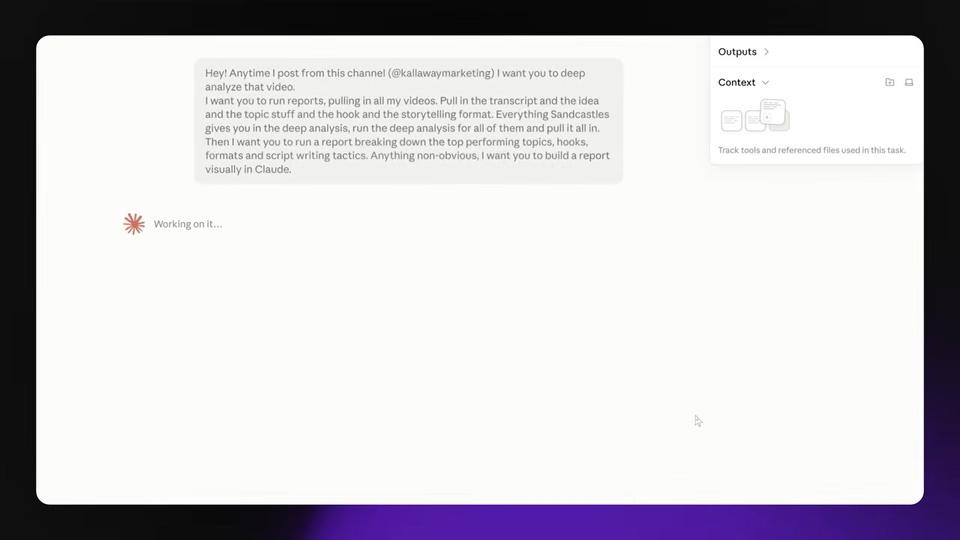
ويصف الـMCP بأنه «الجسر الذي يضخّ بياناتك الاجتماعية إلى Claude حتى تستطيع آلة Claude تحليلها لك» [24:58]. والنتيجة العملية: «أحضر فقط والتقرير مصنوع لي» — «وما أفعله هو قراءة تلك التقارير. مهما قالت لي: اصنع هذه السبعة، اصنع اثنين آخرين مثل هذا، توقّف عن فعل هذا، قل هذه الكلمات، توقّف عن قول تلك الكلمات — أياً كان ما تقوله، أفعله في السبعة التالية» [25:25].
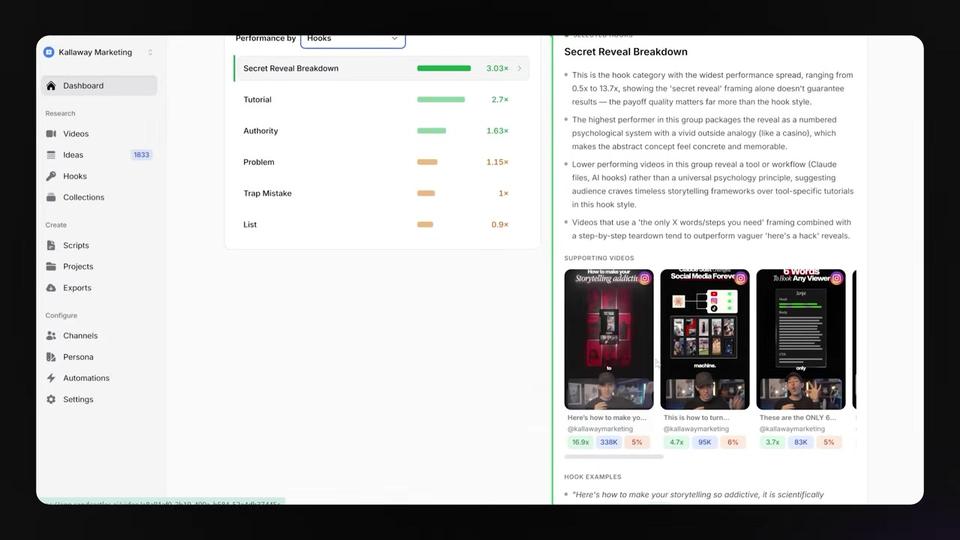
وشرط تشغيلها كما ذكره: «ما إن توثّق حساباتك الاجتماعية، ستُريك الموضوعات والخطّافات والصيغ وتكتيكات كتابة السكربت، وسترتّبها كلها لك» [26:18]. ويصفها بأنها «نسخة أخفّ وأسرع من ذلك التقرير العميق، تحدث لك آلياً» — «إن أردتَ تشغيل تقرير Claude فلست بحاجة إلى النظر في اللوحة. لكني أجد أنّ فتح اللوحة مرة واحدة يومياً وقراءة ما تقوله مفيد جداً حين أصنع الفيديوهات» [26:18].
الاكتشاف غير البديهي — بمثال واحد وثّقه
«في أول سبعة فيديوهات، أربعة لم تنجح وثلاثة نجحت. ثم في الدفعة التالية نجح بعضها وفشل كثير منها. ولم أكن متأكداً لماذا لم تنجح، لأني كنت أُجري تنقيح الموضوعات. فسألتُ Claude: حلّل الفيديوهات تحليلاً عميقاً، وشغّل تقريراً كاملاً، وأخبرني» [27:13].
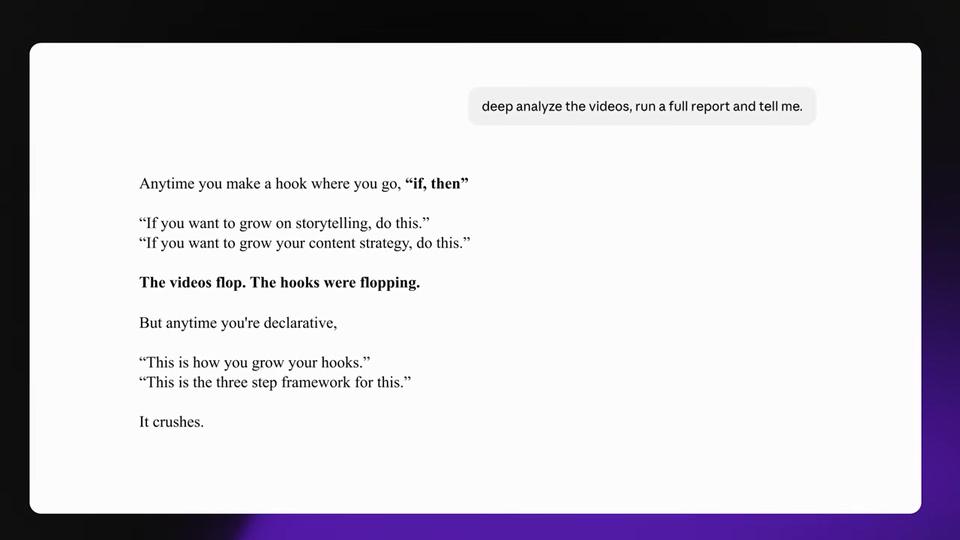
وخلاصته من هذه الواقعة: «أنا أعيش في المحتوى كل يوم. وأنت إن لم تكن تعيش فيه وكنت مبتدئاً نسبةً إليّ، فهذه أنماط خفية لن تراها. ما لم تُغذِّ كل البيانات إلى Claude وتجعله يستخرج الأنماط، لن تعرفها» — «وبمجرد أن أخبرني، توقّفتُ عن صناعة خطّافات كهذه، وبدأت الفيديوهات تنمو» [28:04].
وحجم العيّنة يتراكم: «تصنع سبعة بأفضل تخمين لديك. تُغذّي البيانات. تدع Claude يخبرك بما نجح. تحمل ذلك إلى الدفعة التالية. الآن لديك 14 لتحليلها — عيّنة أكبر. سبعة أخرى، فتصير 21… أنا في الجولة الثانية عشرة الآن، ولديّ سلفاً صيغة لما ينجح معي بالضبط» [28:30].
الخطوة ٥ · أنظمة الإنتاج
Systems For Production [28:47 – 35:06]
حجم الإنتاج الذي يتحدث عنه: «لكي أضغط نشر 99 مرة في آخر 100 يوم — 85 ريلز و14 كاروسيل — كان لا بد أن تكون أنظمتي مضبوطة لأبلغ هذا الحجم، لأني لا أفعل هذا بدوام كامل» [28:59].
«بصدق، وأعني هذا بصدق وإخلاص: أنفق 4 إلى 5 ساعات فقط أسبوعياً على هذه القناة. كل فيديو، كل كاروسيل، كل شيء مجموعاً — 4 إلى 5 ساعات أسبوعياً كحد أقصى.»
والوسيلة: «الطريقة التي أفعل بها ذلك هي الدُّفعات (batching)، لأني أنظر إلى البيانات… على فيديوهات التقنية قلتُ في الماضي إني لم أعمل بالدفعات أبداً، لكن هنا عملتُ بالدفعات من البداية وكانت نقلة نوعية، لأني أستطيع استخدام البيانات لأفهم بسرعة ما ينجح وما لا ينجح، فأُشغّل دفعات من سبعة أو عشرة في المرة، وأشعر بالثقة أني لا أحتاج حلقة البيانات يومياً — أستطيع الاكتفاء بالأسبوع» [29:26].
أ · الخطّافات: ادرس فائزيك أنت
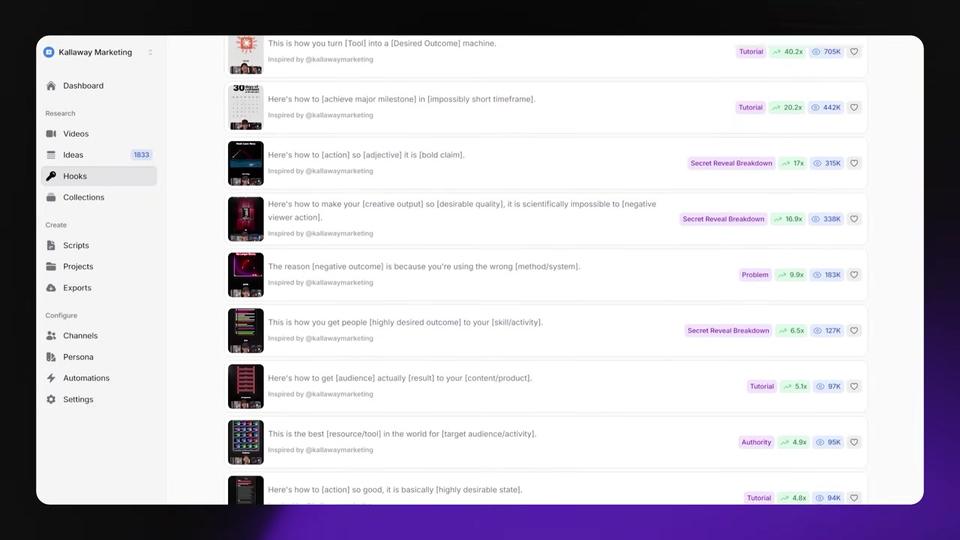
«ثم أدرس فقط الكلمات القوية والصيغ من كل خطّاف من الخطّافات الأعلى أداءً. فكلما صنعتُ موضوعاً جديداً في سلة، أذهب وأنظر وأقول: حسناً، أنا أصنع فيديو عن سير عمل الذكاء الاصطناعي — ما الخطّافات التي استخدمتها لسير عمل الذكاء الاصطناعي وكانت الأفضل أداءً؟ وأي كلمات قوية أو صياغات استخدمتُها للإشارة إلى تلك الفيديوهات من قبل؟ آه، لاحظتُ نمطاً هناك. حسناً، سأشغّله مجدداً» [30:22].
ب · الأفكار: أربعة أنابيب
«تعرف السلال بناءً على البيانات، لكن الأفكار الفردية، كيف تأتي بها؟» — عدّ أربعة مصادر، اثنان رئيسيان واثنان احتياطيان:
| # | الأنبوب | كيف يعمل بنصّه |
|---|---|---|
| 1 | فائزو قناتك أنت | «لو صنعتُ فيديو عن إطار سردي من ثلاث خطوات — هل هناك أطر سردية أخرى أعرفها من ثلاث خطوات أستطيع قولها بالطريقة نفسها؟ هل هناك أطر أخرى قريبة من الذي صنعته؟» [30:54] |
| 2 | شواذّ المنافسين | «رتّب حسب outlier score مع كل القنوات، وانظر ماذا يتحدثون عنه، وشاهدها، ثم اسأل نفسك: هل أعتقد شيئاً مختلفاً عمّا قالوه؟ إن كان كذلك، فهذا موضوع ممتاز» [31:22] |
| 3 | ردود فعل التصفّح | «كل مرة تصل إلى شيء يلاقي صدى لديك في مجالك، اسأل نفسك سؤالين: (١) لو صنعتُ نسخة من هذا، هل ستراكم ثقة اتجاهياً لهذا المجال؟ (٢) هل لديّ شيء مختلف بصدق أقوله وأؤمن به فعلاً؟» — ووصفه بأنه «أكثر ضوضاءً وأقل كفاءة»، و«إن تصفّحت 30 إلى 60 دقيقة تستطيع الحصول على الكثير» [31:47] |
| 4 | محادثات العملاء | «أنت تتحدث إلى العملاء. تقرأ التعليقات. ما الذي يقوله العملاء ويثير اهتمامهم، أو ما نقطة الألم الشائعة التي تسمعها مراراً؟ يمكن أن يكون ذلك فيديو ضيّقاً ممتازاً — إن كان داخل إحدى سلال موضوعاتك المثبتة» [32:14] |
والهدف الكمّي: «عبر تلك الأنابيب الأربعة، أحاول الوصول إلى سبع أفكار مختلفة لدفعة الأسبوع. وأريد لتلك الأفكار بالطبع أن تكون داخل سلال الموضوعات الثلاث التي صادقنا عليها» [32:44].
ج · كتابة السكربت
«إن كنتُ أعيد مزج فيديو لي أو فيديو شاذّ لمنافس، أفتح التحليل العميق… وأنظر إلى التفريغ، وأضغط الزرّ الذي يريني أقسام القصة. وإن احتجت، أنسخ ذلك الفيديو الواحد إلى Claude وأقول: مرحباً، أحاول كتابة سكربت مشابه لهذا ببنية مشابهة. هذه فكرتي. هذه زاويتي. ماذا سأقول لو أردت كتابة هذا في سكربت؟ كيف سيبدو؟ — فأبدأ من هناك ثم أعيد المزج تبعاً لذلك» [32:44].
د · التصوير والمونتاج
«بالنسبة للتصوير، كما قلت، أصوّر بالدفعات. أستطيع تصوير نحو عشرة في 45 إلى 60 دقيقة» [33:38]. أما المونتاج فحكمه فيه قاطع:
«إن كنت صاحب عمل، فليس لديك وقت لمونتاج فيديوهاتك بنفسك… إن كنت تحاول فعلاً إدارة عملية وبناء نظام تنشر فيه سبع مرات أسبوعياً، فلا يجب أن تكون أنت من يُنتج. وما إن تستطيع تحمّل كلفة محرِّر — وهي نحو 100 إلى 150 دولاراً للفيديو — فيجب أن توظّفه فوراً.»
مع تحفّظ لمن لا يستطيع: «إن لم تكن في مرحلة توظيف محرِّر فلا تقلق، ستفعلها بنفسك. إما أن تدفع بالوقت أو بالمال. لكن هذا سيكون القيد الرئيسي الذي يمنعك من الانتقال من فيديوهين إلى أربعة أسبوعياً إلى سبعة» [34:05].
إفصاح ورد في الفيديو نفسه: توقّف ليعلّق على كثرة ذكره لأداته: «إن كنت تسمعني أتحدث عن Sandcastles كثيراً وتقول: هذا الرجل يتحدث عنها كثيراً — Sandcastles هي دماغي في المحتوى موضوعاً داخل برمجية. نحن نبني حرفياً ميزات لحلّ نقاط الألم التي أحتاج أنا حلّها كصانع وصاحب عمل في الميدان… في البداية حين أطلقناها ذكرتُها لكني لم أتعمّق فيها، وذلك لأن الميزات لم تكن الأفضل في فئتها. وهي الآن الأفضل في فئتها بفارق كبير لدرجة أنه سيكون جُرماً ألّا أذكرها» [34:05].
الخطوة ٦ · هندسة القُمع
Funnel Architecture [35:06 – 36:40] — أقصر فصل، وهو الذي يحوّل المشاهدات إلى مال.
«القطعة الأخيرة لجعل المال يخرج من الطرف الآخر هي هندسة القُمع. لأنه شيء أن تستطيع الحصول على مشاهدات عند الطلب. وشيء آخر أن تحصل على مشاهدات ويتابعوك. وشيء ثالث تماماً أن تحصل على المشاهدات والمتابعين وتحوّلها فعلاً إلى عملاء ومبيعات» [35:04].
ومعدّله الحالي: «أنا الآن أُراكم قائمتي البريدية بمعدل 10 إلى 15 ألف بريد شهرياً، وأفعل ذلك اعتماداً على نمو الفيديو القصير فقط» [35:04].
«كل فيديو أصنعه يحمل دعوة إلى إجراء مع مغناطيس عملاء (lead magnet) مخصَّص لذلك الفيديو تحديداً.»
والمبدأ الحاكم كما صاغه: «ربما سمعت هذا من قبل، لكن إنستغرام منصّة مستأجَرة، والبريد مملوك. هدفك أن تنقل أكبر عدد ممكن من الناس من المكان المستأجَر إلى المكان المملوك بأسرع ما يمكن» [35:31].
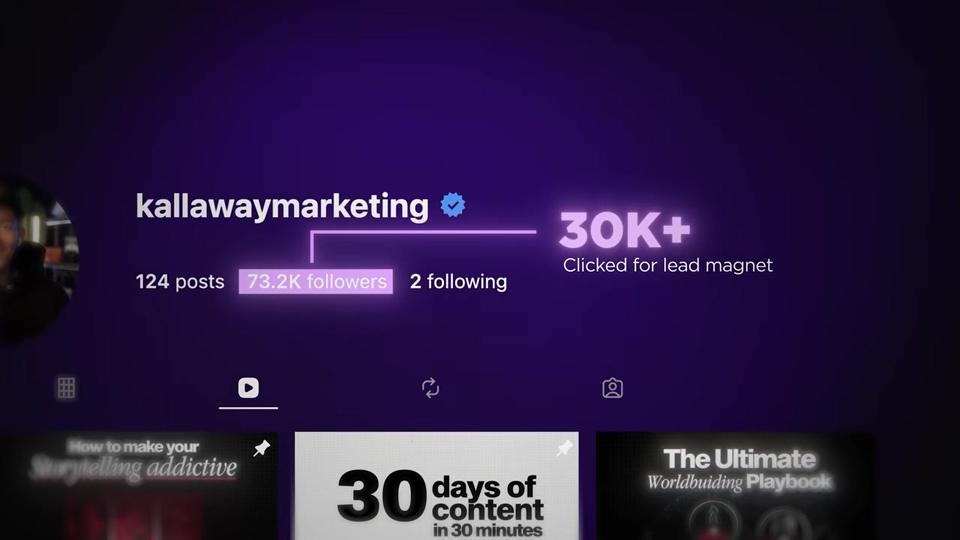
وحسابُه للنسبة كما نطقه: «لديّ نحو 65,000 متابع وقت هذا التسجيل، ونحو 40 إلى 50 ألفاً منهم ضغطوا طالبين مغناطيس العملاء، بعضهم مكرّر. فلدينا نحو 30,000 بريد فريد من ذلك. وكل ذلك من 4 إلى 4.5 مليون مشاهدة فقط في أول 100 يوم. هذا يعني أن نحو 1٪ من مشاهدي الفيديوهات يعطونني بريدهم — وهي نسبة جنونية» [35:56].
والقاعدة التي استخرجها منها: «لو كنت صاحب عمل وحصلت على 100,000 مشاهدة وحصلت على أكثر من ألف بريد، فستطبع. سيكون ذلك العمل صحّياً جداً جداً» [35:56].
وسمّى المكوّن الأخير دون شرحه: «أسمّي هذه تدفّقات تفعيل المشتري (buyer activation flows). هي كيف تأخذ مشاهداً فعلاً وتجعله نشطاً ليصير مشترياً. لن أتحدث الآن عن كيفية بناء هذه التدفّقات… لكن هذا حاسم. هذا هو الميل الأخير في تحويل المشاهدات إلى دولارات» [36:23].
ملاحظات على المصدر
مواضع تعارض فيها المصدر مع نفسه أو ورد ملتبساً. أُثبتت كما هي ولم تُحسم.
- عدد المتابعين: قال في المقدمة «أكثر من 60,000 متابع» [0:00]، وقال في الخطوة السادسة «نحو 65,000 متابع وقت هذا التسجيل» [35:56]، بينما تُظهر لقطة الحساب على الشاشة 73.2K متابع [36:05]. ولم يوفّق المصدر بين هذه الأرقام.
- عدد المنشورات: قال «99 مرة في آخر 100 يوم — 85 ريلز و14 كاروسيل» [28:59]، بينما تُظهر لقطة الحساب 124 منشوراً [36:05].
- عدد الفيديوهات الضائعة بلا بيانات: ذكر ثلاثة مدَيات مختلفة في الفيديو نفسه — «20 إلى 50 فيديو من التخمين» [4:50]، و«20 إلى 30 فيديو» [15:07]، و«أول 30 إلى 50 فيديو من الارتباك» [20:11].
- مشاهدات الفيديو السادس: قال «430,000 مشاهدة» [22:35]، بينما يظهر في لقطة الشبكة على الشاشة 435K [23:00].
- عدد السلال الفائزة: قال إن ثلاثة فيديوهات من أول سبعة «انفجرت» فصار لديه ثلاثة فائزين [26:47]، ثم سمّى سلّتين فقط — «استراتيجية المحتوى» و«السرد الفيروسي» — ولم يسمِّ الثالثة [27:13].
- اسم النموذج: ورد في التفريغ «Fable 5» بوصفه النموذج الذي يختاره داخل Claude [19:12]، ويظهر الاسم نفسه في لقطة الشاشة عند الموضع نفسه.
- رقم المشاهدات الكلّي: ورد في التفريغ الآلي مشوّشاً هكذا: «4 to 4 1.5 million views» [35:56] — أُثبت في هذا الملخص بصيغة «4 إلى 4.5 مليون» كما تُقرأ، والأصل غير قاطع.
- الإفصاح التجاري: الأداة التي يوصي بها في معظم الخطوات التنفيذية (Sandcastles) يملكها هو، وقد صرّح بذلك في الفيديو: «Sandcastles هي دماغي في المحتوى موضوعاً داخل برمجية» [34:05]. كما أن العرضين اللذين يذكرهما في الخطوة الأولى هما منتجاه، والفيديو ينتهي بدعوة للعمل معه مدفوعاً [37:21].
- أسماء وردت في التفريغ الآلي بصيغ مضطربة: «Callaway» بدل Kallaway، و«San Castles / Sand Castles» بدل Sandcastles، و«Chat GBT» بدل ChatGPT، و«Codeex» بدل Codex، و«acrue» بدل accrue. اعتُمد في هذا الملخص الهجاء الوارد في وصف الفيديو الرسمي.
- ما استُبعد: فقرات الترويج لمنتجاته وروابط الالتحاق ببرامجه المدفوعة المتناثرة في الفيديو — ليست من مادة الشرح. وأُبقي منها ما هو جزء من الشرح نفسه (الإفصاح أعلاه، وكلفة المحرِّر، والعرضان في الخطوة الأولى).
خاتمة الفيديو
«هذه الآن رابع قناة أنمّيها فوق 50,000 متابع. وبنهاية العام ستكون عند 100 ألف. تلك أربع مرات، زائد قناة اليوتيوب هذه، أستطيع فيها تجاوز حجم جمهور من ستة أرقام» [36:50].
ويحدّد لمن هذا النظام: «لقد توسّعتُ على نموذج صفقات العلامات التجارية، وتوسّعتُ على نموذج العملاء والمبيعات. أتقنتُ كليهما تماماً. فتحديداً، إن كنت تريد جلب العملاء المحتملين، فهذا هو النظام الذي ينبغي أن تشغّله» [36:50]. ويقول إنه ركّب هذا الدليل «عشرات ومرّات عديدة عبر مجالات كثيرة مختلفة» [37:21].
خطة تطبيقية
هذا القسم ليس من الفيديو. أضفتُه بناءً على طلبك النصّي، ووسمتُه بحسب المادة 4 من دستور الملخصات.
ما في هذا الصندوق وما ليس فيه: كل إجراء في الجدول أدناه مأخوذ من الفيديو ومنسوب إلى طابعه الزمني — فإن لم يكن أمام السطر طابع زمني، فهو ترتيبي أنا لا كلامه. أما التتابع الزمني (ما قبل ماذا، وفي أي أسبوع) ومؤشرات التوقّف فهي بناءٌ منّي على ما ورد؛ الفيديو يعطي الخطوات لا التقويم.
المرحلة صفر — قبل نشر أي فيديو (جلسة واحدة، 30 إلى 60 دقيقة)
هذه هي مدّته هو للخطوتين مجتمعتين [12:46].
- اكتب العرض أولاً، لا المحتوى. حدّد ما تبيعه ومن يشتريه [1:59]. إن لم يكن لديك عرض، فهذه خطوتك الصفرية قبل أي شيء آخر [2:27].
- استخرج الأربعة: سلال الموضوعات · الرسائل والكلمات القوية · المعتقدات التي يحملها المشتري أصلاً · الاعتراضات التي تمنعه من الشراء [4:50].
- ارسم مسارك: راجع صفات التموضع السبع، واختر ما تستطيع التمايز فيه بصدق، واترك ما يجيده غيرك أصلاً [8:55].
- اكتب قيودك الإبداعية — قيداً واحداً على الأقل في التخطيط البصري وقيداً في الصيغة [11:24].
المرحلة الأولى — أسبوع البيانات (قبل الدفعة الأولى)
| # | الإجراء | الرقم كما ورد | الموضع |
|---|---|---|---|
| 1 | اجمع قنوات منافسة في مجالك | 20–25 قناة · بين 10,000 و250,000 متابع | [15:32] [16:02] |
| 2 | رشّح فيديوهاتهم | آخر 3 أو 6 أشهر · تفاعل ≥ 2٪ · ترتيب بـoutlier score | [17:21] |
| 3 | حلّل أفضل المنشورات وصدّرها CSV | ابدأ بـ50 · التشغيل 3–5 دقائق | [17:48] [18:15] |
| 4 | مرّر الملف إلى نموذج ذكاء اصطناعي واطلب توزيع سلال الموضوعات | مخرَج متوقّع: 5–7 سلال | [18:42] [19:12] |
| 5 | اختر 3 سلال: واحدة عريضة داخل مجالك، واثنتان ضيّقتان على مشتريك | 3 سلال | [14:05] |
المرحلة الثانية — دورة التشغيل الأسبوعية
- سبعة منشورات في الأسبوع: سلة عريضة ×2 + سلة ضيّقة ×2 + سلة ضيّقة ×2 + عامل فوضى ×1 [13:39].
- صوّر بالدفعات: عشرة تسجيلات في 45–60 دقيقة [33:38].
- الأفكار من الأنابيب الأربعة بالترتيب: فائزوك أنت ← شواذّ المنافسين ← ردود فعل التصفّح ← محادثات العملاء [30:54]–[32:14].
- الخطّاف: قبل كل فيديو، ارجع إلى خطّافاتك الأعلى أداءً في السلة نفسها واستخرج الكلمات القوية والصيغة [30:22].
- كل فيديو ينتهي بدعوة إلى مغناطيس عملاء مخصَّص لذلك الفيديو — لا مغناطيس واحد عام [35:31].
المرحلة الثالثة — نقاط القرار
| متى | ماذا تفعل | الموضع |
|---|---|---|
| بعد كل دفعة (7) | غذِّ بيانات الدفعة إلى النموذج واسأل عن الأنماط غير البديهية — لا الموضوعات وحدها بل الخطّافات والصيغ وتكتيكات السكربت | [25:25] [27:39] |
| بعد أسبوعين (14) | أعِد التقييم: سلة متفوّقة ← ضاعِف عليها. سلة غير متوائمة مع خبرتك ← اقتلها وأدخِل بديلة | [19:38] |
| عند 2–4 فيديو أسبوعياً | القيد هو المونتاج. وظّف محرِّراً (100–150 دولاراً للفيديو عنده) لتصل إلى سبعة | [33:38] [34:05] |
| مستمر | لا تخرج عن مجالك ولو أغراك انتشار غيرك — المشاهدات خارج المجال لا تراكم ثقة اتجاهية ولا تُحوِّل | [20:44] |
ثلاثة تحفّظات قبل أن تبني على هذا
هذه قراءتي أنا، لا قوله:
- الأرقام صادرة عن الطرف المستفيد ولم يتحقّق منها أحد. كل رقم في الفيديو رواية صاحبه عن نفسه، وثلاثة منها تتعارض مع ما يظهر في لقطاته (المتابعون، عدد المنشورات، مشاهدات الفيديو السادس — انظر «ملاحظات على المصدر»).
- نقطة البداية ليست صفراً. الحساب «الجديد» أطلقه شخص يقول إن لديه أكثر من مليون متابع على قنوات أخرى وأكثر من 100 فيديو تجاوز المليون مشاهدة [0:57]. جزء من سرعة الـ100 يوم قد يعود إلى ذلك، والفيديو لا يفصل هذا الأثر.
- الخطوات التنفيذية مربوطة بأداة يملكها هو. وقد صرّح بذلك [34:05]. والمنطق نفسه قابل للتنفيذ بأي مصدر بيانات: المطلوب فعلياً هو جدول فيه أفضل فيديوهات منافسيك مع موضوعاتها وأدائها، ثم سؤال نموذج لغوي عن توزيع السلال. الأداة تختصر الجمع، ولا تصنع الاستراتيجية.
أصغر نسخة قابلة للتنفيذ هذا الأسبوع
إن أردت اختبار الفكرة قبل الالتزام بالنظام كاملاً: اكتب عرضك ومشتريك في صفحة واحدة، اجمع يدوياً أفضل 30 فيديو من 10 منافسين، صنّفها في سلال، اختر ثلاثاً، وانشر سبعة فيديوهات في أسبوع واحد بمغناطيس عملاء واحد لكل فيديو. ثم احكم على الرقم الذي يحكم به هو: نسبة المشاهدات إلى البُرد، لا عدد المتابعين [35:56].
المنهجية: أُعدّ هذا الملخص في 2 سبتمبر 2026 من مصدرين من الفيديو نفسه: (١) التفريغ النصي الآلي بلغته الأصلية (الإنجليزية)، مسحوباً بأداة yt-dlp بصيغة json3 — نحو 10,166 كلمة، وقُرئ كاملاً؛ (٢) لقطات مستخرَجة من ملف الفيديو مباشرة بأداة ffmpeg عند الطوابع الزمنية المذكورة تحت كل لقطة، بدقة 960 بكسل عرضاً، غير معدّلة ولا مقصوصة ولا ممدّدة — وكل تعليق تحت لقطة يصف ما يظهر فيها فقط. كل رقم وكل اقتباس قولُ المتحدّث بطابعه الزمني كما ورد، وليس قياساً ولا حساباً منّا، ولم يُصحَّح شيء ممّا ورد في المصدر، بما في ذلك المواضع المتعارضة المثبتة في «ملاحظات على المصدر». الترجمة حرفية بالمعنى الدقيق مع الحفاظ على التحفّظات كما نطقها («على الأرجح»، «لن أضمن لك»، «نحو»). الملخص نفسه خالٍ من أي إضافة أو استنتاج؛ والقسم الوحيد المضاف هو «خطة تطبيقية»، أُدرج بناءً على طلبك النصّي «وضع في النهاية خطة تطبيقية واضحة»، ووُضع في صندوق موسوم بحسب المادة 4 من دستور الملخصات، ومُيّز داخله ما هو منقول عن المصدر بطابعه الزمني ممّا هو ترتيبٌ أو قراءةٌ منّا. النشر: رُفعت هذه الصفحة أول مرة بتاريخ 6 سبتمبر 2026، بناءً على أمرك النصّي الصريح لهذا الملف بعينه — وهو استثناء موثَّق من المادة 6 من دستور الملخصات التي تجعل الملخصات ملفات محلية بشكل افتراضي. وتبقى الصفحة موسومة noindex بعد النشر كما توجب المادة نفسها. والنشر على «ملخصاتي»: رُفعت هذه الصفحة على shortitfor.me/social بتاريخ 13 سبتمبر 2026، بناءً على أمر المالك النصّي الصريح لهذا الملف بعينه («ارفعها على موقع ملخصاتي») — استثناءٌ موثَّق من المادة 6 من دستور الملخصات، والصفحة موسومة noindex كما توجب المادة نفسها.
A faithful, quote-by-quote summary of the video “I Blew Up On Social Media in 100 Days to Prove It's Not Luck (Again)” by the owner of the Kallaway channel, in which he explains the six-step blueprint he applied to a new Instagram account over its first 100 days. The stills on this page are taken from the video itself, with their timestamps.
▶ Watch the original video
The Central Claim: Growth Without Going Viral
The video opens by rejecting the premise that most growth content rests on.
He says he ran “a very different social media strategy than you typically see,” and that he designed it to rapidly grow his authority and following without needing to go viral [0:00]. The evidence he offers for this is numerical:
“Of my 85 videos posted, only six of them have more than 100,000 views. None of them have more than a million. And that was completely on purpose.”
He preempts the objection that he simply doesn't know how to go viral: “On my other channels in tech and AI… I have over a million combined followers, and I purposely tried to go mega viral on every single video. I've gotten over a million views more than 100 different times. So, it's not that I don't know how to go viral. It's that for conversion, I've realized you actually don't want to go mega viral, especially not at the beginning” [0:57].
He is clear about the scope of what he's offering: “I want to be very clear. There are many different ways to play the content game. The one that I'm running on this new Instagram channel… is not designed to go viral” [1:28]. He describes the first two steps as “strategic positioning in your niche,” and stresses: “the strategy and the positioning are critical things that you cannot ignore before you start posting.”
Step 1 · Content-Audience-Offer Alignment
Content–Audience–Offer Alignment [1:47 – 6:07]
“This is a bit counterintuitive, but if you want to make content that drives revenue, you actually don't want to start with the content. You want to start with the offer and work backwards from there. Because it's actually incredibly hard to build a system that prints leads and sales unless you are crystal clear on what the offer is and who the buyer is that is buying that offer” [1:59].
“Any person that you're working with that's helping you with content that isn't starting with your offer is just wasting your time and money.”
The reason he gives: “When you get clear on the offer, you're also clear on who the buyer avatar is, what pain points they actually have and what pain points they think they have, and the best performing words, messages, and phrases that have already resonated to get them to buy your offer in the first place” [2:27].
He adds a caveat for anyone who doesn't have an offer yet: “If you're watching this video right now and you don't know what your offer is, that's okay. You can still make content that gets tons of valuable views, but it's going to be hard to build a content money machine unless you have a method to actually collect the money” — which is why he calls it “step zero” [2:27].
The “Target Authority Statement” Exercise — and Its Four Outputs
“I have a very specific exercise that I put every business owner through as soon as we start working together to help them define their target authority statement. And this will help them deeply map exactly what their offer is and who the buyer avatar is” [4:21]. Its four outputs:
The cost of skipping the exercise, in the figures he cites: “Without knowing these things beforehand, you can try to make content, but it's probably going to take you 20 to 50 videos guessing before you start to get signal back on what's actually working. If you run these exercises and you know what these are from the beginning, the leads basically flow instantly” [4:50].
The Macro Reason: Trust Accrues Directionally
“The macro reason why all this is important is because in order to get leads and sales out of your content, you need trust to accrue directionally towards you in the niche you're talking about. If you make accounting content and you sell accounting services, you making a pop culture video may get millions of views, but it doesn't actually accrue trust directionally in the domain of accounting for you. That's why those videos don't drive sales” [5:19].
How he applied it to himself: he names two core offers — the first, Short Form Academy (SFA), where he works one-on-one with business owners to install this same machine: “I level up their content skills from like 1 out of 10 to 8 out of 10. I personally review a bunch of their videos every week, give them three to five tactical things to improve… and then after 6 to 12 months, they graduate out and they start scaling on their own.” The second, Sandcastles, “my platform for making short form video 10 times faster… the data intelligence layer for social media” [2:57].
Step 2 · Niche Strategic Positioning
Strategic Niche Positioning [6:07 – 13:23]
“Where step one is kind of going inside out and looking at your offer to map who the buyer would be, step two is going outside in, where we're actually looking at the niche on social media, who the players are, and we try to find where there's white space that we can carve our own lane” [5:53].
“The truth is the average viewer only has enough brain space to remember one person per lane per niche. They just can't keep all of it straight if you're a derivative of a derivative.”
And he names the output: “I call this your unique positioning angle or your UPA. Now there are seven positioning attributes that you can use and stack together to create a new lane for you” [6:56].
| # | Attribute | What it means, in his words |
|---|---|---|
| 1 | Topic Selection Topic Selection | “You would cover topics that aren't normally covered in your niche.” |
| 2 | Substance Depth Substance Depth | “You're covering topics that are already commonly talked about in your niche, but the substance and depth and the value you communicate is just on another level.” |
| 3 | Unique Stories (or scenarios) Unique Stories | “This is you having specific experience that other people could not match unless they were lying about things they hadn't done.” |
| 4 | Avatar Specificity Avatar Specificity | “You would talk to a specific slice or certain avatar within the niche that is currently being underserved.” |
| 5 | Delivery Style Delivery Style | “Your tone, your cadence, your flow, the way you tell stories is just different relative to other people in the niche.” |
| 6 | Storytelling Format Storytelling Format | “You use different formats in your videos that are not currently oversaturated in the niche.” |
| 7 | Visual Format Visual Format | “Your editing and your visual style differentiates across other people in the niche.” |
And the rule for using them: “The goal is to stack uniqueness across as many of these seven areas as possible. And the more you have, the more unique of a lane you'll build, because they multiply together to create this unique element” [8:00]. With a caveat: “Some people in some niches can create white space just with differentiation on one of these elements. For other people, they try to attack all seven at the same time” [8:27].
What He Chose for Himself: Four of Seven
And he stated where he could not differentiate: “For three of these — unique stories, avatar specificity, and storytelling format — I wasn't able to find ways to differentiate, because what I authentically wanted to do was already being done by different people in the niche. So, for those, I wasn't trying to compete” [8:55]. As for the four he chose:
- Substance: “I was going to cover most topics that were already being covered, but just at a level and value and depth that was completely different in the niche.”
- Delivery style: “As you can tell, I kind of have my own like rapping rhythmic style, tone, and delivery cadence.”
- Visual format: “Most of the visual formats are raw… I took a completely different approach: split screen, premium motion graphics, premium visuals. So, I cut through immediately because not a lot of people were doing that.”
- One topic bucket: “Most of my topics were going to be things people normally talk about — hooks and script writing and storytelling — 'cause I know that's pretty saturated, but there was white space in AI workflows… taking social media data and building AI workflows around it. So, that was going to be one of the topic buckets that I knew I could win on because most people weren't talking about it.” [9:25]
Creative Constraints — The Hidden Benefit of Positioning
“Once you pick your positioning, the beauty of it is that it gives you creative constraints. And ironically, constraints are the best thing to add if you're trying to systematize your process and scale faster… If you could make anything in any style, for anyone, in any way, it becomes a blue ocean. And that blue ocean is actually suffocating for most people” [10:56].
“I have a rule on my channels where if I have to get out of this chair to film something, I will not make that format and I will not make that visual layout… Just this one constraint in the visual layout category reduces my options from like 30 different layouts down to five. And that lets me go from idea to post way faster without any analysis paralysis.”
He then separated his personal constraints from the general rule: “Everybody's going to have different creative constraints that they put on themselves. I am just this way: I don't want to be a full-time creator. I want to make content and grow my business… I'm not telling you which creative constraints to add. I'm just telling you to add some, because by adding some, you remove optionality. It actually helps you go way faster” [12:21].
And he specified the time needed for the two steps together: “You don't need to spend a ton of time doing that. 30 to 60 minutes on both combined. That's it. Don't procrastinate and spend weeks doing this” [12:46].
Step 3 · Content Strategy: The “3-2-1” System
Content Strategy [13:23 – 23:39] — the longest chapter in the video, and the most operationally detailed.
“I recommend every business owner run what I call the 3-2-1 strategy. Now, I've run many content strategies for me on multiple channels and for a bunch of the business owners I've worked with. I'm very confident this is the best, easiest-to-implement content mix strategy for any business owner that's trying to drive leads and sales” [13:39].
The structure, by his count: “You got seven days in a week. You got seven videos in a week. Three buckets, two videos each. That's six plus one chaos agent. Now, the chaos agent can be a double down on any of the buckets or any random thing you find. If you see something crazy and you want to try it, you have one attempt per week where you have no rules. The other six, we're going to run a very rigid three-bucket strategy” [13:39].
And the broad-versus-narrow split: “One of the buckets, two of the videos is going to be more broadly positioned, still within your niche… it's designed to apply to many of the people in your niche to give you a chance to get some broad viral growth. These are the ones that are going to step you up a few thousand followers at a time. The other two buckets, four videos, are designed to be much more narrow and specifically targeted at exactly your buyer avatar. These are not meant to go broadly viral. They may, and you might get lucky, but they are really not intended to” [14:05].
How to Pick the Three Buckets: The Guessing Path vs. the Data Path
“You have two paths… Number one is you could just randomly guess… it's probably going to take you 20 to 30 videos to like figure out if those are actually working… Option two is to use the data and to study first the answer what has already worked and then guide you that way. So this is what I ran myself and what I teach all the business owners” [15:07].
And the steps of the second path, as he counted them off:
- Identify the competitors: “You are going to research the top competitors between 10,000 and 250,000 followers in your niche… we want to get to like 20 to 25 channels” [15:32].
- Build the watchlist: by searching the name, pasting the profile URL, using the recommendations button, or describing the niche if you don't know anyone. And his verdict here is categorical: “There is no niche on earth where you are inventing it. You just haven't looked hard enough to find people talking to that avatar” [16:28].
- Filter the videos: “Go to the videos tab… You're going to go last 3 months or 6 months in the filters… The engagement rate you're going to set to 2% on the lower bound. That will filter out brand deals. Then you're going to go to this sort… and you're going to pick outlier score” [17:21].
- Analyze the top 50 to 100 posts: either one by one after watching each, or in one bulk run. “This will spend one credit per video. If you're signed up on the Pro plan, you have 100 credits… I recommend just starting with 50. Now, that'll take about 3 to 5 minutes to run” [17:48].
- Export the data: “You're going to go up to the export button… click CSV, and press export. This now gives you all of the advanced data about every single one of those top videos, including the topics in one CSV report” [18:15].
- Ask the AI model: “You're going to go to Claude or you're going to go to ChatGPT, Codex, whatever AI platform you use. You're going to drag this in and you're going to run this prompt” [18:42].
And what he expects from this output: “There won't just be three. There'll probably be five, six, or seven topic buckets. You can from here pick and choose what you want your 3-2-1 buckets to be. Now, this alone won't give you the topics per video, but it will give you the bucket — so it adds those guardrails for you to then come up with topics within” [19:12].
The Re-evaluation Cycle: Two Weeks
“You're going to make your first seven videos in the first week. You're going to do that again for the second week. At two weeks, you're going to re-evaluate: Are any of the buckets really outperforming? Are any of the buckets misaligned with what I feel like authentically my expertise or insight would be? If so, kill those and populate in a new bucket. If one's really working, you're going to double down on that” [19:38].
“Topics are the load-bearing element for content. They are the highest leverage thing to needle move your performance on. Everything else outside of topics — the hooks, the structure, the visuals — that's all icing. We can fix that later. The topics are the 80/20.”
And he described the mistake he sees repeated: “Typically the arc for someone that doesn't use this data method, they'll make 20 to 30 videos. None of them will work… And then they start looking around… They're like, ‘Why is my content not working? Why am I in 200-view jail?’ They look around. They look around. They see a bunch of super mega viral videos from other people. And they're like, ‘Huh, maybe I should make some of those.’ So, they start going out of their niche, these big macro cultural big TAM topics. They make a few, maybe one hits, they get 200,000 views. They get a rush of followers and they think it's working. But that never ends up converting into leads and sales. And the problem is you went outside of your normal topic slice. You're not directionally accruing trust in your domain. That is a huge mistake” [20:44].
And he gave an example of topics that are dead no matter what you do: “Take the social media growth niche for me. No matter what videos I make or what I say, people do not care about ideas or strategy or recording or delivery and even editing. They don't care about those topics. They really care about hooks, script writing, storytelling, and AI workflows. No matter what I do, if I made a video about recording, it's not going to do that well because the topic is not that powerful” [22:07].
His Own Result on the First Batch
“I really studied who in social media was winning and what were they winning with topically. I put this into Claude from Sandcastles. I got the buckets and I was like, ‘Oh, content strategy, hooks, and storytelling seemed to be working right now.’ So, that's what I made my first seven videos on. Boom. I got three bangers. I went from zero to 8K followers pretty quickly. I think I hit 10K followers in like 12 days” [22:35].
He follows it with an explicit caveat: “I'm not going to guarantee you are going to hit 10K in 12 days” — “but because I aimed my attention towards topic buckets that were already validated and then could be creative within those constraints, I was able to win so much faster” [23:03].
Step 4 · The Data-Driven Iterative Loop
Data-Driven Iteration [23:39 – 28:47]
“I like to call this the data-driven iterative loop. So, I post seven videos. I let the data tell me what's working. The next seven, I use the data. The next seven, I use the data. And I'm constantly reinforcing my learning to try to make better and better decisions” [23:37].
He defines his role as a “time allocator”: “I want to de-risk my effort so that when I press post, I have the best chance of it working” — “There are some creators that… go willy-nilly and they don't want to use the data and they're like, ‘I just post what I feel.’ That's not me. I'm a business owner. I'm a busy person. I don't want to spend time making videos that might not work. I don't want to talk about my feelings in the videos. All I want is leads and sales to come out the other side” [24:04].
“If I gave you a paid ad and I said, ‘This paid ad is returning 5x on cash’ — would you make a new ad or would you just put more money into the paid ad that was 5x on cash? Of course, you'd put more money into the winner. Organic works the same way. You find the winners, you let the data tell you why they won — very non-obvious sometimes — and then you double down.”
The Two Tools He Uses
He describes the MCP as “the bridge that pipes your social data into Claude so that Claude's magic machine can actually analyze it for you” [24:58]. The practical result: “I just show up and the report is made for me” — “And so what I would do is just read those reports. Whatever it told me to do, make these seven videos, make two more like this, stop doing this, you say these words, stop saying the words — whatever it said, I would do it for my next seven videos” [25:25].
The condition for running it, as he stated: “Once you verify your social accounts, it'll show you topics, hooks, formats, and script writing tactics. It will rank all of them for you” [26:18]. He describes it as “a lighter, quicker version of that deep Claude report that's just automated happening for you” — “So if you want to run the Claude report, you don't need to look at dashboard. But I find if I just open dashboard once a day and I can read what it's saying, it's super helpful when I make videos” [26:18].
The Non-Obvious Insight — One Example He Documented
“In those first seven videos, four of them didn't work. Three of them worked, four of them didn't. And then the next batch, we had a couple work and many of them didn't. And I wasn't sure why they weren't working because I was doing this topic refinement. So I asked Claude, ‘Deep analyze the videos, run a full report and tell me’” [27:13].
His takeaway from the episode: “I live in the content every single day. If you're not living in the content and you're a beginner relative to me, these are hidden patterns you just would not see. Unless you feed all the data into Claude and have it parse out the patterns, you're not going to know” — “As soon as it told me that, I stopped making hooks like that and the videos started growing” [28:04].
And the sample size compounds: “You make seven videos with your best guess. You feed the data in. You let Claude tell you what worked. You bring those to the next batch. Now, you have 14 to analyze — you have a bigger sample size. Seven more. Now it's 21… I'm 12 rounds in. And I've already… I have a formula for exactly what works for me” [28:30].
Step 5 · Content Systems
Systems For Production [28:47 – 35:06]
The volume of output he's talking about: “In order to press post 99 times in the last 100 days — 85 reels and 14 carousels — I had to have systems dialed to be able to hit that volume because I'm not doing this full-time” [28:59].
“Truthfully, and I mean this truthfully, sincerely: I only spend 4 to 5 hours per week on this channel. Every single video, every single carousel, all rolled up — 4 to 5 hours per week max.”
The means: “The way I'm doing that is through batching because I'm looking at the data… On my tech videos, in the past I've said on videos I never batched, but here I've batched from the beginning and it's been a game changer for me because I can use the data to quickly understand what works and doesn't work. I can then run batches of seven or 10 at a time and feel confident that I don't need the iterative data loop on a daily basis — I can go weekly” [29:26].
A · Hooks: Study Your Own Winners
“And then I will just study the power words and the formats from each of the top performing hooks. So, anytime I make a new topic in a bucket, I go and look and I see, okay, I'm making an AI workflow video. What are the hooks that I've used for AI workflows that have worked the best? What power words or phrasing did I use to signal those AI workflow videos before? Oh, that's interesting. I noticed a pattern there. Okay, I'm going to run that again” [30:22].
B · Ideas: Four Pipes
“You know the buckets based on the data, but actually the ideas, the individual ideas, how do you come up with those?” — he lists four sources, two main and two fallback:
| # | Pipe | How it works, in his words |
|---|---|---|
| 1 | Your own channel's winners | “If I made a video about a storytelling framework with three steps — are there any other storytelling frameworks I know with three steps that I could say in the same way? Are there any other frameworks in this that are cousins to the one that I made?” [30:54] |
| 2 | Competitor outliers | “You sort by outlier score with all the channels and you see what they're talking about and you just watch them and you ask yourself: do I believe something different than what they said? If so, that's a great topic” [31:22] |
| 3 | Scroll reactions | “Every time you land on something that resonates with you for your niche, you ask yourself: if I made a version of this, would it directionally accrue trust for this niche? And two, do I have something authentically different to say that I really believe?” — he describes it as “noisier and less efficient,” and says that “you can really get a lot if you scroll for 30 to 60 minutes” [31:47] |
| 4 | Customer conversations | “You're talking to clients. You're reading comments. What are customers saying that is piquing their interest, or that is a common pain point you're hearing over and over? That could be a great narrow video that you could use — if it's within one of your proven topic buckets” [32:14] |
The quantitative target: “Across those four pipes, I'm trying to get to seven different ideas for the week's batch. And I want those ideas, of course, to be within those three topic buckets that we validated” [32:44].
C · Script Writing
“If I'm remixing my video or a competitor outlier, I'll just pull up the deep analysis… I'll look at the transcript. I can click that little bullets with the lines button… and it will actually show you the sections of the story. If I need to, I'll just copy that one video into Claude and I'll say: ‘Hey, I'm trying to write a script similar to this with similar structure. Here's my idea. Here's my take. What would I say if I wanted to write this in a script? How would it look?’ Right? So, oftentimes I'll start there and then remix accordingly” [32:44].
D · Recording and Editing
“For the recording, like I said, I batch record. So I can do about 10 in like 45 to 60 minutes” [33:38]. As for editing, his verdict is categorical:
“If you're a business owner, you do not have time to edit your own videos… if you're really trying to run an operation and build a system where you're posting seven times a week, you should not be editing. Once you can afford an editor — which is about 100 to 150 bucks per video — you should hire them immediately.”
With a caveat for those who can't: “If you're not at the point of hiring an editor, don't worry. You're just going to do it, right? You can either pay with time or money… But this will be the main constraint preventing you from going to two to four videos a week up to seven” [34:05].
A disclosure made in the video itself: he pauses to address how often he mentions his own tool: “If you're watching this and you hear me talk about Sandcastles a lot and you're like, ‘Oh man, this guy really talks about Sandcastles a lot’ — Sandcastles is my brain and content put into software. We're literally building features to solve the exact pain points that I, as a creator and business owner in the trenches, need solved… At the beginning when we launched it, I mentioned it, but I didn't really deep dive on it, and that's because the features weren't best-in-class. It is now so far best-in-class that it'd be a crime for me not to mention it” [34:05].
Step 6 · Funnel Architecture
Funnel Architecture [35:06 – 36:40] — the shortest chapter, and the one that turns views into money.
“The last piece to actually make the money come out the other side is the funnel architecture, because it's one thing to be able to get views on demand. It's another thing to be able to get views and have them follow, but it's a whole other thing to get the views and the followers and actually turn it into leads and sales” [35:04].
His current rate: “Right now, I'm compounding my email list at about 10 to 15,000 emails per month. And I'm doing that purely based on short form growth” [35:04].
“Every single video I make has a CTA with a custom lead magnet designed for that video.”
The governing principle, as he puts it: “You probably heard this before, but Instagram is a rented platform, email's owned. Your goal is to get as many people from the rented place to the owned place as fast as possible” [35:31].
His arithmetic on the ratio, as he spoke it: “I have about 65,000 followers at the time of this recording, and about 40 to 50,000 of them have clicked asking for a lead magnet, some of them duplicates. So, we have about 30,000 unique emails from that. And that is all off of just like 4 to 4.5 million views in the first 100 days. That means roughly 1% of the people that are viewing the videos are giving me their email, which is an insane ratio” [35:56].
And the rule he draws from it: “If you were a business owner and you get 100,000 views and you get over a thousand emails, you will just print. That business will be super super healthy” [35:56].
He names the final component without explaining it: “I call these buyer activation flows. It's how you actually take a viewer and get them active in order to be a buyer. Now, I'm not going to talk about how to build these flows right now… But this is critical. This is the last mile of getting the views into dollars” [36:23].
Notes on the Source
Places where the source contradicts itself or is ambiguous. They are recorded as they stand and left unresolved.
- Follower count: in the introduction he says “over 60,000 followers” [0:00], and in Step 6 “about 65,000 followers at the time of this recording” [35:56], while the on-screen still of the account shows 73.2K followers [36:05]. The source does not reconcile these figures.
- Post count: he says “99 times in the last 100 days — 85 reels and 14 carousels” [28:59], while the still of the account shows 124 posts [36:05].
- Number of videos wasted without data: he gives three different ranges in the same video — “20 to 50 videos guessing” [4:50], “20 to 30 videos” [15:07], and “first 30 to 50 videos of confusion” [20:11].
- Views on the sixth video: he says “430,000 views” [22:35], while the on-screen grid still shows 445K [23:00].
- Number of winning buckets: he says three of the first seven videos “popped,” leaving him with three winners [26:47], then names only two buckets — “content strategy” and “viral storytelling” — and does not name the third [27:13].
- Model name: the transcript gives “Fable 5” as the model he selects inside Claude [19:12], and the same name appears in the video still at that point.
- Total view count: the auto-generated transcript garbles it as “4 to 4 1.5 million views” [35:56] — this summary renders it as “4 to 4.5 million,” the most plausible reading, but the original is inconclusive.
- Commercial disclosure: the tool he recommends in most of the operational steps (Sandcastles) is one he owns, and he says so in the video: “Sandcastles is my brain and content put into software” [34:05]. The two offers he mentions in Step 1 are likewise his own products, and the video ends with a pitch to work with him for a fee [37:21].
- Names garbled in the auto-transcript: “Callaway” for Kallaway, “San Castles / Sand Castles” for Sandcastles, “Chat GBT” for ChatGPT, “Codeex” for Codex, and “acrue” for accrue. This summary uses the spellings given in the video's official description.
- What was left out: the promotional passages for his products and the sign-up links for his paid programs scattered through the video — they are not part of the teaching itself. What belongs to the explanation was kept (the disclosure above, the editor's cost, and the two offers in Step 1).
The Video's Closing
“This is now my fourth channel that has grown above 50,000 followers. By the end of the year, it'll be at 100K. That'll be four times, plus this YouTube channel, that I'm able to go over six figures audience size on a channel” [36:50].
And he says who the system is for: “I've scaled on the brand deal model. I've scaled on the leads and sales model. I've got both absolutely dialed. So specifically, if you want lead gen, this is the system you should be running” [36:50]. He says he has installed this playbook “dozens of times across many, many different niches” [37:21].
Action Plan
This section is not from the video. I added it at your written request and tagged it under Article 4 of the Summaries Constitution.
What is in this box and what is not: every action in the table below is taken from the video and attributed to its timestamp — where a line has no timestamp beside it, it is my own arrangement, not his words. The timeline (what comes before what, and in which week) and the stop signals are my construction on what he said; the video gives the steps, not the calendar.
Phase Zero — Before Posting Any Video (one session, 30–60 minutes)
That is his own figure for the two steps combined [12:46].
- Write the offer first, not the content. Define what you sell and who buys it [1:59]. If you don't have an offer, that is your step zero before anything else [2:27].
- Extract the four: topic buckets · key messages and power words · the beliefs the buyer already holds · the objections that would keep them from buying [4:50].
- Map your lane: go through the seven positioning attributes, pick the ones where you can genuinely differentiate, and leave the ones others already do well [8:55].
- Write down your creative constraints — at least one on visual layout and one on format [11:24].
Phase One — Data Week (before the first batch)
| # | Action | Figure as stated | Timestamp |
|---|---|---|---|
| 1 | Gather competitor channels in your niche | 20–25 channels · between 10,000 and 250,000 followers | [15:32] [16:02] |
| 2 | Filter their videos | Last 3 or 6 months · engagement ≥ 2% · sort by outlier score | [17:21] |
| 3 | Analyze the top posts and export them as CSV | Start with 50 · the run takes 3–5 minutes | [17:48] [18:15] |
| 4 | Feed the file to an AI model and ask for the topic-bucket distribution | Expected output: 5–7 buckets | [18:42] [19:12] |
| 5 | Pick 3 buckets: one broad, within your niche; two narrow, aimed at your buyer | 3 buckets | [14:05] |
Phase Two — The Weekly Operating Cycle
- Seven posts a week: broad bucket ×2 + narrow bucket ×2 + narrow bucket ×2 + chaos agent ×1 [13:39].
- Batch record: ten recordings in 45–60 minutes [33:38].
- Ideas from the four pipes, in order: your own winners → competitor outliers → scroll reactions → customer conversations [30:54]–[32:14].
- The hook: before every video, go back to your top-performing hooks in the same bucket and pull out the power words and the format [30:22].
- Every video ends with a CTA for a lead magnet designed for that specific video — not one generic magnet [35:31].
Phase Three — Decision Points
| When | What to do | Timestamp |
|---|---|---|
| After every batch (7) | Feed the batch's data into the model and ask for the non-obvious patterns — not just topics but hooks, formats, and script-writing tactics | [25:25] [27:39] |
| After two weeks (14) | Re-evaluate: an outperforming bucket → double down on it. A bucket misaligned with your expertise → kill it and bring in a replacement | [19:38] |
| At 2–4 videos a week | The constraint is editing. Hire an editor ($100–150 per video, by his figure) to get to seven | [33:38] [34:05] |
| Ongoing | Don't leave your niche even when someone else's virality tempts you — views outside the niche don't accrue trust directionally and don't convert | [20:44] |
Three Caveats Before You Build on This
This is my reading, not his:
- The numbers come from the interested party, and no one has verified them. Every figure in the video is the speaker's own account of himself, and three of them conflict with what his own stills show (followers, post count, the sixth video's views — see “Notes on the Source”).
- The starting point is not zero. The “new” account was launched by someone who says he has over a million followers on other channels and more than 100 videos past a million views [0:57]. Part of the 100-day speed may be due to that, and the video does not isolate this effect.
- The operational steps are tied to a tool he owns. He said as much himself [34:05]. The logic itself can be run with any data source: what is actually needed is a table of your competitors' top videos with their topics and performance, and then a language model asked for the bucket distribution. The tool speeds up the collection; it does not create the strategy.
The Smallest Version You Can Run This Week
If you want to test the idea before committing to the full system: write your offer and your buyer on a single page, manually gather the top 30 videos from 10 competitors, sort them into buckets, pick three, and post seven videos in one week with one lead magnet per video. Then judge by the number he judges by: the ratio of views to emails, not the follower count [35:56].
Methodology: This summary was prepared on 2 September 2026 from two sources within the video itself: (1) the auto-generated transcript in its original language (English), pulled with yt-dlp in json3 format — about 10,166 words, read in full; (2) stills extracted directly from the video file with ffmpeg at the timestamps given under each still, at 960 pixels wide, unedited, uncropped, and unstretched — and every caption under a still describes only what appears in it. Every number and every quote is the speaker's own statement at its timestamp, as delivered, not a measurement or calculation of ours, and nothing in the source has been corrected, including the conflicting passages recorded in “Notes on the Source.” The translation is literal in the strict sense, preserving the hedges as he spoke them (“probably,” “I'm not going to guarantee,” “about”). The summary itself is free of any addition or inference; the only added section is “Action Plan,” included at your written request (“put a clear action plan at the end”), placed in a box tagged under Article 4 of the Summaries Constitution, and inside it, what is carried over from the source with its timestamp is distinguished from what is our ordering or our reading. Publication: This page was first published on 6 September 2026, on your explicit written instruction for this specific file — a documented exception to Article 6 of the Summaries Constitution, which makes summaries local files by default. The page remains tagged noindex after publication, as the same Article requires. Publication on Shortitfor.me: This page was uploaded to shortitfor.me/social on 13 September 2026, on the owner's explicit written instruction for this specific file (“upload it to my summaries site”) — a documented exception to Article 6 of the Summaries Constitution, and the page is tagged noindex as the same Article requires.